Tbilisi Botanical Garden
A garden in the ravine behind Narikala, ending at a waterfall — complete silence ten minutes from the centre.
- Time needed
- 2 h
- From Tbilisi
- 4 km · 0:15
- Road
- Paved
- Car needed
- Economy class
- Season
- May–October
- Entry
- 4 ₾
The Botanical Garden lies on the far side of Narikala and hides the city completely. It fills the narrow gorge of the Tsavkisis-Tskali stream, directly under the fortress walls, and two hundred metres past the gate the traffic noise is simply gone.
The site has a long history. Royal gardens existed here from at least the seventeenth century, and the botanical garden was formally established in 1845. Today it covers around a hundred hectares and holds several thousand plant taxa, from Caucasian oak woodland to bamboo and a collection of cacti under glass.
The layout is linear rather than concentric: one main path follows the gorge, crossing from bank to bank on small bridges, and after about twenty-five minutes of walking it ends at the waterfall — tall, narrow, thin in late summer and noticeably heavier in spring, when snowmelt comes down off the Trialeti ridge.
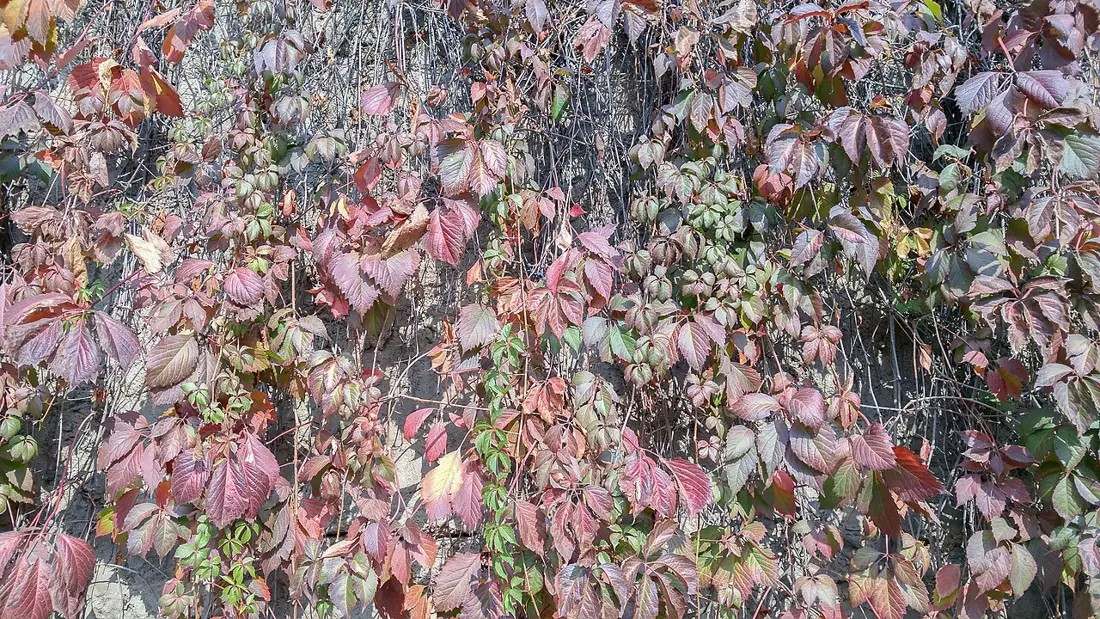
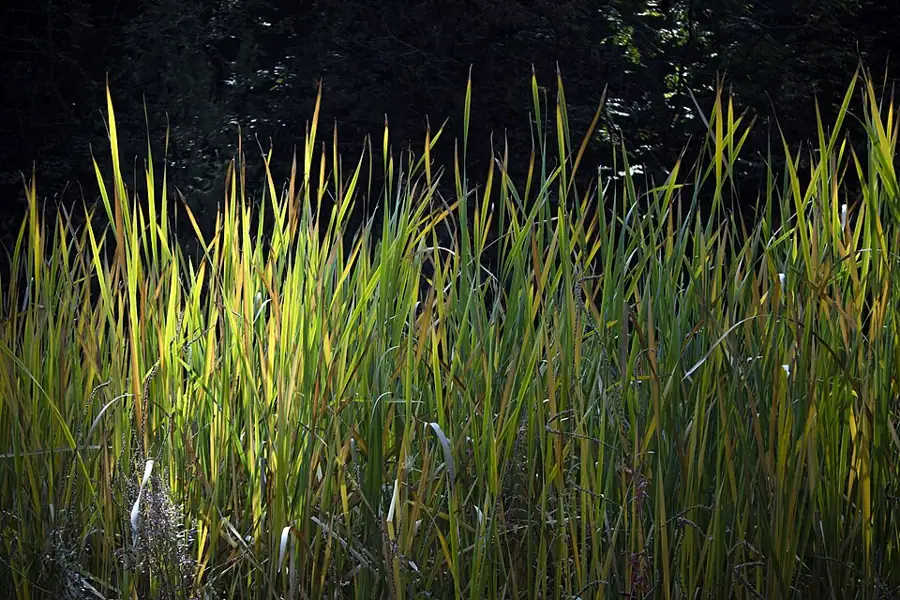
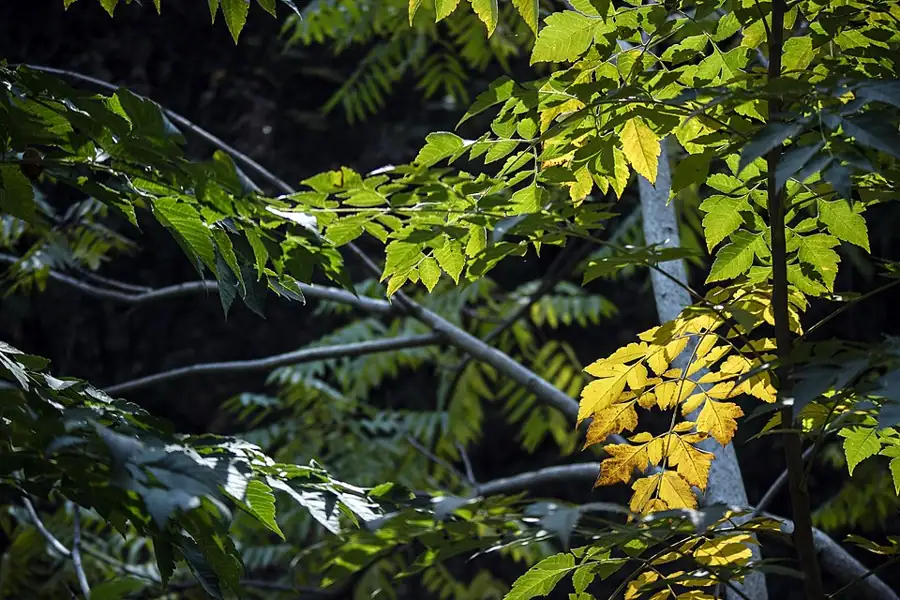
Seasons matter here more than in most city parks. April brings magnolia, Japanese cherry and irises; May and June belong to the rose collection; by August the gorge is dry and yellowed, though it still holds shade; October, when the leaves turn, is probably the best month of all. The garden stays open in winter but is nearly empty, and much of it is bare.
Along the eastern edge of the garden lies the old Muslim cemetery, where the nineteenth-century writer Mirza Fatali Akhundov is buried.
The main gate is on Botanikuri Street, five minutes' walk from the sulphur baths. A second, upper gate opens directly onto the Narikala path, and many visitors come in from the top and walk down, which turns the whole garden into a gentle descent and saves the climb back.
The stone arched bridge over the stream is the prettiest single point in the garden and a useful landmark: from it the path divides, one branch going on to the waterfall and the other climbing towards the walls of Narikala. From the upper path the fortress is seen side-on rather than from below, which is a view very few visitors bother to find, and the sound of the city comes back at exactly the height where you left it an hour earlier.
Practical advice
Two hours covers the full walk to the waterfall and back. The path is decent for most of the way, but the last stretch to the falls is stony and uneven, so trainers help. Only the first section is manageable with a wheelchair. Summer afternoons are hot in the gorge, though there is more shade than in the city. Carry water: there is one small cafe near the entrance and nothing further in. Toilets are by the ticket desk. The last tickets are sold about an hour before closing.
How to get there from Tbilisi
From the centre drop down to Gorgasali Square and turn up Botanikuri Street — 4 km, about fifteen minutes. Parking at the gate itself is minimal and sits on a narrow street where two cars barely pass; at weekends there is effectively nothing. The reliable answer is the paid parking at Gorgasali Square or the car park in Rike Park, ten to twelve minutes' walk away. The alternative is to ride the cable car to Narikala and enter through the upper gate. An economy car is enough, and a small one is easier on Botanikuri Street.
Click a marker for details. Coloured lines are ready-made road trips.
Nearby places
 Fortress
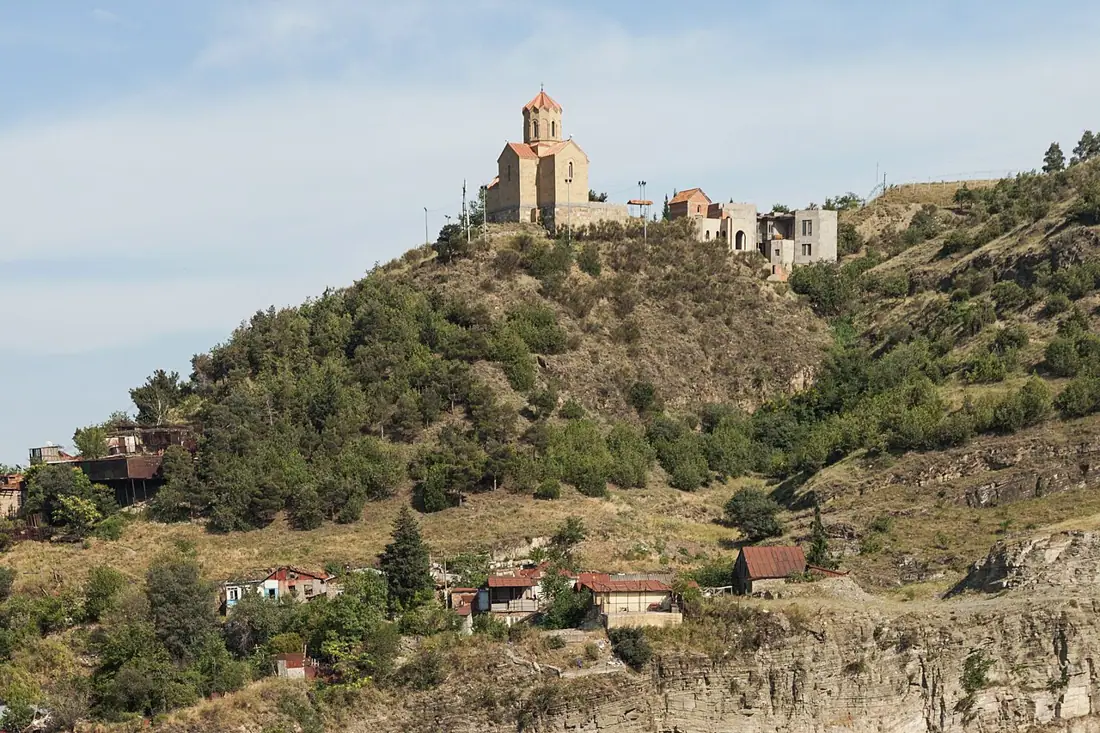
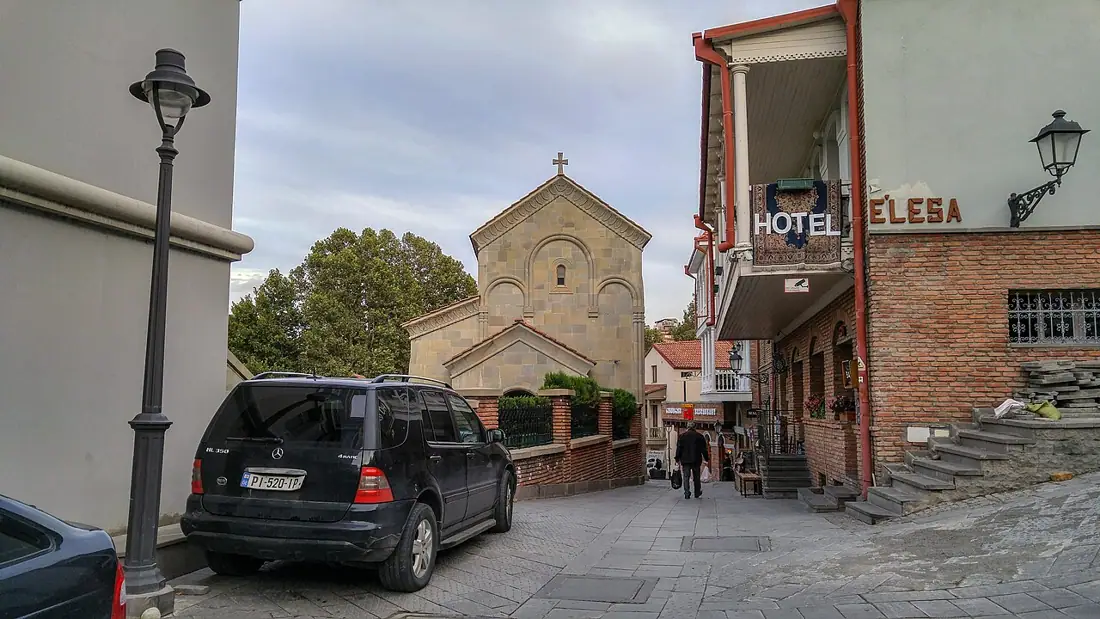
Narikala Fortress
A 4th-century citadel on the ridge above the Old Town — the defining silhouette of Tbilisi and its best viewpoint.
 Spa resort
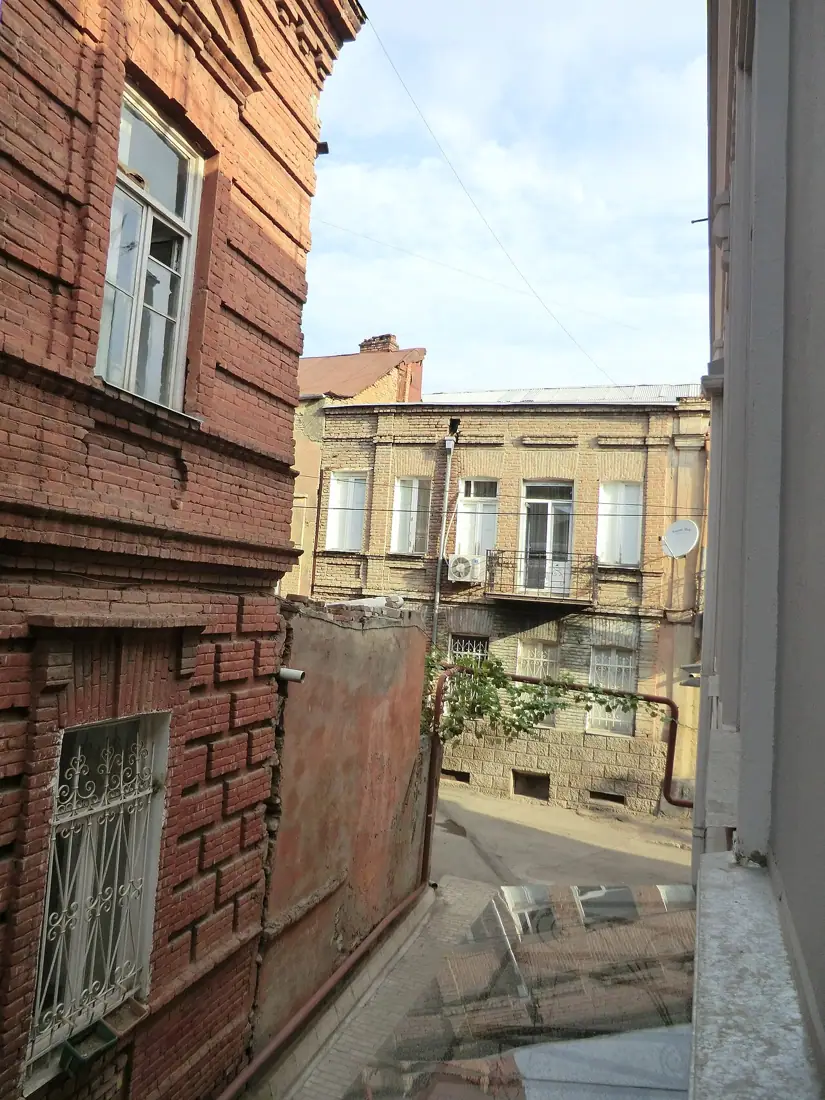
Abanotubani and the Sulphur Baths
The birthplace of Tbilisi — brick-domed sulphur bathhouses in the heart of the Old Town.
 Town
TownBetlemi Quarter and the Stairs
A pedestrian quarter climbing the ridge below Narikala, with stone stairs, two churches and an old fire temple.
 Monastery
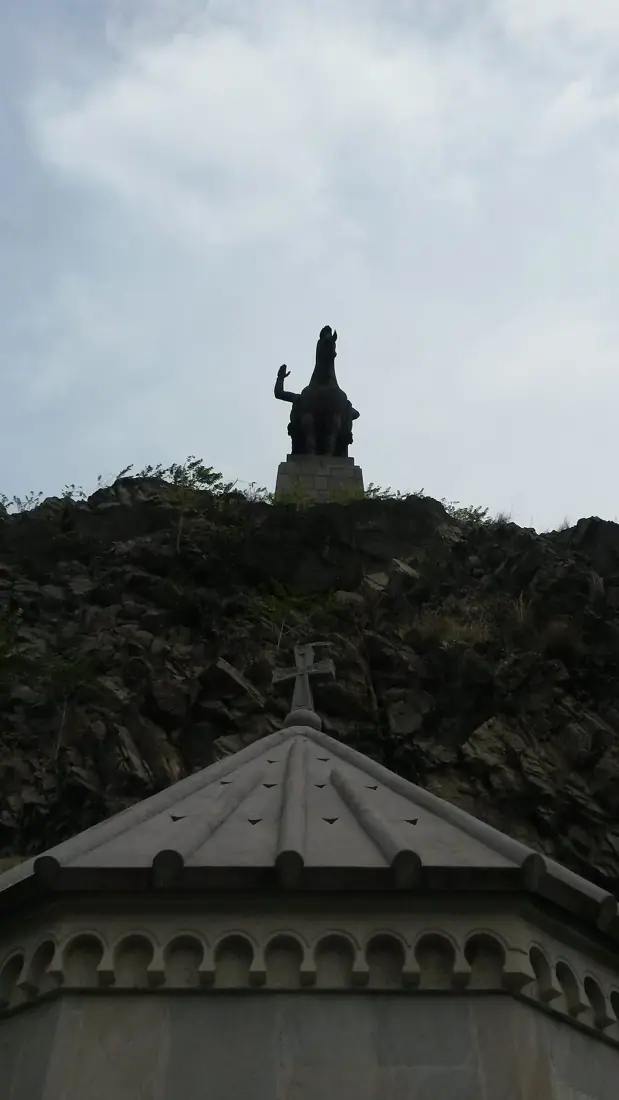
Metekhi Church
A thirteenth-century church on the cliff beside the Gorgasali statue, with the best view of old Tbilisi.