Metekhi Church
A thirteenth-century church on the cliff beside the Gorgasali statue, with the best view of old Tbilisi.
- Time needed
- 0.5 h
- From Tbilisi
- 3 km · 0:15
- Road
- Paved
- Car needed
- Economy class
- Season
- All year
- Entry
- free
Metekhi stands where Tbilisi began. The rock above the left bank of the Mtkvari held a royal residence as early as the fifth century, in the time of Vakhtang Gorgasali, and tradition credits him with building the first church on the spot.
What stands now is much later: it was built between 1278 and 1289 under King Demetre II, on a cross-in-square plan with three projecting apses. Its later history says a good deal about how successive rulers treated the city. In 1819 the Russian administration turned the church into a barracks and then a prison; Maxim Gorky was among those held here. Under Soviet rule it stayed a prison and was converted into a theatre in the 1930s. Services only returned at the end of the 1980s.
By tradition, St Shushanik is buried in the church — the fifth-century martyr who is the subject of the oldest surviving work of Georgian literature.
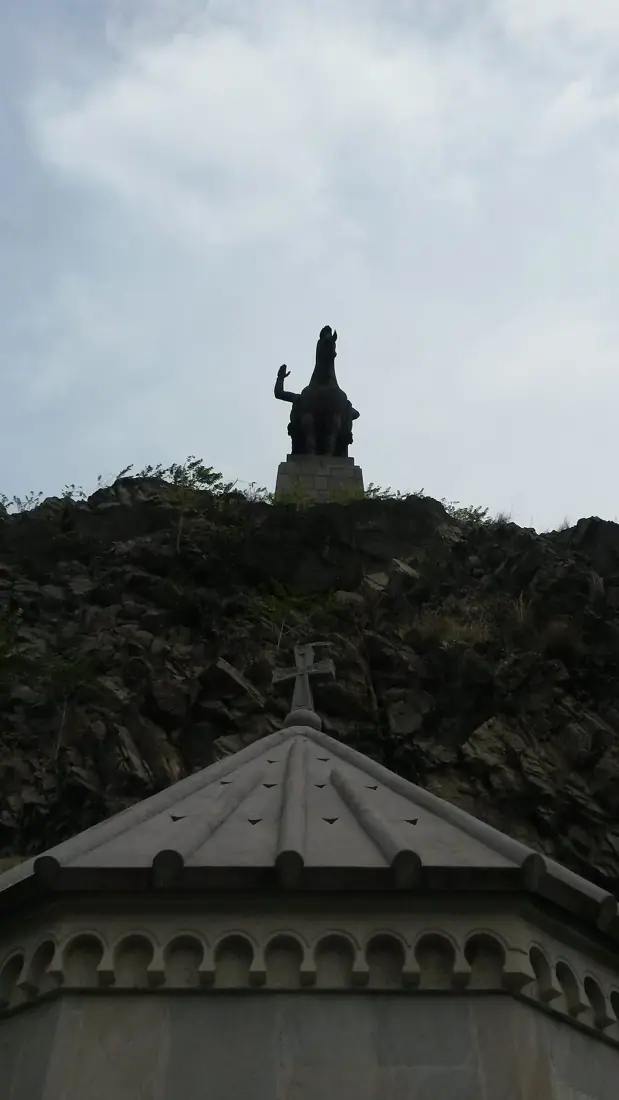
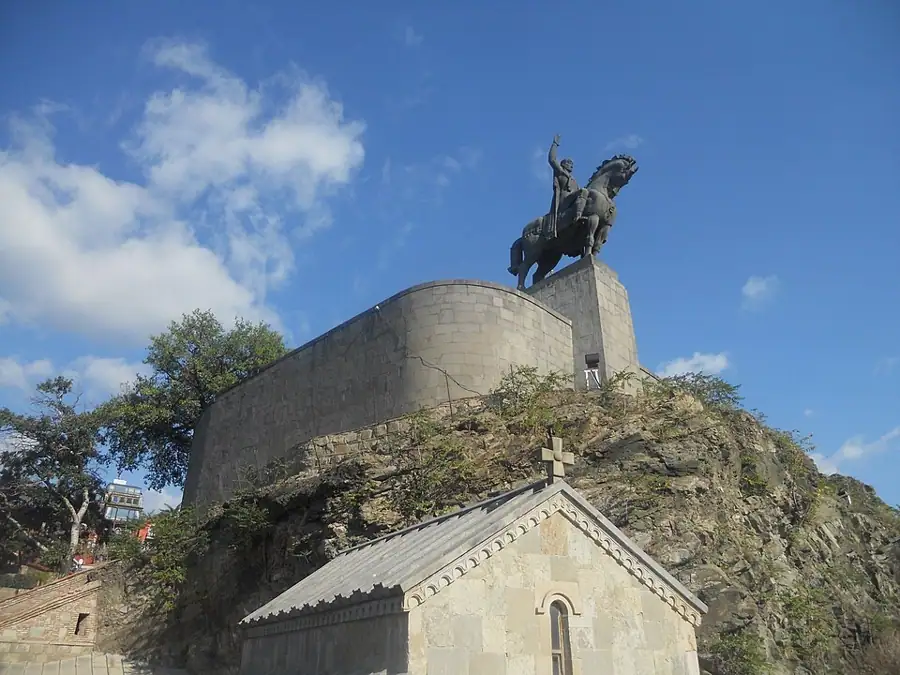
On the terrace beside it stands the equestrian statue of Vakhtang Gorgasali, put up in 1967 by the sculptor Elguja Amashukeli; it is one of the most photographed silhouettes in the country.
The honest assessment is that the interior is plain — almost no old wall painting survives, and there is not much to detain you. People come for what is outside: the view from the cliff edge over the brick domes of the sulphur baths, Narikala on the opposite ridge, the Bridge of Peace and the bend of the river. In the evening, when the floodlights come on, this is the postcard of Tbilisi.
From the terrace you look straight down at the place the city is named after. By tradition Vakhtang Gorgasali was hunting here when a wounded pheasant fell into a hot spring, and the king ordered a town to be built on the spot — tbili means warm, and the sulphur water still surfaces in the same place below. The story is a legend, but archaeology confirms that people were settled on this bend of the river long before it.
Practical advice
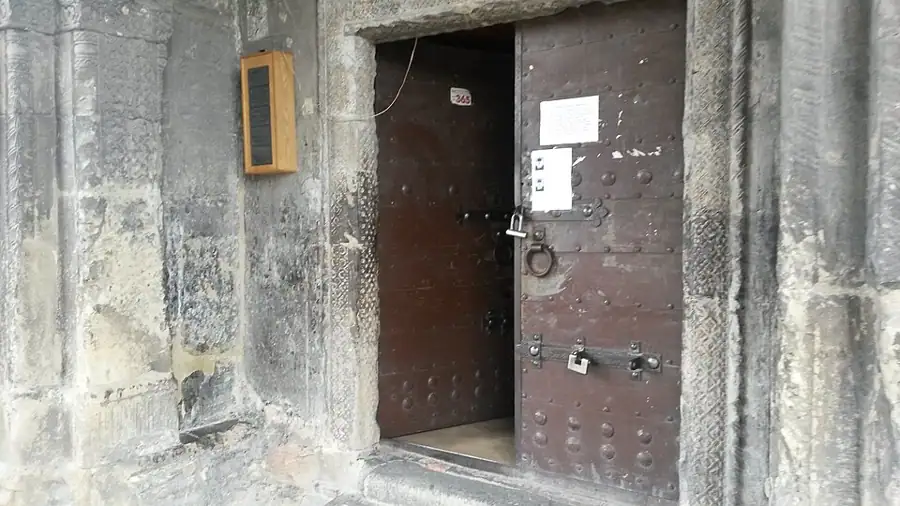
Half an hour is plenty. A few steps lead up to the church, but the terrace itself is flat and manageable with a wheelchair. Dress rules apply and scarves are kept by the door. The parapet on the terrace is low — keep hold of small children. The light is best in the morning or at sunset; at midday you are shooting straight into the sun and the photographs come out flat. Toilets and cafes are down at Gorgasali Square. The cliff is windy in winter.
How to get there from Tbilisi
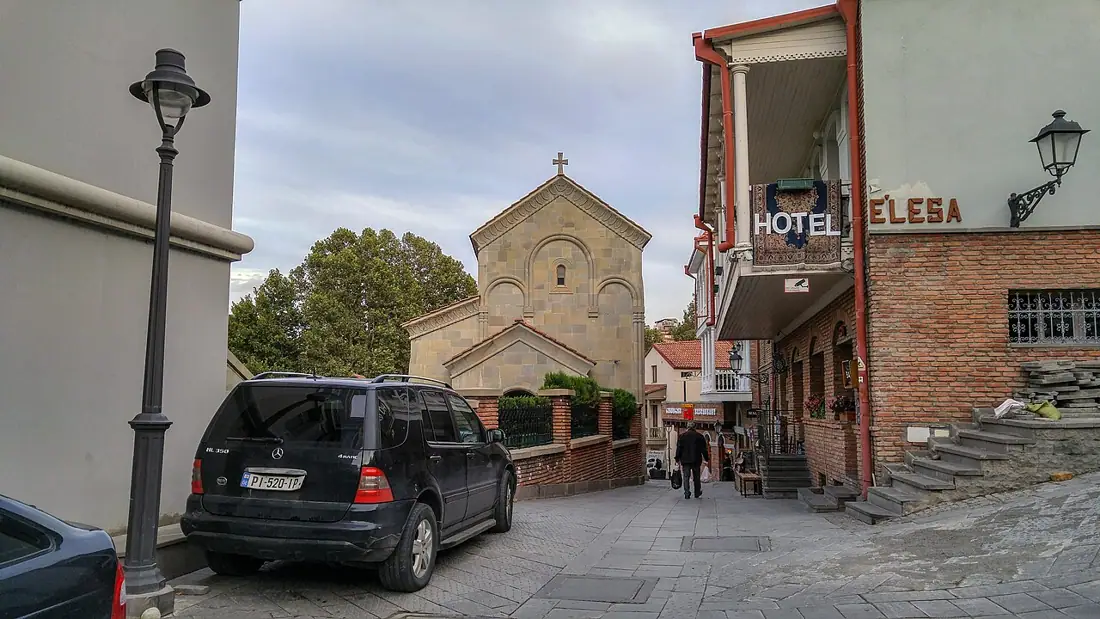
You are on the left bank: from the centre cross by Baratashvili or Metekhi bridge and climb the Metekhi rise. There is a small square in front of the church where a handful of cars fit, but it is almost always full and tour coaches use it too. More reliable is the lower car park at Rike Park, ten minutes' walk up from there, or metered bays towards Gulua Street and Avlabari. Avlabari metro station is also ten minutes away on foot. An economy car is enough.
Click a marker for details. Coloured lines are ready-made road trips.
Nearby places
 Spa resort
Abanotubani and the Sulphur Baths
The birthplace of Tbilisi — brick-domed sulphur bathhouses in the heart of the Old Town.
 Fortress
Narikala Fortress
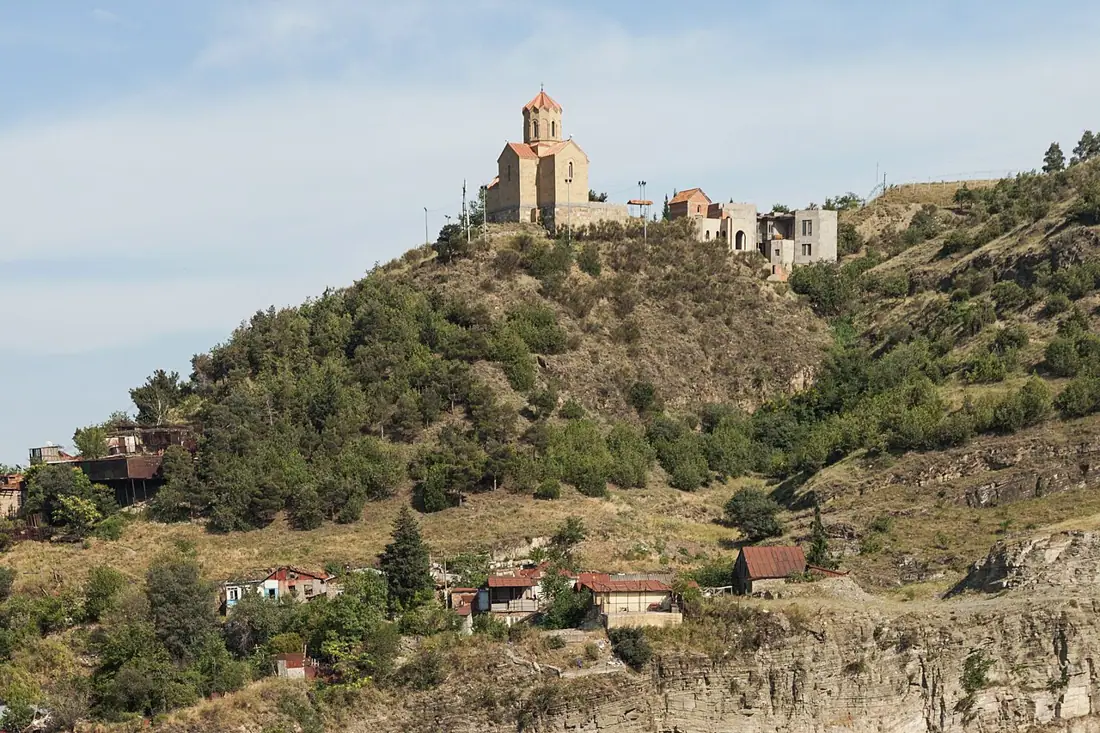
A 4th-century citadel on the ridge above the Old Town — the defining silhouette of Tbilisi and its best viewpoint.
 Nature
Bridge of Peace and Rike Park
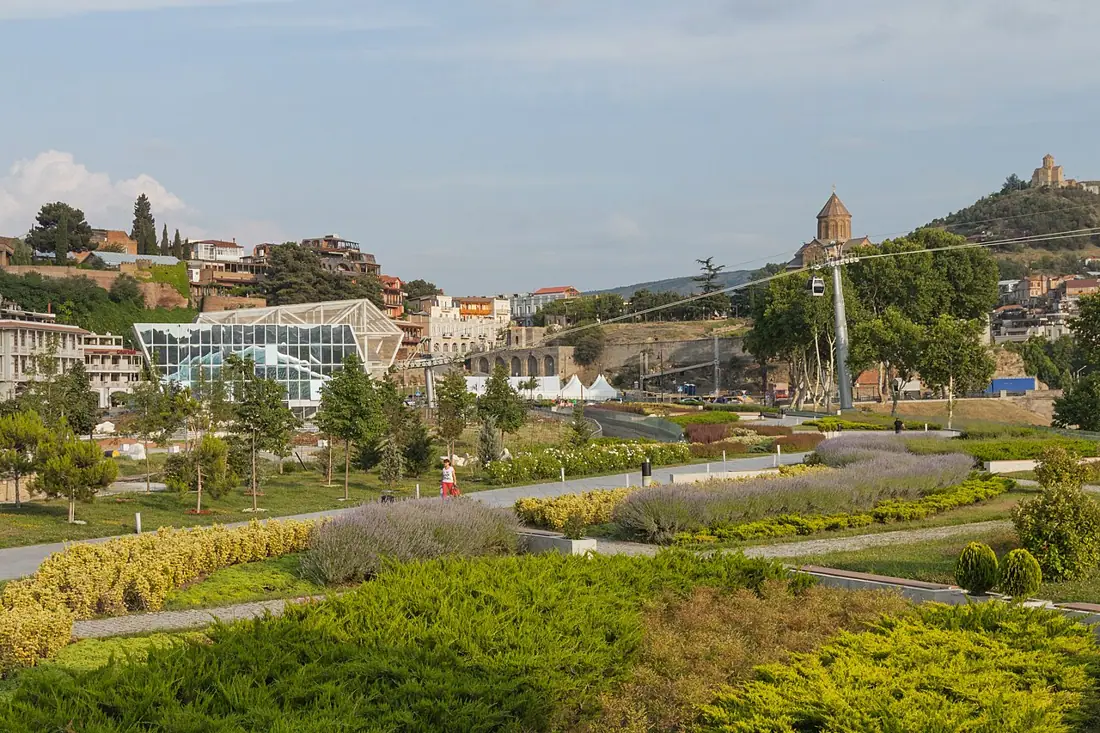
A glass and steel footbridge over the Mtkvari and the park at its far end, with the cable car station.
 Monastery
Sioni Cathedral
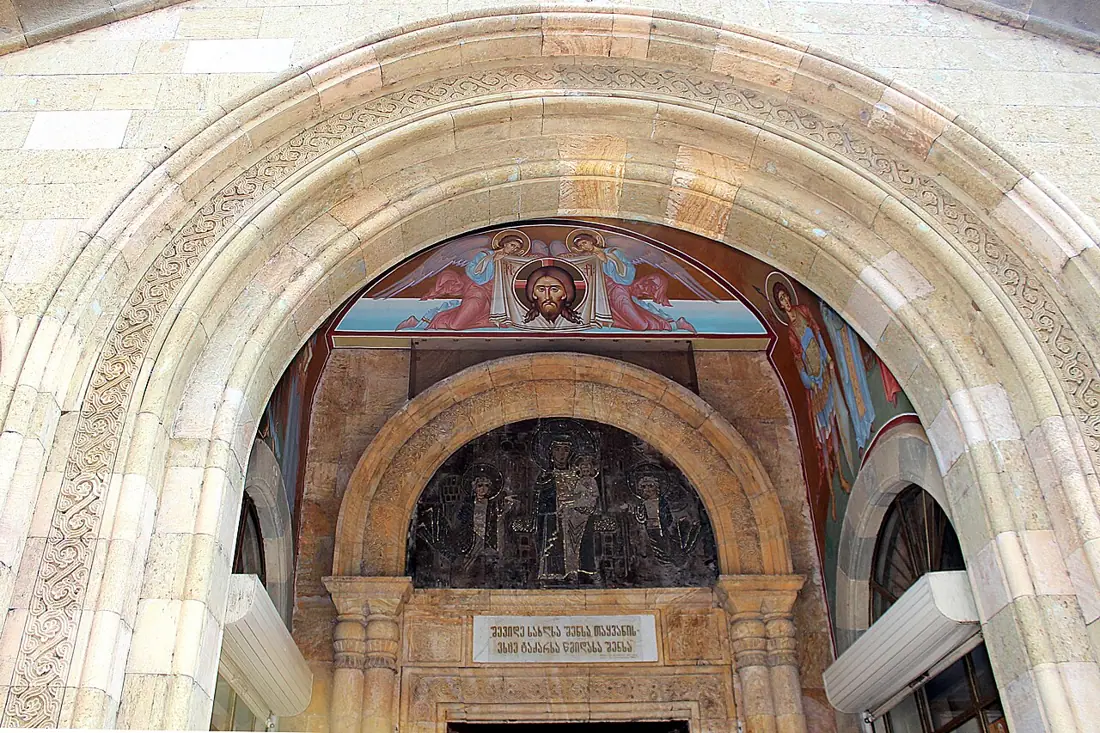
The old cathedral on the bank of the Mtkvari, where the grapevine cross of St Nino is kept.