Mtatsminda Pantheon
The terraced cemetery around the church of St David, where Georgia's writers and public figures are buried.
- Time needed
- 1 h
- From Tbilisi
- 5 km · 0:20
- Road
- Paved
- Car needed
- Economy class
- Season
- All year
- Entry
- free
The Pantheon sits on the slope of Mtatsminda, two hundred metres above the city, on a series of narrow terraces. Its centre is the church of Mamadaviti, a site connected with the sixth-century Assyrian father David of Gareja; by tradition his cave and spring were here, and childless women still come to the spring.
The cemetery was formally founded in 1929, to mark a century since the death of Alexander Griboedov. Griboedov, the Russian playwright and diplomat killed in Tehran in 1829, lies here with his Georgian wife Nino Chavchavadze. She was sixteen when she was widowed, and the epitaph she had cut — "Your mind and deeds are immortal in Russian memory, but why did my love outlive you?" — is the most quoted inscription in Tbilisi.
Also buried here:
-
Ilia Chavchavadze, writer and reformer, murdered in 1907 and later canonised
-
Akaki Tsereteli, Vazha-Pshavela, Nikoloz Baratashvili and Galaktion Tabidze
-
Sergei Parajanov, the film director
-
Zviad Gamsakhurdia, the first president, reburied here in 2007
-
Ekaterine Geladze, Stalin's mother
This is not a tourist site and does not try to be one. The paths are narrow, the stone crosses are furred with moss, and the only noise is leaves and the city left somewhere below. It is cool in summer, and in late autumn, when the maples turn, it is one of the most beautiful places in Tbilisi.
The funicular that brings most people up is itself a piece of history: it opened in 1905 and has closed and reopened several times since. Its intermediate station is at the Pantheon, so a good number of passengers step off here while the rest carry on to the amusement park at the top. That contrast — elderly women tending graves, and the noise of fairground rides two hundred metres higher up the same hill — says a fair amount about how Tbilisi uses its mountain.
Gallery
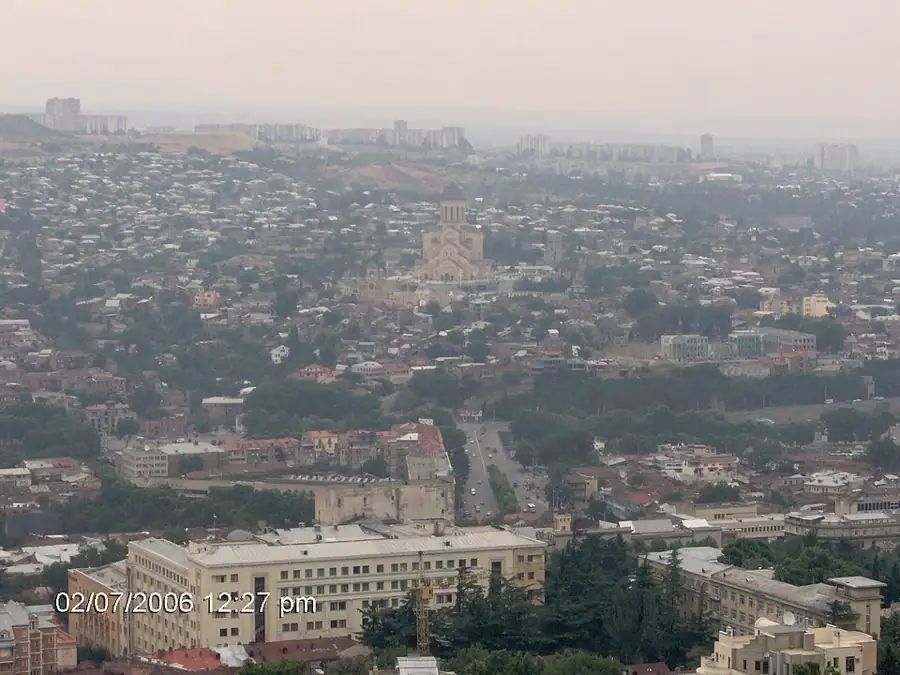
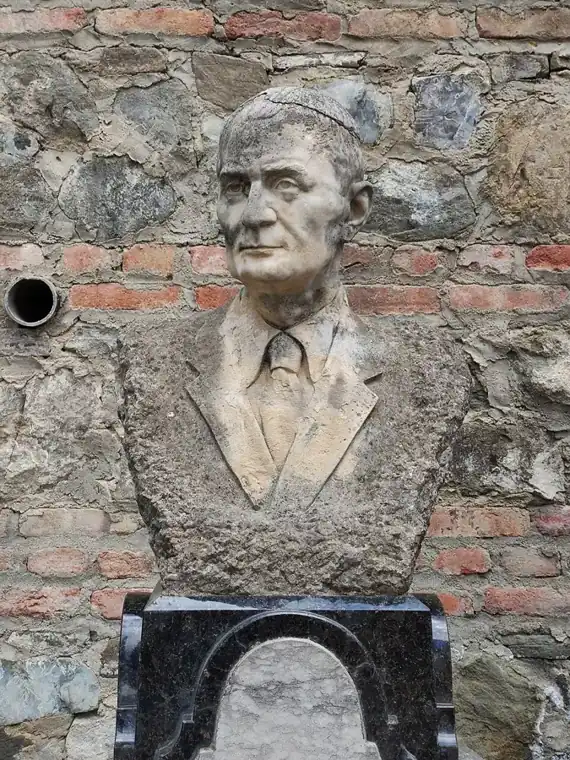
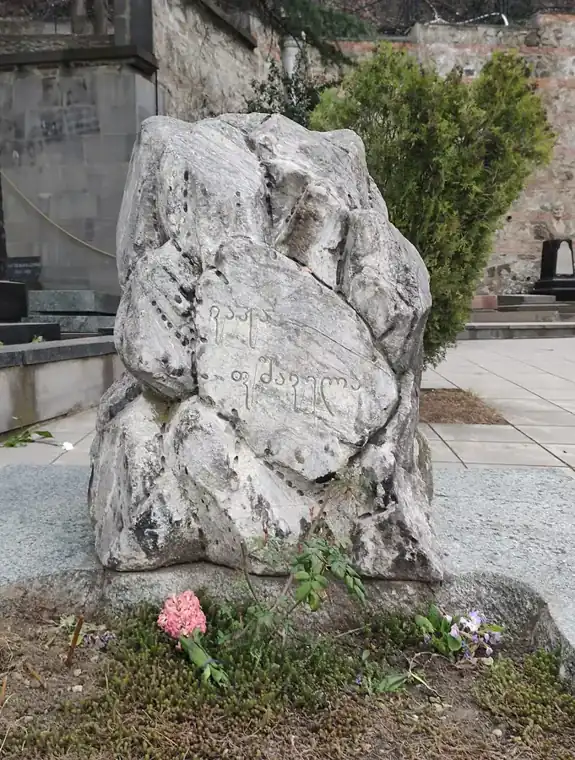
Practical advice
An hour is enough. The pantheon is built on steep terraces with narrow, uneven stone paths: impossible with a wheelchair, and proper shoes matter. This is a working church and an active cemetery, so loud conversation and picnics are out of place, and dress rules apply inside the church. There is a toilet in the church yard; the nearest cafe is up in the park. The funicular has an intermediate station right at the Pantheon, which is by far the easiest way to arrive.
How to get there from Tbilisi
You can drive, but it is not pleasant: the approach is the narrow, steep, hairpinned Mtatsminda Street, where two cars barely pass and ice forms in winter. There are three or four spaces at the Pantheon itself and they are usually taken. It is far better to leave the car below, on Chonkadze or Besiki Street, and ride one stop up on the funicular, or to park in the large car park at Mtatsminda Park at the top and walk down for fifteen minutes. An economy car is sufficient, but take care in wet weather.
Click a marker for details. Coloured lines are ready-made road trips.
Nearby places
 Nature
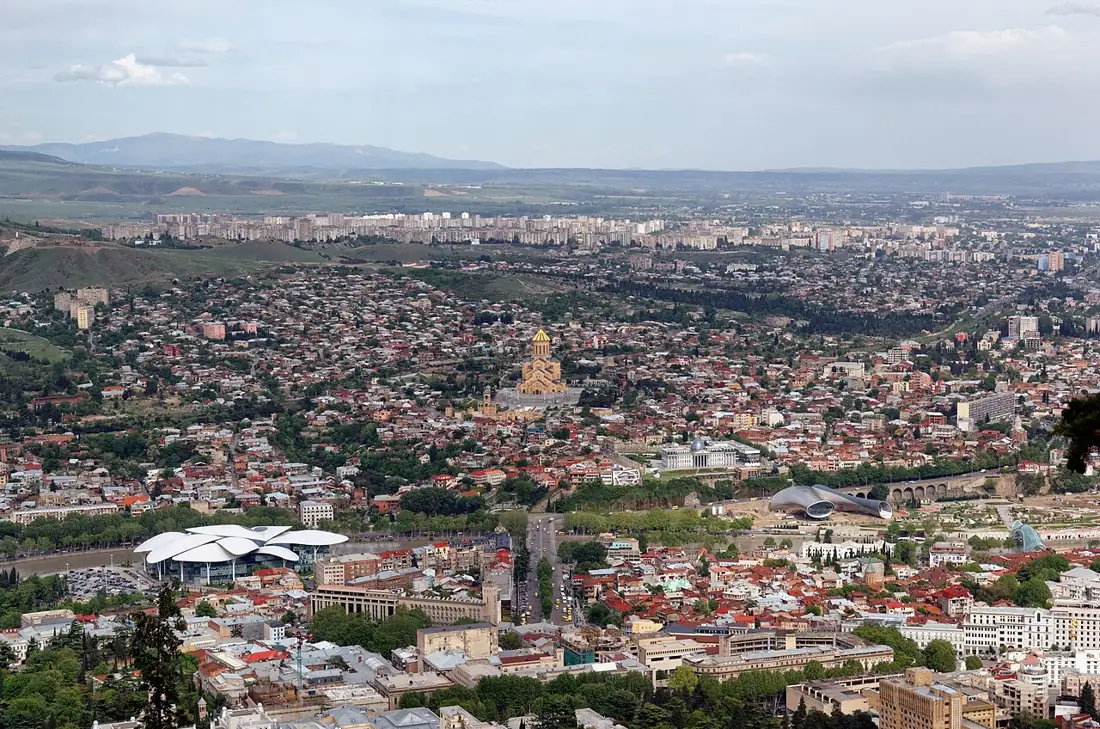
Mtatsminda Park and Funicular
A hilltop amusement park above the city, reached by a 1905 funicular, with the widest panorama of Tbilisi.
 Town
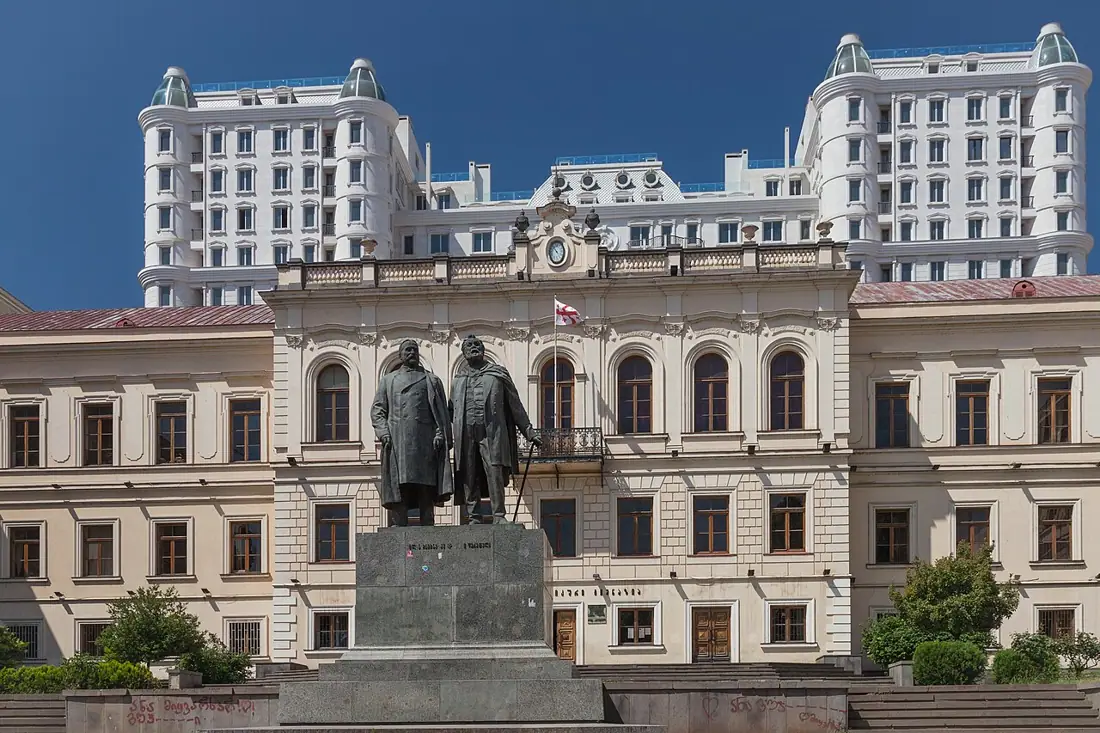
TownRustaveli Avenue
Tbilisi's main street: a kilometre and a half of plane trees, opera, parliament and political memory.
 Town
TownSololaki and its Art Nouveau Entrances
A nineteenth-century merchants' district under the ridge, where the best of it is inside the stairwells.
 Fortress
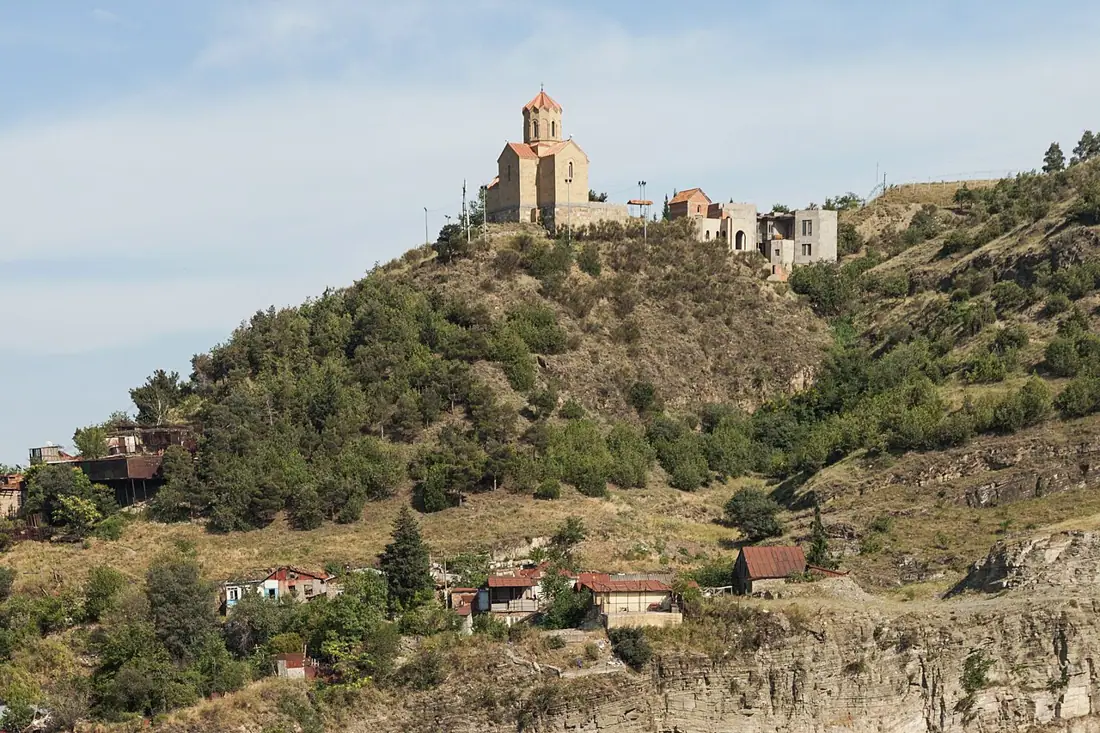
Narikala Fortress
A 4th-century citadel on the ridge above the Old Town — the defining silhouette of Tbilisi and its best viewpoint.