
Zando St George Monastery
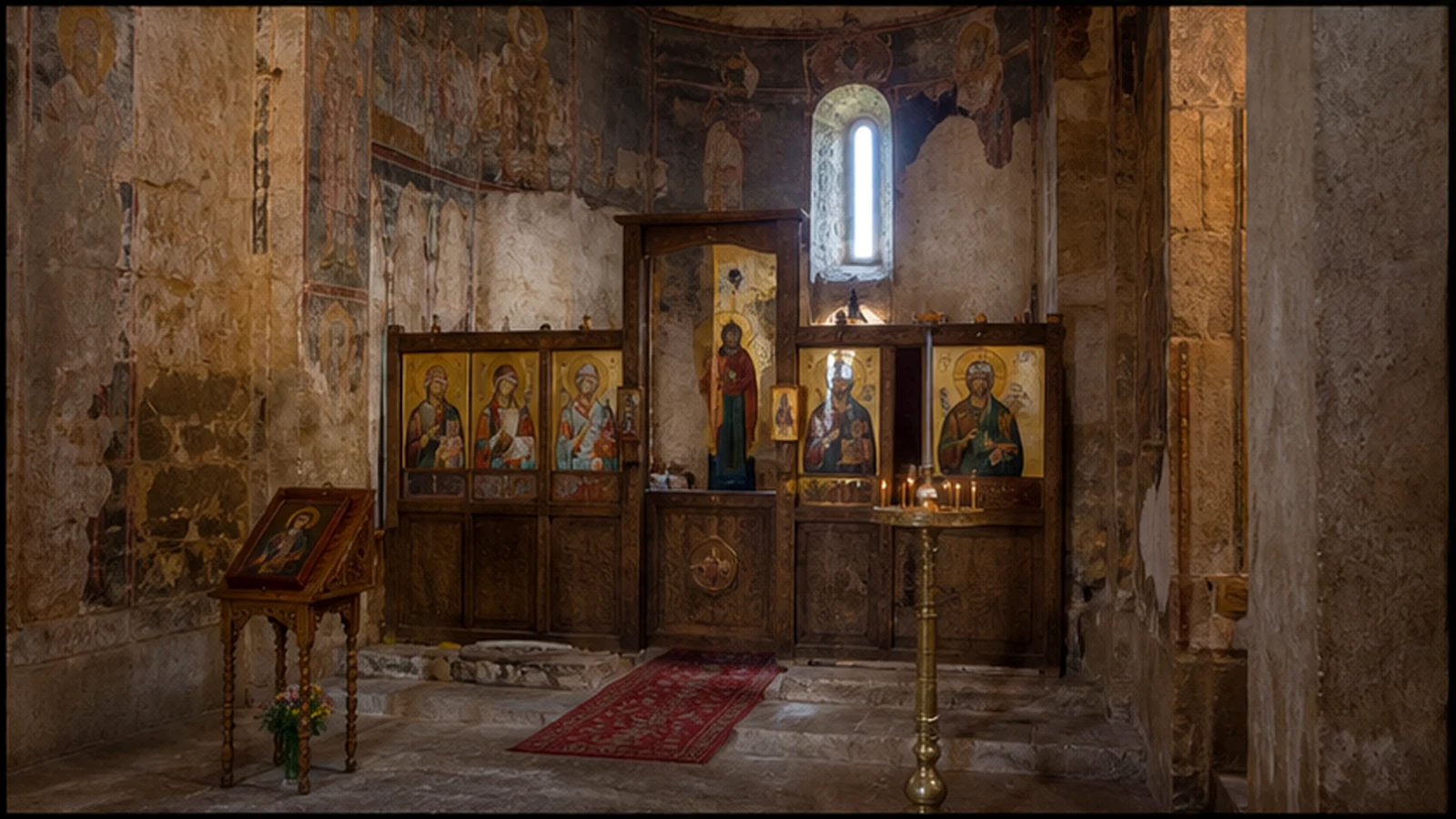
A small domeless church of 1519 on a hazel-wooded hill south of Samtredia, where on clear days the view reaches Lake Paliastomi and Poti.
- Time needed
- 1.5 h
- From Tbilisi
- 263 km · 4:15
- Road
- Mostly paved
- Car needed
- Crossover / SUV
- Season
- All year
- Entry
- free
Tradition says this hill was first called Sando, 'the trusty one', because in hard times it hid people well; over the years the name wore down to Zando. The village below — until 2007 the two villages of Zemo and Kvemo Abasha — is now called Gamochinebuli, 'the one in plain view', and the monastery on the height shares that name for the same reason: from here the eye travels far.
The church of St George is small and domeless, built of dressed stone and dated to 1519, standing in a thicket of hazel and plane trees on one of the spurs of the Guria range. West of it rises a two-storey bell tower of stone and lime. Over its eastern door it carried an inscription in Georgian script: in 1856, 'for the remembrance of the souls of Gigo Kaloiani and his parents', the nobleman Otia Kaloiani gave three tumans towards building the tower.
In the 1780s, after the Ottomans abolished the bishopric of Khinotsminda, its see took refuge here, with the exiled Bishop Ioane. A golden icon of the Virgin came with it from Khinotsminda; it was stolen from the church in 1904. The opera singer Pilimon Koridze, who wrote down Georgian church chant in musical notation, was born in the village.
An old Easter custom is on record here. On Good Friday a man of the Targamadze family carried a silver-mounted banner-cross through the village and people gave freely; the money bought a sheep, which after the Easter morning liturgy was roasted and presented to the Kaloiani family. They took the shoulders, then called out that the offering was ready, and shared the rest among everyone.
On the clearest days the view runs from the Bakhmaro mountains and the Gurian highlands to the glint of Lake Paliastomi and the lighthouse at Poti.
Practical advice
The monastery is usually open from 10:00 to 17:00. Dress as for any Georgian monastery: covered shoulders and knees, a headscarf for women, and quiet voices, especially during services. Don't count on buying anything on the hill; bring water. For the long view to Paliastomi and Poti, choose a clear, dry day — the haze over the lowland often hides the coast in summer — and come in the morning or late afternoon, when the light is kinder to the stone. After heavy rain the last climb gets slippery, so wear shoes with grip.
How to get there from Tbilisi
From Tbilisi take the S1 (E60) west past Gori, Khashuri, Zestaponi and Kutaisi to the Samtredia roundabout, about 247 km. Turn south onto the S12 towards Lanchkhuti and after four or five kilometres, at Dapnari, turn off onto the village roads that run south through Gamochinebuli to the foot of the hill — about 263 km and some four and a quarter hours in all. The main roads are asphalt; the final climb of a kilometre or so is rough, and the regional tourism office recommends a 4×4. In an economy car, leave it in the village and walk up. Fuel is easiest in Samtredia.
Click a marker for details. Coloured lines are ready-made road trips.
Nearby places
Telefisi Fortress (Tolebi)
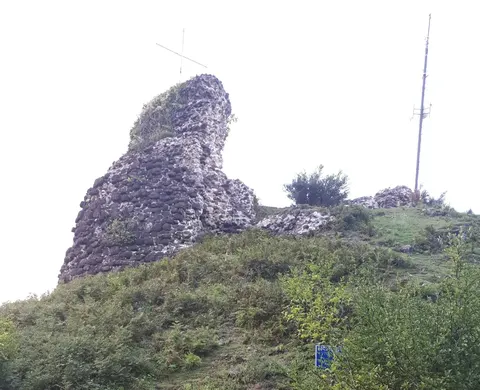
A broken 6th-century wall on a steep hill above the Rioni plain — the Telephis where Byzantium and Persia fought for western Georgia.
Vani Archaeological Museum
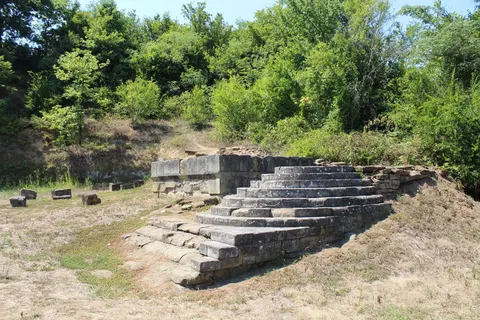
A Colchian city-sanctuary burned in the 1st century BC: hilltop walls and altars above a museum of gold diadems, Greek pottery and bronze.
Niko Nikoladze House Museum
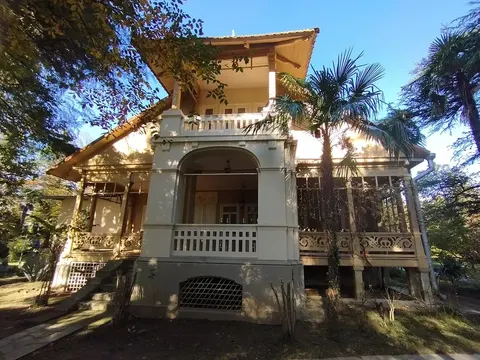
A cream villa in the Imeretian lowland where a Zurich-trained reformer built Georgia's only wind engine and ordered a sundial from Paris.
Best car for this trip
Mostly paved
Guides
- Driving in Georgia: What the Distances Actually Cost You Georgia is a small country with slow roads. Here is what 267 measured drives from Tbilisi say about how long y
Pickup locations
Car Rental at Kutaisi Airport — 18 km (straight line)