
Vani Archaeological Museum
A Colchian city-sanctuary burned in the 1st century BC: hilltop walls and altars above a museum of gold diadems, Greek pottery and bronze.
- Time needed
- 2 h
- From Tbilisi
- 255 km · 3:45
- Road
- Paved
- Car needed
- Economy class
- Season
- All year
- Entry
- ~7 ₾
Nobody knows what the people of this hill called their city, and that is worth remembering as you climb it.
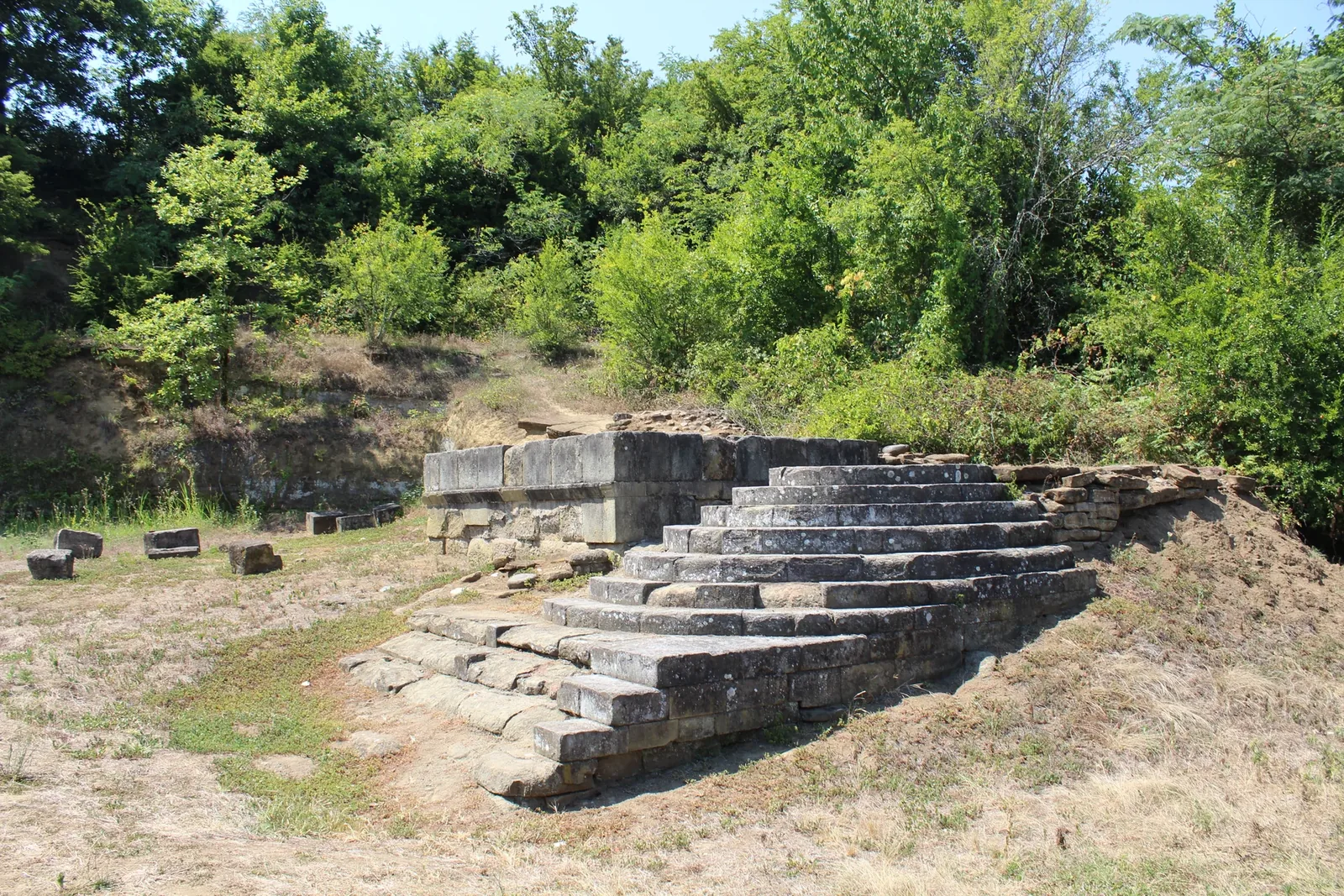
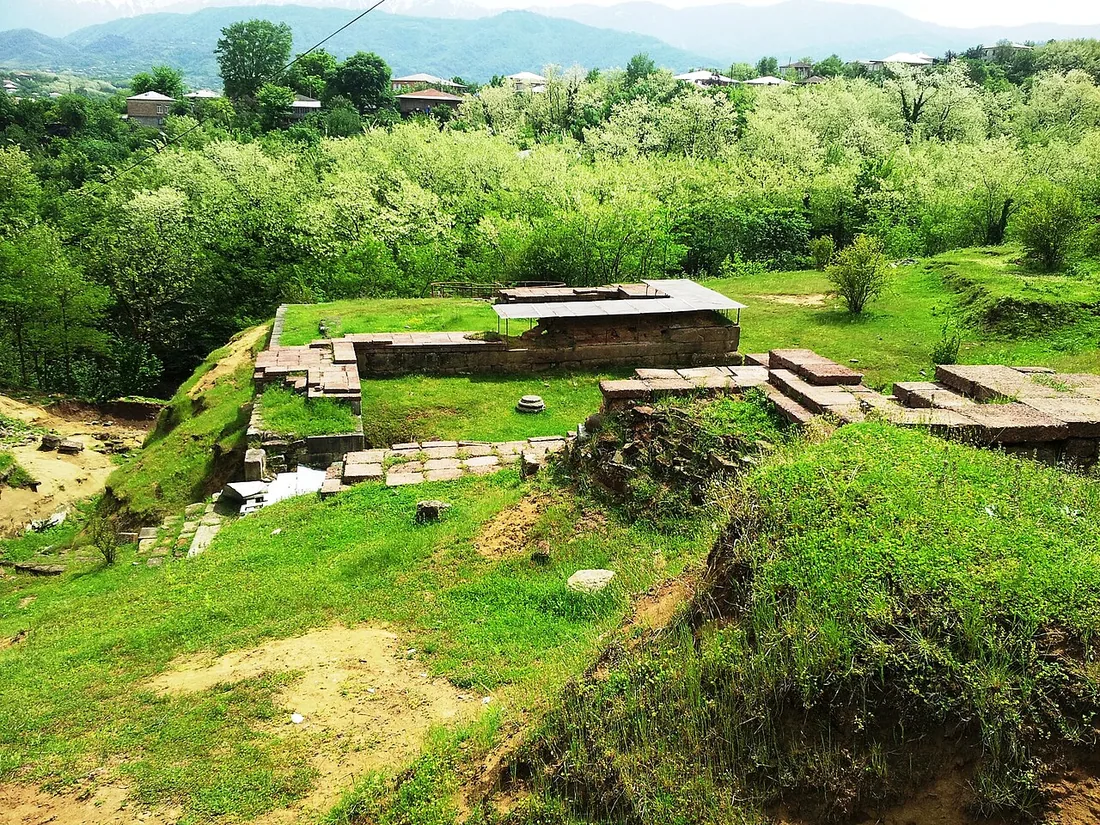
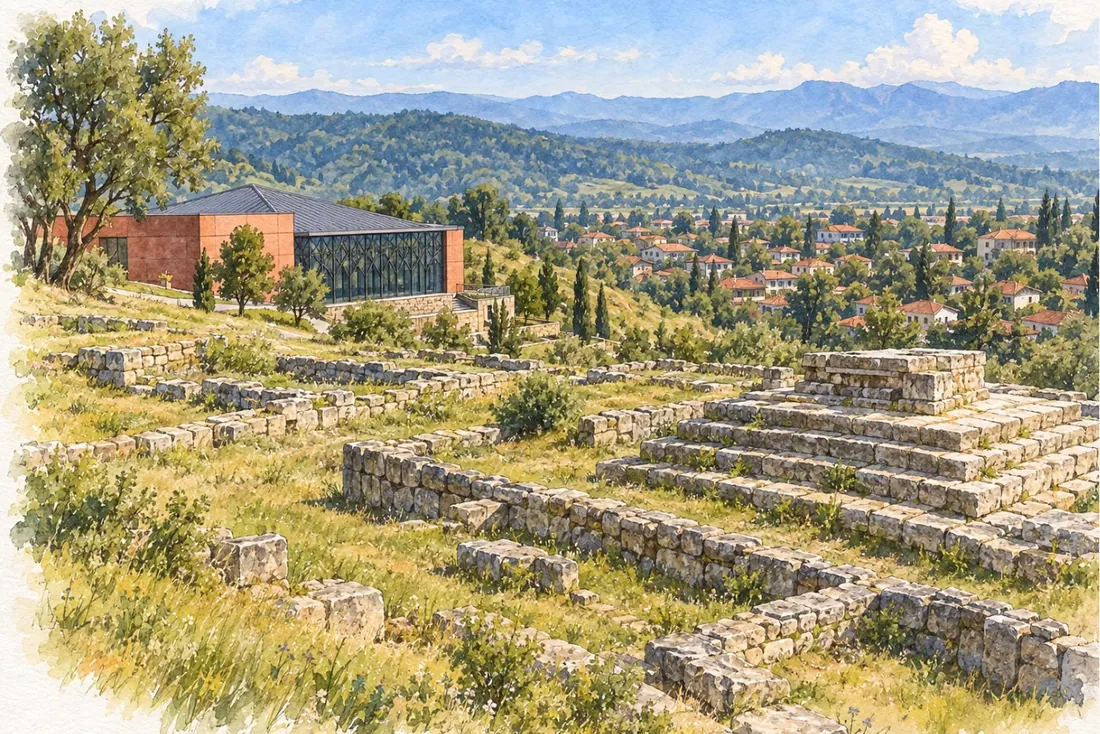
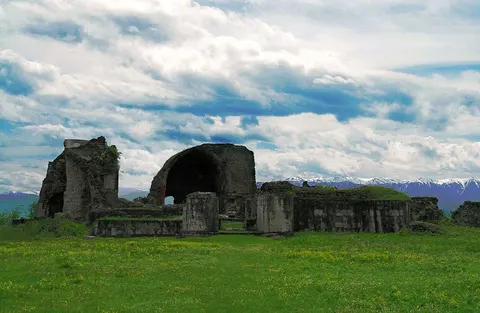
The ruins crown Akhvlediani Gora, a terraced hill on the western edge of modern Vani, guarded on two sides by deep ravines and looking out over the plain of Colchis. People lived here from the 8th century BC. Between about 600 and 350 BC it was the seat of a wealthy local elite, buried with gold diadems, temple pendants and necklaces of extraordinary fineness, and with painted pottery from Chios, Lesbos and Athens beside them. A 4th-century BC signet ring spells out, in Greek letters, the name Dedatos, probably a local ruler.
From about 250 BC the hill became what Otar Lordkipanidze, who led the excavations from 1966 until his death in 2002, read as a walled city-sanctuary, with towers, a heavily defended gate, temples, a twelve-stepped altar and a workshop for casting bronze statues. Then, in the middle of the 1st century BC, it burned. Pompey, Pharnaces II and Mithridates of Pergamon are all suspects; Lordkipanidze identified two destruction layers a few years apart.
The name remains open. Some scholars see here the Surium of Pliny the Elder, and a bronze inscription from the site reads 'Souris'; others, Lordkipanidze among them, place here the temple of Leucothea described by Strabo.
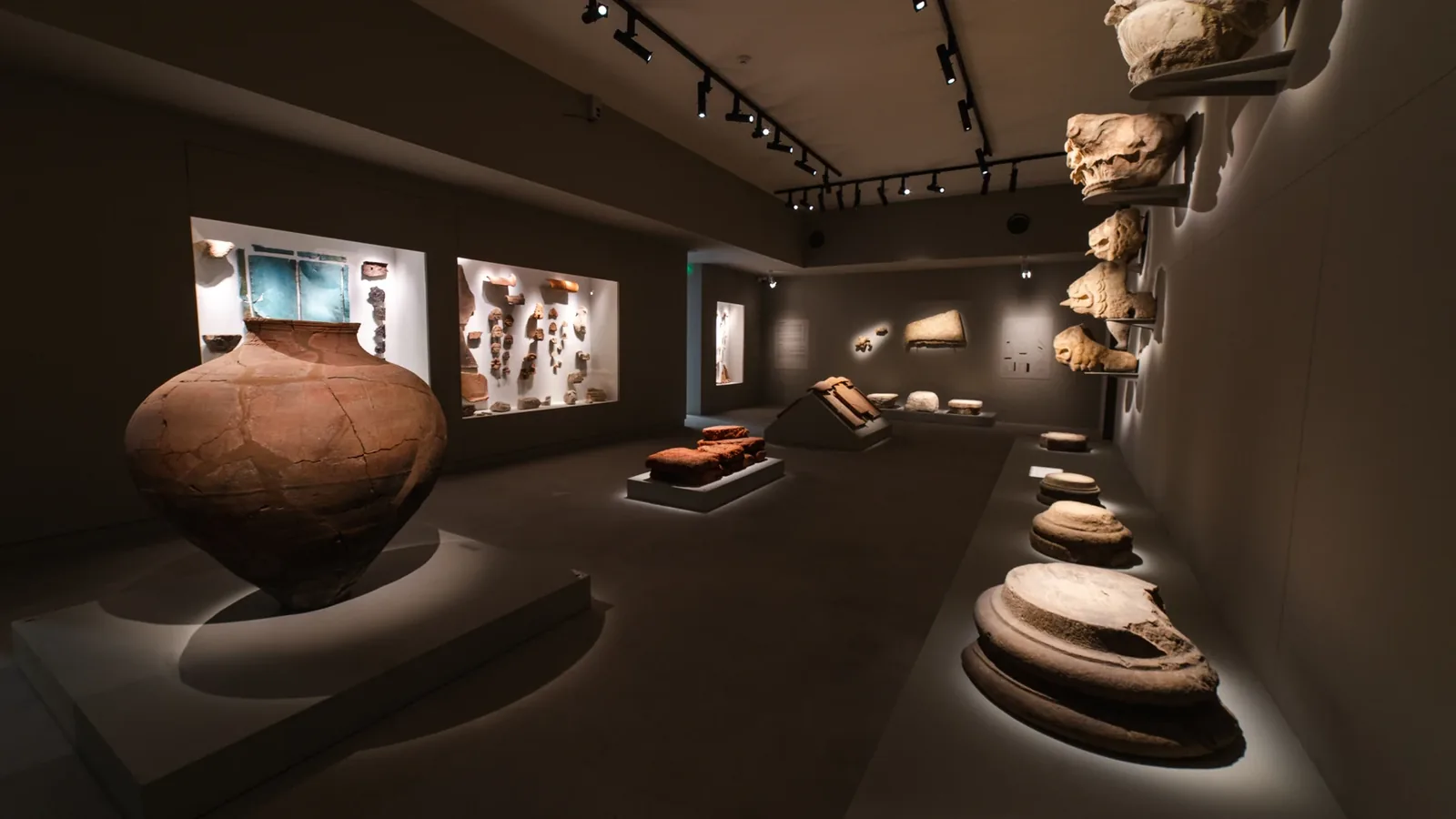
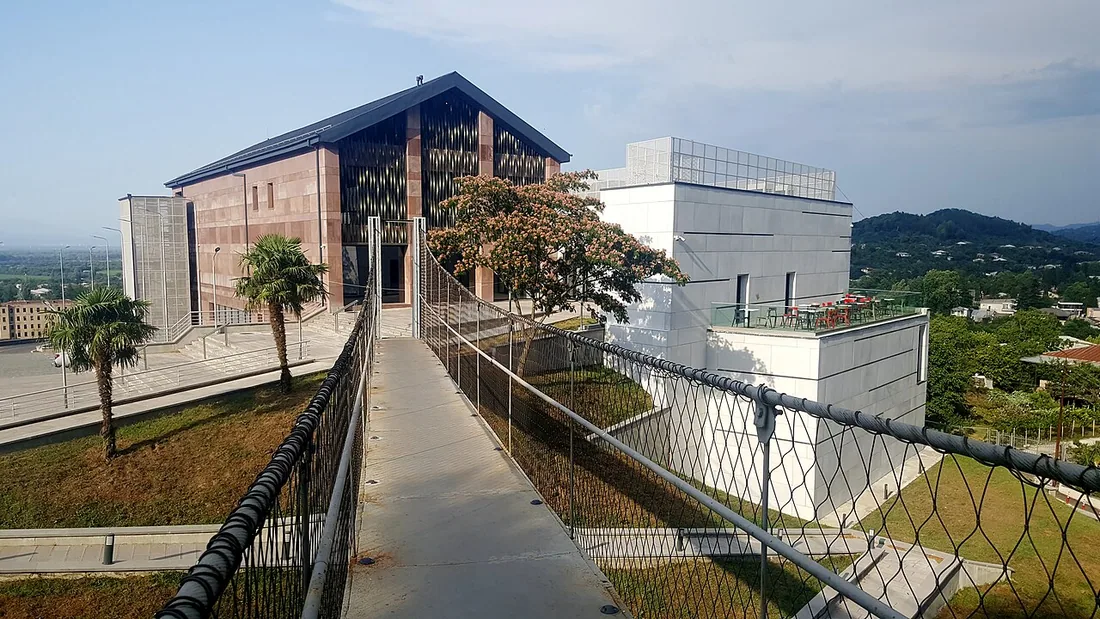
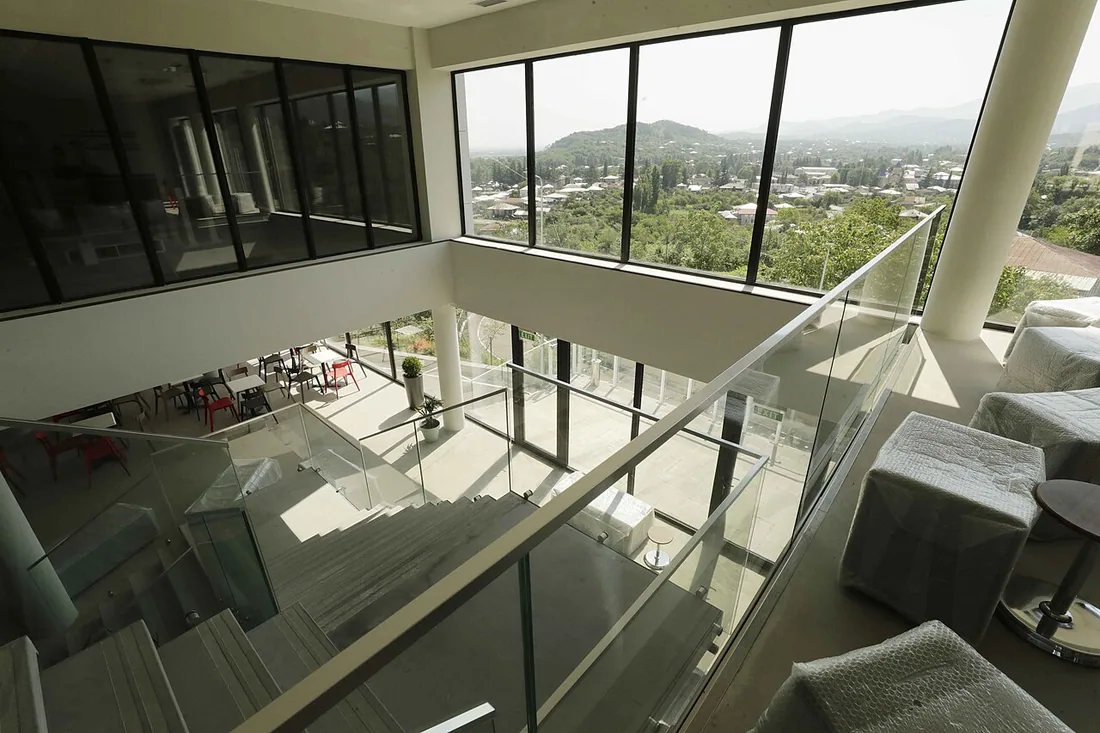
The finds, from the gold to a bronze torso of a youth and lion-head waterspouts, are divided between the museum at the foot of the hill, which bears Lordkipanidze's name, and the National Museum in Tbilisi. Vani is not Aia of the Golden Fleece, and no archaeologist claims it is. Stand among the burnt foundations with that gold in mind, though, and you understand where the Greeks found the story.
Gallery
Practical advice
Give it two hours, one in the museum and one on the hill. The path up to the ruins is steep and stepped, unsuited to wheelchairs, and there is almost no shade at the top, so in summer climb early or late. After rain the clay turns slick. Labels are in Georgian and English, and a guide can be arranged in advance. Tickets are around 7 lari. Toilets are at the museum; for food, head to the town centre a few minutes away. See the museum first and the hill second, not the other way round.
How to get there from Tbilisi
From Tbilisi take the S1 (E60) west over the Rikoti Pass and past Zestaponi. Shortly before Kutaisi turn south towards Baghdati, cut across via Vartsikhe and join the Sh13, which runs west into Vani. In all it is about 255 km and three hours forty-five, paved throughout; the last twenty kilometres are narrow roads through villages where cows often wander onto the tarmac. Refuel in Zestaponi or Kutaisi. There is free parking in front of the museum, and the ruins are a climb on foot from there. An economy car is enough.
Click a marker for details. Coloured lines are ready-made road trips.
Nearby places
Zando St George Monastery
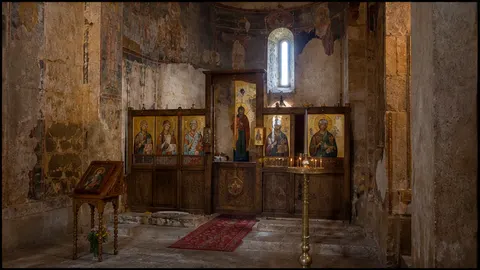
A small domeless church of 1519 on a hazel-wooded hill south of Samtredia, where on clear days the view reaches Lake Paliastomi and Poti.
Niko Nikoladze House Museum
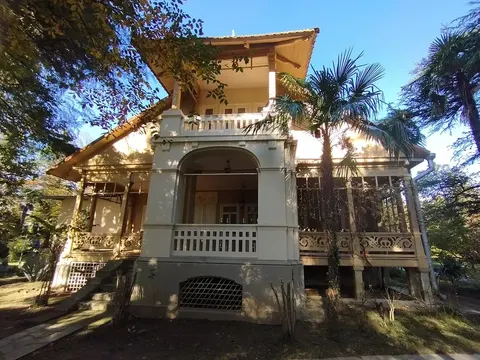
A cream villa in the Imeretian lowland where a Zurich-trained reformer built Georgia's only wind engine and ordered a sundial from Paris.
Geguti Palace
Brick ruins of George III's great palace on the Rioni plain south of Kutaisi, where in 1191 rebel nobles crowned a rival to Queen Tamar.
Best car for this trip
Guides
- Driving in Georgia: What the Distances Actually Cost You Georgia is a small country with slow roads. Here is what 267 measured drives from Tbilisi say about how long y
Pickup locations
Car Rental at Kutaisi Airport — 10 km (straight line)