
Niko Nikoladze House Museum
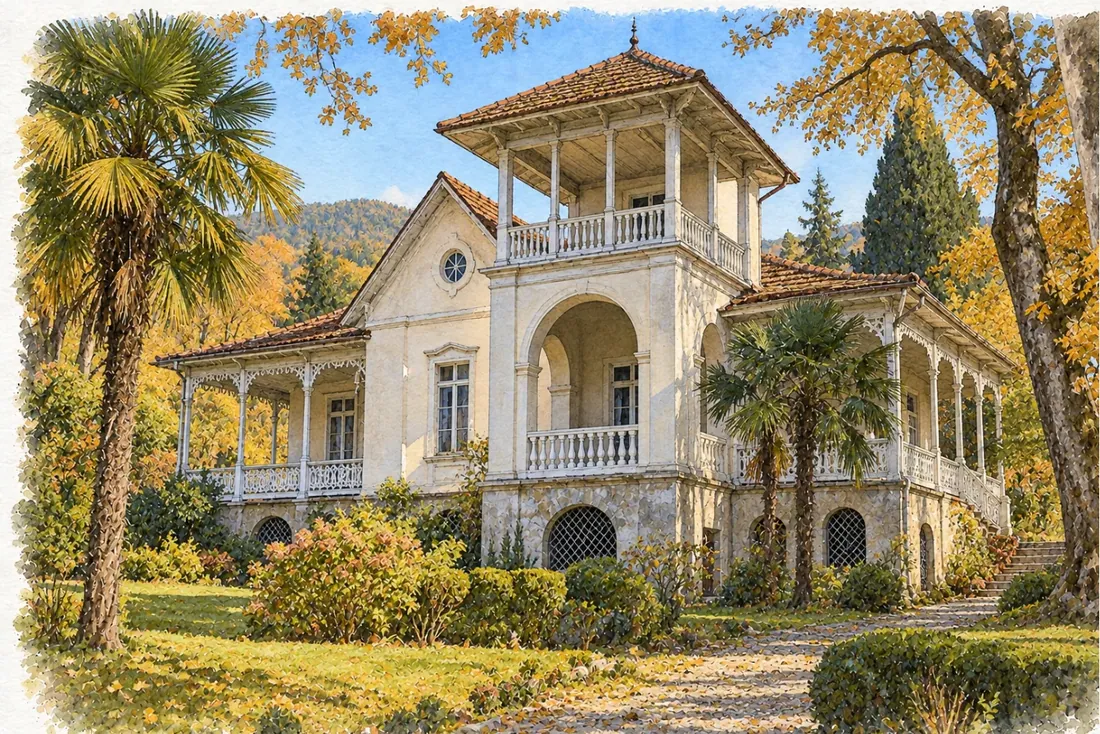
A cream villa in the Imeretian lowland where a Zurich-trained reformer built Georgia's only wind engine and ordered a sundial from Paris.
- Time needed
- 1 h
- From Tbilisi
- 250 km · 3:30
- Road
- Paved
- Car needed
- Economy class
- Season
- All year
- Entry
- check locally
Niko Nikoladze once turned down an offer from Karl Marx; in 1910 he built a wind engine in his own garden in Didi Jikhaishi to pump water from the well — the first and only one in Georgia.
Born in Kutaisi in 1843, Nikoladze was thrown out of St Petersburg University in 1861 for joining student protests, and in 1868 became the first Georgian to take a doctorate at a European university, in law at Zurich. There he met Marx, who asked him to represent the International in Transcaucasia; he declined. He founded newspapers in Tbilisi and Paris, pushed for railways and the Grozny–Poti pipeline, and as mayor of Poti from 1894 to 1912 turned a small harbour town into a trading port.
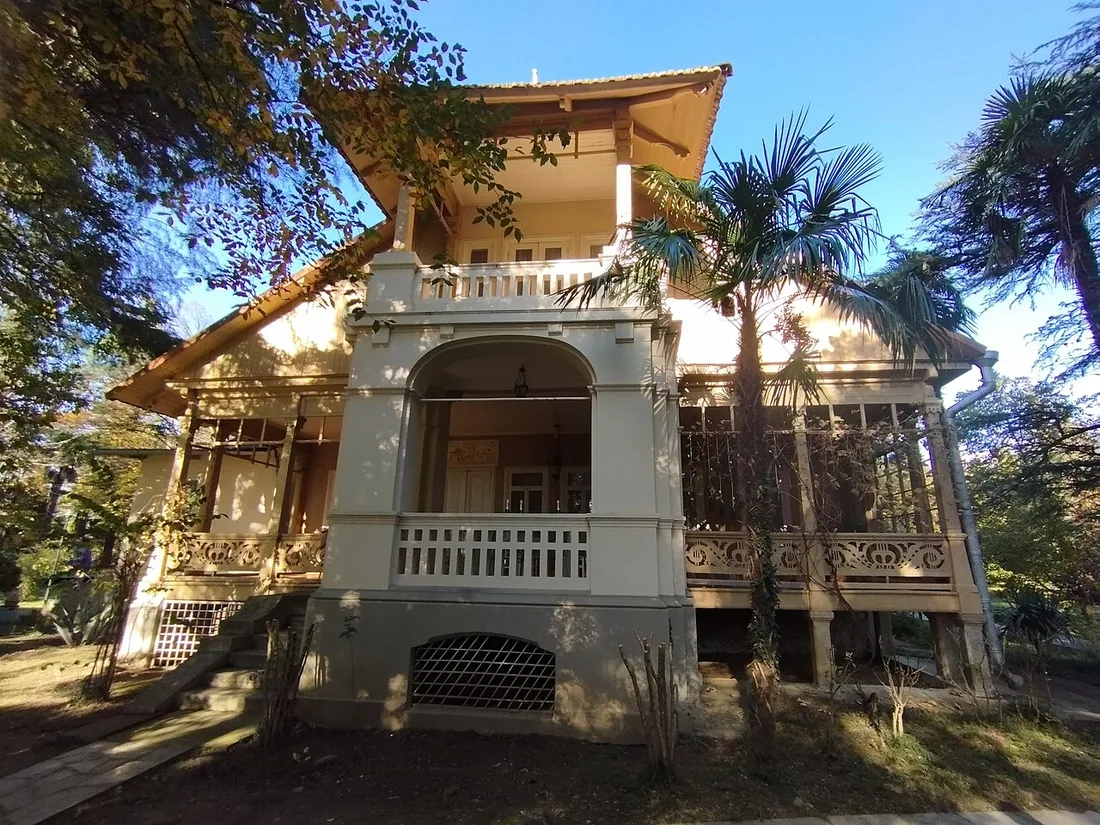
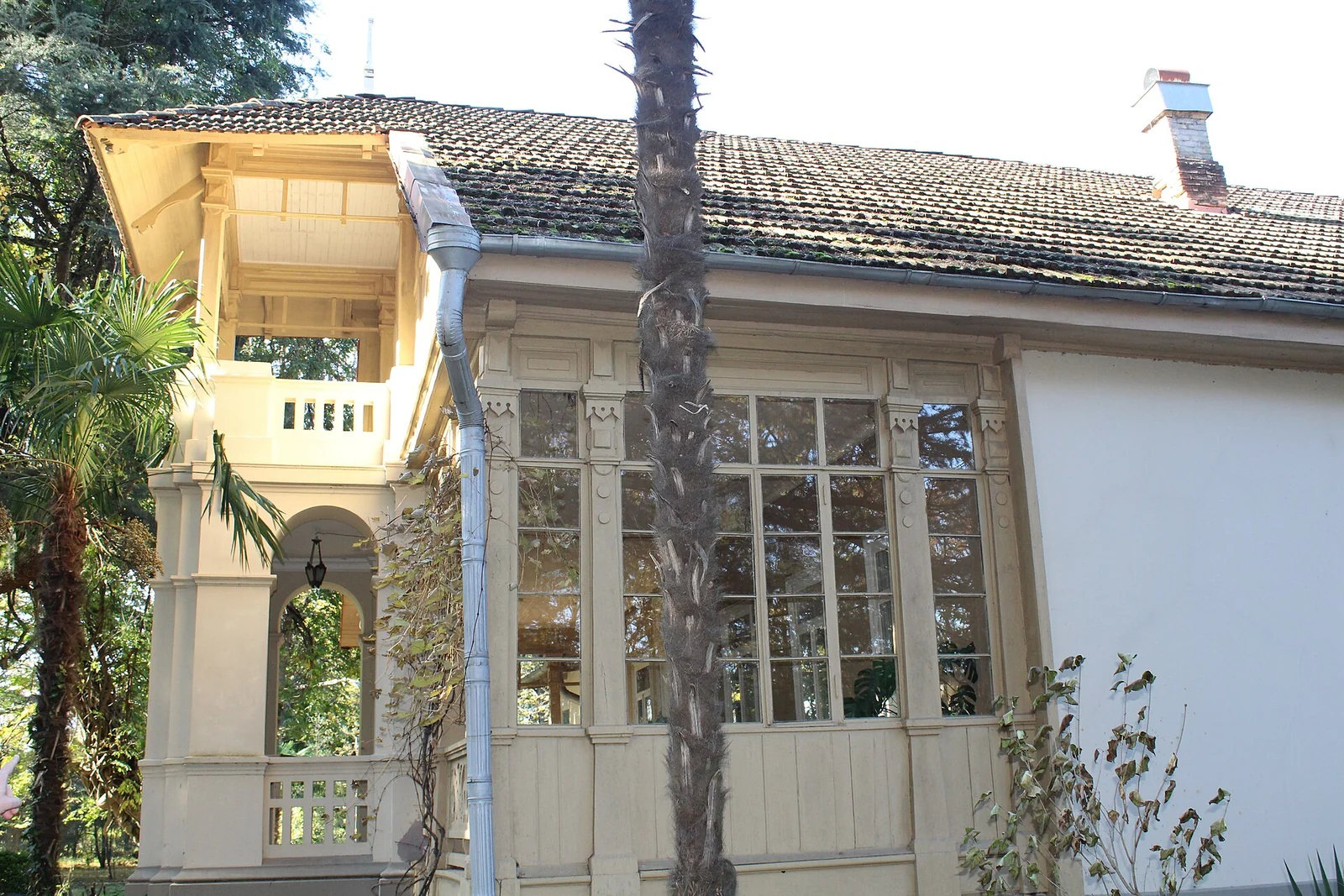
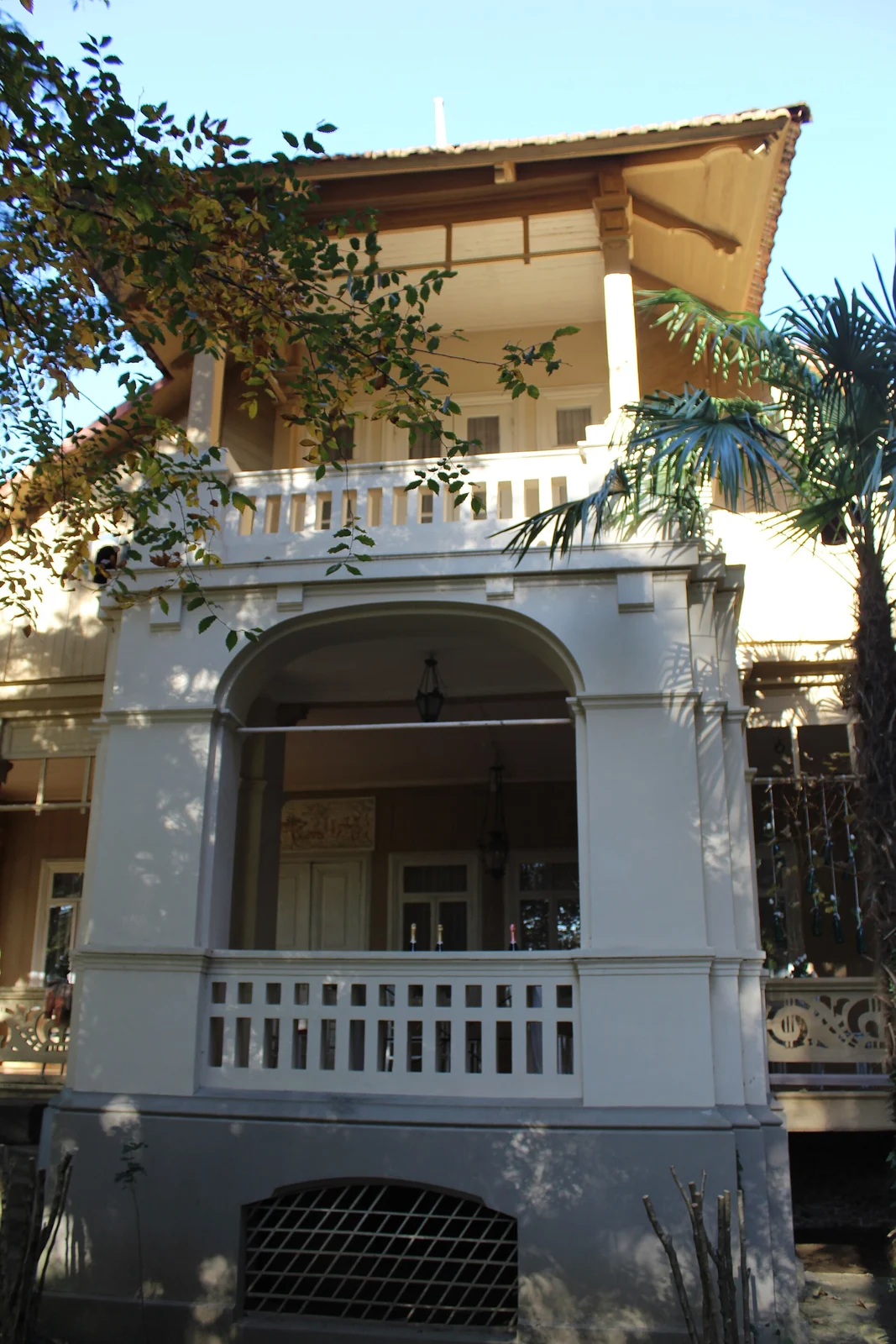
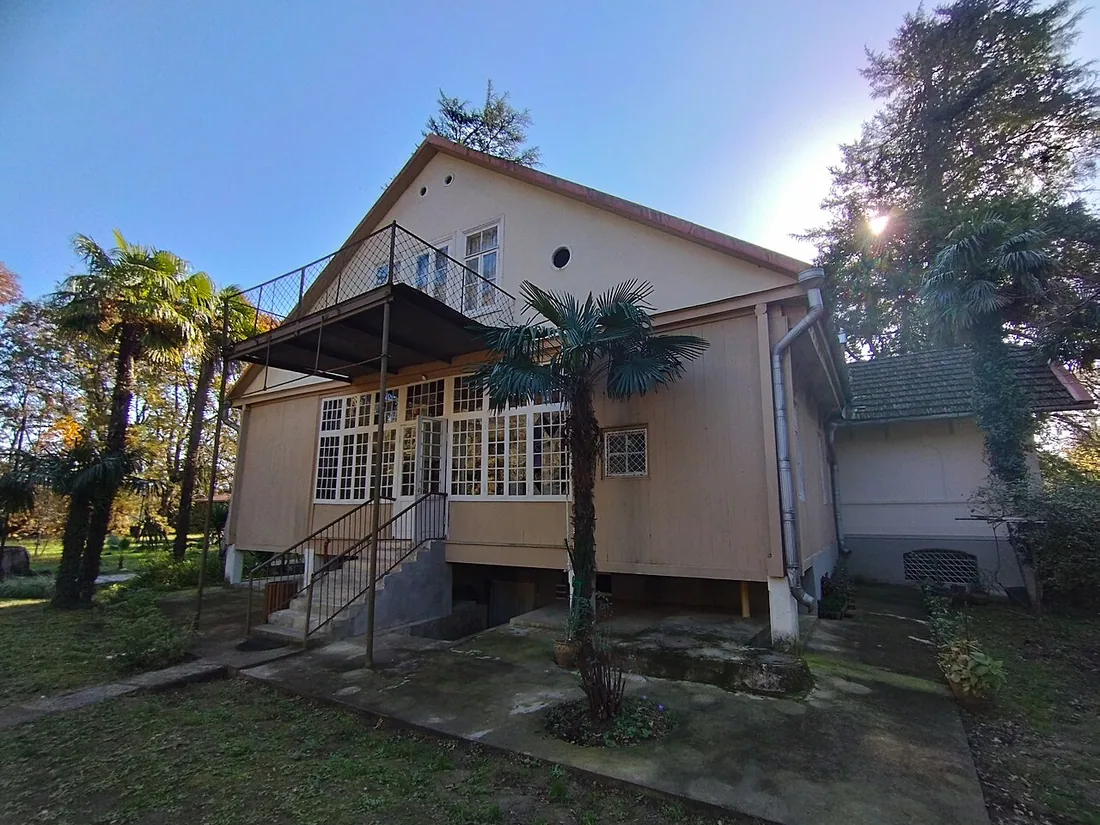
The family settled here in 1886, the year the house was built. It was remodelled three times and reached its final form in the 1910s to a design by a Swedish architect named Frid: a cream villa raised on a basement, with glazed verandas and a central tower opening into an arched loggia. The roof tiles came from Marseille, and in places they double as skylights. The museum says the concrete of the balconies and cellars, imported from Europe, was the first used for a house anywhere in the Russian Empire.
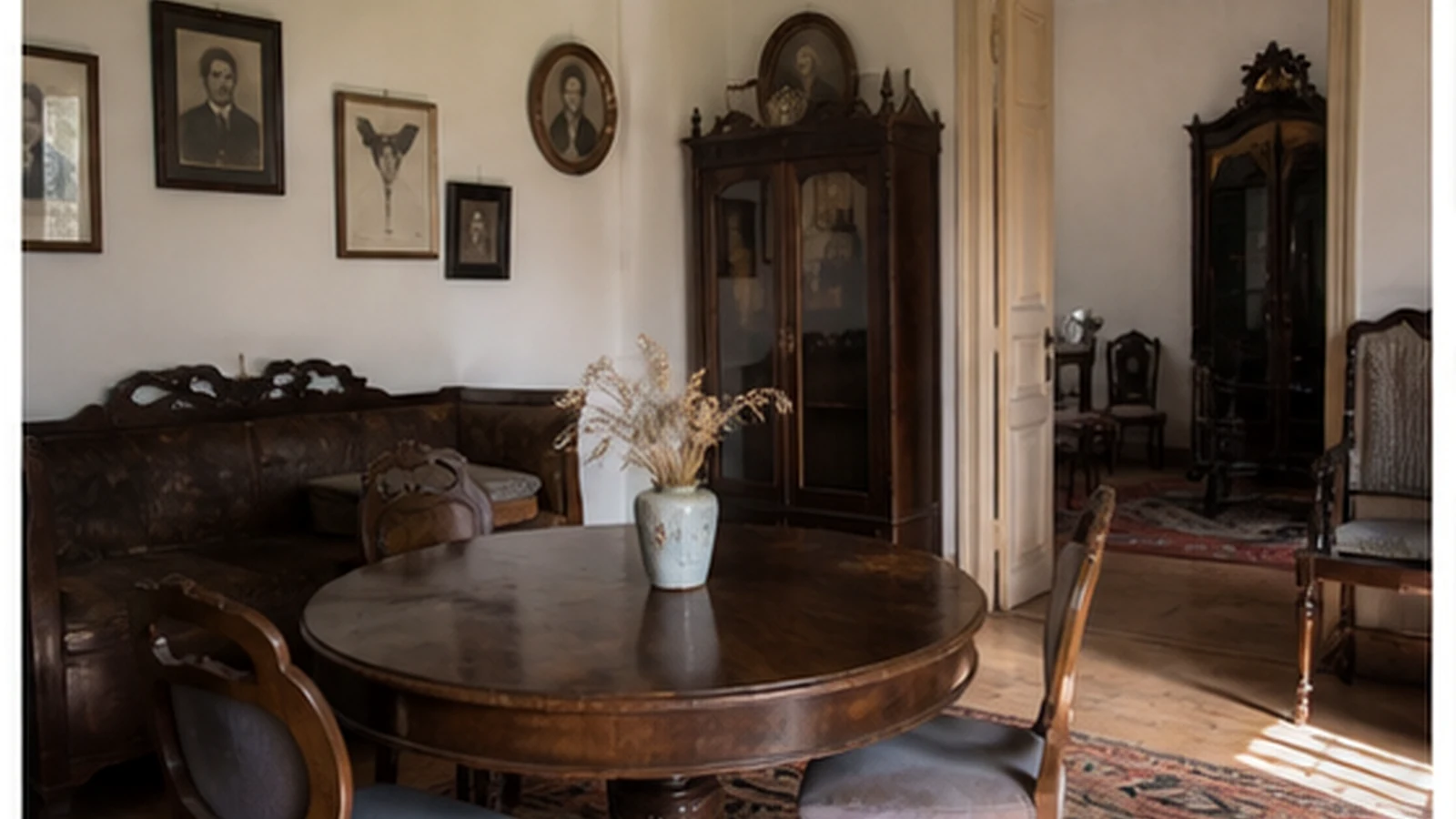
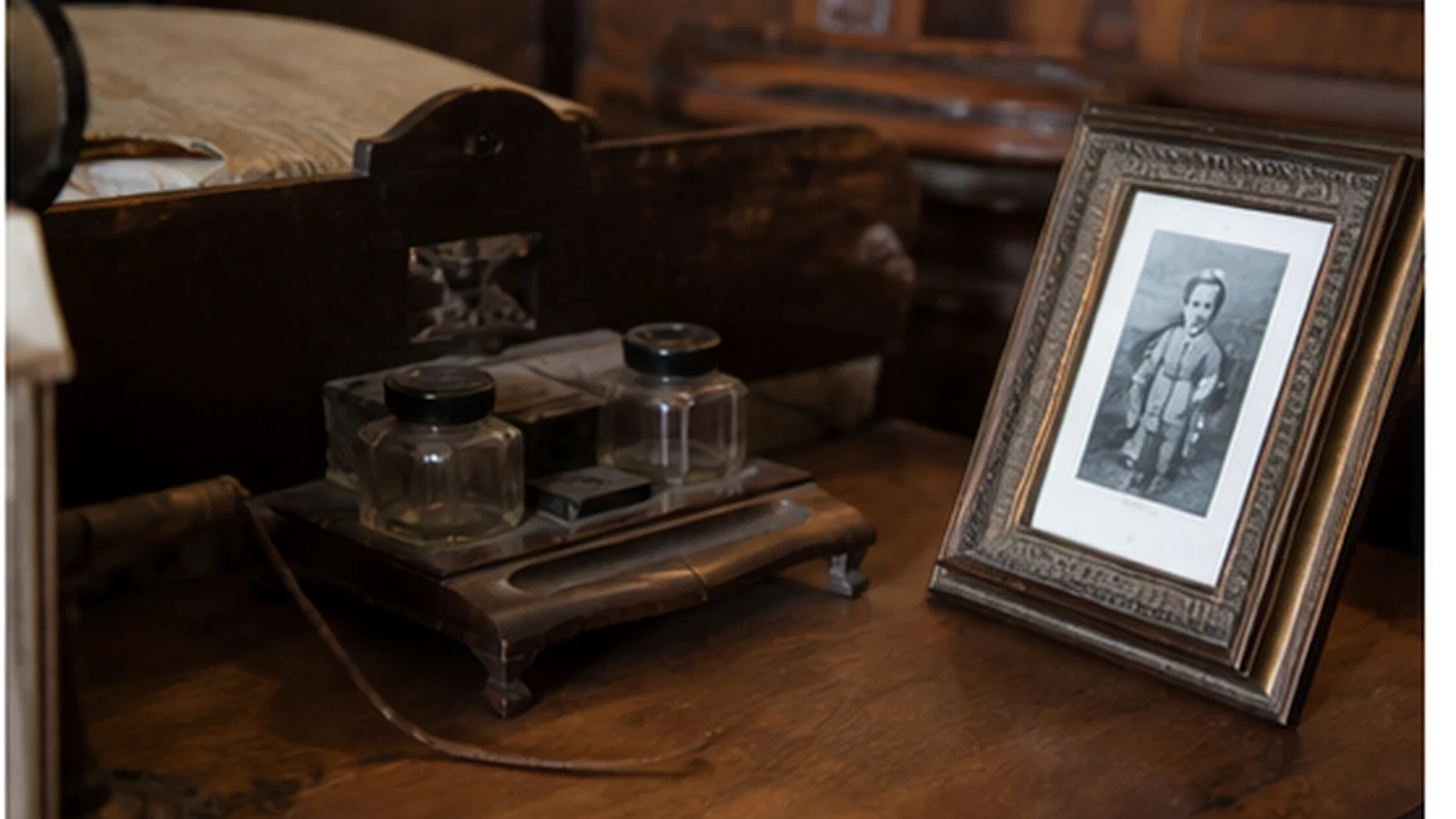
Inside are more than 1,340 principal exhibits: the library, family belongings, an early Kodak camera, and household and farm objects brought from Berlin, Dresden, London, Copenhagen, Cincinnati and Paris. In the garden grow a sequoia, cork oaks, a Himalayan cedar and French vines, all planted by Nikoladze. In 1923 he gave the estate to the village; the museum was decreed in 1947 and opened in 1951.
The sundial he had made in Paris is marked with the meridians of Jikhaishi — this village's own noon.
Gallery
Practical advice
Allow an hour, and more if you want to walk the garden. Ask whether a guide is free: the stories behind the objects say far more than the labels. Opening hours are short and not reliably published online, so aim to arrive by late morning, and treat the ticket price as something to check locally. The house is at 109 Nikoladze Street. It sits naturally in a day with Kutaisi or Vani, or as a break on the long drive between Tbilisi and the coast; there is little to buy in the village itself, so bring water.
How to get there from Tbilisi
From Tbilisi take the S1 (E60) west past Gori, Khashuri and Zestaponi, keeping on the main road past the Kutaisi turn-offs towards Samtredia. Between Kutaisi and Samtredia, near Akhalsopeli, turn north onto the Sh103 and follow it about six kilometres into Didi Jikhaishi — about 246–250 km and three and a half hours in all. The village lies on the lowland at around 40 metres, 20 km from Kutaisi and 12 km from Samtredia. Asphalt the whole way; an economy car is fine. Fuel is easy along the S1.
Click a marker for details. Coloured lines are ready-made road trips.
Nearby places
Vani Archaeological Museum
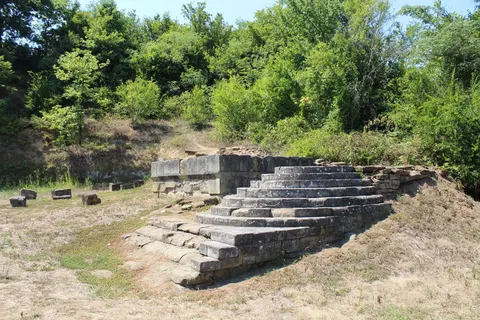
A Colchian city-sanctuary burned in the 1st century BC: hilltop walls and altars above a museum of gold diadems, Greek pottery and bronze.
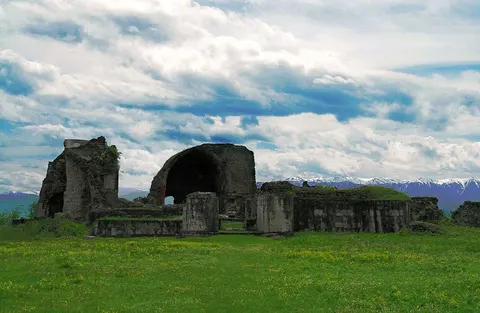
Geguti Palace
Brick ruins of George III's great palace on the Rioni plain south of Kutaisi, where in 1191 rebel nobles crowned a rival to Queen Tamar.
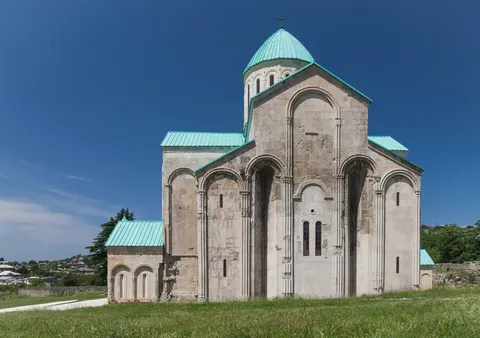
Bagrati Cathedral and central Kutaisi
Bagrat III's cathedral of 1003 on Ukimerioni Hill, blown up by an Ottoman garrison and controversially rebuilt, above the old heart of Kutaisi.
Best car for this trip
Guides
- Driving in Georgia: What the Distances Actually Cost You Georgia is a small country with slow roads. Here is what 267 measured drives from Tbilisi say about how long y
Pickup locations
Car Rental at Kutaisi Airport — 6 km (straight line)