
Church of the Theotokos, Vale
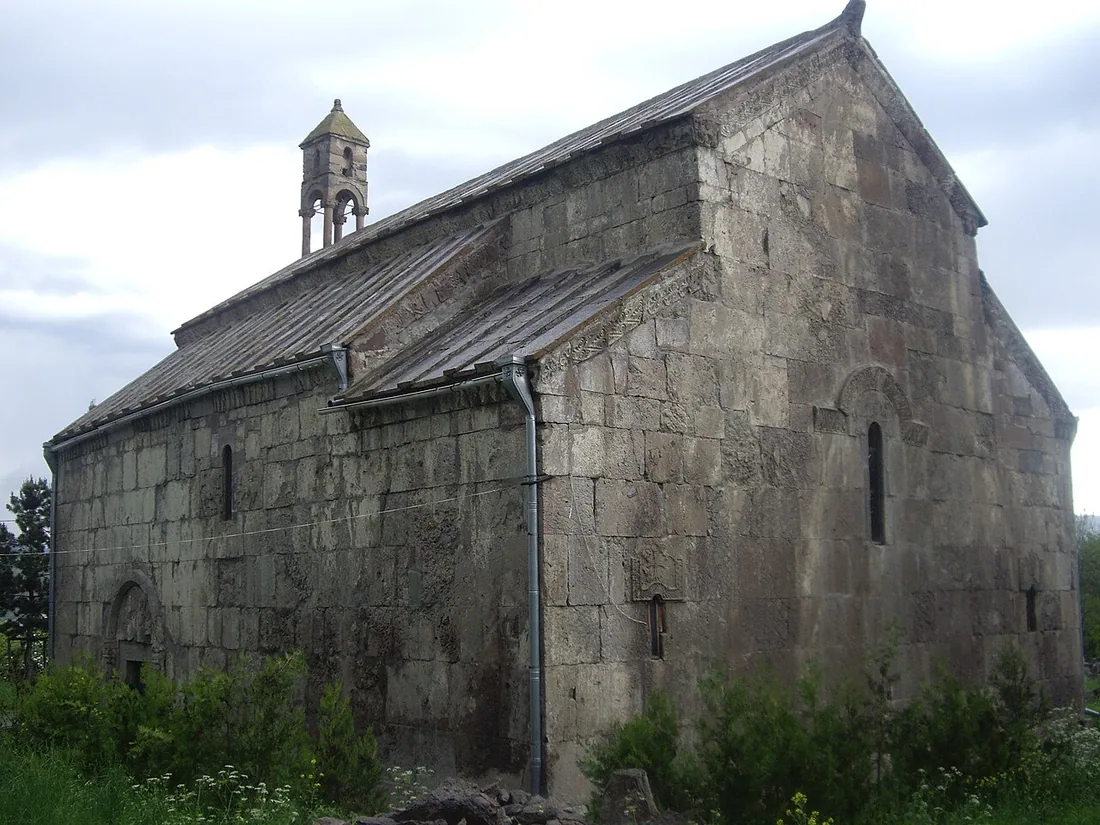
A 10th-century church remade as a basilica in the 16th, its walls carrying Georgian inscriptions in two scripts — the quiet core of a border town.
- Time needed
- 0.5 h
- From Tbilisi
- 218 km · 3:30
- Road
- Paved
- Car needed
- Economy class
- Season
- All year
- Entry
- free
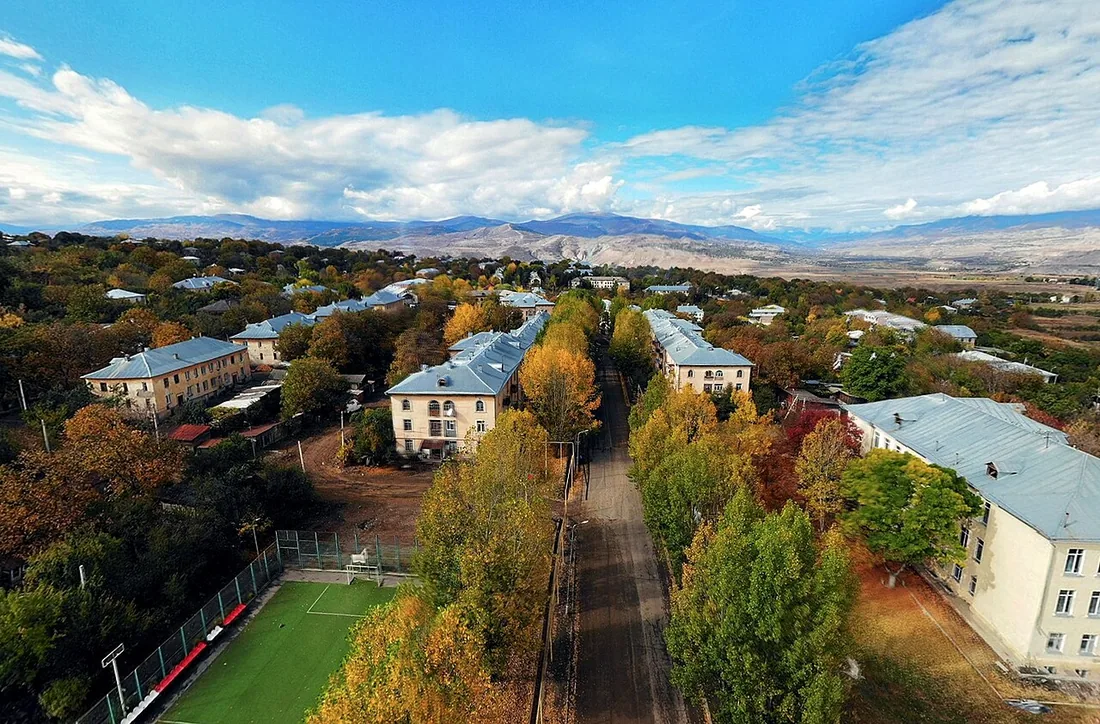
In Vale two churches honour the same Mother of God a short walk apart, and the older one has stood in this border valley for more than a thousand years.
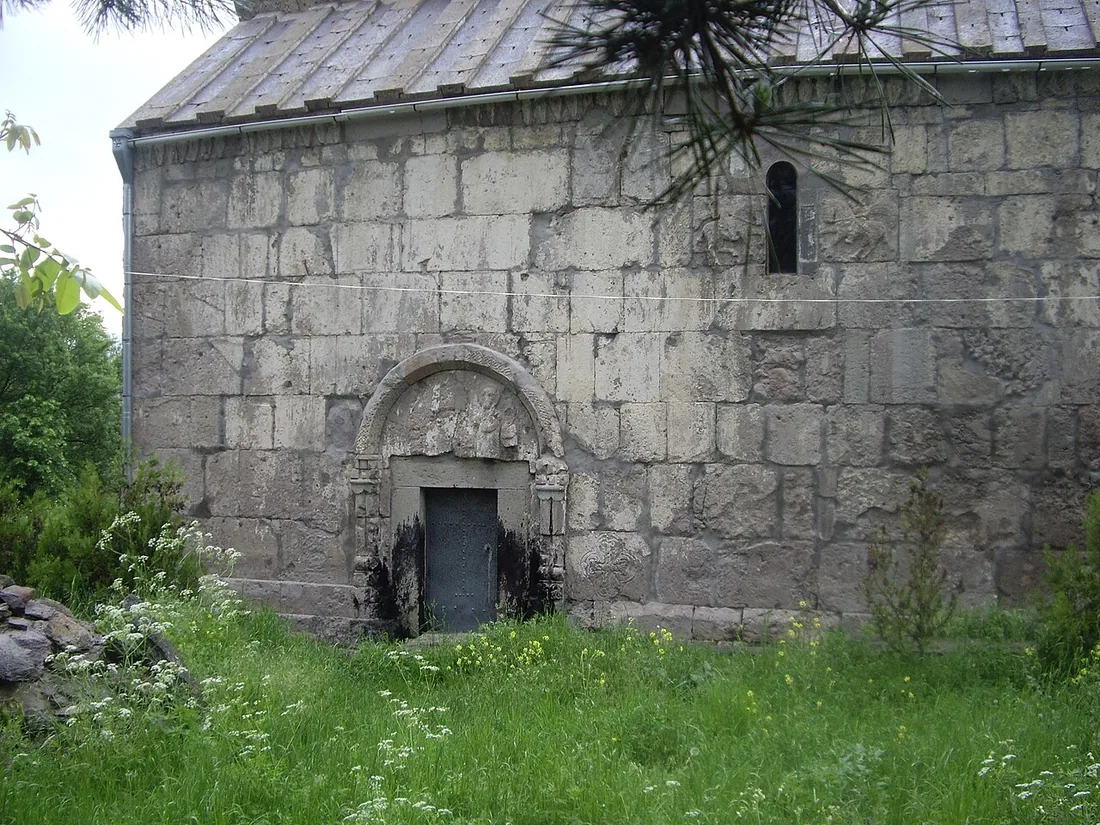
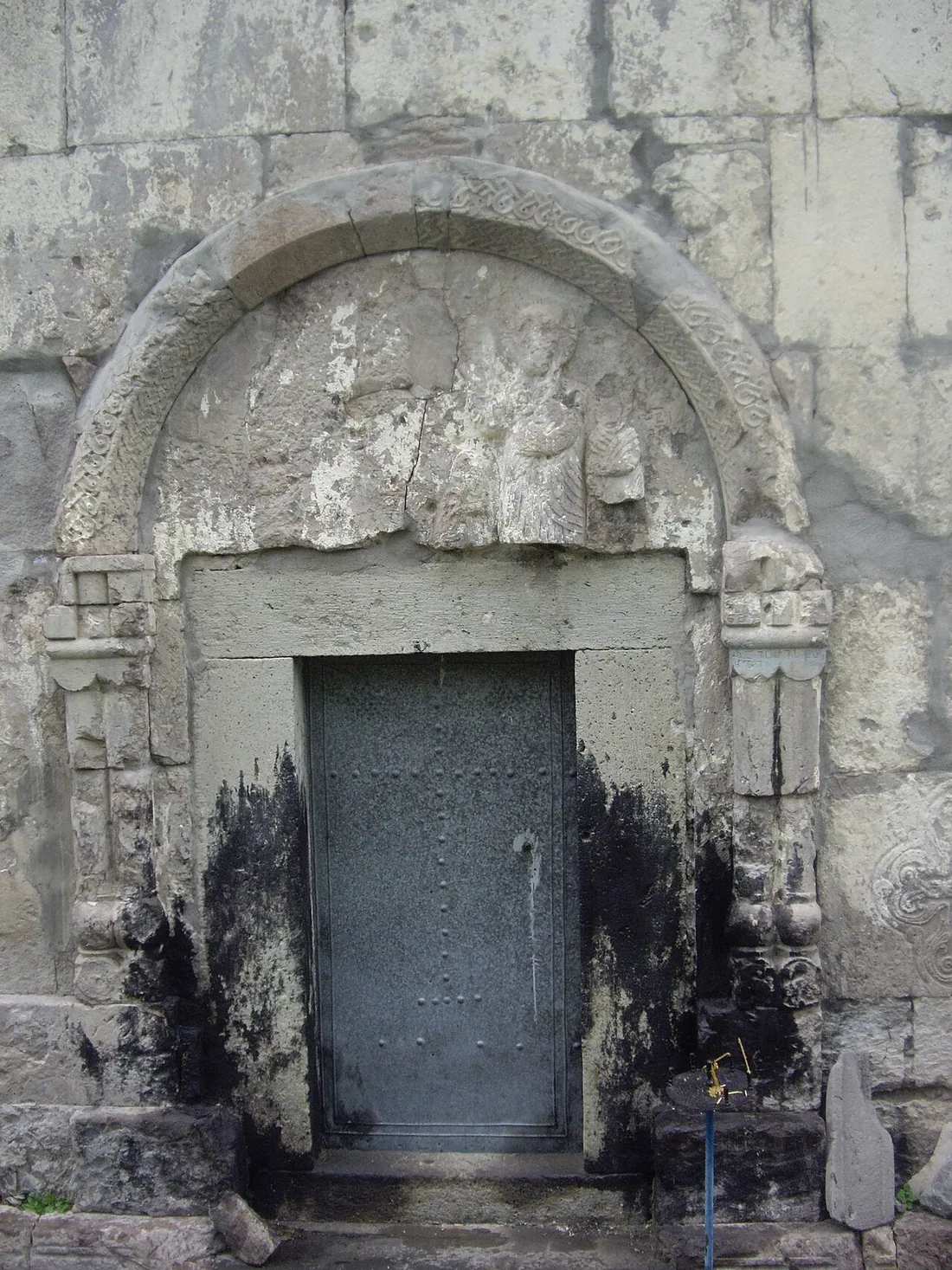
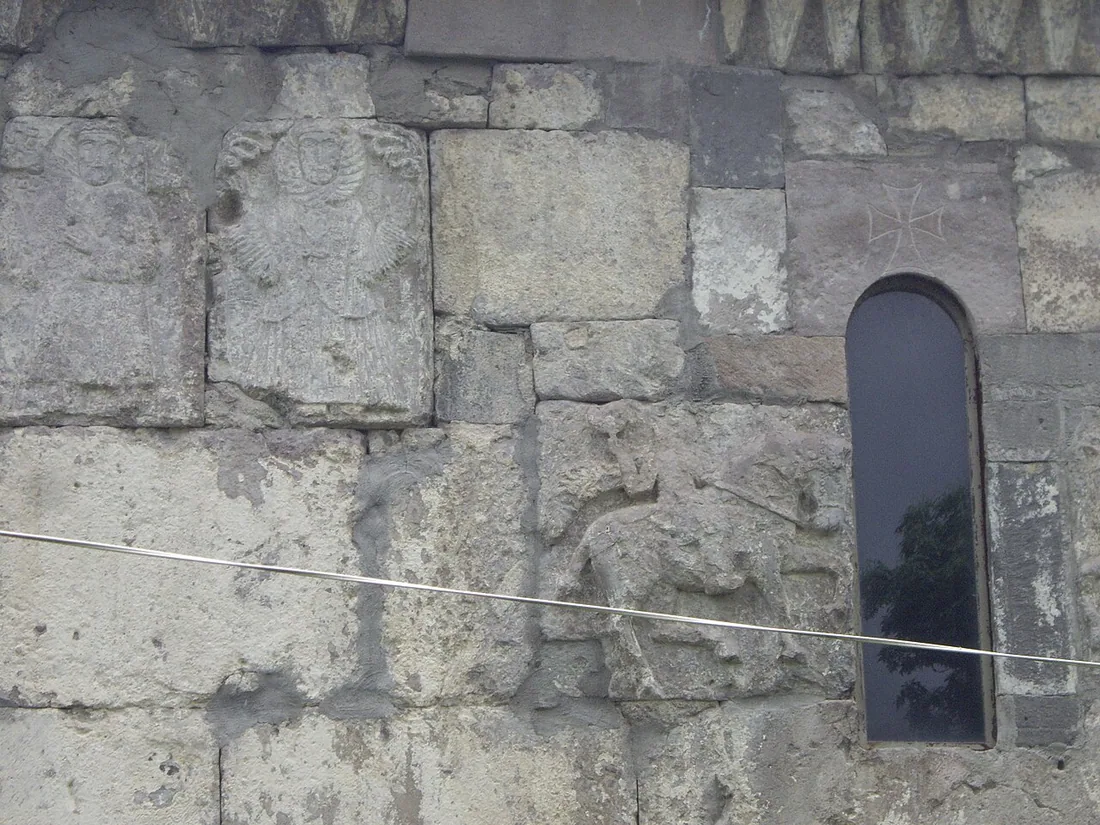
The Church of the Theotokos, in the western part of town, was founded in the last quarter of the 10th century and remodelled in the 16th as a three-nave basilica — the shape that still stands today. It is listed as a monument of national significance, and its walls keep inscriptions in two Georgian scripts, the old capital asomtavruli and the later mkhedruli: two alphabets, two eras' handwriting on a single building.
Don't expect grandeur. This is the church of a small former mining town, and its interest is quiet: the stonework, the letters, and the history pressing in around it. From the late 16th century until 1829 Samtskhe was Ottoman land. An Ottoman register of 1595 records Vale as the centre of a district with 59 Georgian households, and even keeps some of their names — Vardzela son of Ilarion, Revaza son of Datuna, Azaria the priest. They sowed wheat, barley, millet, chickpeas and lentils, tended vines, and kept bees and sheep.
In the 17th century a community of Catholic Georgians took root here; by 1757 Vale had 150 Catholics and a priest. Their Church of the Nativity of the Theotokos, built in 1862, stands close to the old church, and a mosque from the turn of the 20th century also survives in town. In Soviet times lignite mining turned the village into a town — it gained town status in 1962 — but the mines closed in the 1980s.
Vale's whole history fits into one short walk, provided you walk it slowly.
Gallery
Practical advice
Entry is free. You may find the door locked; if so, the walls and their inscriptions still repay an unhurried circuit outside. Dress as for any Orthodox church: shoulders and knees covered, a headscarf for women. Half an hour is enough — longer if you also look for the Catholic church nearby. Vale offers little beyond village shops, so eat and refuel in Akhaltsikhe, twelve kilometres back, and pair the stop with Rabati Castle or Sapara Monastery the same day.
How to get there from Tbilisi
From Tbilisi take the S1 (E60) west for about 120 km to the Khashuri junction, then the S8 south through the Borjomi gorge to Akhaltsikhe. The same S8 carries on 12 km south-west to Vale — 218 km and about 3 h 30 min in all, asphalt the whole way, though narrower and slower after Akhaltsikhe. Fuel up in Akhaltsikhe. Any economy car will do. The road continues beyond the town to the Turkish border crossing; you won't need it — the church stands in Vale's western part, a short walk from wherever you park.
Click a marker for details. Coloured lines are ready-made road trips.
Nearby places
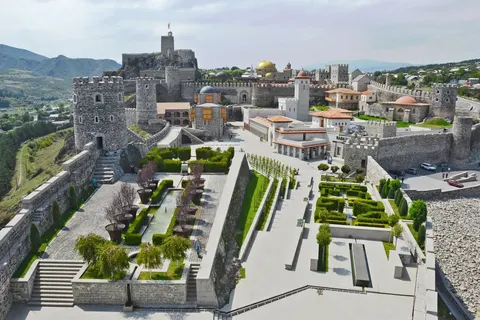
Rabati Castle (Akhaltsikhe)
Akhaltsikhe's walled hill, where a Jaqeli palace, an 18th-century mosque and an Orthodox church share one enclosure above the old town.
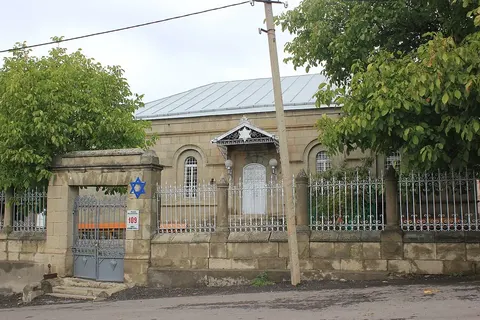
The Jewish quarter and synagogues of Akhaltsikhe
A synagogue of 1862 with a painted wooden interior, its empty younger neighbour and an old hillside cemetery in Akhaltsikhe's Rabati district.
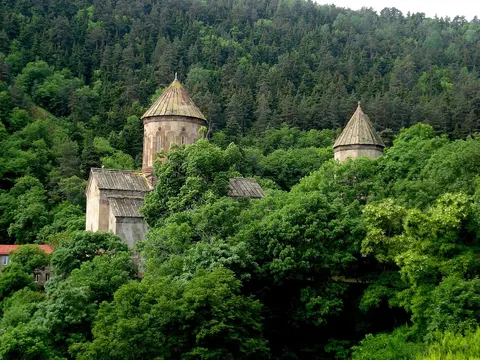
Sapara Monastery
The Jaqeli family's monastery at the head of a wooded valley above Akhaltsikhe, its walls painted with 14th-century portraits of Samtskhe's rulers.
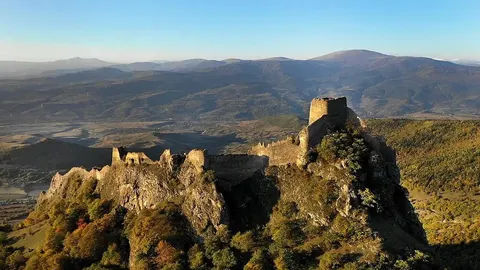
Okros Tsikhe (Golden Fortress)
The Jaqelis' 'golden fortress': ten-metre walls grown into a crag above the Kvabliani valley, where a princess held out in the Ottoman war of 1578.
Best car for this trip
Guides
- Driving in Georgia: What the Distances Actually Cost You Georgia is a small country with slow roads. Here is what 267 measured drives from Tbilisi say about how long y
Pickup locations
Car Rental at Kutaisi Airport — 70 km (straight line)
Booking and enquiries
The easiest way to reach these places is by car — you pick the route and the stops.