
Okros Tsikhe (Golden Fortress)
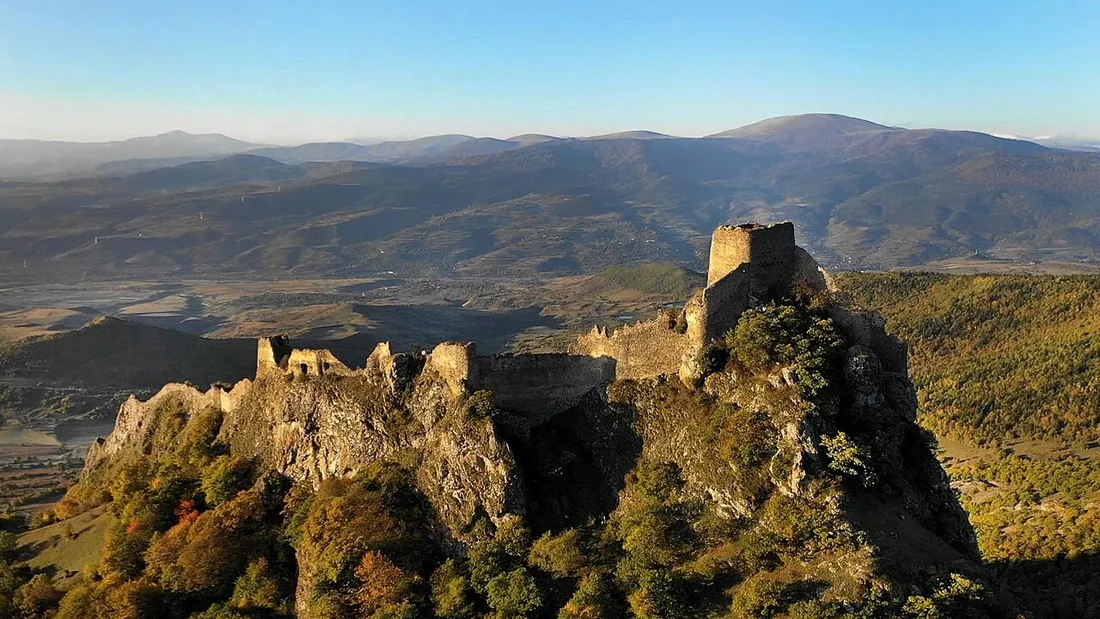
The Jaqelis' 'golden fortress': ten-metre walls grown into a crag above the Kvabliani valley, where a princess held out in the Ottoman war of 1578.
- Time needed
- 2 h
- From Tbilisi
- 236 km · 4:00
- Road
- Mostly paved
- Car needed
- Economy class
- Season
- May–October
- Entry
- free
Okros Tsikhe means 'the golden fortress' — and when the Ottomans finally took it, they kept the name: Altunkal'a says the same thing in Turkish.
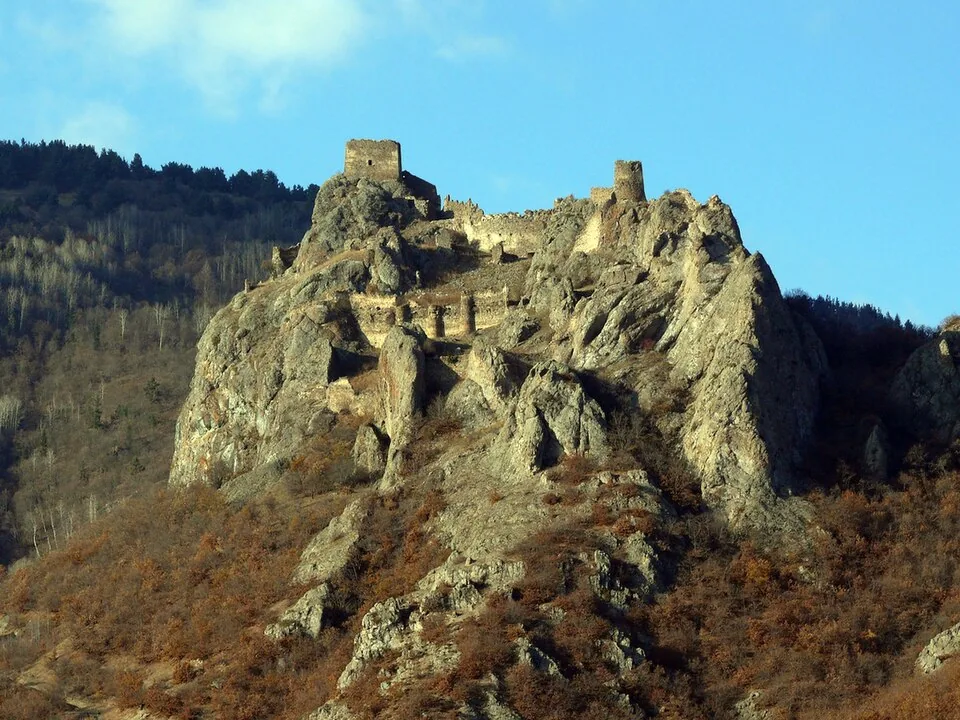
Built in the late 13th or early 14th century, it was one of the principal strongholds of the Jaqeli dynasty, the princes of Samtskhe. Its builders chose a crag north of the village of Shoka that commands the Kvabliani valley, and left attackers no easy way in: walls of massive, roughly dressed blocks stand up to ten metres high, the citadel crowns the rocky ridge, and ramparts braced by large towers pour steeply down both the northern and southern slopes. It is counted among the largest medieval fortifications in Georgia.
Walk its levels and you notice how hard it is to say where the builders stopped and the mountain began. The plan follows every twist of the rock, and masonry and cliff merge into a single wall.
In 1578, during Lala Mustafa Pasha's campaign in the Caucasus, the fortress became a bulwark of Samtskhe. Princess Dedisimedi entrenched herself here before negotiating peace with the Ottoman commander. After the final Ottoman conquest of the province, Altunkal'a became the seat of its own district, a liva, and remained a working fortress until the end of the 18th century.
Today it is a monument of national significance with no ticket office, no signposts and no railings — only stone, wind and the valley opening towards Adigeni.
The gold was only ever in the name. What the Jaqelis prized was height, and that, as you will notice on the way up, has not worn away at all.
Gallery
Practical advice
Free, unmanaged and unsigned. Leave the car where the lane near Shoka runs out; the way up the rock is an unmarked, steep path over loose stone with no railings, and in places you will need your hands. Wear boots with grip and turn back in rain, fog or snow, since wet rock here is treacherous. Allow at least two hours for the climb and a slow circuit of the ramparts. Bring water and food: the village has nothing for visitors. Keep children close on the walls. Zarzma Monastery (about 25 km by road) and Abastumani Observatory (about 30 km) make easy companions.
How to get there from Tbilisi
From Tbilisi take the S1 (E60) west to the Khashuri junction, about 120 km, then the S8 through Borjomi to Akhaltsikhe. There pick up the Sh1 west, the road to Adigeni and the Goderdzi pass, for about 15 km, then turn north for Kvemo Enteli; a narrow village road climbs some 5 km more towards the hamlet of Shoka beneath the fortress. About 236 km and 4 h in all. Asphalt reaches the village area; the last lane is narrow and not always smooth, but an economy car manages it with care. Refuel in Akhaltsikhe.
Click a marker for details. Coloured lines are ready-made road trips.
Nearby places
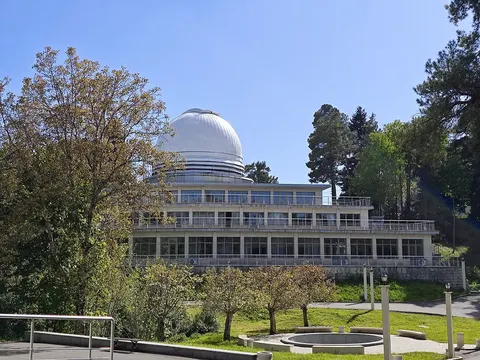
Abastumani Astrophysical Observatory
White domes in the pines of Mount Kanobili, where Georgian astronomy began in 1932, above the faded imperial spa of Abastumani.
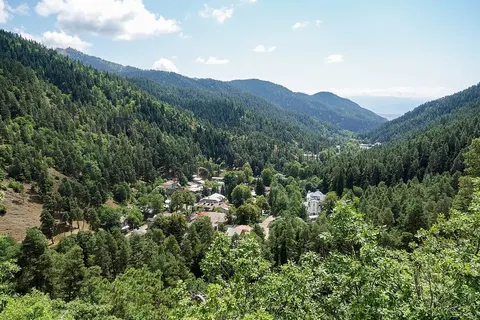
Abastumani Resort
An old imperial-era spa in a pine valley at 1,340 m: hot springs, a grand duke's legacy and a copy of Zarzma painted by Mikhail Nesterov.
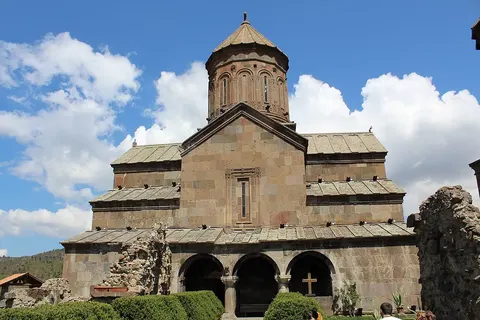
Zarzma Monastery
A 14th-century monastery in the forested Kvabliani valley west of Akhaltsikhe, with portraits of the Jaqeli princes and one of Georgia's largest bell towers.
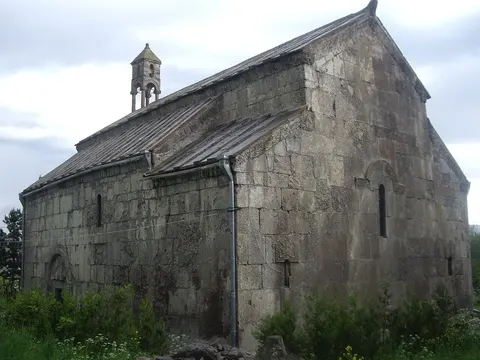
Church of the Theotokos, Vale
A 10th-century church remade as a basilica in the 16th, its walls carrying Georgian inscriptions in two scripts — the quiet core of a border town.
Best car for this trip
Mostly paved
Guides
- Winter Driving in Georgia: What Closes, What Opens, Which Car Of the 267 places we map, 161 are in season in winter and 52 are flagged as not reachable year-round. The pass
- The Best Time to Visit Georgia, Counted Month by Month Georgia does not have one season. It has two countries: a 60% country from November to April and a 99% country
Pickup locations
Car Rental at Kutaisi Airport — 57 km (straight line)
Booking and enquiries
The easiest way to reach these places is by car — you pick the route and the stops.