
Ujarma Fortress
The ridge-top fortress-town above the Iori where, the chronicle says, Vakhtang Gorgasali died of his wounds — 45 km from Tbilisi on the Gombori road.
- Time needed
- 1 h
- From Tbilisi
- 45 km · 0:55
- Road
- Paved
- Car needed
- Economy class
- Season
- All year
- Entry
- free
Before Tbilisi became Georgia's capital, a king held court on this ridge above the Iori — and, the chronicle says, came back here to die.
The chronicler Leonti Mroveli credits King Aspagur (Aspacures I) with laying Ujarma's first stones at the turn of the 3rd and 4th centuries. In the 5th century Vakhtang Gorgasali and his son Dachi gave it a citadel with strong towers, palaces and churches. The Life of Vakhtang tells how the king, fighting an invading Persian army, was shot through a gap in his armour by a renegade slave, carried to his castle at Ujarma, and died here; he was buried at Mtskheta.
Arabs took the town in 914, and in the 10th century Abul-Kasim wrecked the upper fortress. George III (1156–1184) rebuilt it and kept his treasury here. Then came the Mongols, the break-up of the kingdom at the end of the 15th century, and the slow shrinking of a city into a village.
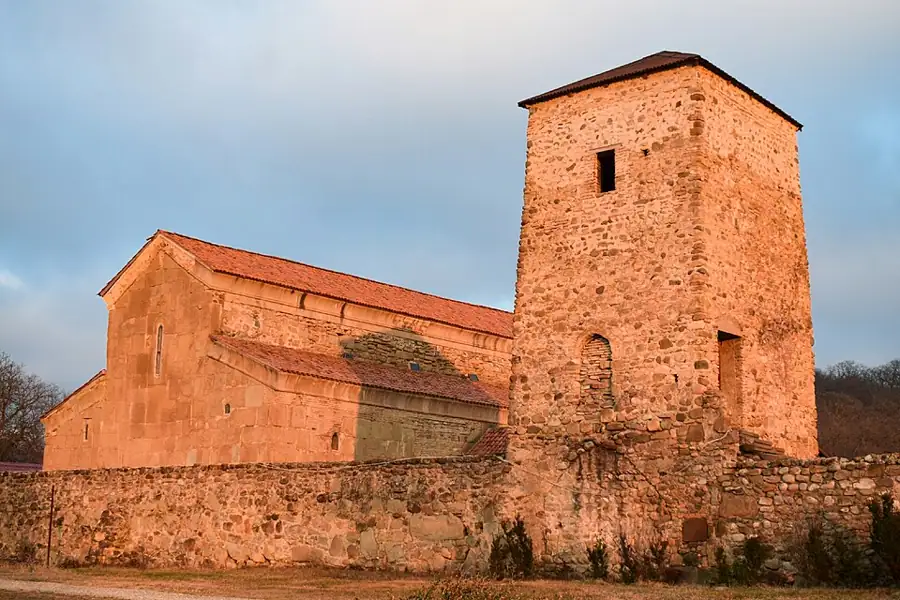
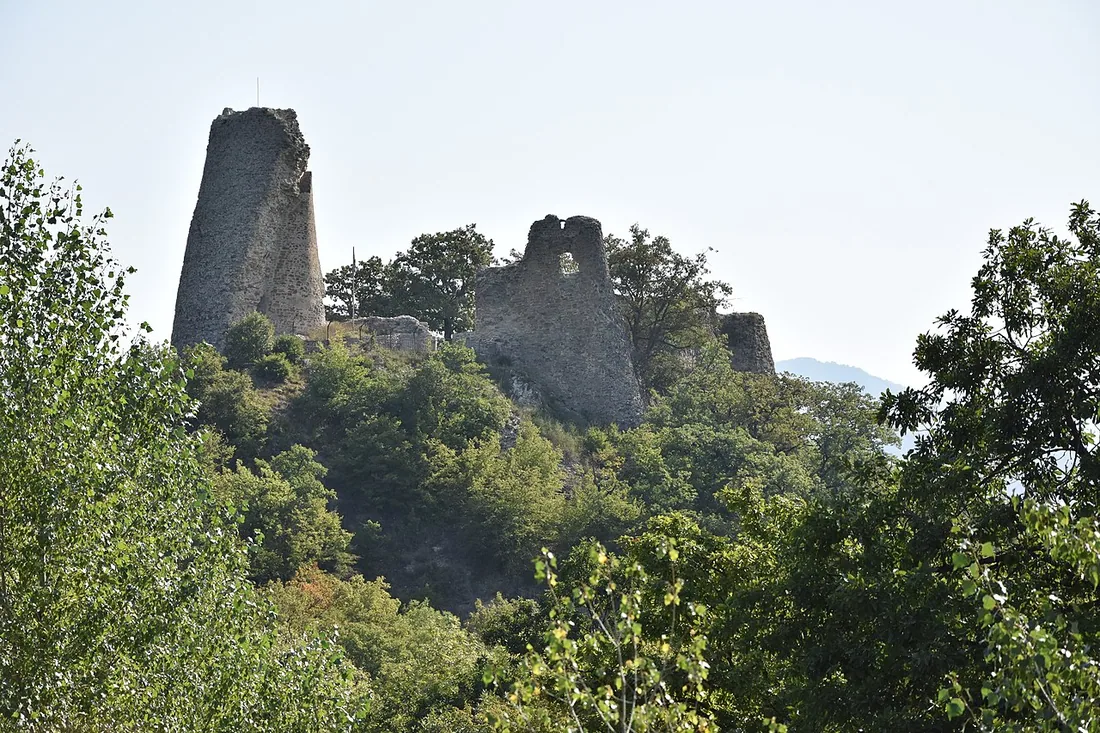
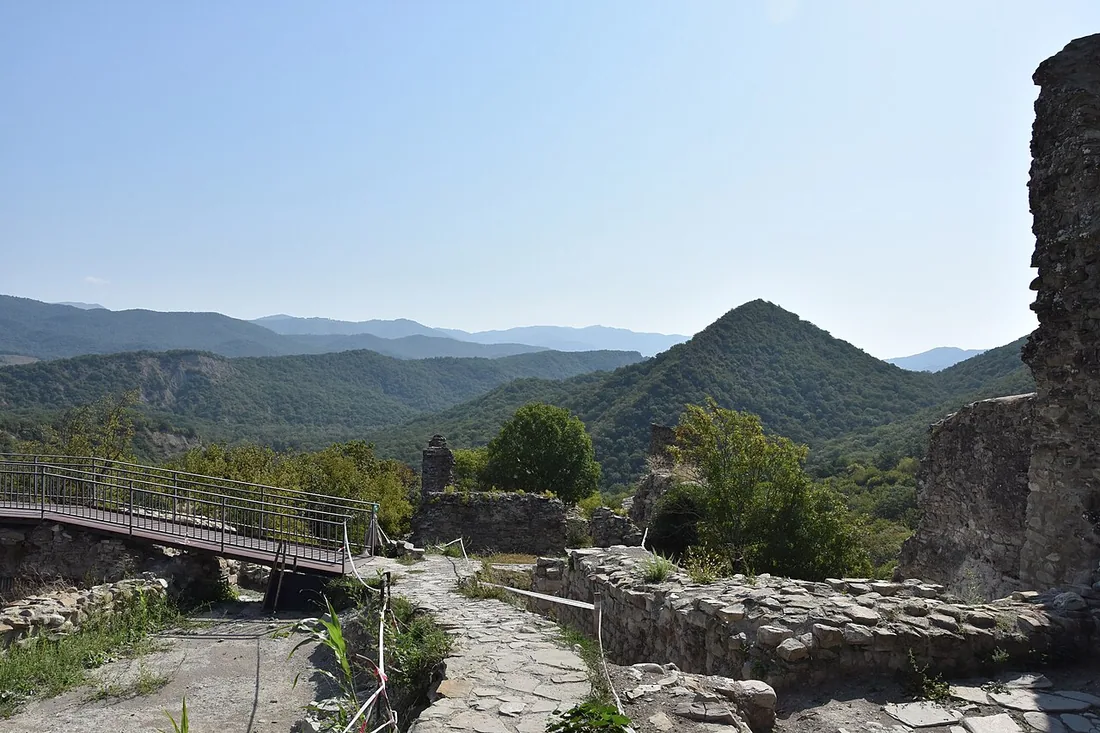
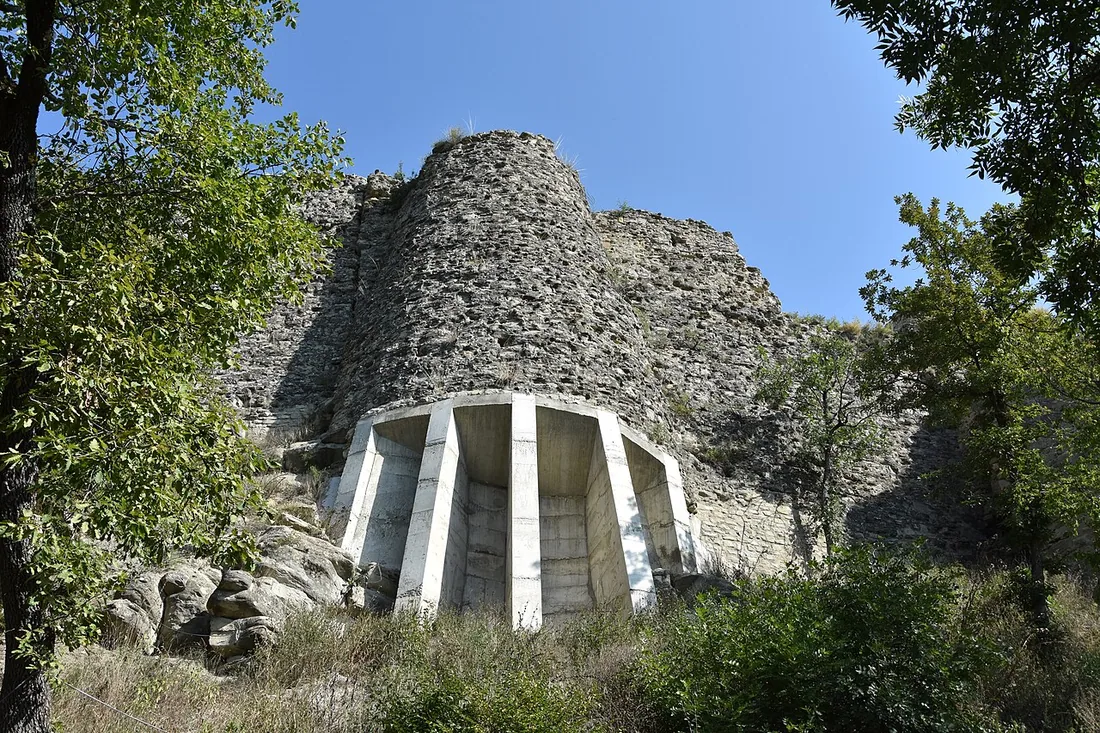
Climb to the citadel. A two-storey palace once filled its eastern corner, and the main gate faced west. The curtain wall ran from the north down the rocky slope to the river, with nine towers at even intervals whose upper floors housed the garrison. Inside stands the two-storey Jvarpatiosani church: the lower level older, the tall single-nave church above added in the 10th–11th centuries, lit from east and west. Down by the Iori, the church of Kviratskhoveli is built of sandstone and brick under a diamond-patterned cornice.
Excavators have found glass and bronze bracelets, rings and buttons, wine qvevri and a bread oven — a royal court, but also a kitchen.
The road below still has no choice but to pass beneath the walls.
Gallery
Practical advice
An hour is enough. The path up to the citadel is loose gravel and steep in places — about ten minutes in proper shoes, not sandals. Parapets along the walls are low or missing, so keep children close. There is almost no shade and no water on site: carry your own, and in July and August come early or late in the day, when the stone has cooled. Entry is free and there is no ticket office. Spring is the kindest season, with green grass and poppies between the stones; after rain or snow the path turns slippery.
How to get there from Tbilisi
Leave Tbilisi on the S5 Kakheti highway and, about 20 km out near Vaziani, branch onto the Sh38 towards Gombori and Telavi. About 4 km north of Ujarma village the walls appear on the ridge beside the road. It is roughly 45 km and 55 minutes from the city centre, asphalt all the way, and an economy car is fine in any season. Fill up before you leave Tbilisi, as the Gombori road is a quiet one. Ujarma pairs naturally with the Gombori pass beyond it: the two Shuamta monasteries lie about 45 km further on, and Telavi a little beyond them.
Click a marker for details. Coloured lines are ready-made road trips.
Nearby places
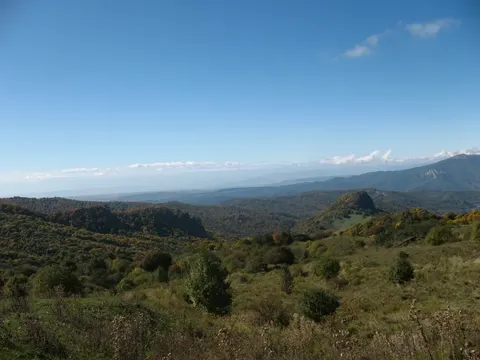
Gombori Pass
A 1,620-metre crossing on the Sh38 where Outer Kakheti ends and the road tips down towards the Alazani valley and the wall of the Caucasus.
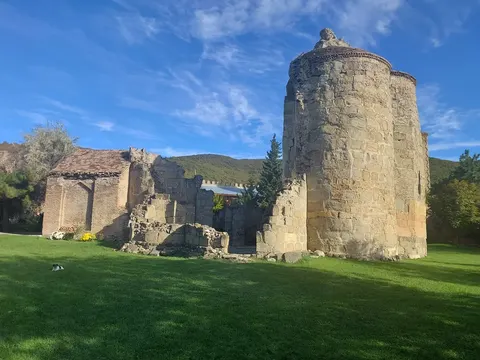
Ninotsminda Cathedral
A 6th-century cathedral older than Jvari, felled by earthquakes, now kept by nuns inside a fortified wall on the western edge of Sagarejo.
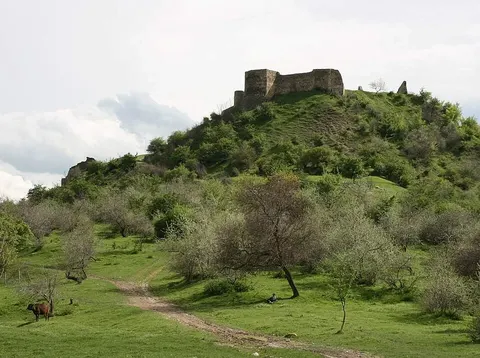
Manavi Fortress
A ruined royal stronghold on the summit above the wine village of Manavi, with three small churches inside a citadel where a Kakhetian king kept court.
Best car for this trip
Guides
- Driving in Georgia: What the Distances Actually Cost You Georgia is a small country with slow roads. Here is what 267 measured drives from Tbilisi say about how long y
Pickup locations
Car Rental at Tbilisi Airport — 23 km (straight line)