
Ninotsminda Cathedral
A 6th-century cathedral older than Jvari, felled by earthquakes, now kept by nuns inside a fortified wall on the western edge of Sagarejo.
- Time needed
- 1 h
- From Tbilisi
- 46 km · 0:50
- Road
- Paved
- Car needed
- Economy class
- Season
- All year
- Entry
- free
Before Jvari rose above Mtskheta, its idea was already standing here, on the western edge of Sagarejo.
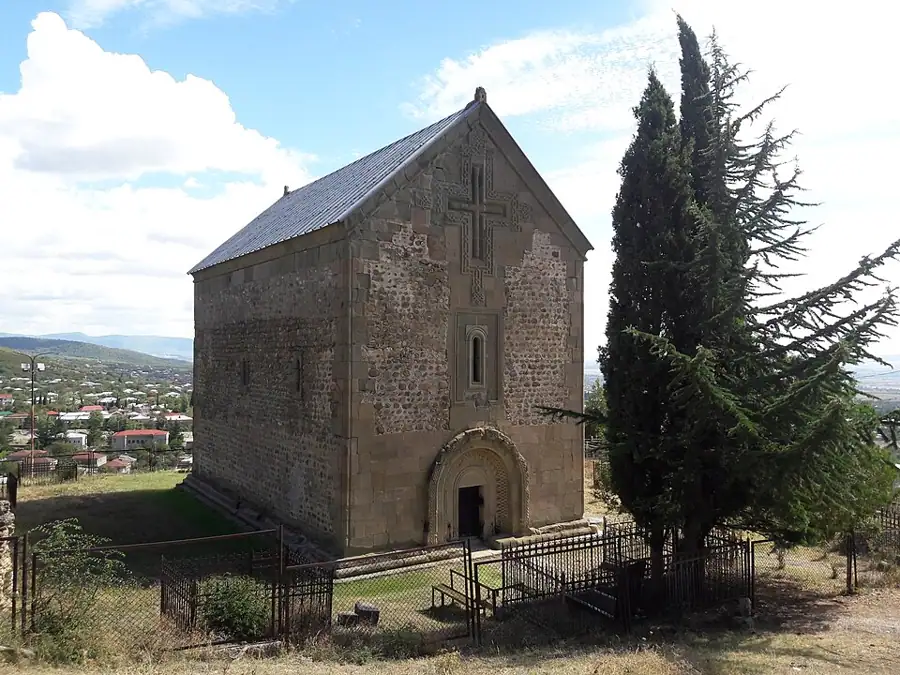
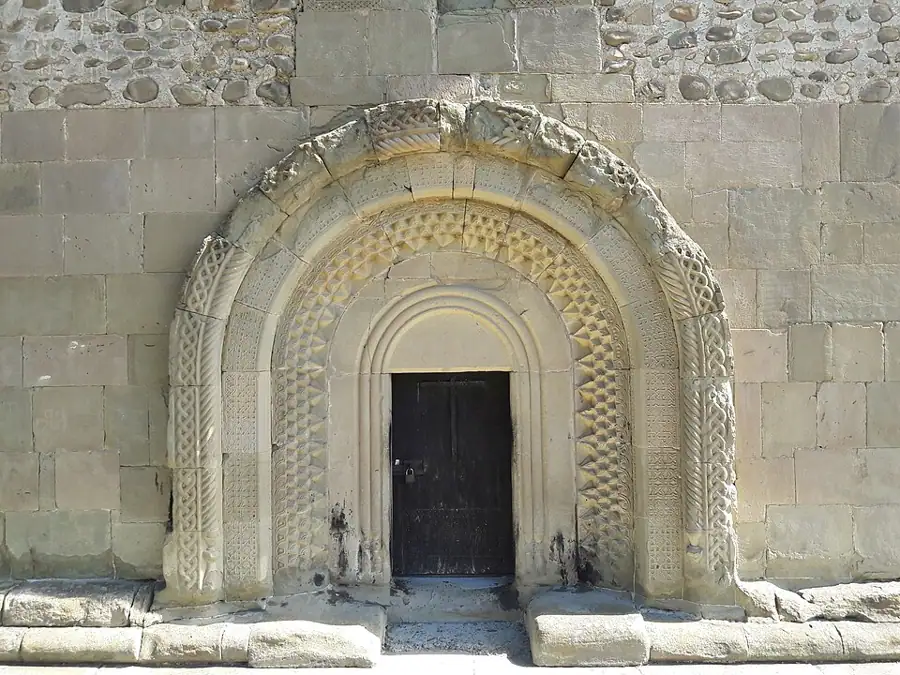
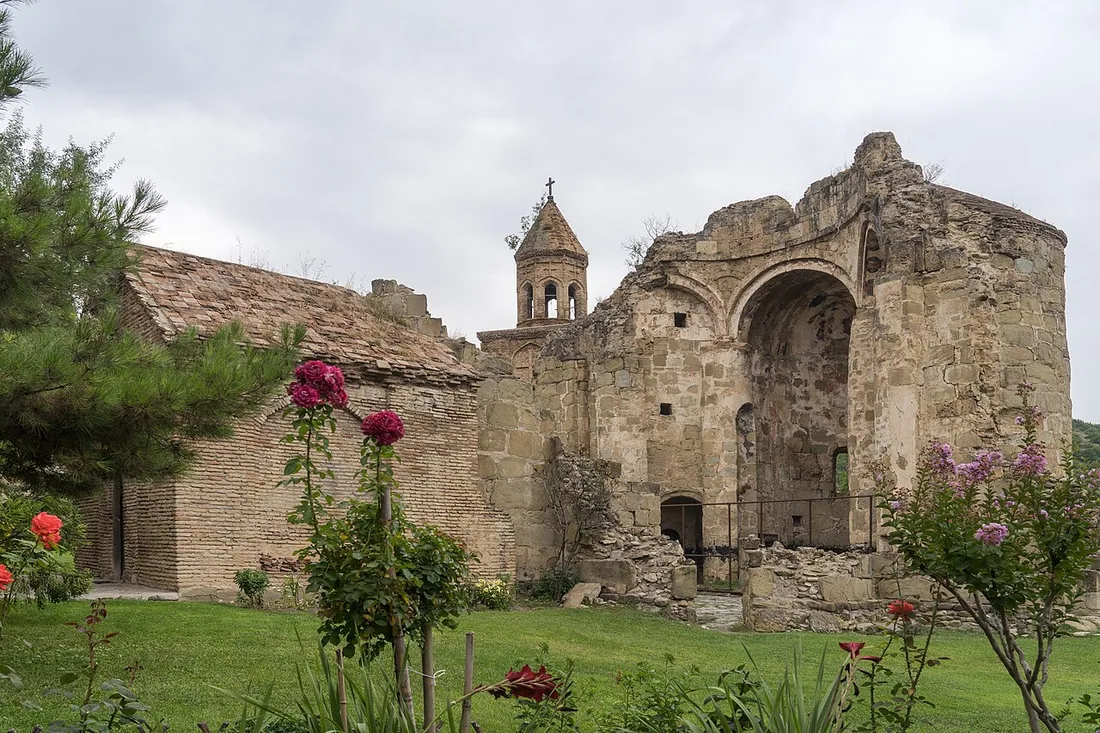
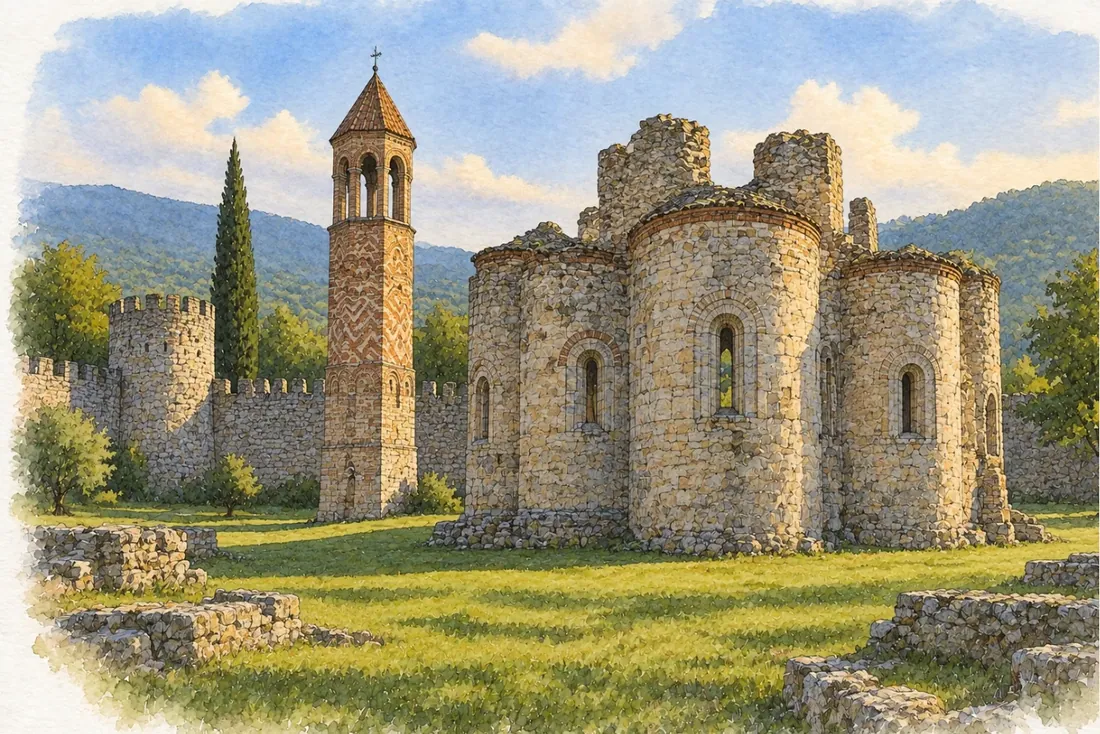
Ninotsminda, whose name honours Saint Nino, was built around 575 and is one of the first great experiments of Georgian church building: a centralised plan, an octagonal core ringed by corner niches, the four-apsed scheme that Jvari would make famous a generation later. Masons repaired it in the 10th and 11th centuries, and again in 1671 and 1774. Then the earth had its say. Earthquakes in 1824 and 1848 brought the church down, and no one rebuilt it.
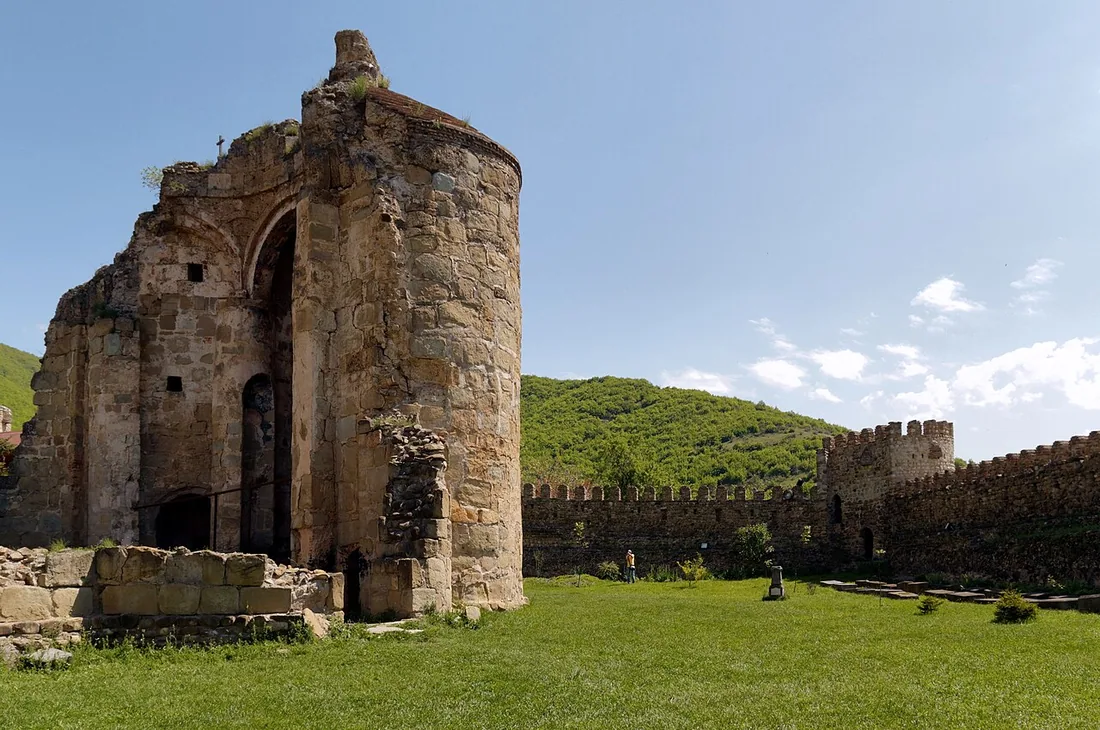
Be ready for how little is left. Only the eastern apse still stands to its full height, a curved wall with open sky where the vault should be, and a stretch of the western wall faces it across the grass. Between them, look at your feet: the outline of the old foundations still traces the octagon that once carried the dome.
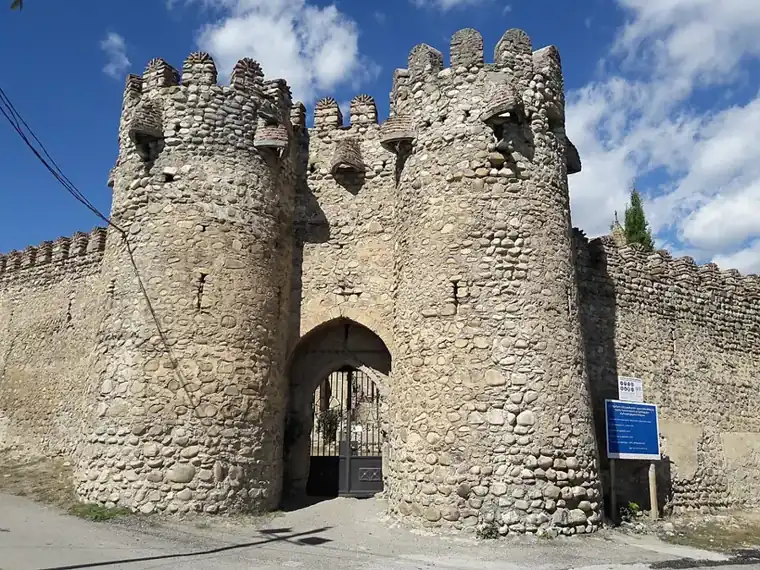
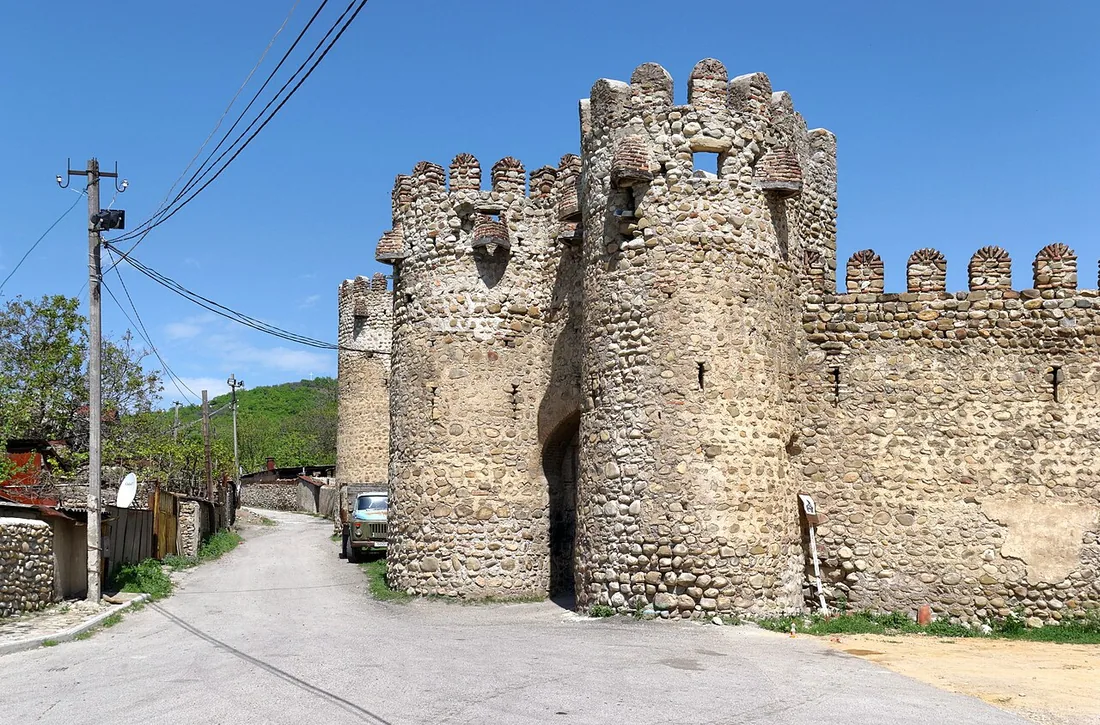
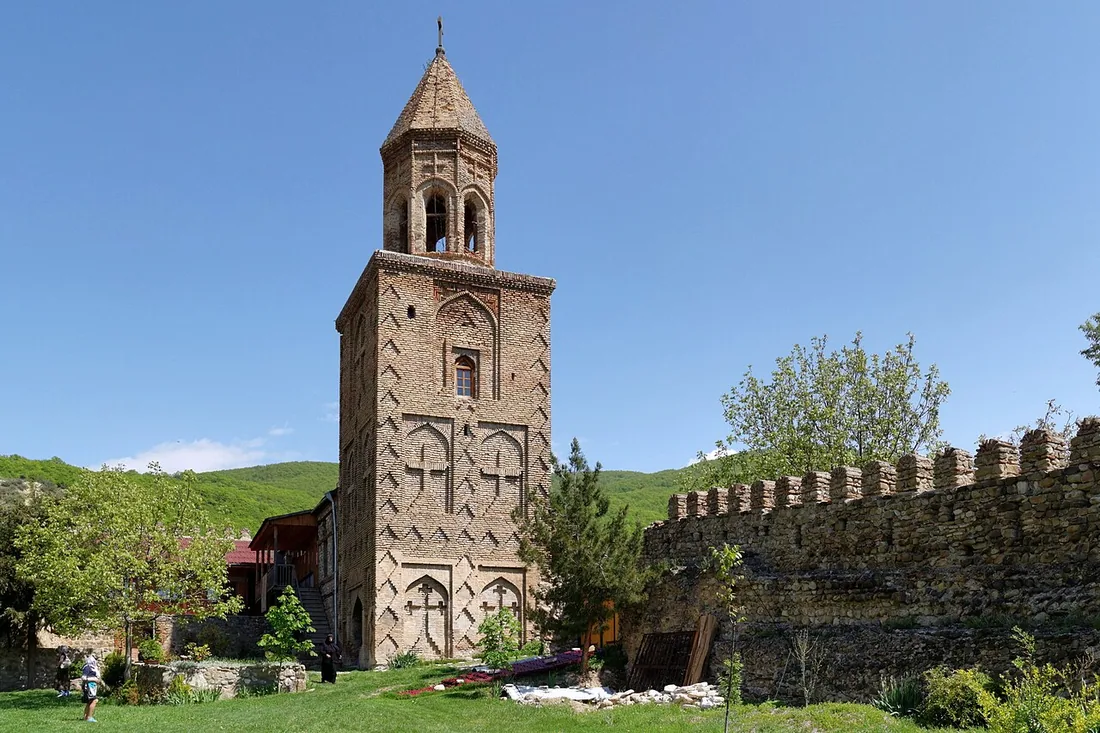
The rest of the enclosure belongs to a later, harder age. The great brick bell tower went up in the reign of King Levan of Kakheti (1520–1574), and its lower three storeys were a house, each floor with its own fireplace. Its bricks are staggered into geometric patterns and its doorway ends in a pointed arch: the taste of Safavid Persia, the empire whose shadow lay across sixteenth-century Kakheti. Around everything runs a 16th–17th-century fortified wall with corner towers and battlements, and above the gate, beehive-shaped machicolations still wait for attackers.
Today Ninotsminda is a convent. Nuns keep the yard, restoration is under way, and the ruin belongs once more to a working life.
Stand in the apse at the end of the day. A sixth-century wall, open to the weather, still does what it was built to do: it gathers the light.
Gallery
Practical advice
An hour is enough for the apse, the bell tower and a slow circuit of the walls. This is a working convent, so dress as for any Georgian monastery: shoulders and knees covered, and women will be most comfortable in a skirt and headscarf. Keep your voice low and ask before photographing the nuns. Entry is free. Among the ruins the ground is uneven and littered with stone, so wear closed shoes, and expect parts of the site to be fenced off while restoration continues. Cafés, shops and toilets are in Sagarejo, three kilometres east. Come late in the afternoon, when the low sun reaches into the apse.
How to get there from Tbilisi
Leave Tbilisi on the S5 Kakheti highway. Just past Vaziani, about 26 km out, take the exit on the right for the old Sagarejo road (Sh212), which runs through the villages instead of bypassing them. Soon afterwards the Sh38 to Gombori branches off to the left; stay on the Sh212. Ninotsminda is the last village before Sagarejo, and the tall brick bell tower is your landmark. The trip is 46 km, about 50 minutes, on asphalt all the way. Fuel is in Sagarejo, three kilometres further on. An economy car is all you need. Manavi fortress is about twenty minutes further east.
Click a marker for details. Coloured lines are ready-made road trips.
Nearby places
Ujarma Fortress
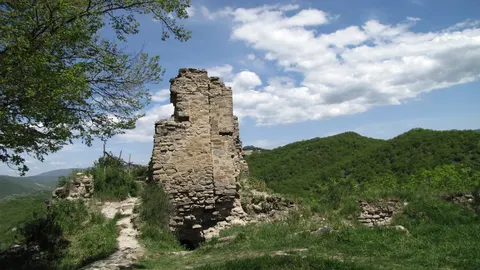
The ridge-top fortress-town above the Iori where, the chronicle says, Vakhtang Gorgasali died of his wounds — 45 km from Tbilisi on the Gombori road.
Gombori Pass
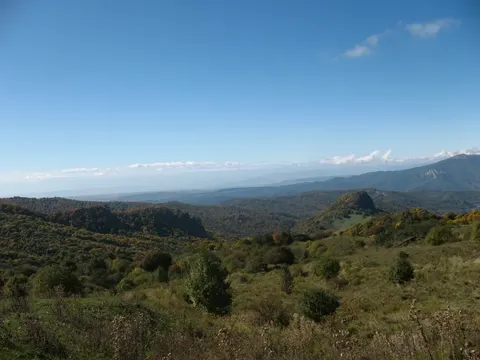
A 1,620-metre crossing on the Sh38 where Outer Kakheti ends and the road tips down towards the Alazani valley and the wall of the Caucasus.
Manavi Fortress
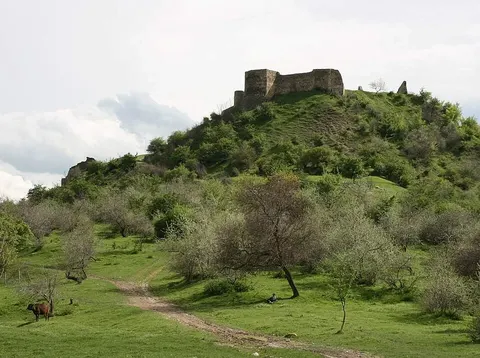
A ruined royal stronghold on the summit above the wine village of Manavi, with three small churches inside a citadel where a Kakhetian king kept court.
Best car for this trip
Guides
- Driving in Georgia: What the Distances Actually Cost You Georgia is a small country with slow roads. Here is what 267 measured drives from Tbilisi say about how long y
Pickup locations
Car Rental at Tbilisi Airport — 29 km (straight line)