
Manavi Fortress
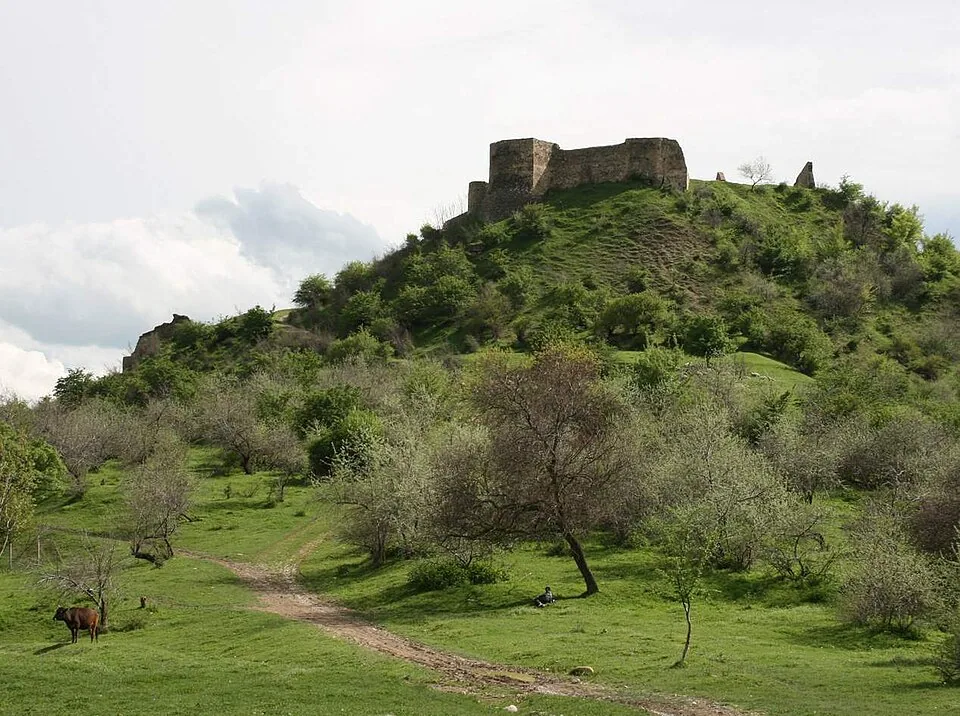
A ruined royal stronghold on the summit above the wine village of Manavi, with three small churches inside a citadel where a Kakhetian king kept court.
- Time needed
- 1 h
- From Tbilisi
- 63 km · 1:05
- Road
- Mostly paved
- Car needed
- Economy class
- Season
- All year
- Entry
- free
When Prince Vakhushti described Manavi in the eighteenth century, he found "an old fortress, now shattered", yet within living memory a king had held court there.
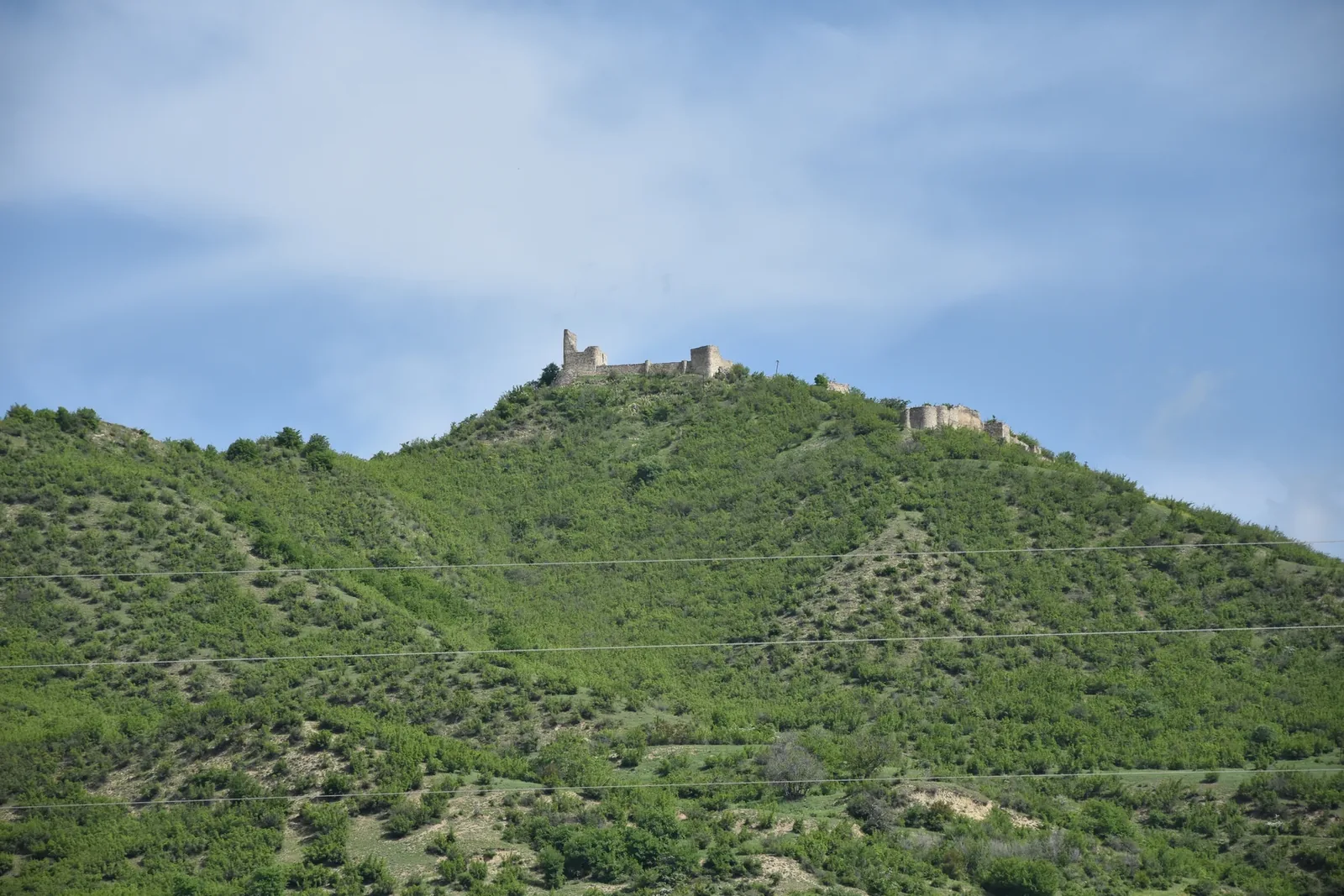
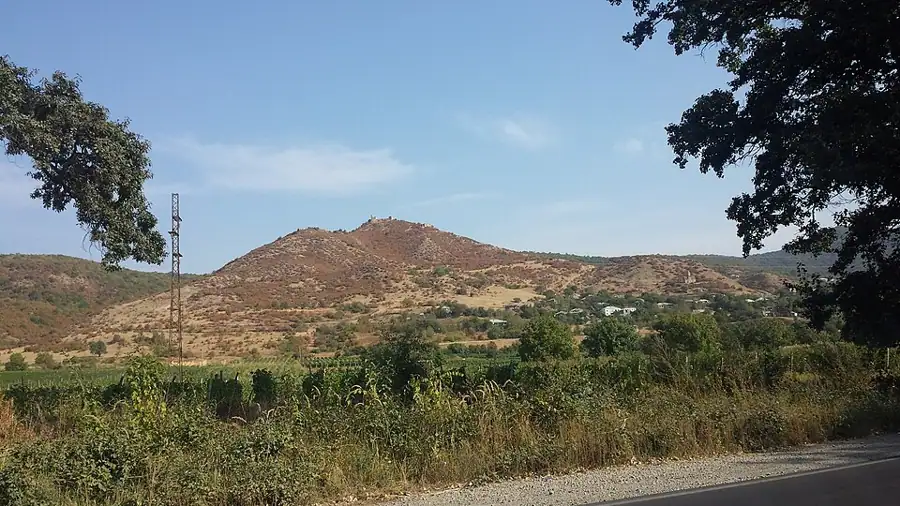
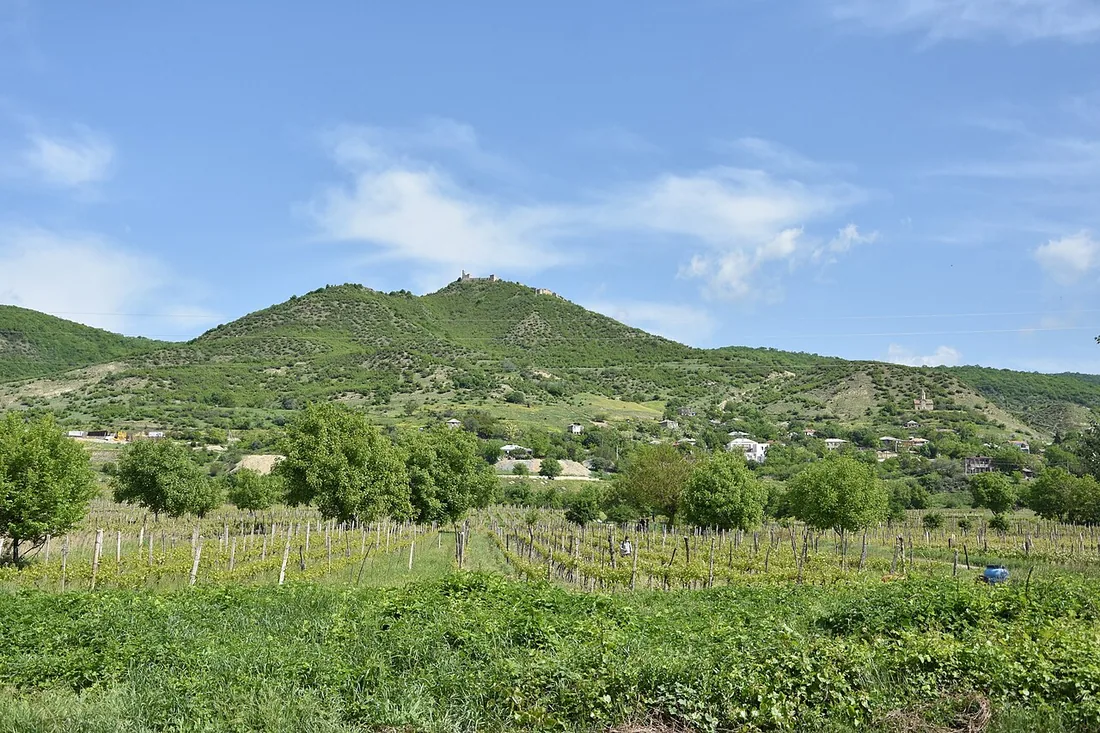
The fortress crowns the highest point of a spur above the village of Manavi, in Outer Kakheti. Its builders chose well: the valley opens out here, high ground closes around it, and on the west the slope itself was the best defence. The oldest masonry is roughly a thousand years old; much of what you see belongs to rebuilding between the 16th and 18th centuries.
Vakhushti also records that King David II of Kakheti (1703–1722) moved his residence here, reusing the older ruins. The later work shows in the plan. The main gate, in the middle of the north wall of the lower fortress, ran through a vaulted passage beneath a tower, a solution Georgian castle builders did not use before the 17th century.
What to look for:
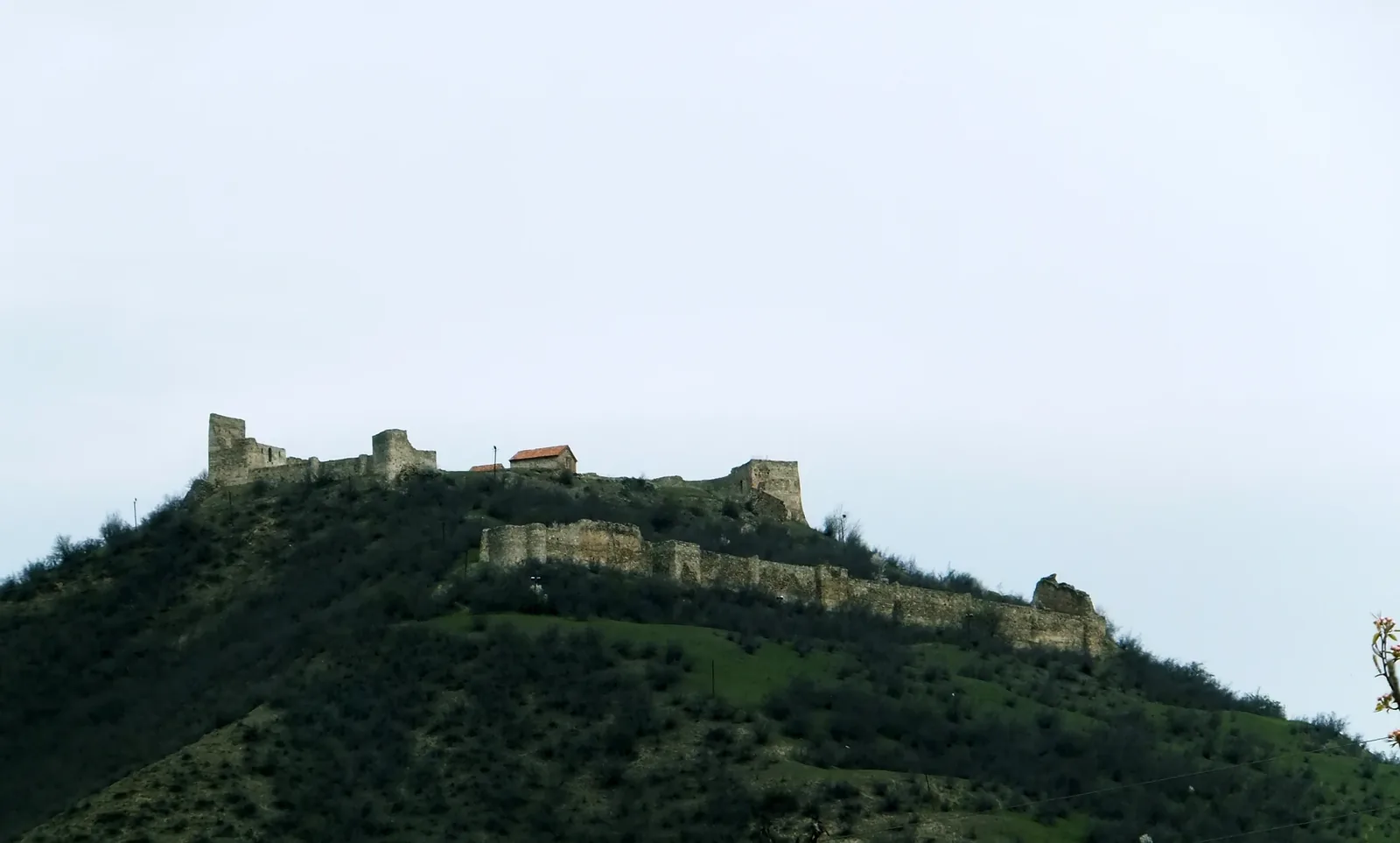
- the citadel on the summit, with the lower fortress, almost twice its size, attached to its east side
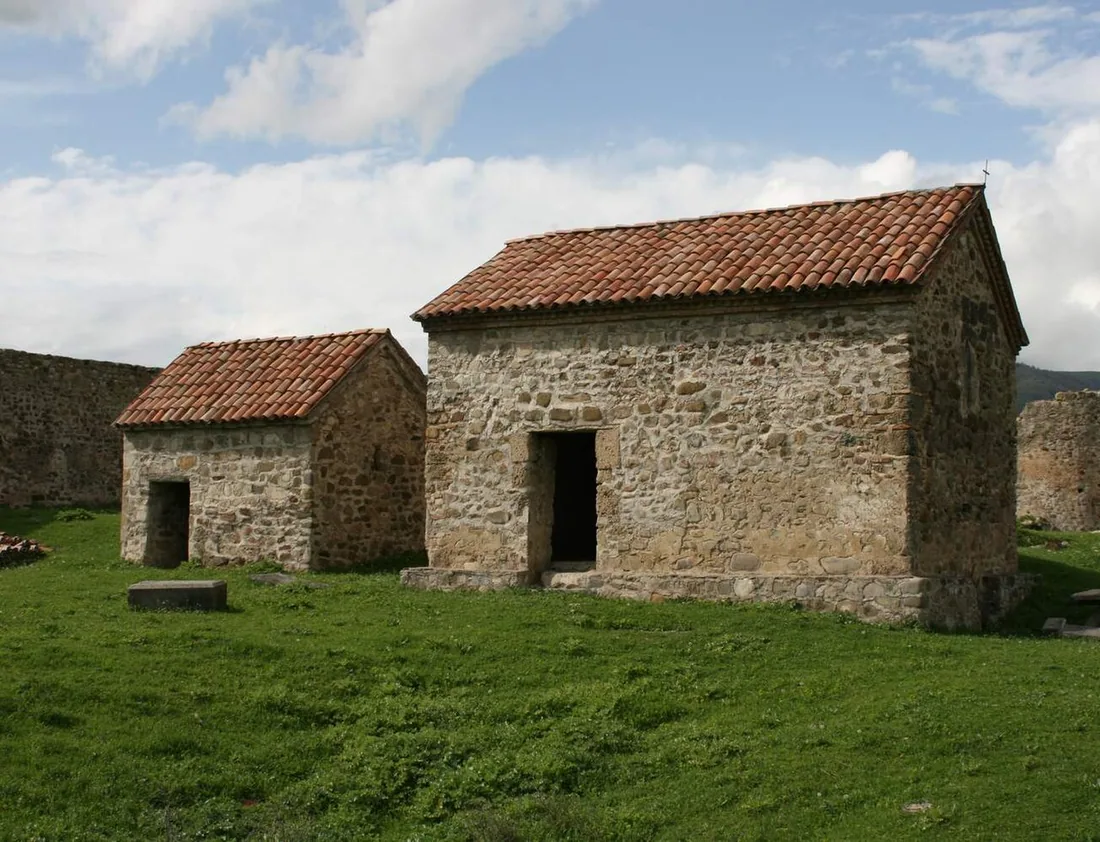
- three small churches grouped in the middle of the citadel; the northern one, the oldest, is faced with neatly dressed shirimi stone
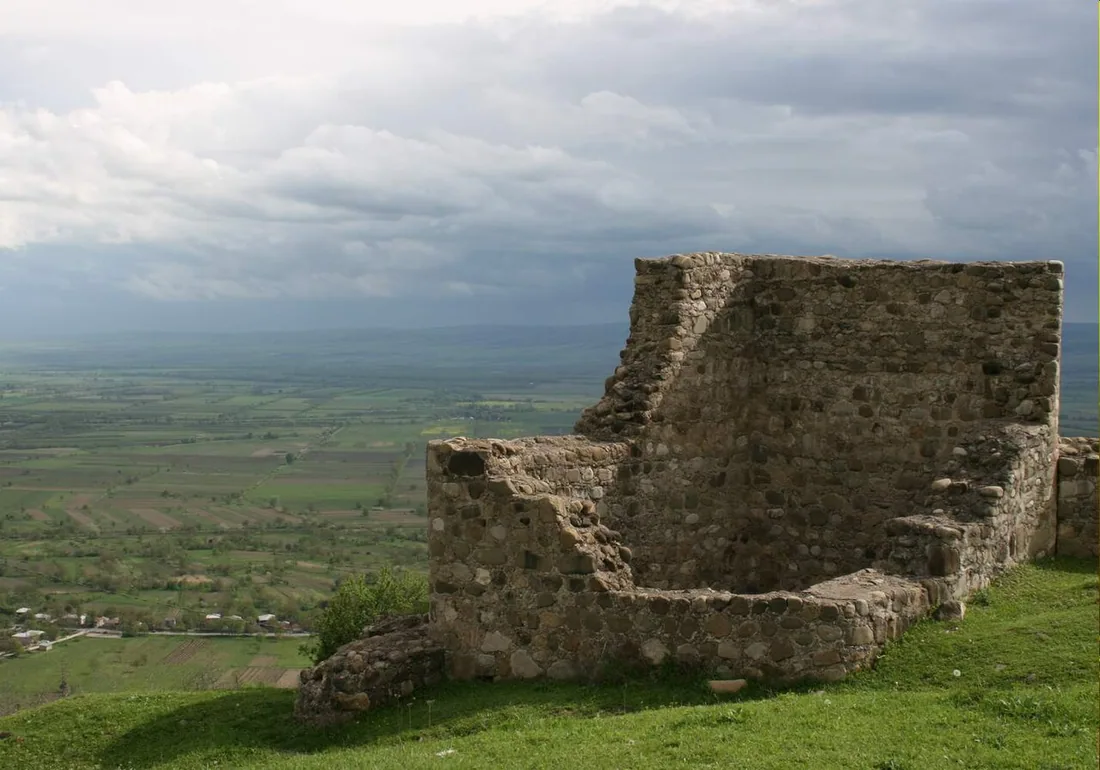
- a tower-house on the west wall, still more than eight metres high, with a single spy-hole in its third storey
- a small vaulted cistern beneath a ruined three-storey house on the north wall
No aqueduct could reach this summit, so every drop was carried up or caught from the rain, which tells you how seriously the kings took the word "refuge".
Below, the village gives its name to Manavis Mtsvane, one of Georgia's best-known white wines. Climb for the ruin, come down for the wine, in that order, and with someone else at the wheel.
Gallery
Practical advice
An hour covers the climb and the ruins. There is no ticket, kiosk or toilet on the hill, so bring water and use the village for everything else. Inside the walls the ground is rough, overgrown in summer and strewn with fallen stone: wear closed shoes and long trousers, and watch your step in the long grass. The only shade is at the foot of the walls. Nothing here is fenced or signposted, so keep children away from the wall tops. If you plan to taste wine in Manavi afterwards, settle who is driving before the first glass.
How to get there from Tbilisi
Take the S5 Kakheti highway east from Tbilisi, past the Sagarejo turn-off. About 12 km further on, turn off into Manavi. From the upper end of the village a narrow lane, part asphalt and part unsurfaced, climbs north-west to a small parking area a few hundred metres below the walls; walk the rest. The total is 63 km, about 1 hour 5 minutes. The highway is fast; the lane is slow but manageable in an economy car when dry. After heavy rain, leave the car in the village and walk up. Fuel is in Sagarejo. Ninotsminda Cathedral is twenty minutes back towards Tbilisi.
Click a marker for details. Coloured lines are ready-made road trips.
Nearby places
Ninotsminda Cathedral
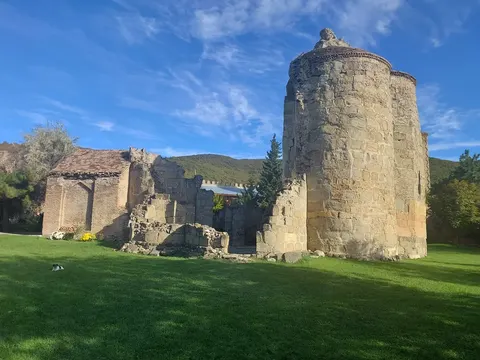
A 6th-century cathedral older than Jvari, felled by earthquakes, now kept by nuns inside a fortified wall on the western edge of Sagarejo.
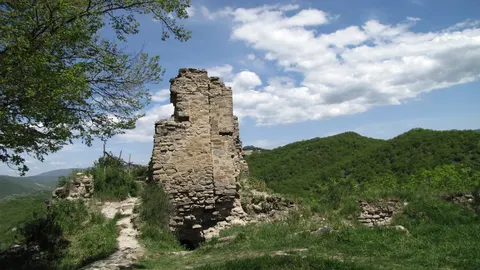
Ujarma Fortress
The ridge-top fortress-town above the Iori where, the chronicle says, Vakhtang Gorgasali died of his wounds — 45 km from Tbilisi on the Gombori road.
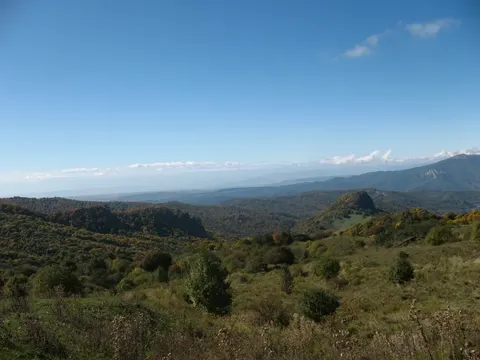
Gombori Pass
A 1,620-metre crossing on the Sh38 where Outer Kakheti ends and the road tips down towards the Alazani valley and the wall of the Caucasus.
Best car for this trip
Mostly paved
Guides
- Driving in Georgia: What the Distances Actually Cost You Georgia is a small country with slow roads. Here is what 267 measured drives from Tbilisi say about how long y
Pickup locations
Car Rental at Tbilisi Airport — 41 km (straight line)