
Khashuri
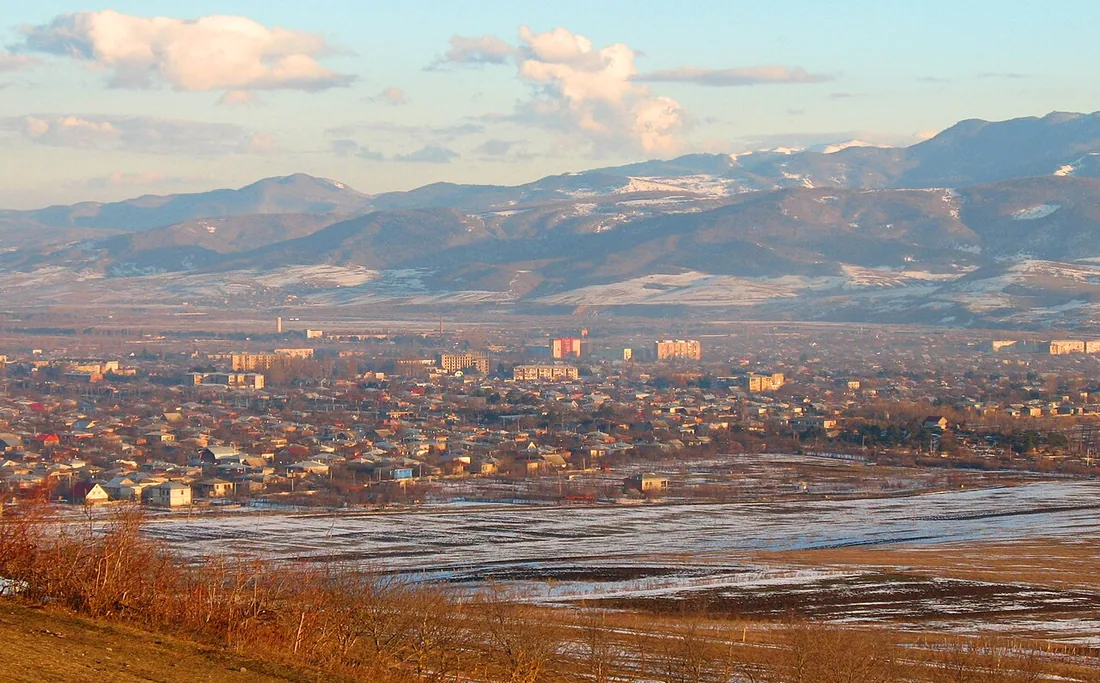
A railway town on the western rim of Shida Kartli, where the main road splits: south to Borjomi, west over the Rikoti pass to the sea.
- Time needed
- 1 h
- From Tbilisi
- 128 km · 1:40
- Road
- Paved
- Car needed
- Economy class
- Season
- All year
- Entry
- free
Khashuri is not a destination; it is the place where the road decides where you are going.
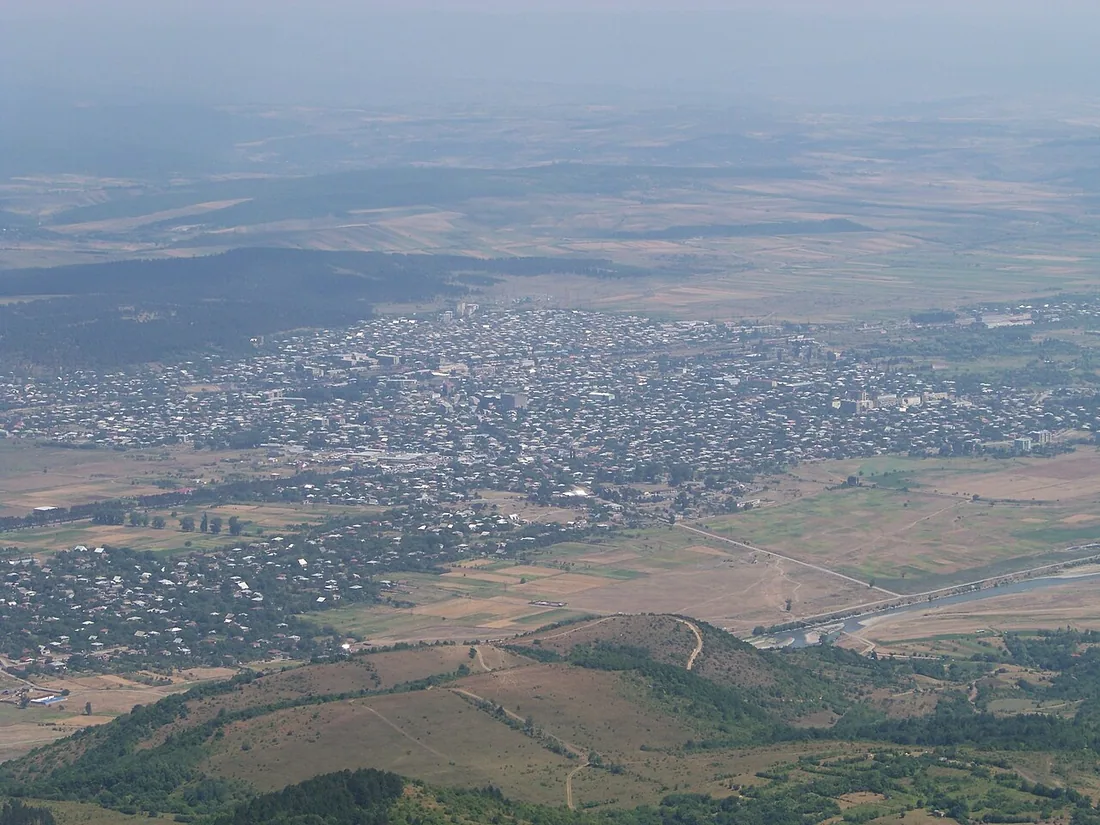
The town stands on the Suramula river, some 700 metres up, on the western rim of the Shida Kartli plain, exactly where Georgia's main highway forks. West, the road climbs towards the Rikoti pass, Kutaisi and the Black Sea; south, it drops into the Borjomi gorge towards Akhaltsikhe and the Turkish border.
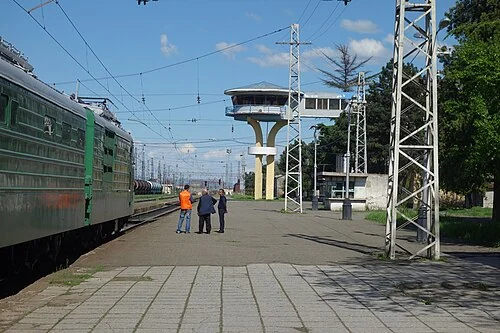
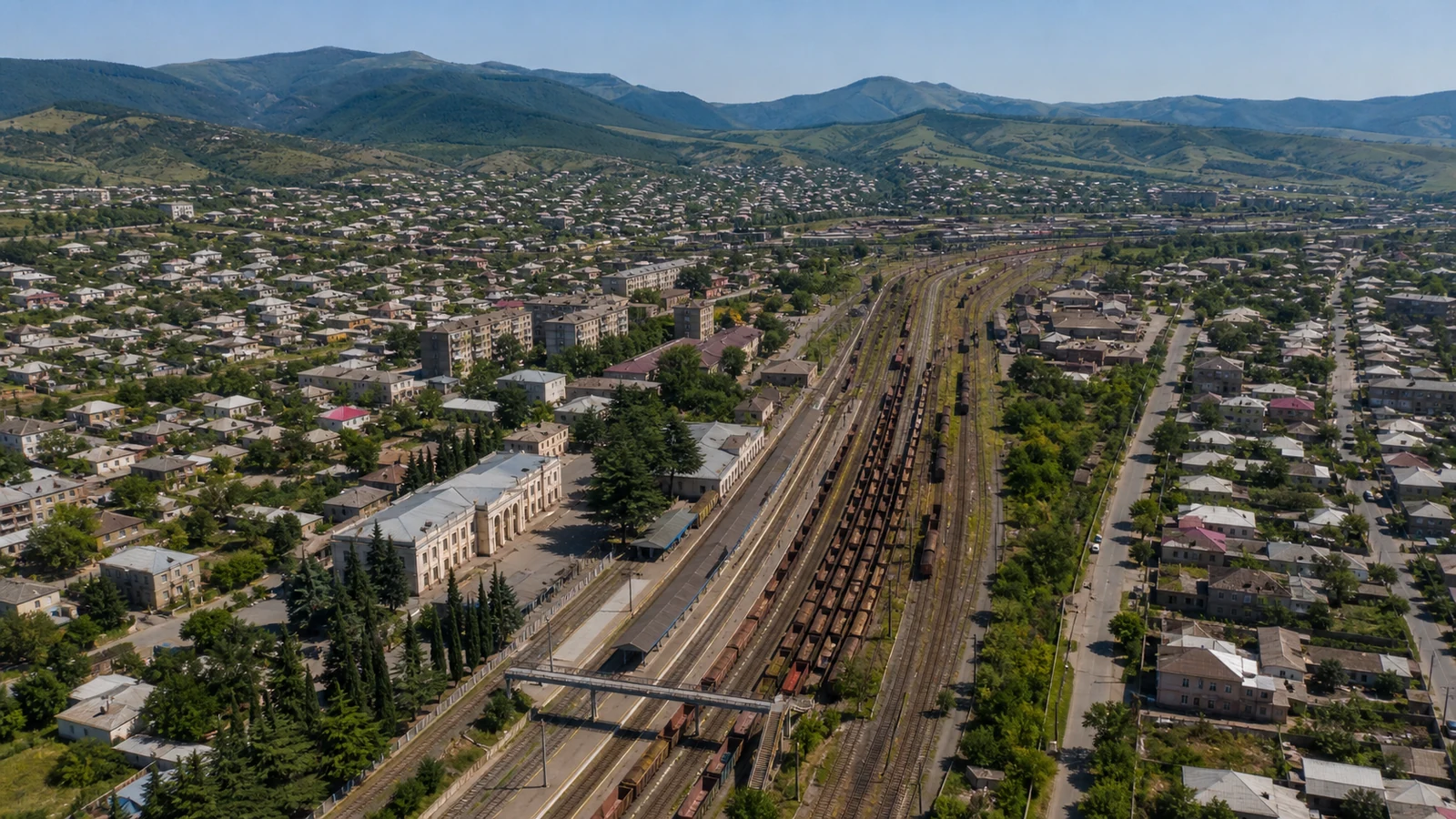
The railway made the town. Khashuri appears in a royal charter of 1693, but the modern town began in 1872 as a modest stop on the Tbilisi–Poti line, named Mikhailovo after Grand Duke Michael Nikolaevich, viceroy of the Caucasus. The old name returned as the empire fell, and for a few years before 1934 the town was called Stalinisi.
In March 1921 the station was a front line. On 5 March the Red Army stormed Mikhailovo; Georgian troops threw it back and counter-attacked that evening, a success that led the Soviet command in Tbilisi to consider talks. In the night that followed, General Koniashvili abandoned his positions for reasons never explained, and on 6 March the station fell.
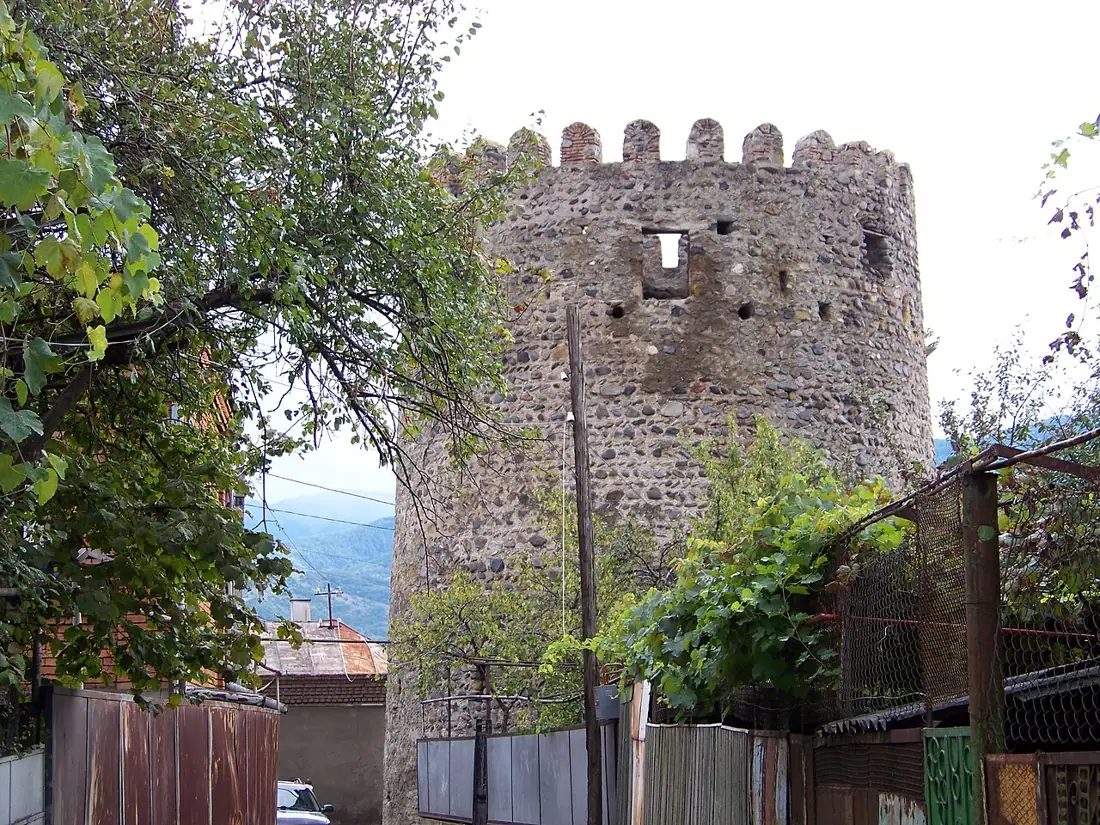
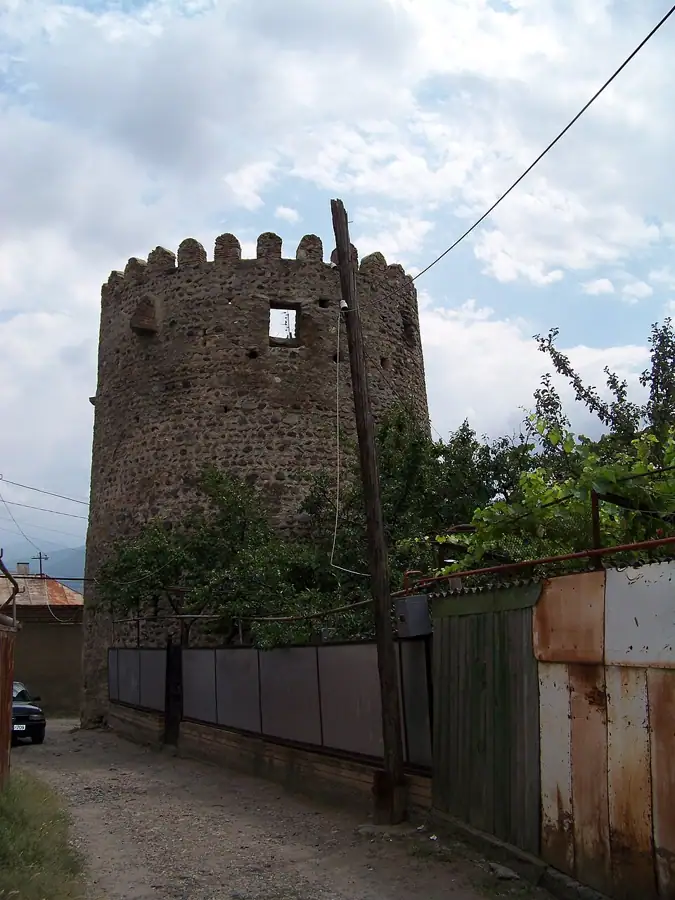
Today Khashuri is a broad main street, Soviet administrative blocks, a busy market and roadside canteens. An 18th-century tower and the churches of St John the Baptist and St Marine survive, but none justifies the drive from Tbilisi alone.
Its value is practical: this is the last sizeable town before the Borjomi gorge or the Rikoti climb, with a supermarket, cash machines, a pharmacy and tyre repair. Surami, with its fortress and nazuki bread stalls, is a few kilometres west; Borjomi about thirty kilometres south. Give Khashuri a day and you will resent it. Give it an hour and a full tank, and it will do exactly what it was built for.
Gallery
Practical advice
An hour covers a practical stop. The supermarket, cash machines and pharmacy sit within a block of one another in the centre, and fuel stations stand at both ends of town and on the Borjomi road. The roadside canteens are plain, but their khachapuri and lobio come quickly and honestly made. Fuel-station toilets are usually cleaner than those by the market. In winter the side streets turn to mud and the pavements ice over. For the night, Borjomi or Surami make better beds.
How to get there from Tbilisi
Leave Tbilisi westbound on the E60 (S1) and follow it past Mtskheta and Gori: 128 km, about 1 hour 40 minutes, asphalt all the way and mostly dual carriageway. Khashuri has two clearly signed exits. Here the road divides: south, the S8 runs to Borjomi and Akhaltsikhe; west, the highway continues past Surami towards the new sections over the Rikoti pass. Fuel stations and rest stops are frequent in both directions, so there is no need to fill up here, though it is the handiest place to do so before the Borjomi gorge. An economy car is all you need.
Click a marker for details. Coloured lines are ready-made road trips.
Nearby places
Surami Fortress
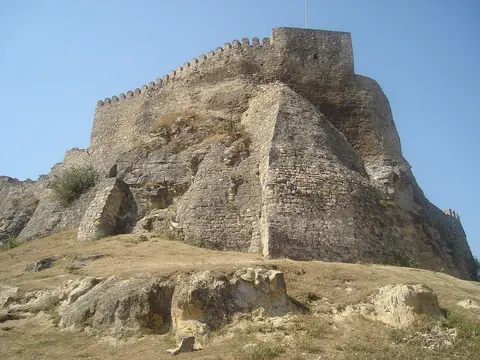
A citadel on a rock at the old fork of the roads west over the Likhi range and south to Borjomi, home to one of Georgia's best-known legends.
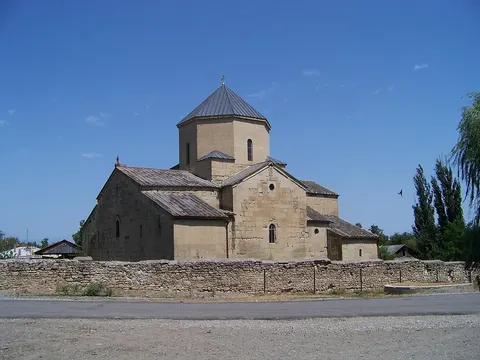
Tsromi Church
Built in 626–634 for Prince Stepanoz II, Tsromi was the first Georgian church to raise its dome on four free-standing piers.
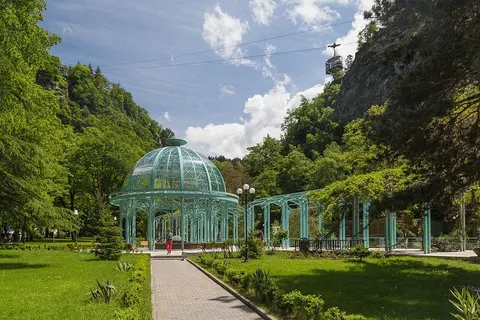
Borjomi Central Park and Mineral Springs
A 19th-century spa park in a narrow wooded gorge, where you fill your own bottle with salty, faintly warm Borjomi water straight from the spring.
Best car for this trip
Guides
- Driving in Georgia: What the Distances Actually Cost You Georgia is a small country with slow roads. Here is what 267 measured drives from Tbilisi say about how long y
Pickup locations
Car Rental in Kutaisi — 80 km (straight line)
Booking and enquiries
The easiest way to reach these places is by car — you pick the route and the stops.