
Skhvitori — Akaki Tsereteli House-Museum
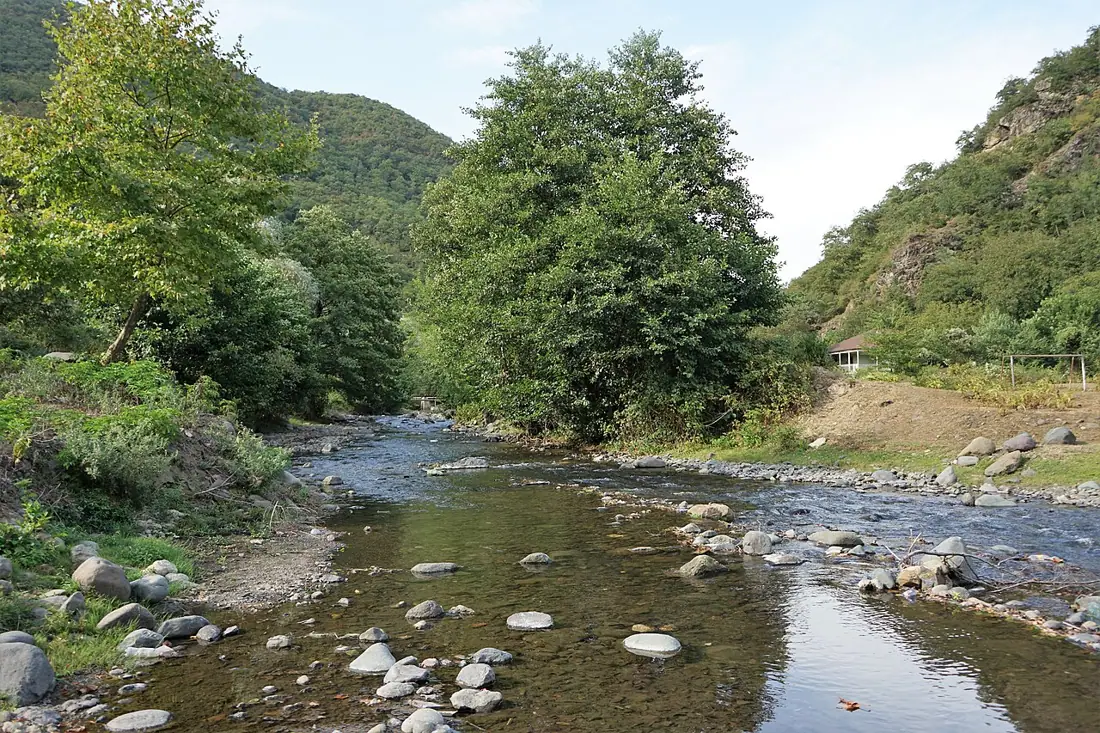
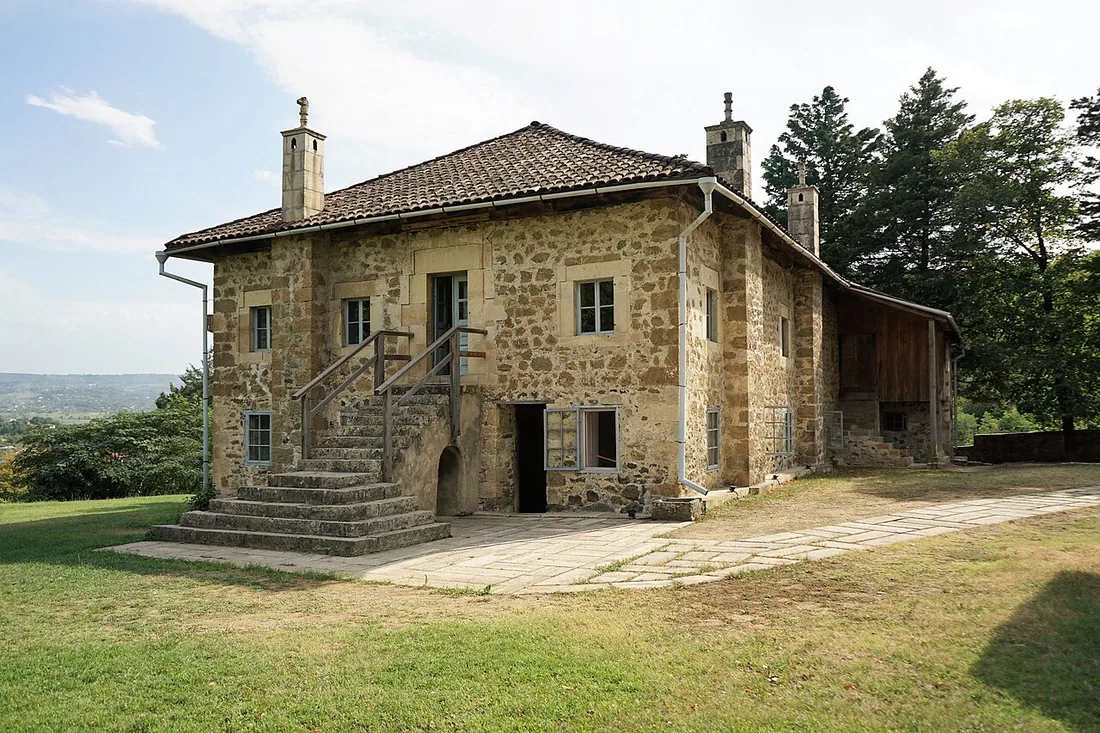
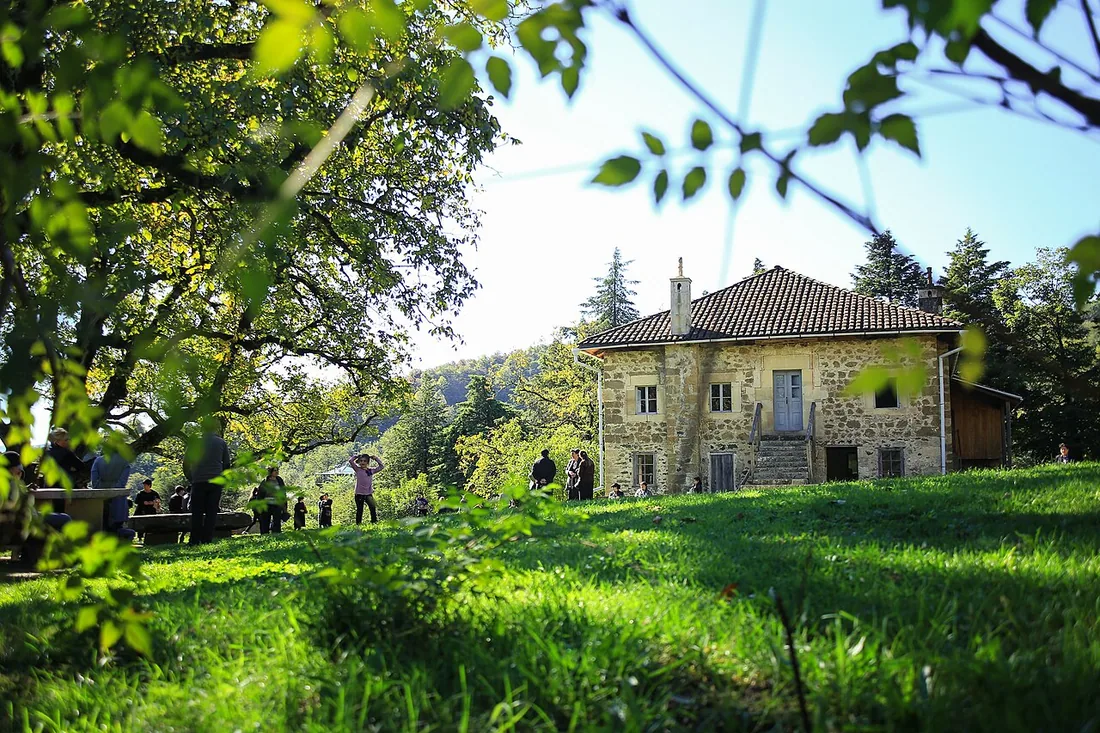
The stone manor at Skhvitori, 3 km from Sachkhere, where the poet Akaki Tsereteli was born in 1840 and died in 1915.
- Time needed
- 1.5 h
- From Tbilisi
- 176 km · 3:00
- Road
- Paved
- Car needed
- Economy class
- Season
- All year
- Entry
- ~5 ₾
Akaki Tsereteli opened his eyes in this house in 1840 and closed them here in 1915. His father, Prince Rostom Tsereteli, built it in 1834 from stone brought from the Kvereti crag and from Chiatura, and Greek masons then working in Sachkhere laboured on it alongside Georgian ones. It is no timber farmhouse but a two-storey country manor of rubble stone with dressed-stone corners, and a five-arched loggia on the upper floor looks out over a lawn and old trees. Behind it rises the wooded slope of Mount Naurtsevi.
The boy did not grow up here. By an old family custom the infant was sent to a peasant household in the village of Savane, and the plain speech of that childhood stayed in his verse for good. Then came the Kutaisi Classical Gymnasium and St Petersburg’s Faculty of Oriental Languages, from which he graduated in 1863. With Ilia Chavchavadze he led the generation that campaigned for Georgia’s cultural revival and self-determination. He wrote hundreds of poems, and one of them, Suliko, became a folk song. In 1879 he went prospecting in the hills around Chiatura and found the manganese that would make the town famous.
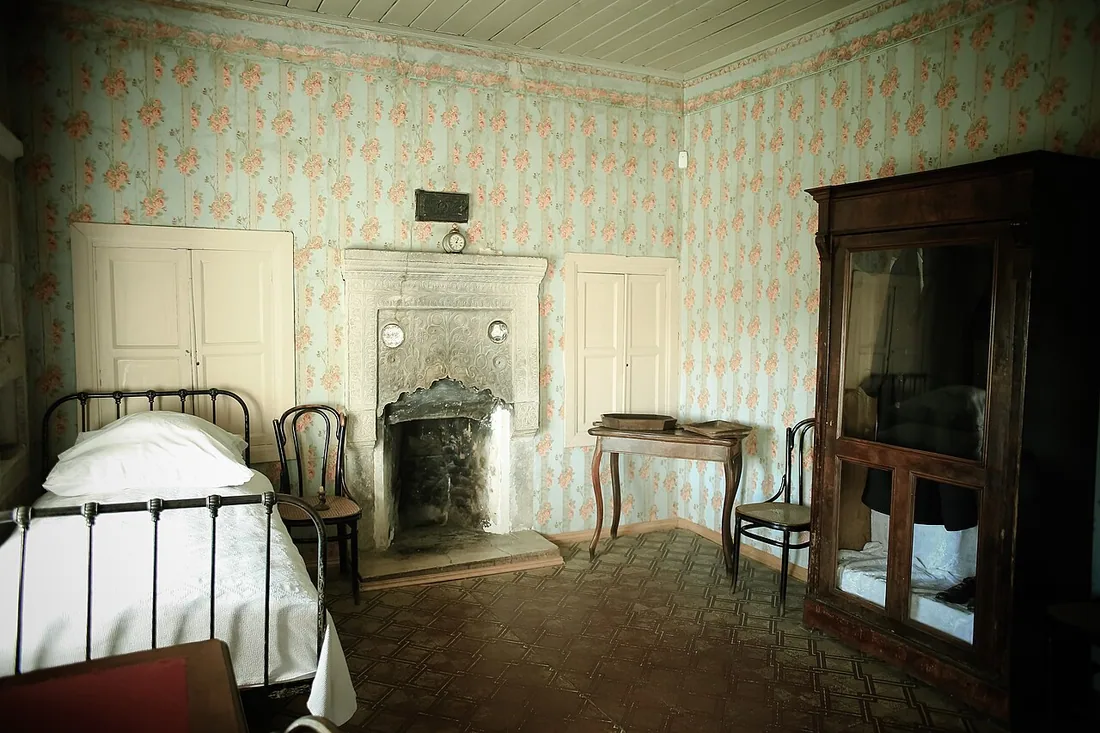
Inside are 19th-century furniture made in France, Germany and Italy, a family library of Georgian, French and Russian books, Sulkhan-Saba Orbeliani’s dictionary, manuscripts by the poet and his contemporaries, and a hand-copied Kartlis Tskhovreba, the Georgian chronicles. Wooden corn cribs stand in the yard. After Akaki’s death his wife, Natalia Bazilevskaya, left for Paris with their son, and the house was left in the care of his steward, Kote Abdushelishvili. In 2018 it was restored to its original look and the balcony renewed.
He lies in Tbilisi, in the Pantheon on Mtatsminda. Both ends of his road, though, are here, inside these stone walls.
Gallery
Practical advice
Allow an hour and a half: forty minutes in the house, the rest in the grounds. Entry is around 5 GEL. Labels are mostly in Georgian, with little English, but staff will often guide you through the rooms if asked. The upper floor is reached by stairs and there is no lift. The park paths are earth and turn muddy after rain. There is no café; Sachkhere, three kilometres away, has cafés by the market. Pair the visit with Modinakhe fortress on its ridge above Sachkhere: the Tseretelis’ castle and their country house make one morning.
How to get there from Tbilisi
The quickest way is not through Zestaponi. Take the E60 (S1) west from Tbilisi past Gori and Kareli, turn off at Agara, about 115 km out, and follow the Sh22 through Gomi and over the hills to Sachkhere, a paved but twisting main road. In Sachkhere take the road north-east for the last three kilometres to Skhvitori and the museum. That makes about 175 km in all, roughly three hours with a stop. There is parking by the gate. Fuel in Kareli or Sachkhere. An economy car is fine all year.
Click a marker for details. Coloured lines are ready-made road trips.
Nearby places
Modinakhe Fortress
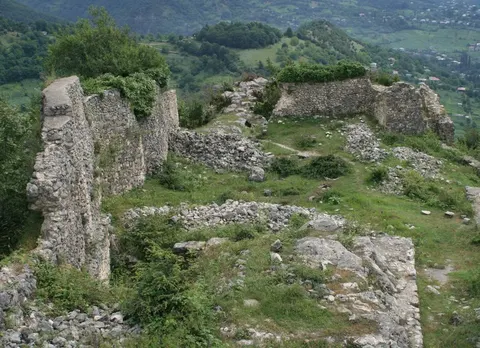
An 18th-century Tsereteli stronghold strung along a limestone crest above Sachkhere, named for a dare: “come and see”.
Chiatura Cable Cars
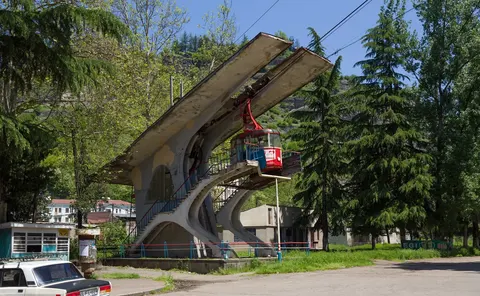
A manganese town at the bottom of the Kvirila gorge, where cable cars have lifted miners up the cliffs since 1954 and still carry the daily commute.
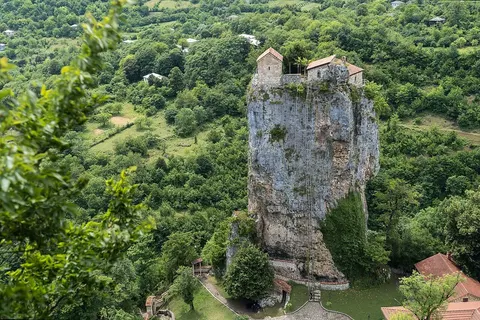
Katskhi Pillar
A 40-metre limestone column above the Katskhuri valley, crowned by a restored medieval hermitage; since 2012 visitors admire it from below.
Best car for this trip
Guides
- Driving in Georgia: What the Distances Actually Cost You Georgia is a small country with slow roads. Here is what 267 measured drives from Tbilisi say about how long y
Pickup locations
Car Rental in Kutaisi — 60 km (straight line)