
Katskhi Pillar
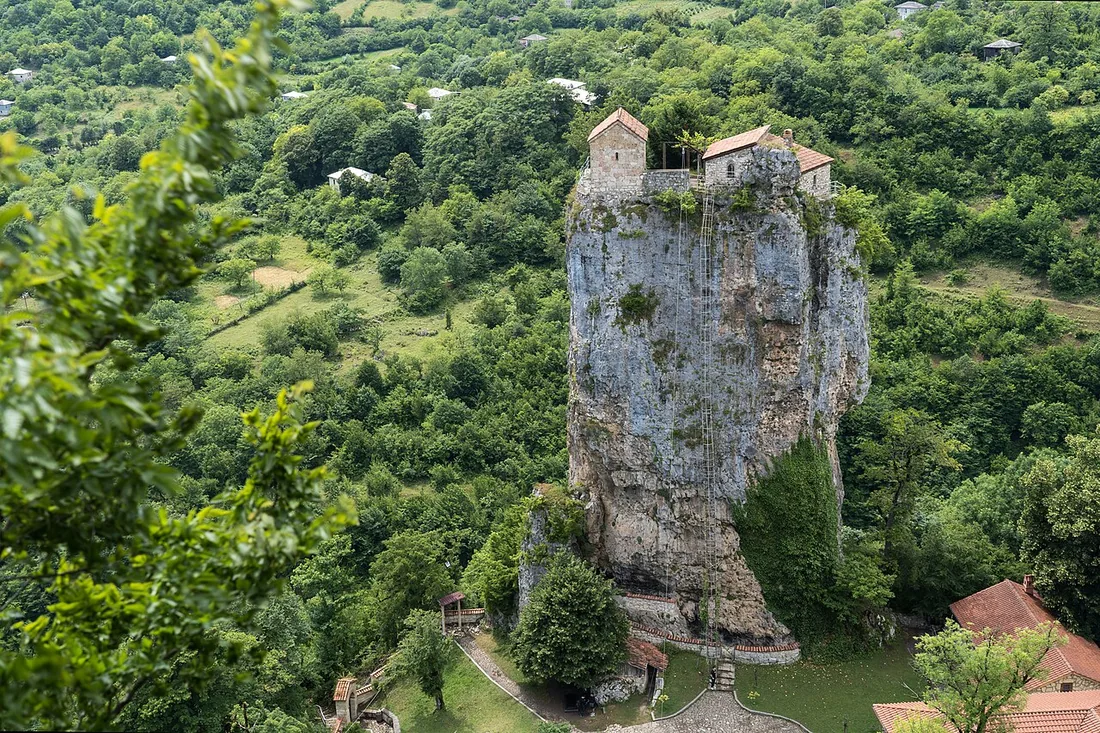
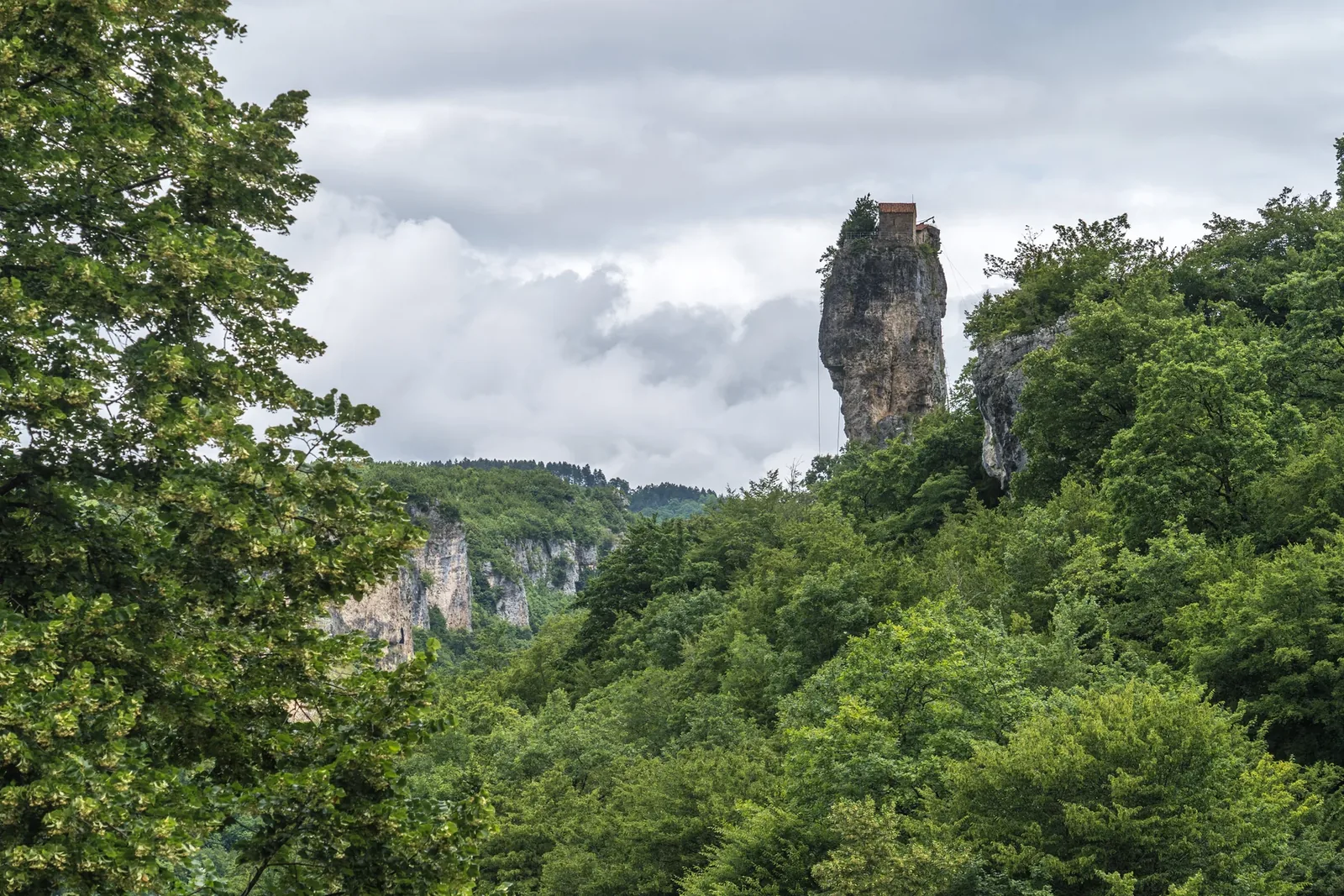
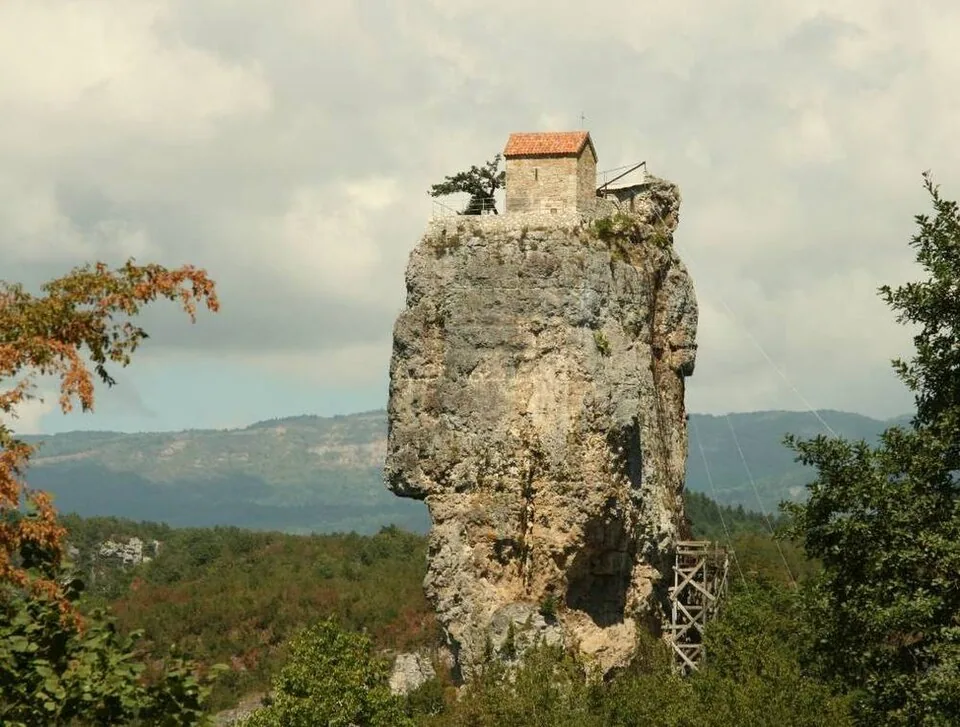
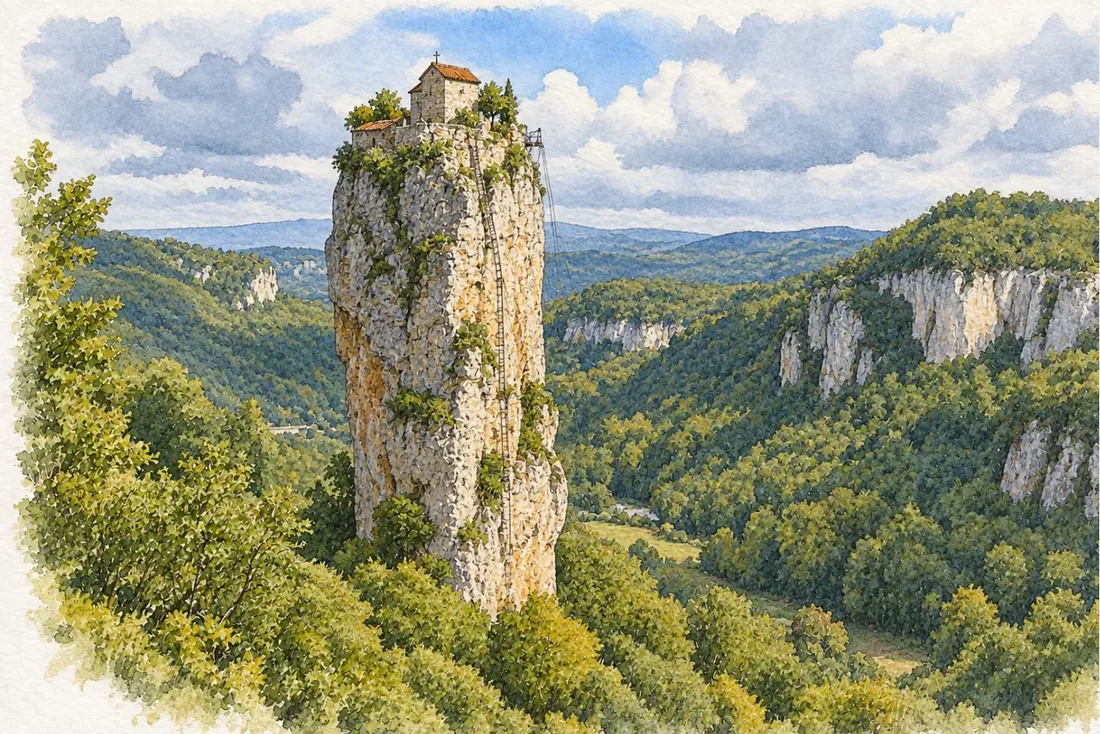
A 40-metre limestone column above the Katskhuri valley, crowned by a restored medieval hermitage; since 2012 visitors admire it from below.
- Time needed
- 1 h
- From Tbilisi
- 213 km · 3:15
- Road
- Paved
- Car needed
- Economy class
- Season
- All year
- Entry
- free
For centuries the church on top of Katskhi was something everyone could see and no one could reach.
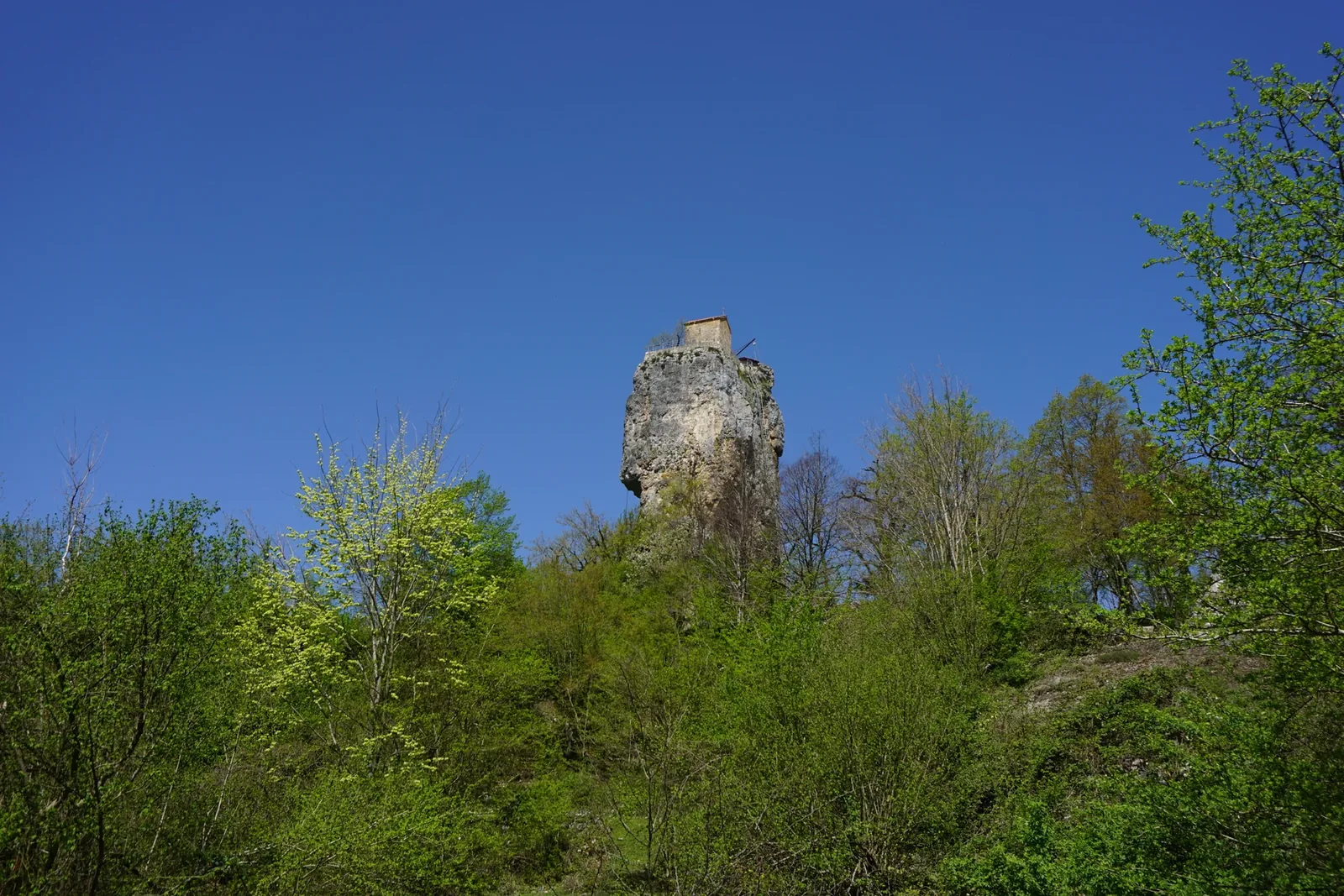
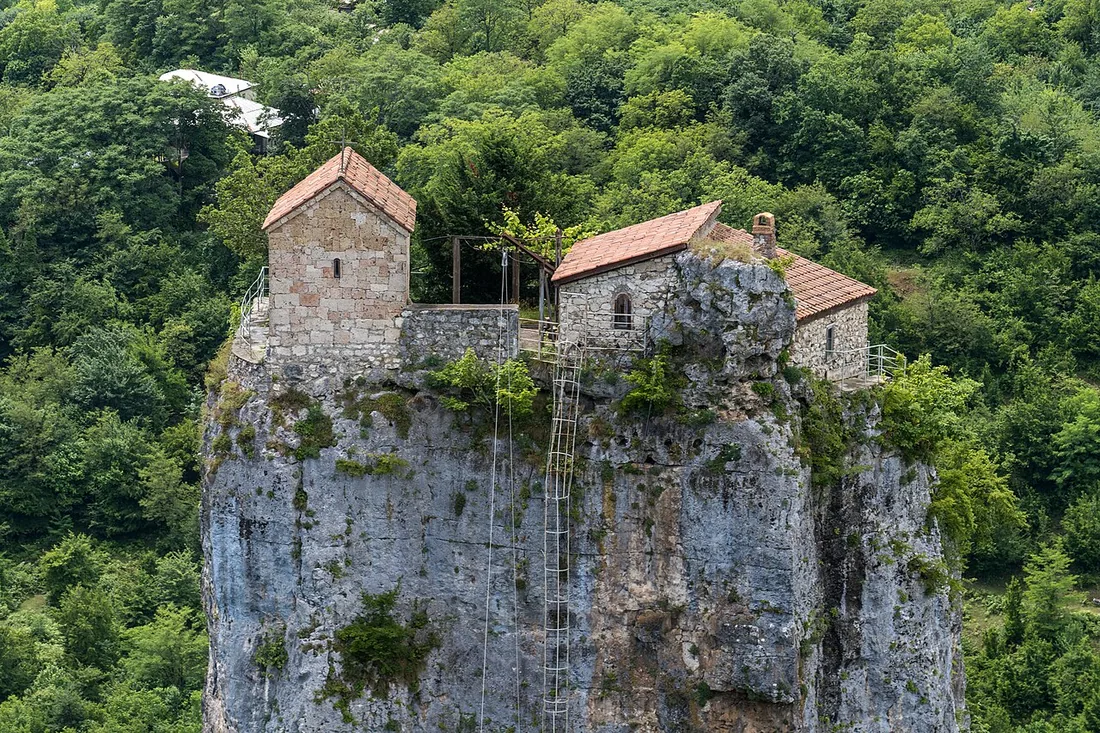
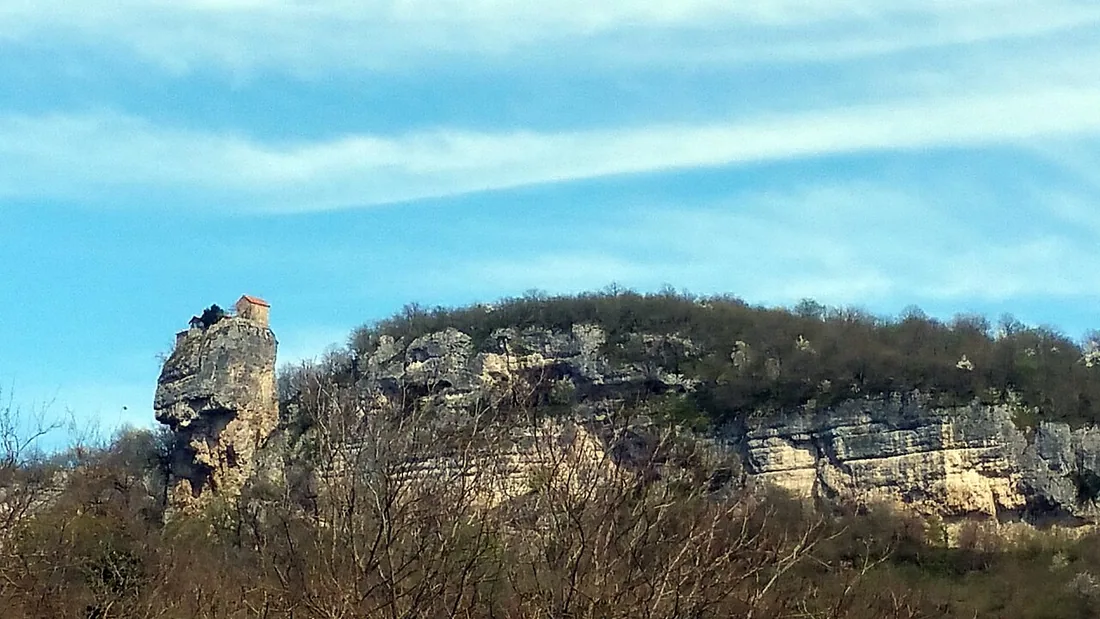
In the 18th century Prince Vakhushti wrote: "There is a rock within the ravine standing like a pillar, considerably high. There is a small church on the top of the rock, but nobody is able to ascend it; nor know they how to do that." The rock is a natural limestone monolith about 40 metres high, near Chiatura, above the valley of the Katskhuri, a right tributary of the Kvirila. Locals revered it as the Pillar of Life, a symbol of the True Cross, and legend says an iron chain once ran from its summit to the dome of the village church, a kilometre and a half away.
In July 1944 the mountaineer Alexander Japaridze and the writer Levan Gotua led the first documented ascent. On a summit of roughly 150 square metres they found ruins that the architectural historian Vakhtang Tsintsadze took for two churches of the 5th–6th century and linked to stylites, ascetics who lived on pillars. Giorgi Gagoshidze's excavations of 2006 later re-dated the complex to the 9th–10th century: a monastery church, hermit cells, and a wine cellar with eight qvevri. A 13th-century inscription found in 2007 names one Giorgi, builder of three cells, and speaks of the Pillar of Life.
Life returned in 1995, when the monk Maxime Qavtaradze, a native of Chiatura, climbed up and stayed for some twenty years, coming down about twice a week. The summit church of St Maximus the Confessor was restored in 2005–2009.
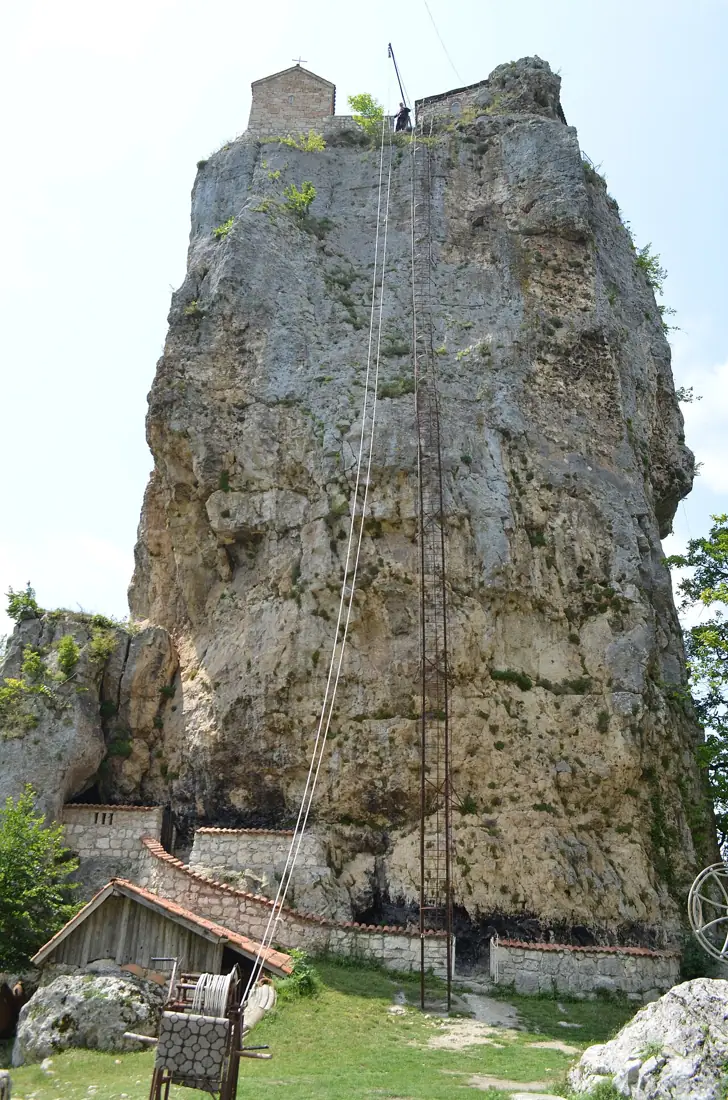
Since 2012 the iron ladder has been closed to visitors for safety. You stay at the foot, by the new church of St Simeon the Stylite and a relief cross carved into the base, and look up, as Vakhushti did.
Gallery
Practical advice
Do not plan on climbing: the ladder has been closed to visitors since 2012. From the parking area a short path leads to the foot of the pillar and the lower church. Monastery dress applies: headscarf and skirt for women, long trousers for men. Forty minutes to an hour is enough. For photographs come in the morning or late afternoon, when side light gives the rock its relief; at noon it looks flat. Look for the relief cross at the base. Cafés and cash machines are in Chiatura, about ten minutes' drive on.
How to get there from Tbilisi
From Tbilisi follow the S1 (E60) west to Zestaponi (about 181 km), then turn north on the Sh22, the road up the Kvirila valley towards Chiatura. After some 26 km, a few kilometres short of Chiatura, turn off at Katskhi; the last kilometre of village road brings you to the foot of the pillar. In all it is about 213 km and 3 h 15 min. The road is paved throughout, but the Sh22 is narrow and worn in places by mining traffic. Fuel is available in Zestaponi and Chiatura. Parking by the pillar is limited. An economy car is fine.
Click a marker for details. Coloured lines are ready-made road trips.
Nearby places
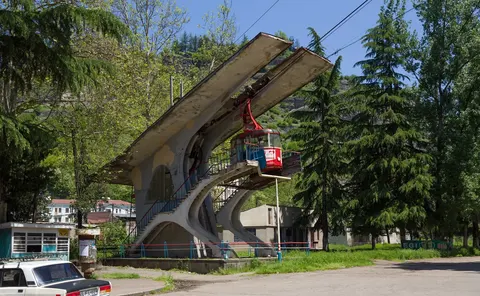
Chiatura Cable Cars
A manganese town at the bottom of the Kvirila gorge, where cable cars have lifted miners up the cliffs since 1954 and still carry the daily commute.
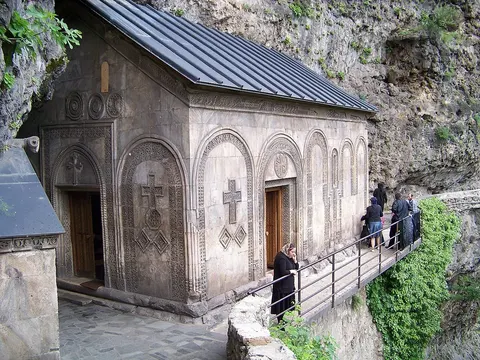
Mgvimevi Monastery
A 13th-century monastery set beneath a limestone overhang above the Kvirila gorge, reached from Chiatura by a long stair and an arched tunnel.
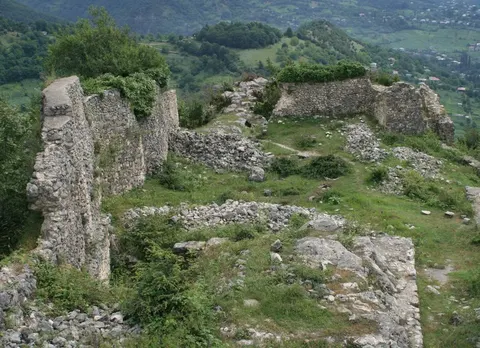
Modinakhe Fortress
An 18th-century Tsereteli stronghold strung along a limestone crest above Sachkhere, named for a dare: “come and see”.
Best car for this trip
Guides
- Driving in Georgia: What the Distances Actually Cost You Georgia is a small country with slow roads. Here is what 267 measured drives from Tbilisi say about how long y
Pickup locations
Car Rental in Kutaisi — 42 km (straight line)