
Chiatura Cable Cars
A manganese town at the bottom of the Kvirila gorge, where cable cars have lifted miners up the cliffs since 1954 and still carry the daily commute.
- Time needed
- 3 h
- From Tbilisi
- 215 km · 3:10
- Road
- Paved
- Car needed
- Economy class
- Season
- All year
- Entry
- free
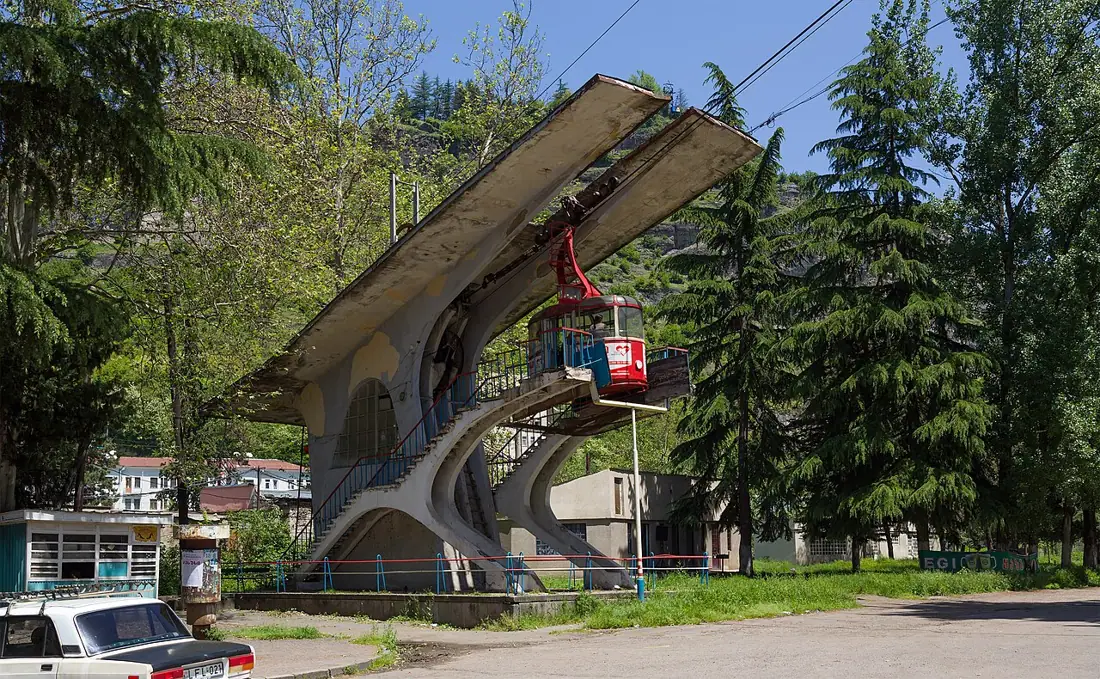
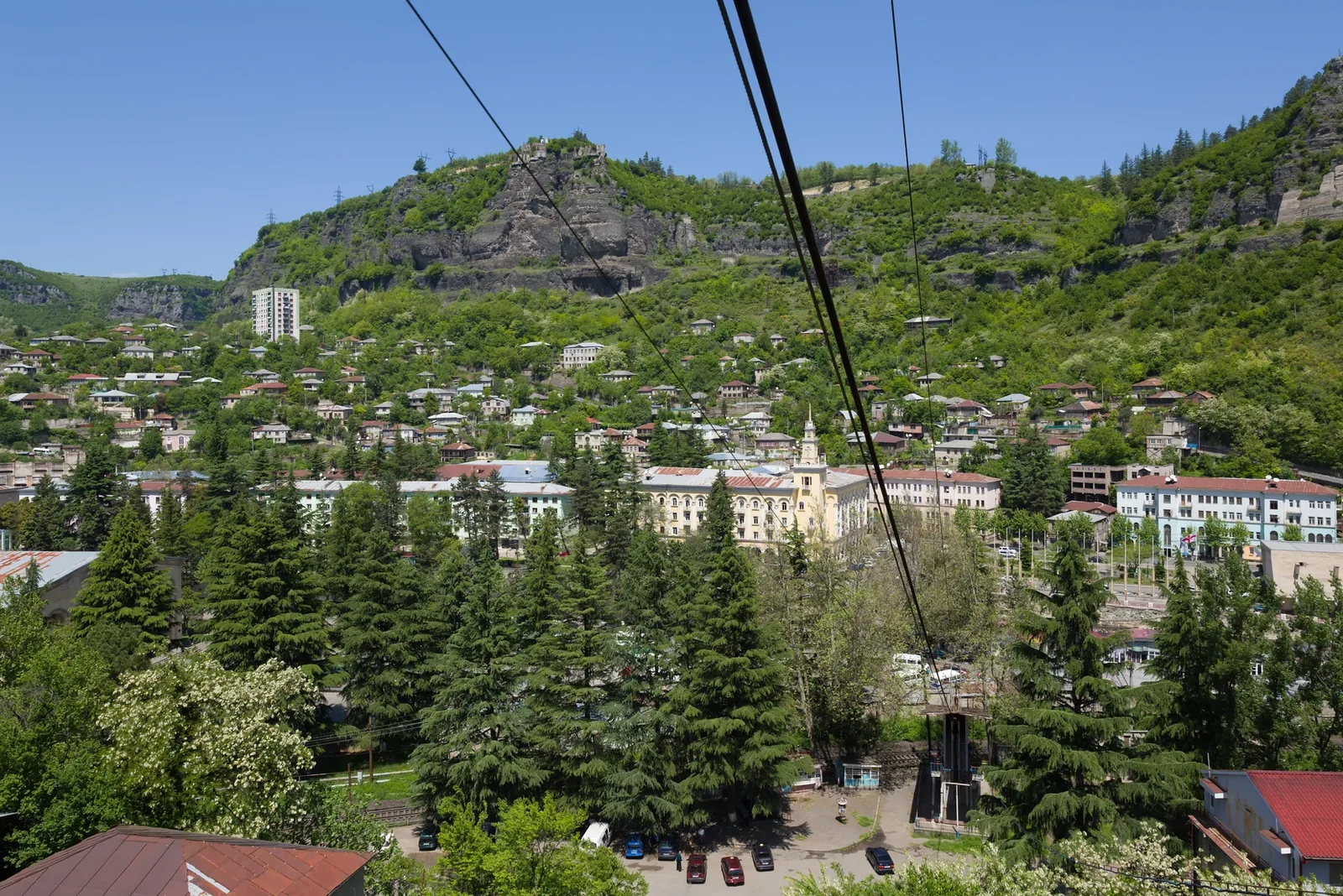
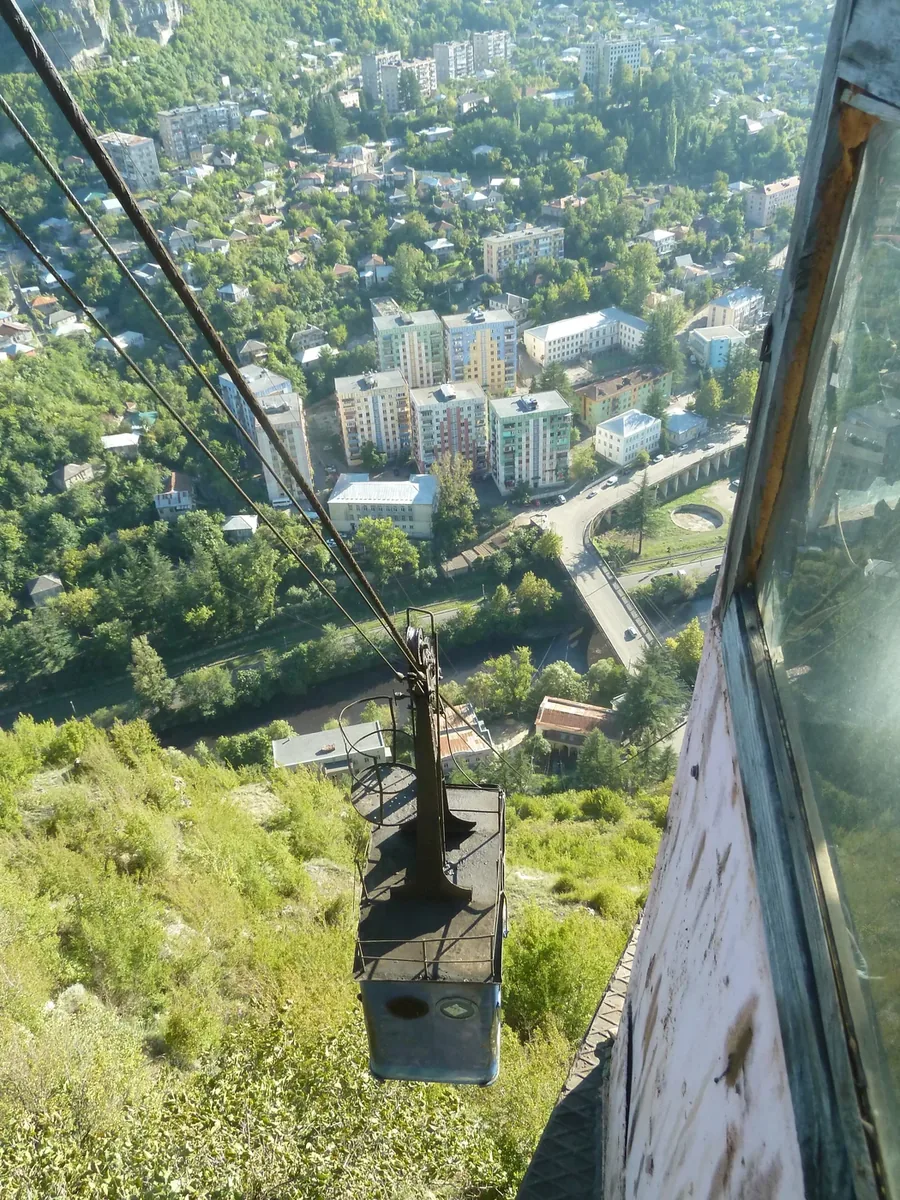
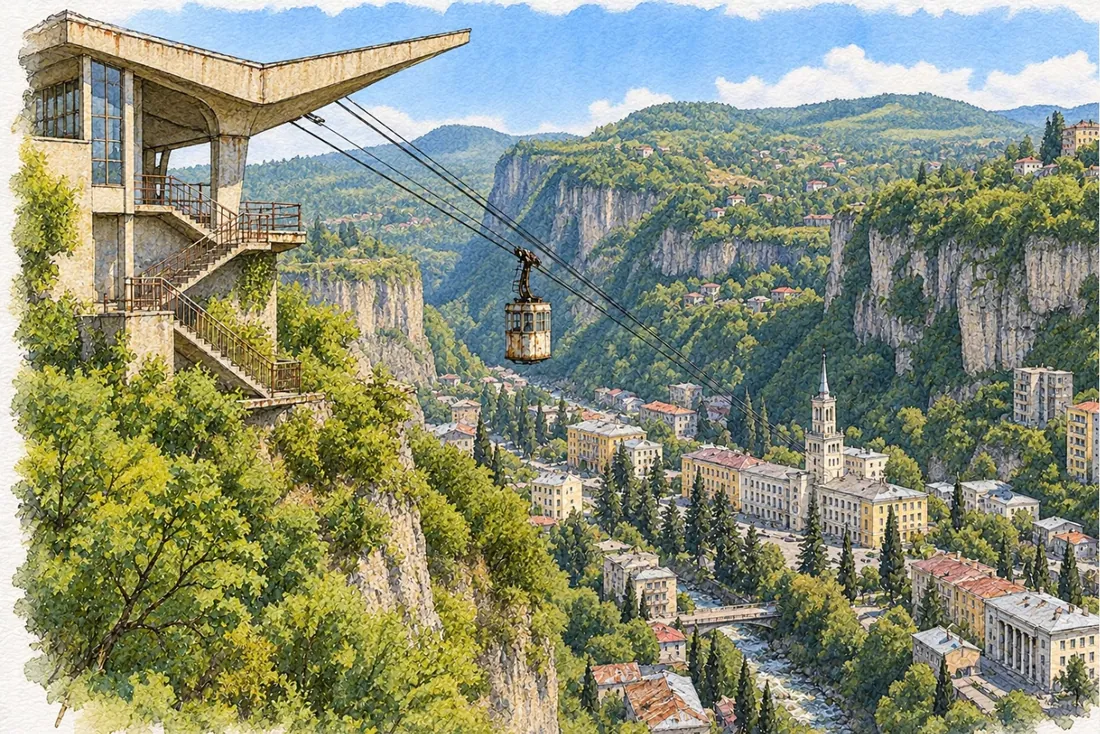
In Chiatura the commute runs vertically: from the floor of the Kvirila gorge to the districts on the cliff tops, by cable car.
The reason is in the rock. In 1879 the poet Akaki Tsereteli came prospecting here and found the deposits; later surveys showed manganese seams up to sixteen metres thick, and by 1905 this narrow valley supplied some 60 per cent of the world's output. The work was brutal. In 1905 about 3,700 miners laboured eighteen hours a day and slept in the mines, and Chiatura became the only Bolshevik stronghold in a largely Menshevik Georgia. Their organiser was a young Joseph Stalin, known to them as Koba, who set up a printing press and armed squads. In 1906 Bolshevik raiders attacked the train carrying the miners' wages and made off with 21,000 roubles; in 1913 the miners held out for 55 days in a successful strike, demanding an eight-hour day.
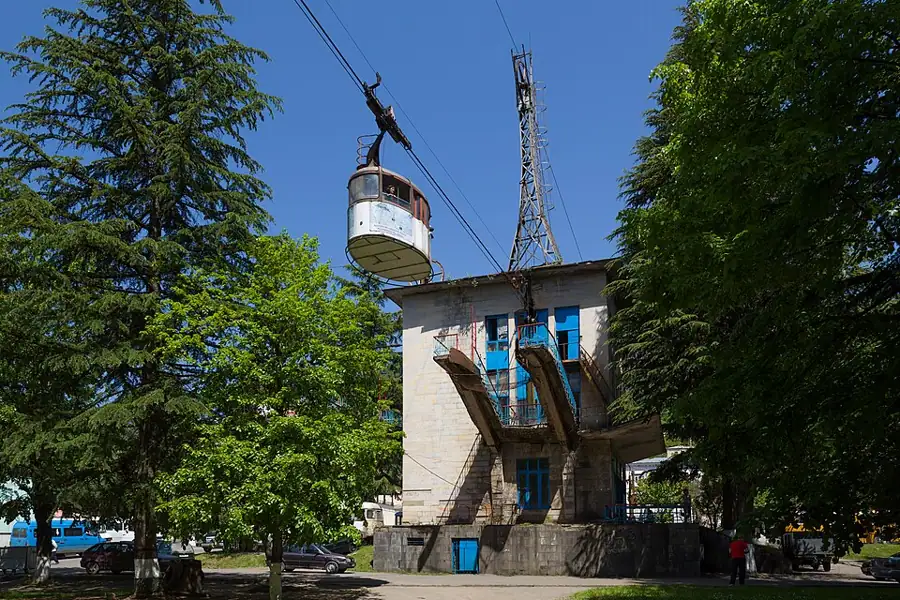
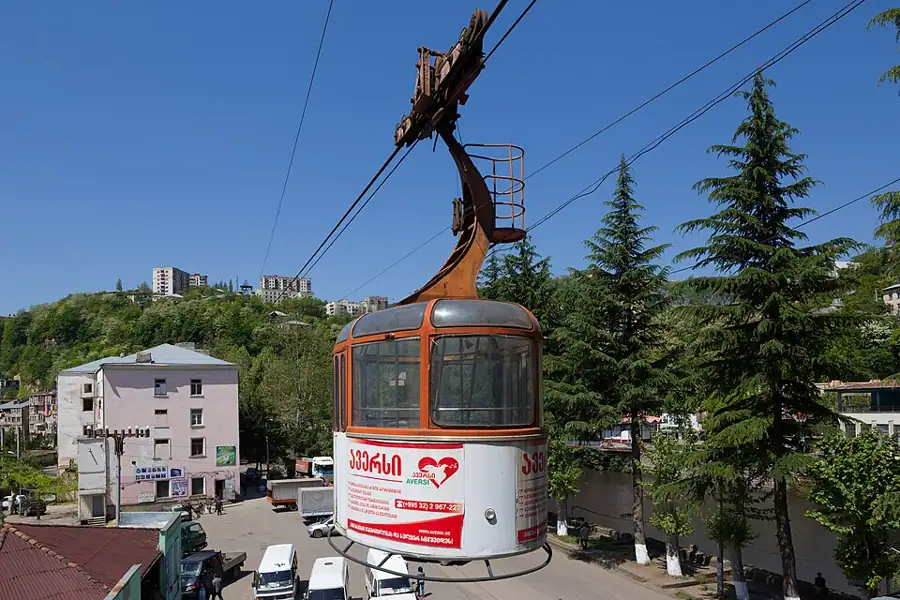
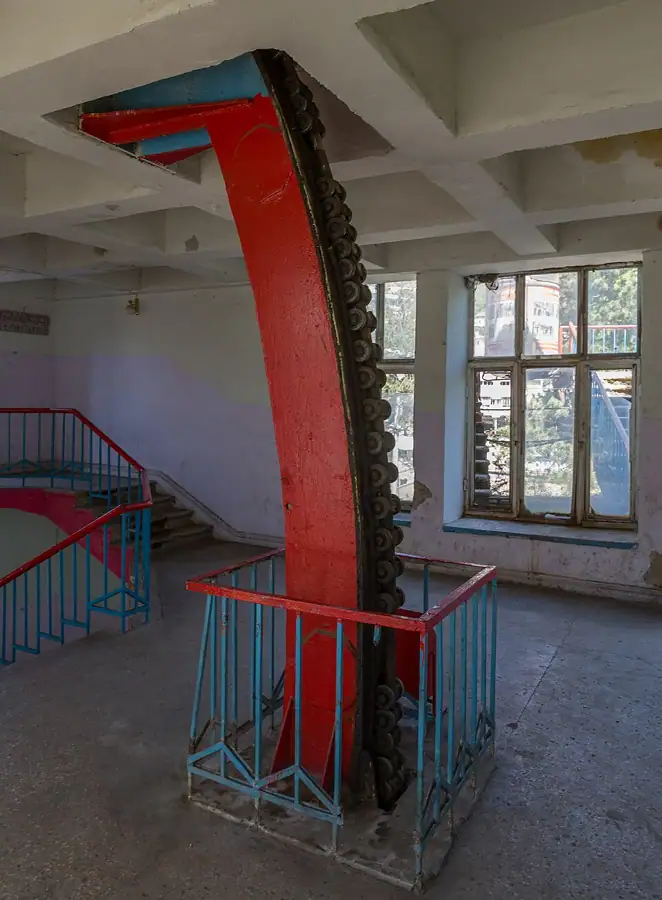
The cable cars came in 1954, because the climb to the pits was eating into every shift. The network grew to seventeen lines and ran on its original Soviet hardware for 67 years, until it was judged unsafe in 2021. A new four-line central station opened that September, a fifth line to Sashevardno followed in early 2025, and others are still being rebuilt. The state means to keep several old stations as heritage.
So you ride modern cabins over the bones of the old system: rusted winding gear, concrete towers with their glass knocked out. Below run the railway that hauls ore to Zestaponi and the grey spoil of a town still at work.
Chiatura makes no effort to charm you. It has a shift to get up the cliff.
Gallery
Practical advice
Allow three hours for rides, a walk and the 10th–11th-century Mgvimevi Monastery, just over a kilometre from the centre. The cabins are small and fill with locals at shift changes, so midday is easier for photographs. Keep out of the abandoned stations: floors have given way and old machinery is still in place. The mine workings are closed to visitors. Cafés and shops cluster around the central square. The gorge is deep, so in winter the sun comes late and leaves early, and the town stays damp. Before you go, watch Rati Oneli's 2017 documentary City of the Sun, filmed among Chiatura's people.
How to get there from Tbilisi
From Tbilisi take the S1 (E60) west over the Rikoti Pass to Zestaponi, about 180 km, then turn north up the Kvirila valley on the Sh22 for the last 35 km, passing Katskhi Pillar some 10 km before town. That makes 215 km and roughly three hours ten, all on asphalt, though after Zestaponi the road narrows, bends constantly and carries heavy lorries. A shorter option leaves the S1 near Agara and follows the Sh22 through Sachkhere, about 185 km. Refuel on the highway before you turn off. An economy car is enough; park near the central square.
Click a marker for details. Coloured lines are ready-made road trips.
Nearby places
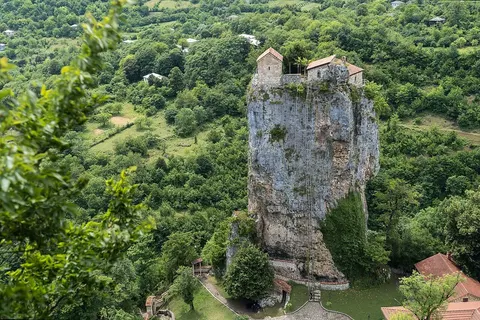
Katskhi Pillar
A 40-metre limestone column above the Katskhuri valley, crowned by a restored medieval hermitage; since 2012 visitors admire it from below.
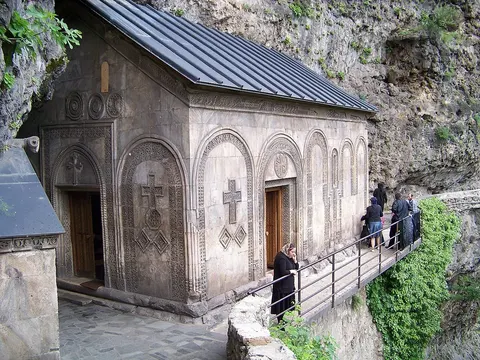
Mgvimevi Monastery
A 13th-century monastery set beneath a limestone overhang above the Kvirila gorge, reached from Chiatura by a long stair and an arched tunnel.
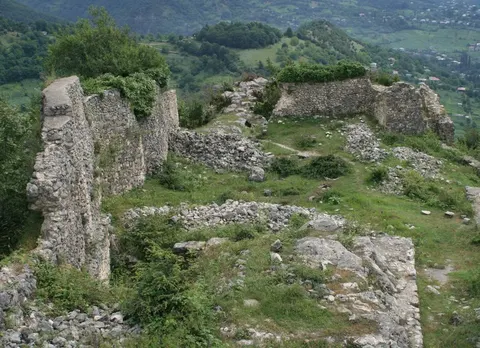
Modinakhe Fortress
An 18th-century Tsereteli stronghold strung along a limestone crest above Sachkhere, named for a dare: “come and see”.
Best car for this trip
Guides
- Driving in Georgia: What the Distances Actually Cost You Georgia is a small country with slow roads. Here is what 267 measured drives from Tbilisi say about how long y
Pickup locations
Car Rental in Kutaisi — 48 km (straight line)