
Sachkhere
A small Kvirila-valley town with a Tsereteli castle, a 1907 stone railway station, an idle Soviet cable car and bold industrial mosaics.
- Time needed
- 1.5 h
- From Tbilisi
- 173 km · 2:40
- Road
- Paved
- Car needed
- Economy class
- Season
- All year
- Entry
- free
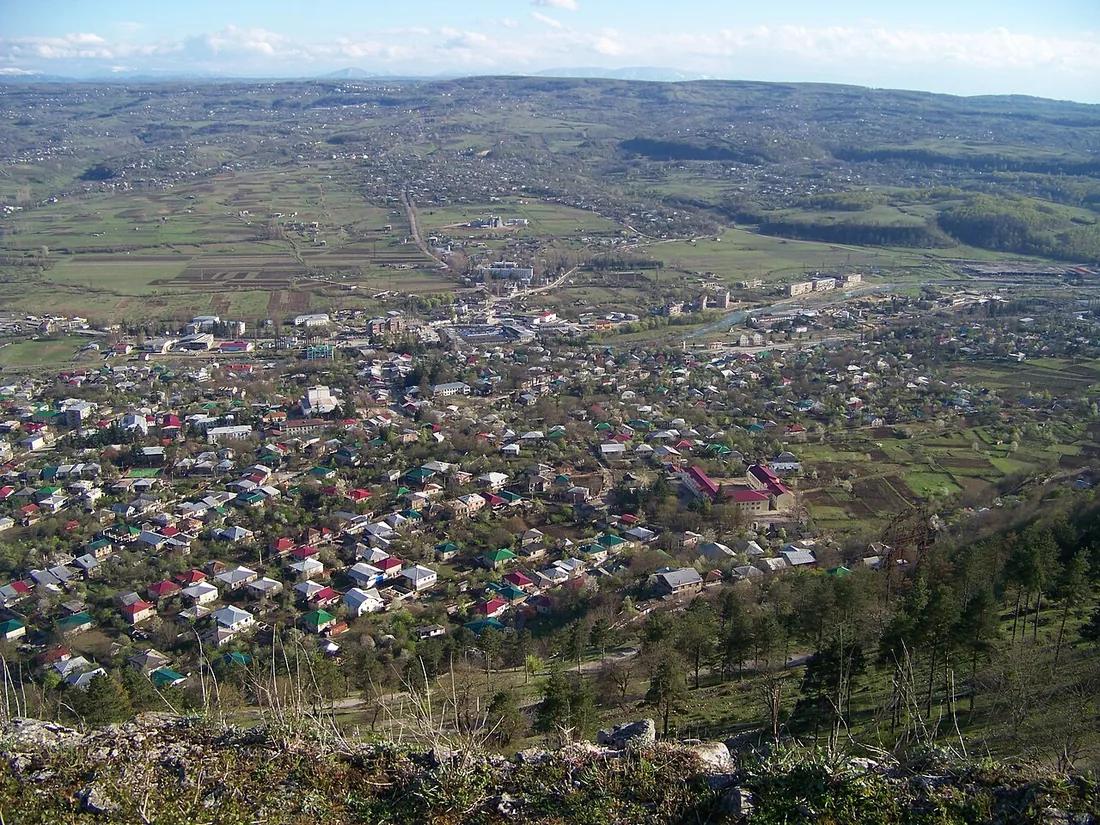
For a town of barely five thousand people, Sachkhere has produced the phage-therapy pioneer George Eliava, two Olympic weightlifting champions and a castle built, so the story goes, to win a bride.
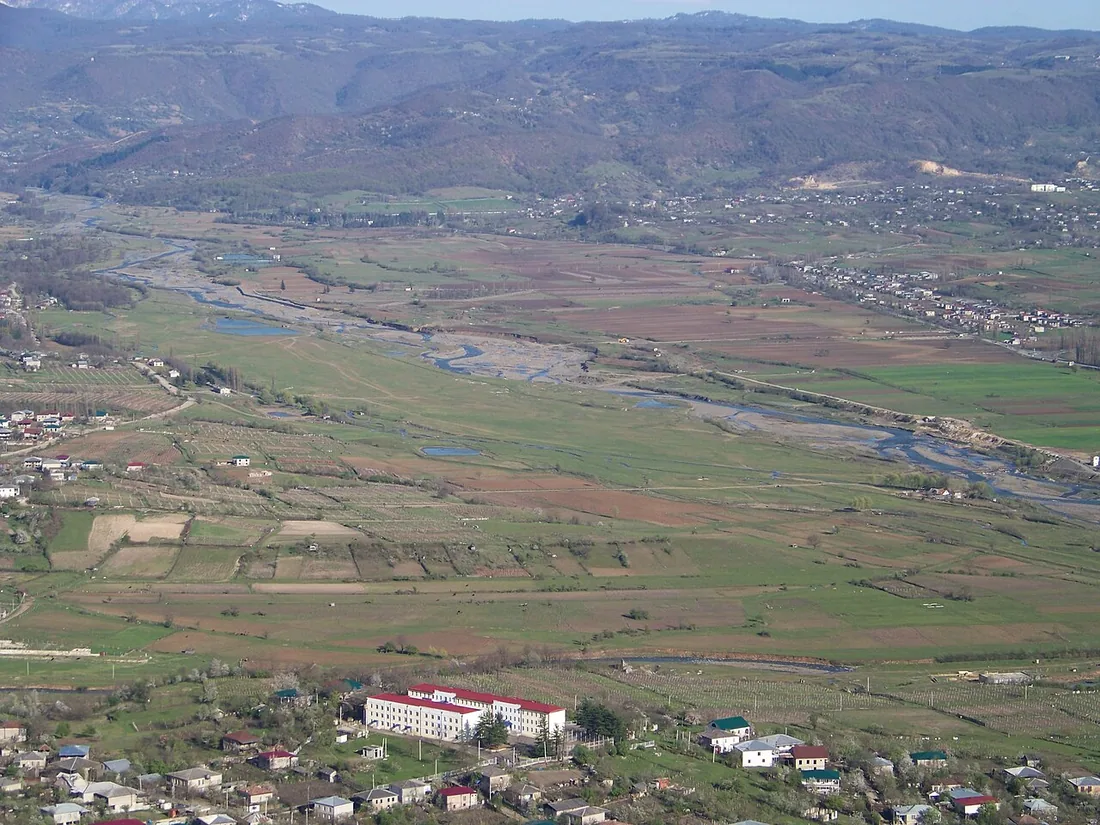
The town sits in the Kvirila valley on the old road that crossed the Likhi Range between Kartli and Imereti. From the end of the 15th century the land belonged to the Tsereteli princes, and early in the 17th century Kings Teimuraz I and Luarsab II, fleeing Shah Abbas, sheltered here with them.
In 1880, 628 of the town's 1,034 people were Georgian Jews. In 1878 nine of them were arrested on a blood libel, accused of murdering a Christian girl from a nearby village. At the Kutaisi Circuit Court in March 1879, the defence lawyers Pyotr Aleksandrov, Lev Kupernik and Moisei Kikodze exposed the false testimony, and every defendant was acquitted.
Modinakhe Castle watches from a ridge above town. Tradition says David Abashidze refused Papuna Tsereteli his daughter because he had no castle; Papuna built one in the 1730s and sent word: 'modi, nakhe' — come and see. It held out against King Alexander V's repeated attempts in 1735, sheltered Solomon I in 1766, and fell only once, to Russian troops in 1810, when its defenders ran out of food. Its restoration after the 1991 earthquake ended in 2019.
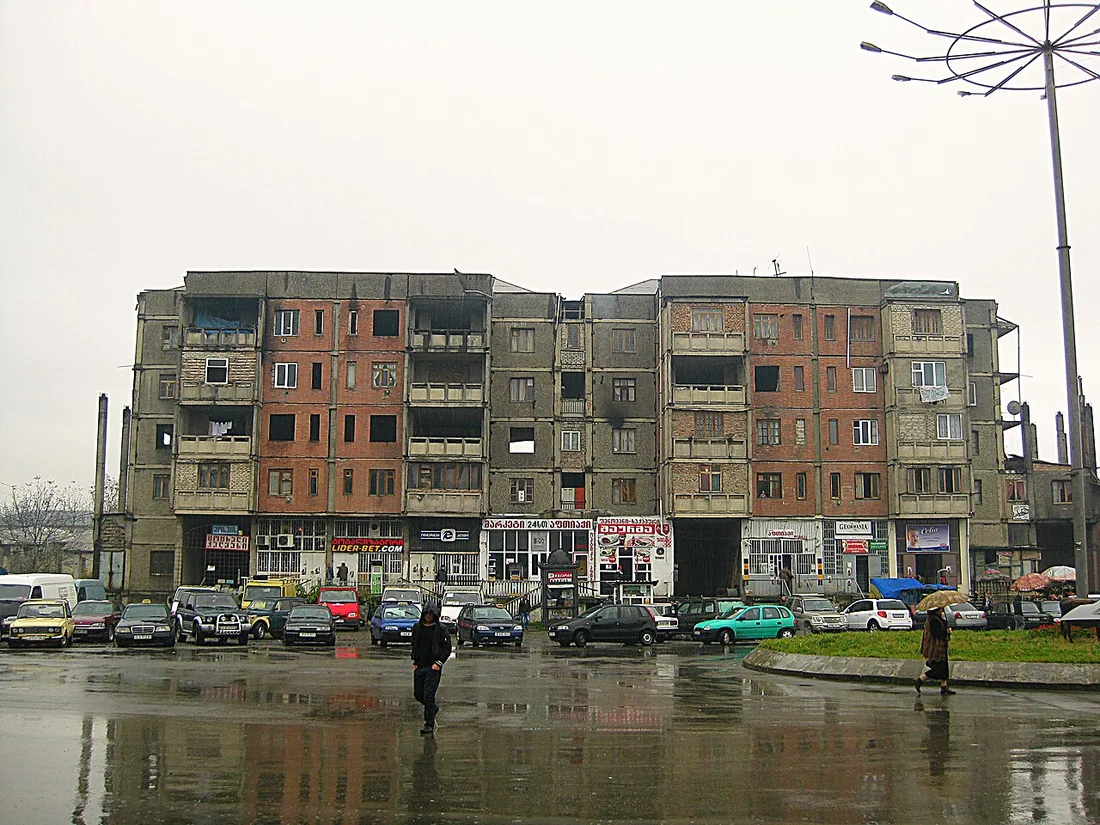
Down in town stand a symmetrical cut-stone railway station of 1907, funded by Elisabeth Tsereteli, and the idle Brutalist station of a cable car that once climbed to the castle. A former petrol station wears a mosaic of vintage cars and a hand holding a torch; across the Kvirila, the old cotton factory carries seven panels of cotton plants and figures in traditional dress. In a single afternoon Sachkhere walks you through three centuries and makes a showpiece of none of them.
Gallery
Practical advice
Park in the centre and walk: the station, the cable-car building and both mosaics are seen from the street, free of charge; the cotton factory is across the river. Modinakhe stands on a steep ridge, so allow separate time and wear proper shoes for it — ask locally about the current state of the path. Fuel, cafés and shops are in town. Pair Sachkhere with the Chiatura cable cars (11 km) and the ruins of Jruchi Monastery (about 13 km); all three fit comfortably into one day. The town is accessible all year.
How to get there from Tbilisi
From Tbilisi take the S1 (E60) west past Gori and Kareli; after about 115 km, near Agara, turn onto the Sh22 and head north-west through Gomi. The road crosses the northern spurs of the Likhi Range and drops into the Kvirila valley — about 55 km. In all, about 173 km and 2 hours 40 minutes, paved throughout, so an economy car is entirely adequate. Fuel is available in Kareli, Khashuri and Sachkhere itself. You can also arrive from the west on the same Sh22 via Zestaponi and Chiatura — the better choice if Chiatura is on your list.
Click a marker for details. Coloured lines are ready-made road trips.
Nearby places
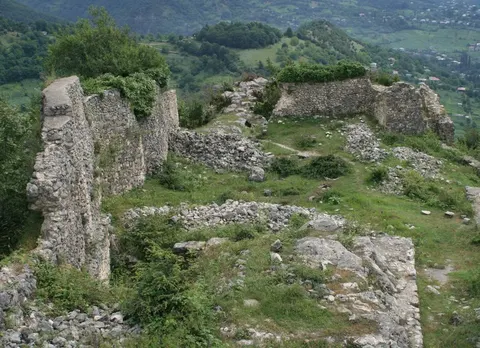
Modinakhe Fortress
An 18th-century Tsereteli stronghold strung along a limestone crest above Sachkhere, named for a dare: “come and see”.
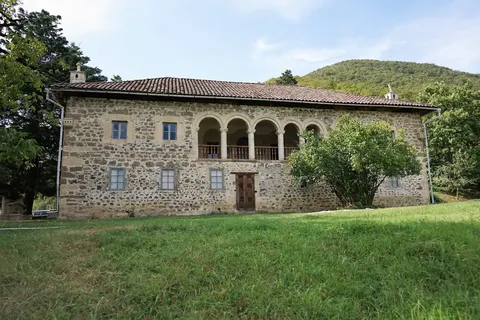
Skhvitori — Akaki Tsereteli House-Museum
The stone manor at Skhvitori, 3 km from Sachkhere, where the poet Akaki Tsereteli was born in 1840 and died in 1915.
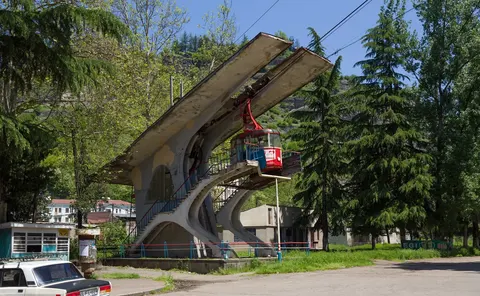
Chiatura Cable Cars
A manganese town at the bottom of the Kvirila gorge, where cable cars have lifted miners up the cliffs since 1954 and still carry the daily commute.
Best car for this trip
Guides
- Driving in Georgia: What the Distances Actually Cost You Georgia is a small country with slow roads. Here is what 267 measured drives from Tbilisi say about how long y
Pickup locations
Car Rental in Kutaisi — 58 km (straight line)