
Niko Pirosmani House Museum
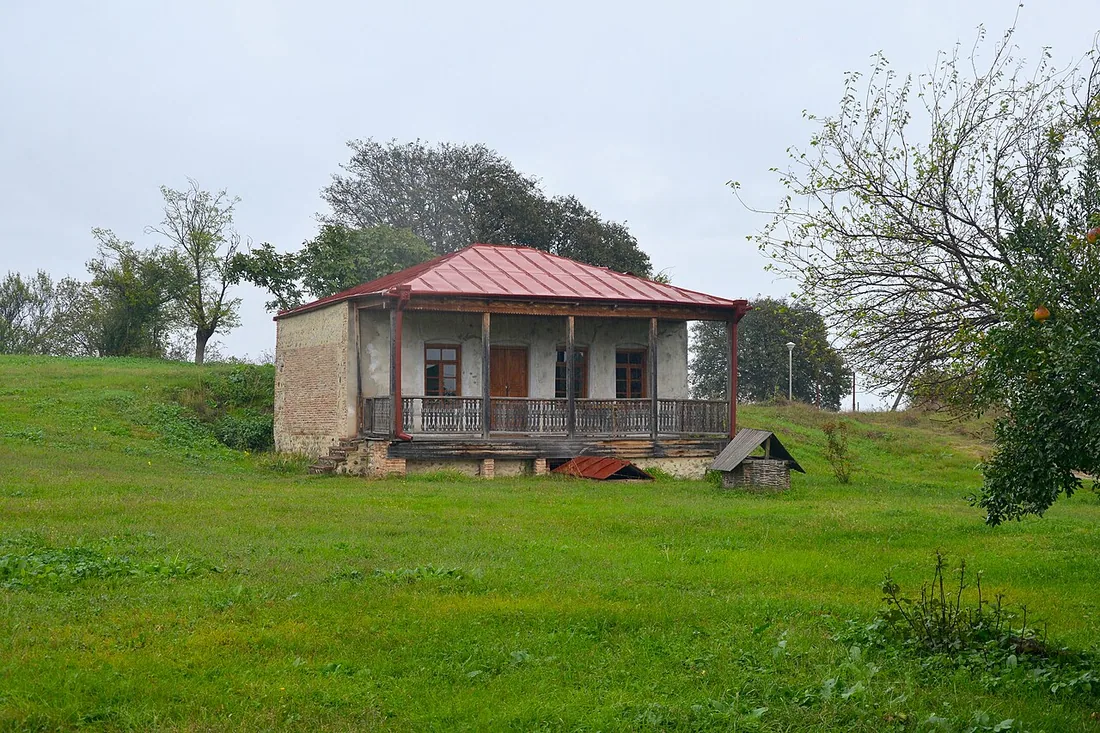
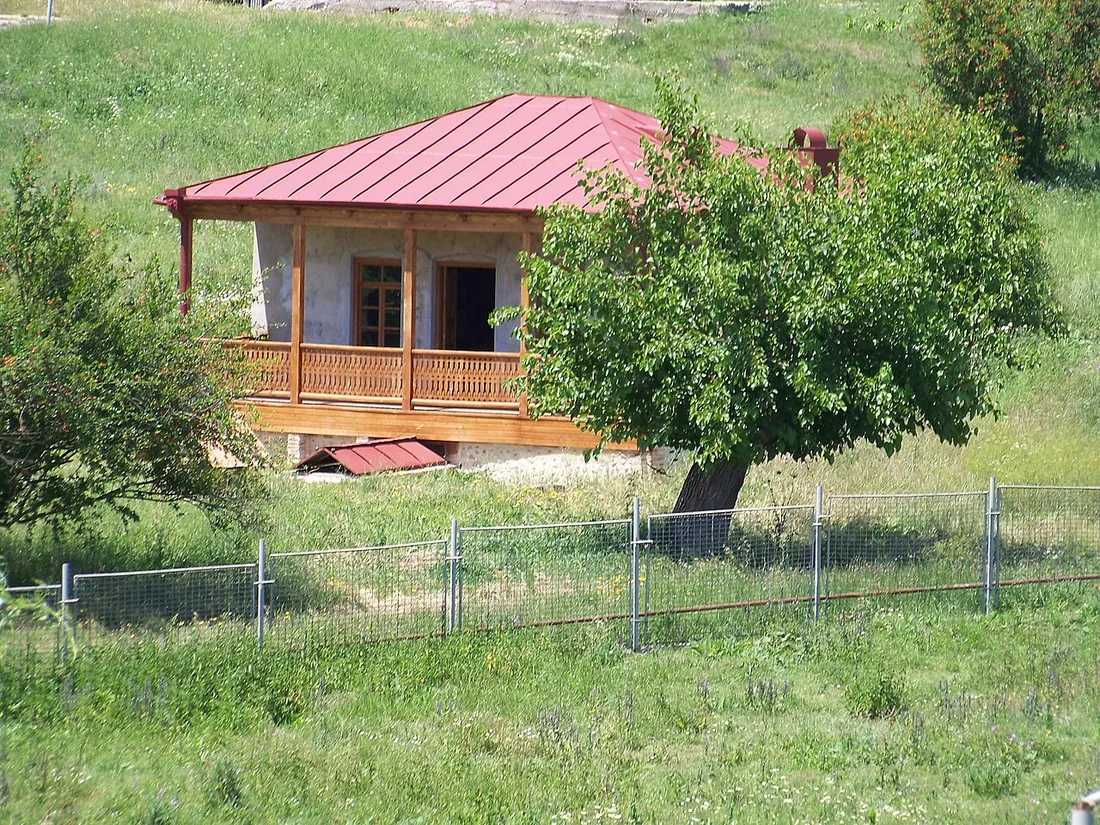
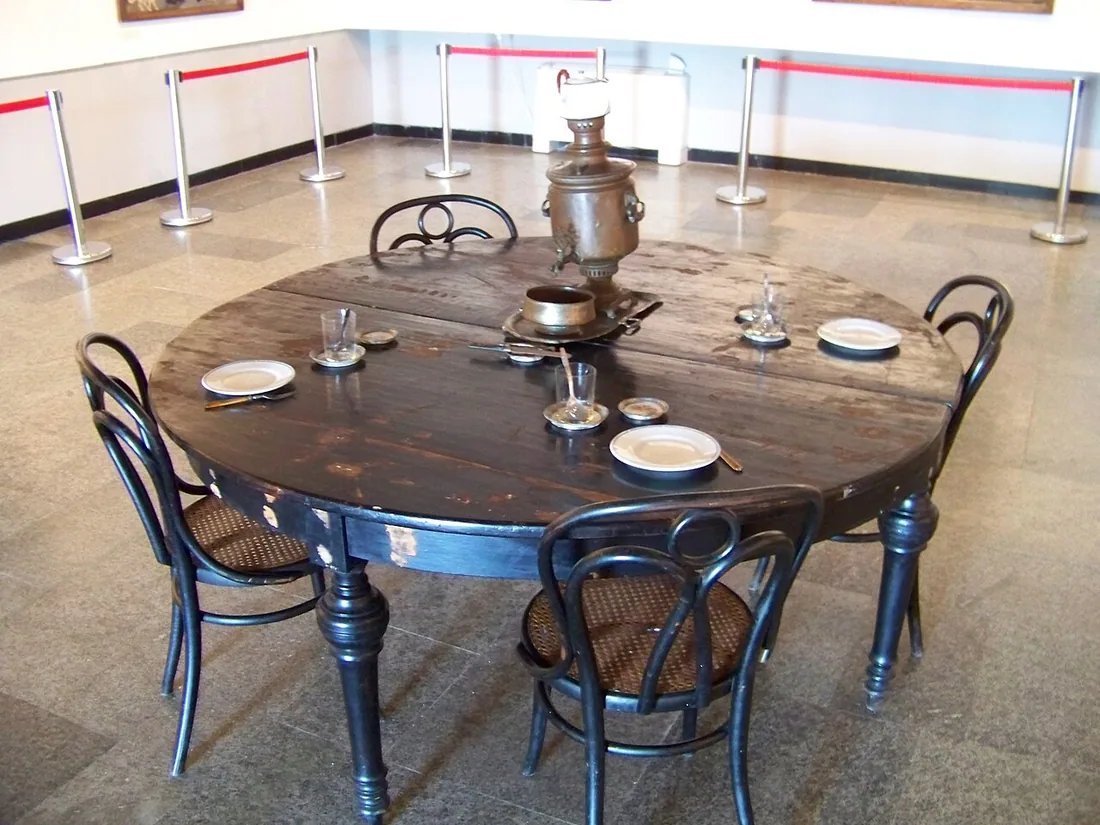
Pirosmani's 1898 village house, now a museum holding 14 of his paintings and a lithograph of Picasso's portrait of him.
- Time needed
- 1 h
- From Tbilisi
- 115 km · 1:55
- Road
- Paved
- Car needed
- Economy class
- Season
- All year
- Entry
- check locally
Niko Pirosmani left behind no family, no fortune and no gravestone — but in Mirzaani, the village where he was born, he left a house.
Pirosmanashvili was born here in 1862 to peasant farmers, orphaned young and raised by his elder sisters, Mariam and Pepe. Nobody taught him to paint. In Tbilisi he painted shop signs, worked on the railway, co-ran a dairy shop and painted for tavern keepers on cheap black oilcloth. In 1898 he built this house back in his home village. He died in Tbilisi in the spring of 1918, alone in a small basement room; where he is buried, no one knows.
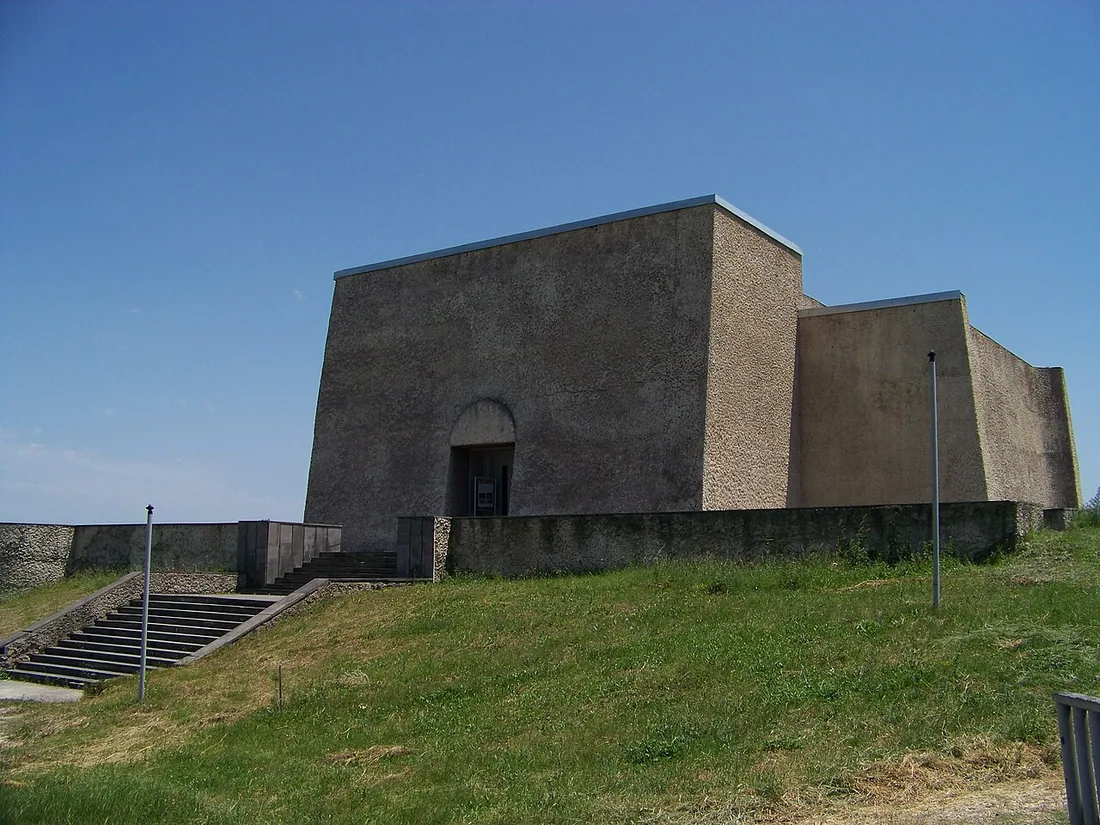
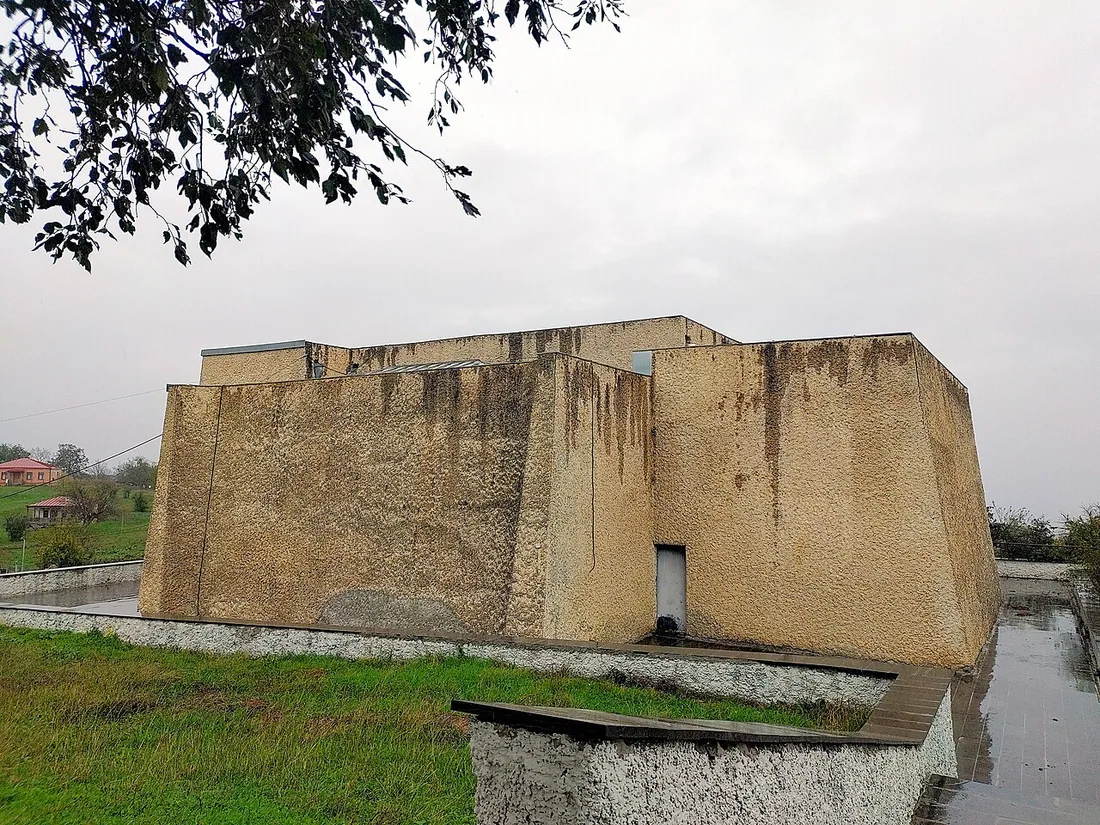
The museum opened in 1960 and holds more than 9,000 exhibits, among them his personal belongings and 14 original paintings. Look at how often Pirosmani leaves the black oilcloth bare, letting it serve as night, as shadow, as the dark from which his feasting men and his calm, almost human-eyed animals step forward.
In the 1910s the avant-garde poet Ilia Zdanevich, with his painter brother Kirill, championed his work and showed it to Pablo Picasso, who went on to make a portrait of him; a lithograph of that portrait hangs here among Pirosmani's own paintings. In 2018 his "Georgian Woman Wearing Lechaki" sold at Sotheby's for $2.8 million — a canvas that had once hung in Stefan Zweig's house in Salzburg.
Legend says he sold everything he owned to carpet a street with flowers for a French actress named Marguerite, a tale later tied to the song "A Million Scarlet Roses". It is a Tbilisi story, and an unprovable one.
Each October Mirzaani holds Pirosmanoba, a festival for the painter. A village of some four hundred people celebrating a man whose canvases now sell for millions: exactly the scale he painted at — a village, a table, its people.
Gallery
Practical advice
The ticket price and opening hours are not reliably published online, so ask your Sighnaghi guesthouse to ring ahead before you make the detour. Allow about an hour for the house and the exhibition hall. Park on the village's main street; the walk in is flat. Food options in Mirzaani are thin — eat in Sighnaghi before or after. Expect crowds during Pirosmanoba in October. Khirsa Monastery is only about 3 km away, and the two fit comfortably into one outing.
How to get there from Tbilisi
Mirzaani is about 115 km from Tbilisi — roughly 1 hour 55 minutes, asphalt all the way. Take the Kakheti Highway (S5) through Sagarejo and Badiauri, then turn off onto the Sighnaghi road (Sh40). The last climb into Sighnaghi is a set of tight switchbacks; beyond the town you drop past Bodbe towards the plain and on to Mirzaani. Fill up in Sighnaghi, as fuel stations thin out after it. An economy car is entirely adequate: the road is paved and easy, with no rough stretch at all.
Click a marker for details. Coloured lines are ready-made road trips.
Nearby places
Khirsa Monastery
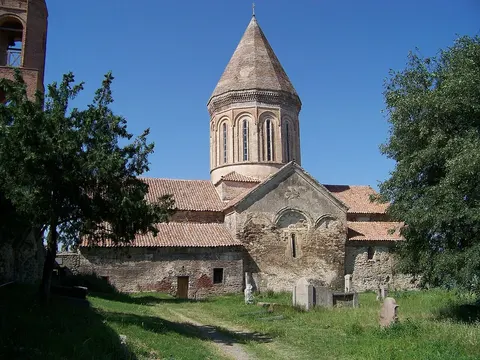
A domed church of sandstone and brick at Tibaani, where a stone dated 886 sits upside down in an arch beneath the dome.
Bodbe Monastery
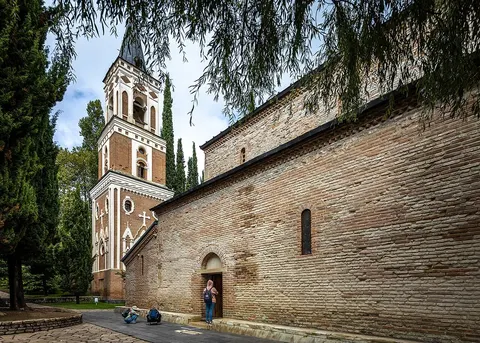
St Nino's resting place above the Alazani Valley: a low basilica among cypresses, a working convent, and a steep path down to her spring.
Sighnaghi
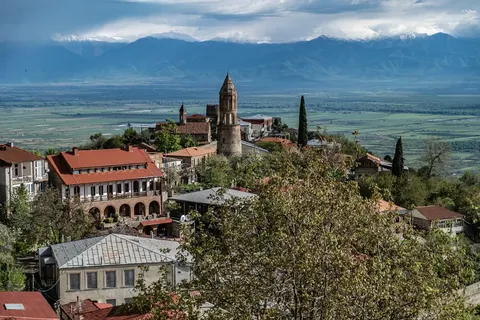
King Erekle's walled refuge on a ridge at 790 metres: towers, cobbled lanes and the whole Alazani Valley laid out below the Caucasus.
Best car for this trip
Guides
- Driving in Georgia: What the Distances Actually Cost You Georgia is a small country with slow roads. Here is what 267 measured drives from Tbilisi say about how long y
Pickup locations
Car Rental at Tbilisi Airport — 86 km (straight line)