
Bodbe Monastery
St Nino's resting place above the Alazani Valley: a low basilica among cypresses, a working convent, and a steep path down to her spring.
- Time needed
- 2 h
- From Tbilisi
- 112 km · 1:55
- Road
- Paved
- Car needed
- Economy class
- Season
- All year
- Entry
- free
Georgia's Christianity began with a woman, and tradition says this is where she lies.
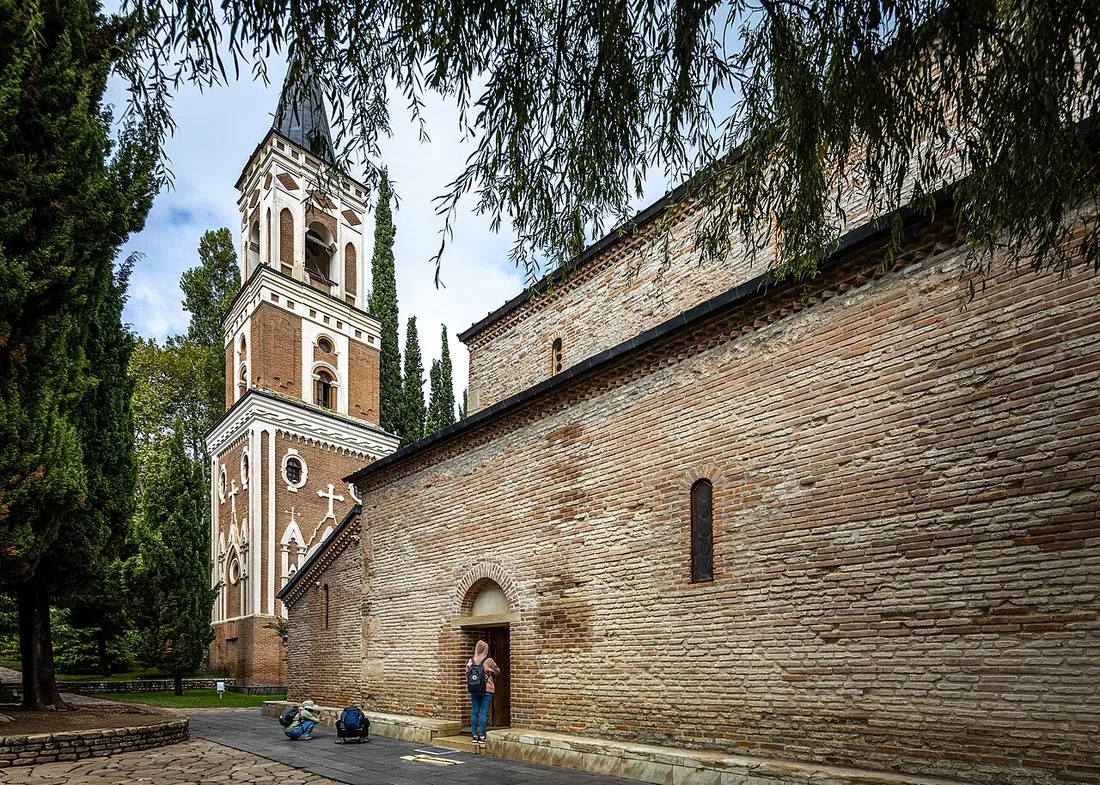
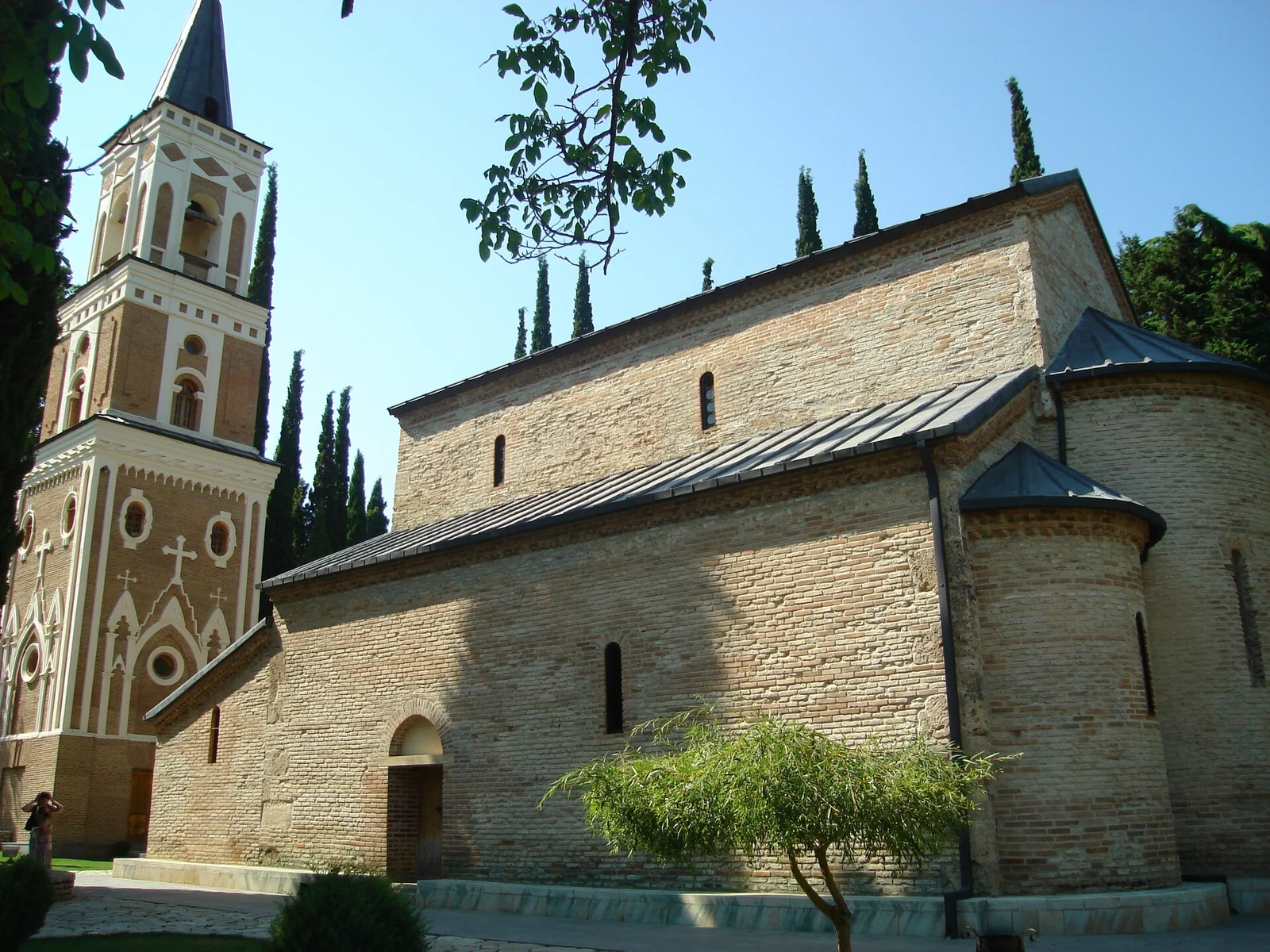
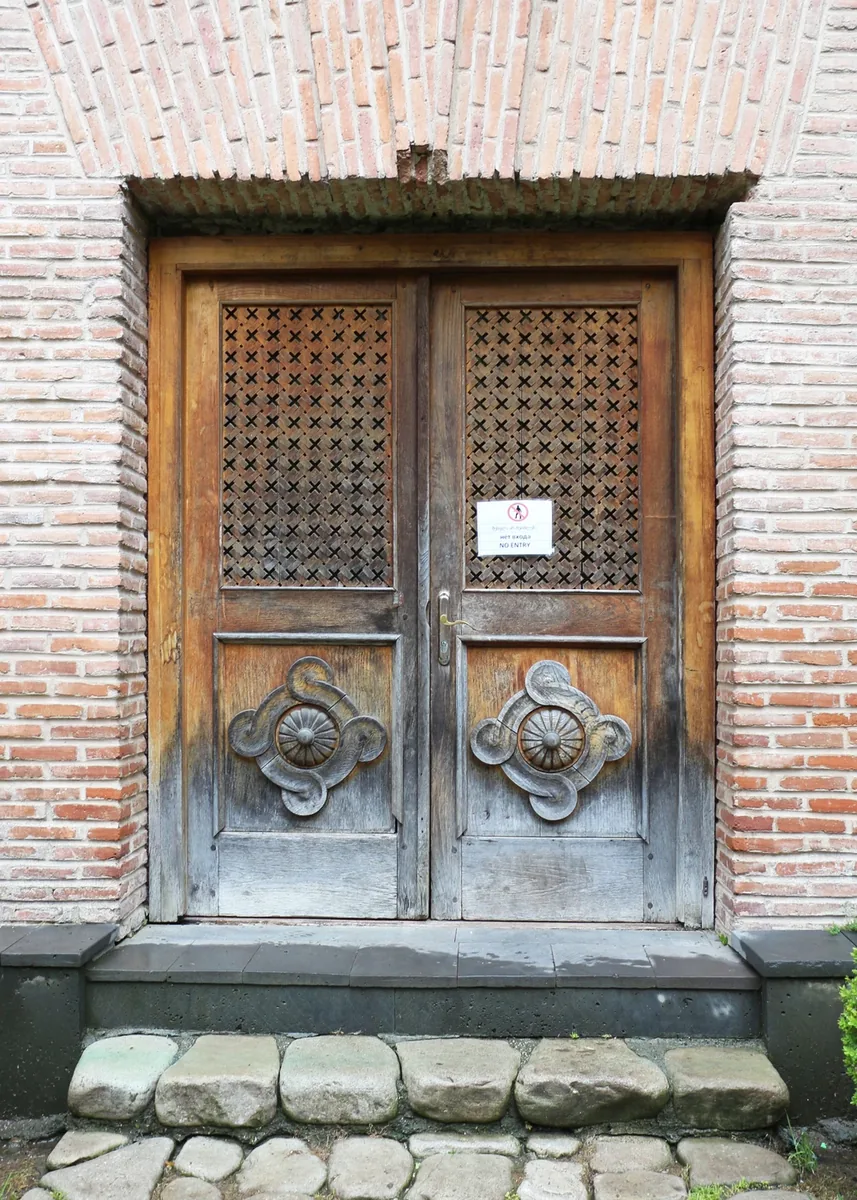
St Nino, the fourth-century evangelist who brought King Mirian III to the faith, withdrew in her last years to the gorge of Bodbe and died here around 338–340. Mirian ordered a small monastery raised over her grave. (Some scholars place her death near Ninotsminda instead; for the Church and for centuries of pilgrims, it is Bodbe.) The three-nave basilica you enter was built between the ninth and eleventh centuries and reworked so often since — pillaged by Shah Abbas's troops in 1615, repainted in the 1820s, restored again in the 1880s — that its plastered walls read in layers. Her tomb lies inside, in a small chapel absorbed into the larger church.
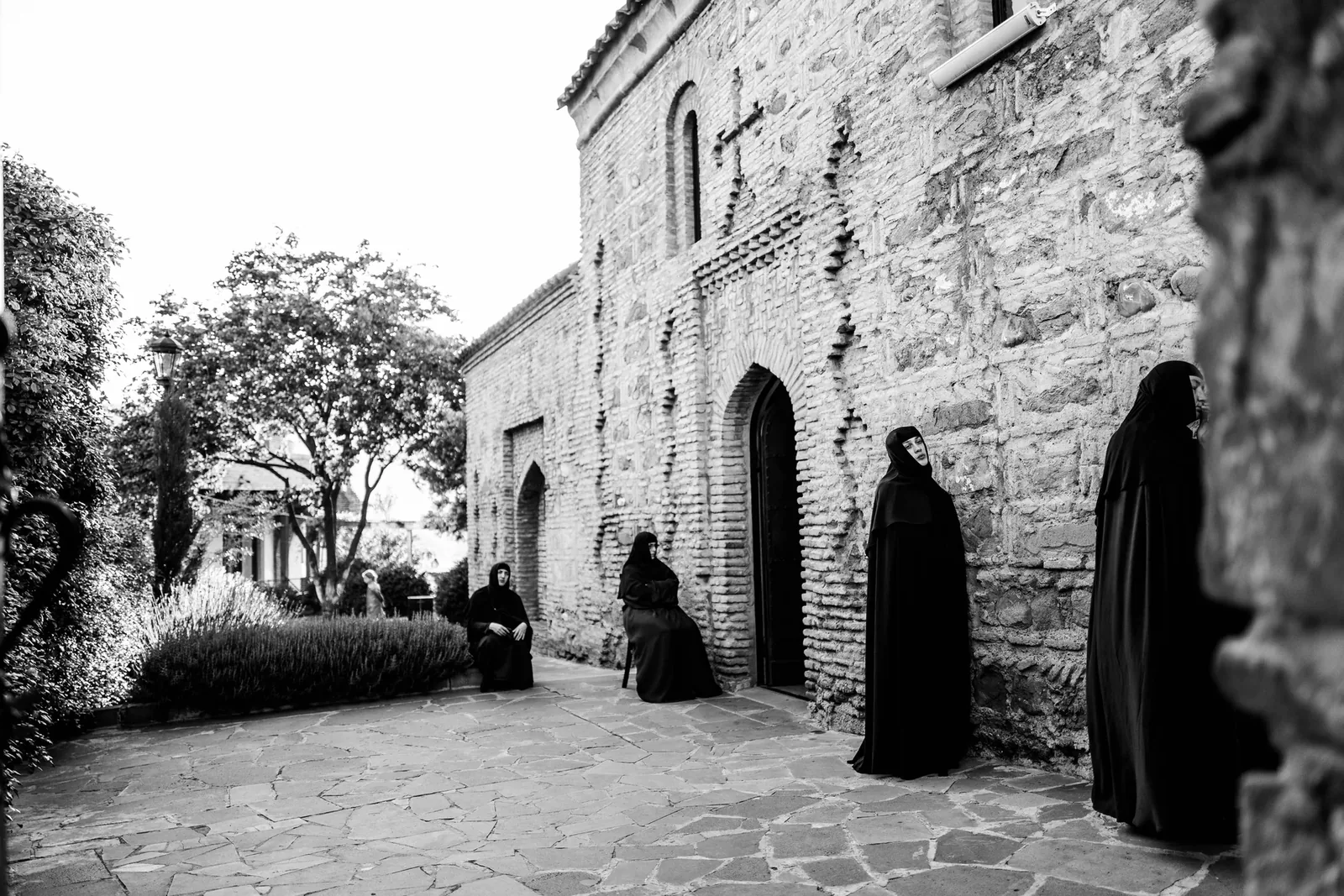
The convent has died and come back more than once. The Russian exarchate abolished it in 1837; Tsar Alexander III ordered a nunnery opened in 1889; the Soviets closed it in 1924 and made it a hospital. The nuns returned in 1991 and are here still, and you often hear their singing through a door before you see anyone.
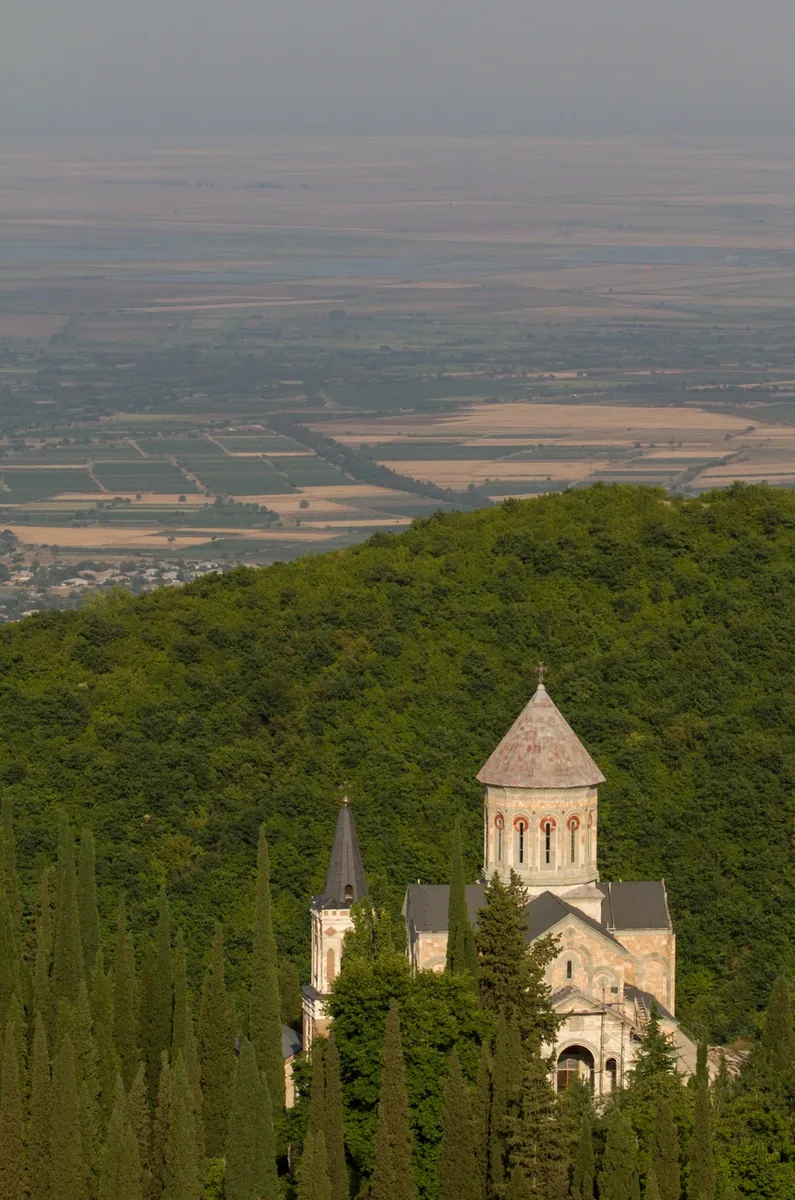
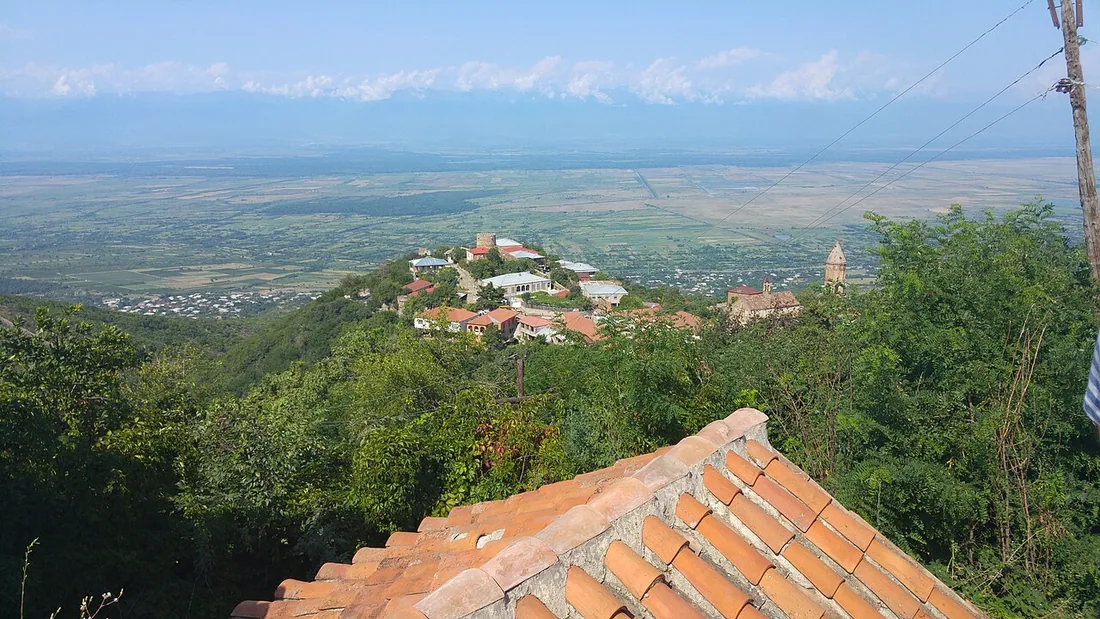
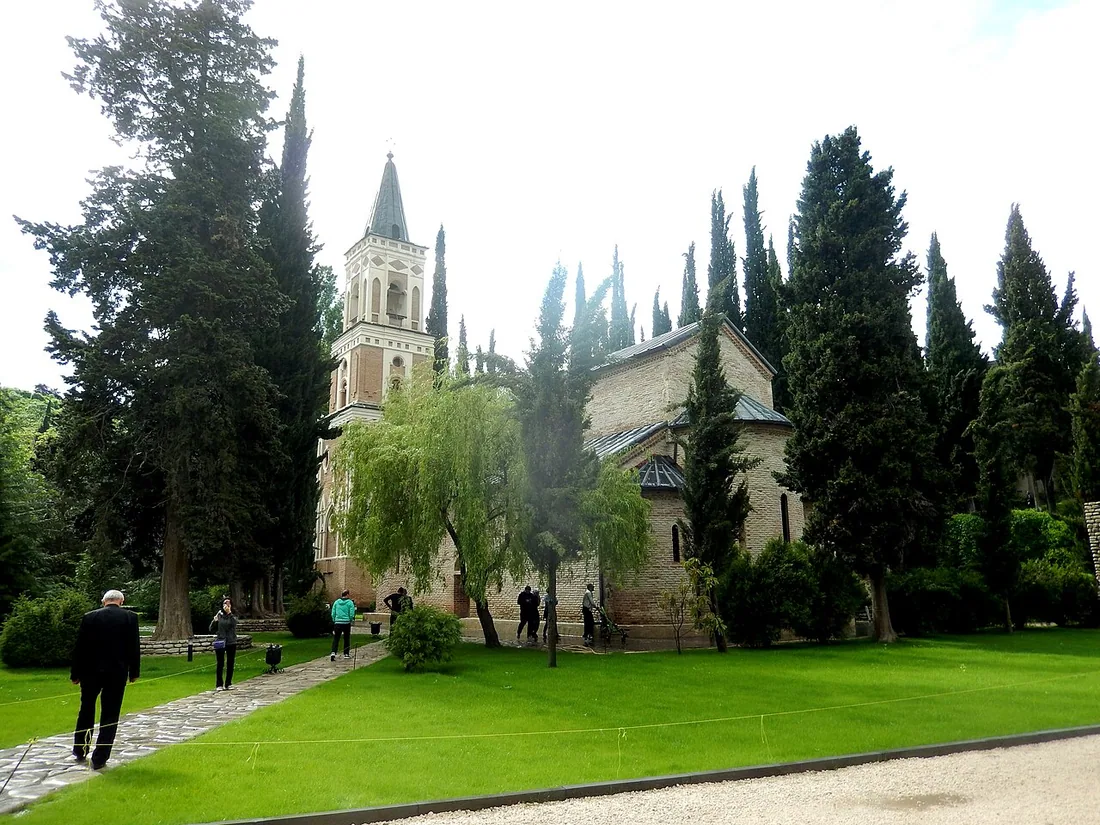
Outside, dark cypresses line the path, roses edge the lawns, and a three-storey bell tower of 1862–1885 stands apart. A much newer, much larger domed church catches most cameras, but Nino rests in the low old basilica. From the terrace the Alazani Valley runs flat all the way to the wall of the Caucasus.
Below, a long, steep path drops to St Nino's Spring, sheltered since the 1990s by a chapel of Saints Zabulon and Sosana — her parents. Legend says the water rose at her prayer, and pilgrims still bathe in it. Most walk back up in silence; the gradient sees to that.
Gallery
Practical advice
Dress as for any Georgian convent: a long skirt and headscarf for women, long trousers for men, shoulders covered. Wraps are usually lent at the gate, but your own scarf saves a queue. Come early in the morning or late in the afternoon — midday brings the coaches from Tbilisi. Photography inside the basilica is restricted, so ask first. Allow two hours for the church, garden and terrace, and one more for the spring, in shoes with grip. If you mean to bathe, bring a long shirt and a towel. On St Nino's feasts, 27 January and 1 June, the grounds fill with pilgrims.
How to get there from Tbilisi
From Tbilisi follow the S5 Kakheti highway east through Sagarejo. About 94 km out, turn right onto the Sh40, which climbs through vineyards towards Sighnaghi; at the edge of the town the signposted Sh176 drops a kilometre or so to the monastery gate. In all it is about 112 km and just under two hours. It is asphalt the whole way, though the final stretch is narrow, steep and tightly curved. An economy car is fine in any season. Fill up in Tbilisi or Sagarejo. Sighnaghi's centre is five minutes back up the hill, so the two make a single outing.
Click a marker for details. Coloured lines are ready-made road trips.
Nearby places
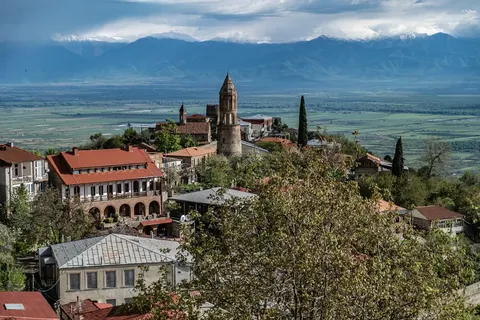
Sighnaghi
King Erekle's walled refuge on a ridge at 790 metres: towers, cobbled lanes and the whole Alazani Valley laid out below the Caucasus.
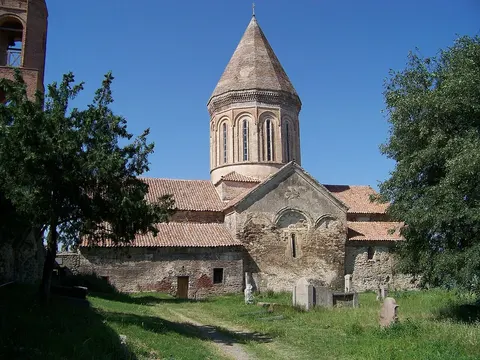
Khirsa Monastery
A domed church of sandstone and brick at Tibaani, where a stone dated 886 sits upside down in an arch beneath the dome.
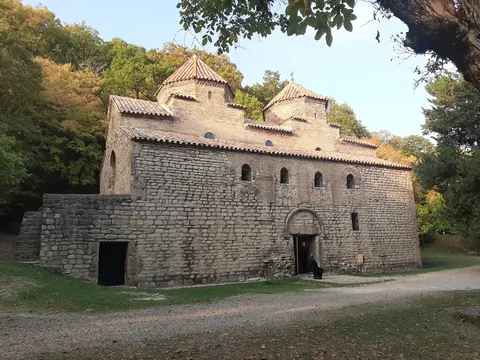
Gurjaani Kvelatsminda
Georgia's only surviving two-domed church: an 8th–9th-century basilica of river cobble and brick in the quiet Kakhtubani valley outside Gurjaani.
Part of these road trips
- Kakheti Wine Loop 3 days · 420 km
- Kakhetian Table and Cellar 3 days · 360 km
- Kakheti Cycling and Wine Road 5 days · 470 km
- Kakheti Wine Day 1 days · 285 km
Best car for this trip
Guides
- Driving in Georgia: What the Distances Actually Cost You Georgia is a small country with slow roads. Here is what 267 measured drives from Tbilisi say about how long y
Pickup locations
Car Rental at Tbilisi Airport — 82 km (straight line)