
Metekhi Church
A thirteenth-century church on a cliff over the Mtkvari that survived a citadel, a prison, Beria and a theatre — with old Tbilisi spread out below.
- Time needed
- 0.5 h
- From Tbilisi
- 3 km · 0:15
- Road
- Paved
- Car needed
- Economy class
- Season
- All year
- Entry
- free
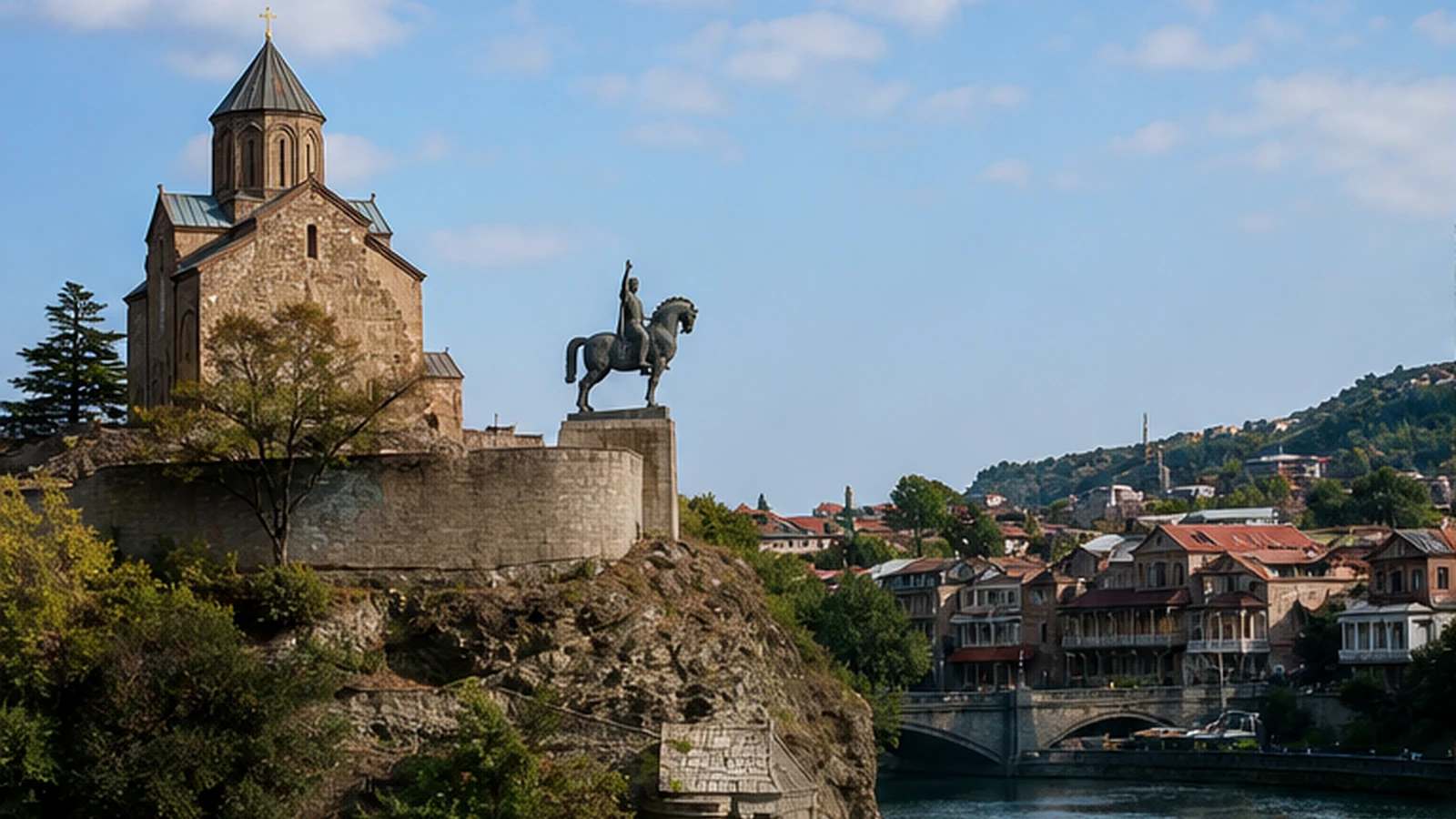
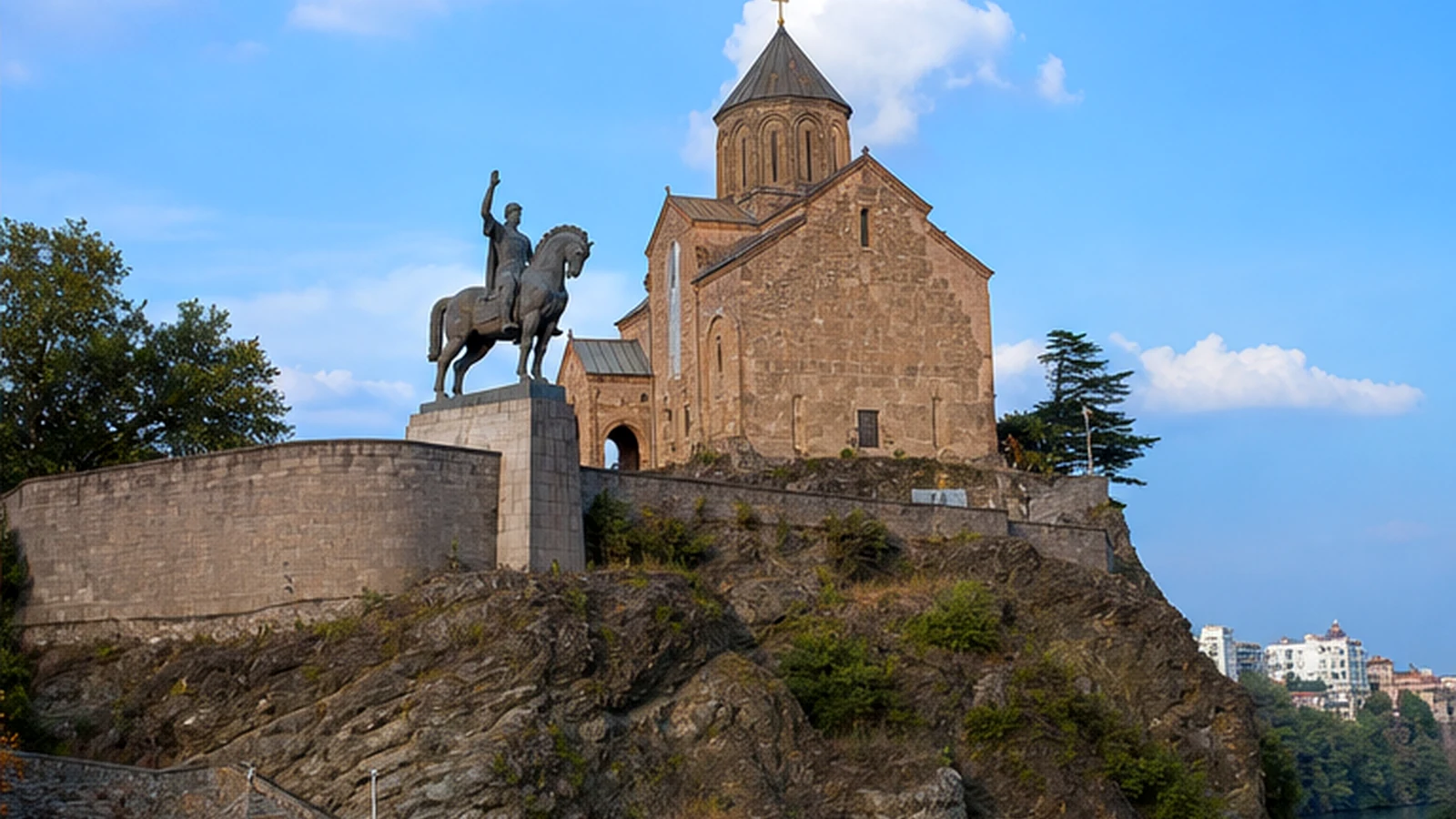
Metekhi means "around the palace", and on this cliff above the Mtkvari the kings of Tbilisi once lived. Tradition credits Vakhtang Gorgasali with a church and fort here in the fifth century, and says that St Shushanik, heroine of the oldest surviving work of Georgian literature, was laid to rest on the spot. Nothing of that outlived the Mongols in 1235. The church you see was raised by King Demetre II around 1278–84: brick and dressed stone, three apses pushing out towards the drop, a dome on four free-standing pillars.
Its later life reads like a roll-call of the city's masters. In the seventeenth century King Rostom ringed it with a citadel held by Iranian soldiers. Under Russian rule the church became a barracks, and in 1819 the citadel gave way to a prison that kept its grim name until it closed in 1938; the young revolutionary Lado Ketskhoveli was shot in his cell here in 1903. During the Great Purges Lavrenti Beria wanted the church pulled down. The painter Dimitri Shevardnadze led the protest and paid for it with his life, but the building stood. In 1974 its interior was stripped for a youth theatre, and only in 1988, after a campaign led by Patriarch Ilia II and a hunger strike by Zviad Gamsakhurdia, did the liturgy return.
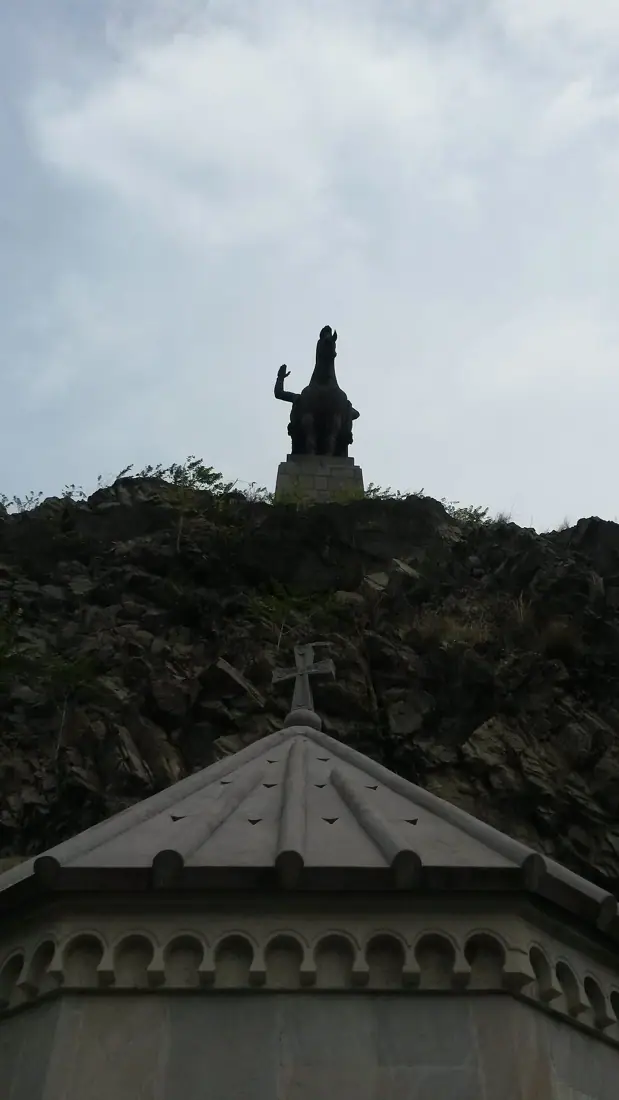
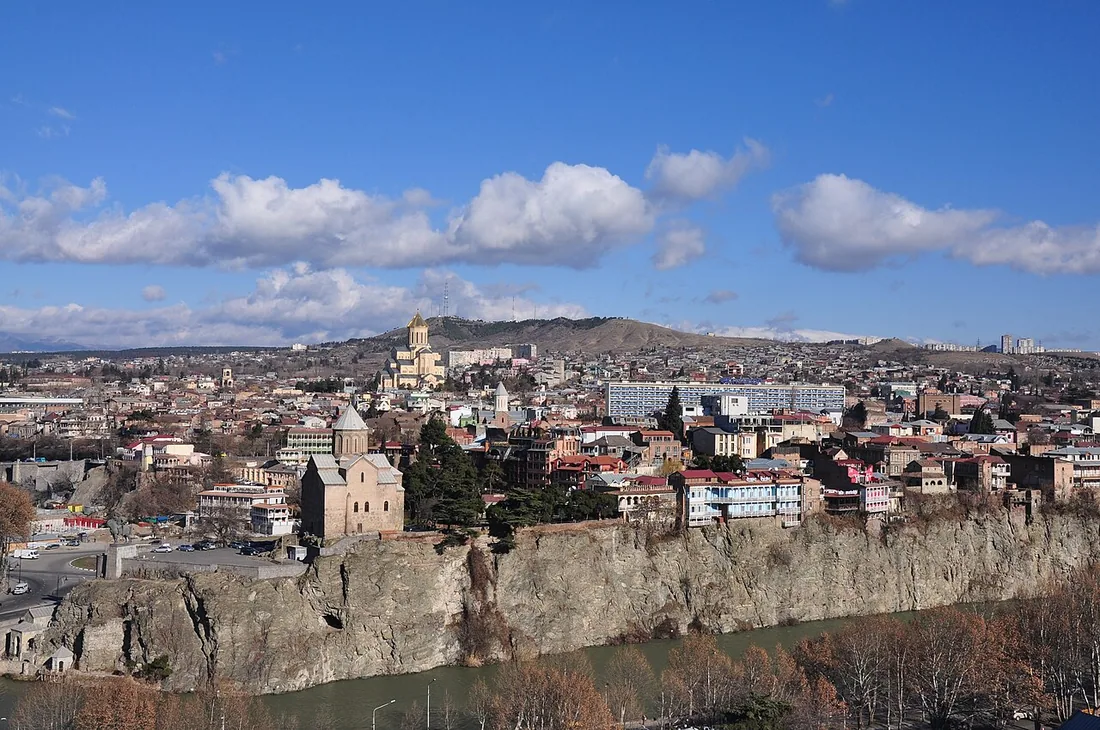
The interior is plain; come for the edge. From the terrace the domes of the sulphur baths lie below, Narikala climbs the opposite ridge and the river swings beneath Metekhi bridge. Beside the church, Vakhtang Gorgasali sits his bronze horse, cast by Elguja Amashukeli in the 1960s, above the city he is said to have founded after his falcon's pheasant fell into a hot spring. Come at sunset, when the cliff turns copper and the old town lights up window by window.
Gallery
Practical advice
Half an hour is enough. A few steps lead up to the church, but the terrace is flat and manageable with a wheelchair. This is a working church: women cover their hair and wear skirts, men long trousers, and scarves hang by the door. The parapet above the cliff is low — keep hold of small children. The light is kindest in the morning and at sunset; at midday the view is flat and hazy. There are no facilities at the church itself: toilets and cafés are down at Gorgasali Square, across the bridge. In winter the wind on the cliff bites.
How to get there from Tbilisi
Metekhi stands on the left bank, about 3 km and ten to fifteen minutes' drive from Freedom Square. Come down to Gorgasali Square, cross Metekhi bridge and turn up the short ramp to the church. The little square in front holds only a handful of cars and is usually taken by tour coaches. More reliable is the paid car park at Rike Park, a ten-minute walk away, or the paid bays towards Avlabari; Avlabari metro is also about ten minutes on foot. The road is asphalt all the way, and an economy car is all you need.
Click a marker for details. Coloured lines are ready-made road trips.
Nearby places
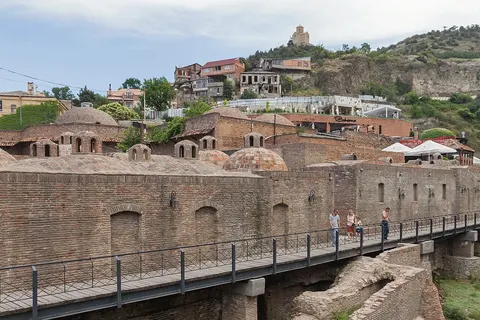
Abanotubani and the Sulphur Baths
Brick domes breathing sulphur at the foot of Narikala: the warm springs that gave Tbilisi its name, still filling private stone pools by the hour.
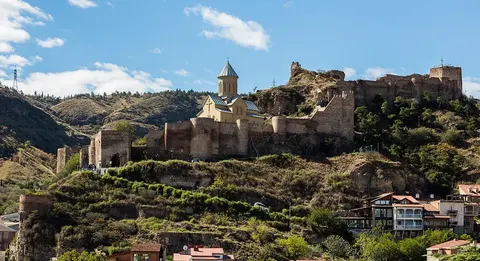
Narikala Fortress
Sixteen centuries of wall on the Sololaki ridge above the Old Town: Tbilisi's citadel, its oldest silhouette and its widest view.
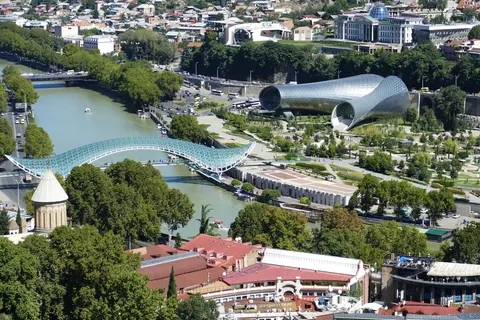
Bridge of Peace and Rike Park
A glass-and-steel wave over the Mtkvari that lights up under your footsteps, and the riverside park where the cable car sets off for Narikala.
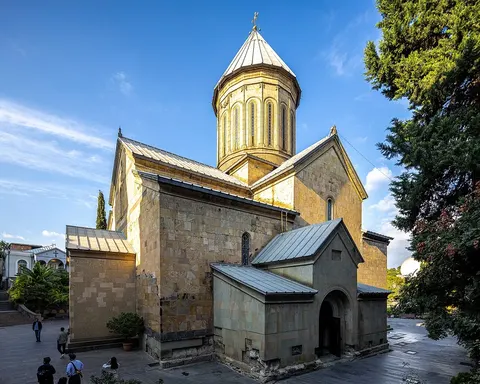
Sioni Cathedral
A honey-coloured cathedral in the old town, destroyed and rebuilt for fourteen centuries, where St Nino's grapevine cross rests in candlelight.
Best car for this trip
Guides
- Driving in Georgia: What the Distances Actually Cost You Georgia is a small country with slow roads. Here is what 267 measured drives from Tbilisi say about how long y
Pickup locations
Car Rental in Tbilisi — 1 km (straight line)