
Martvili (Chkondidi) Monastery
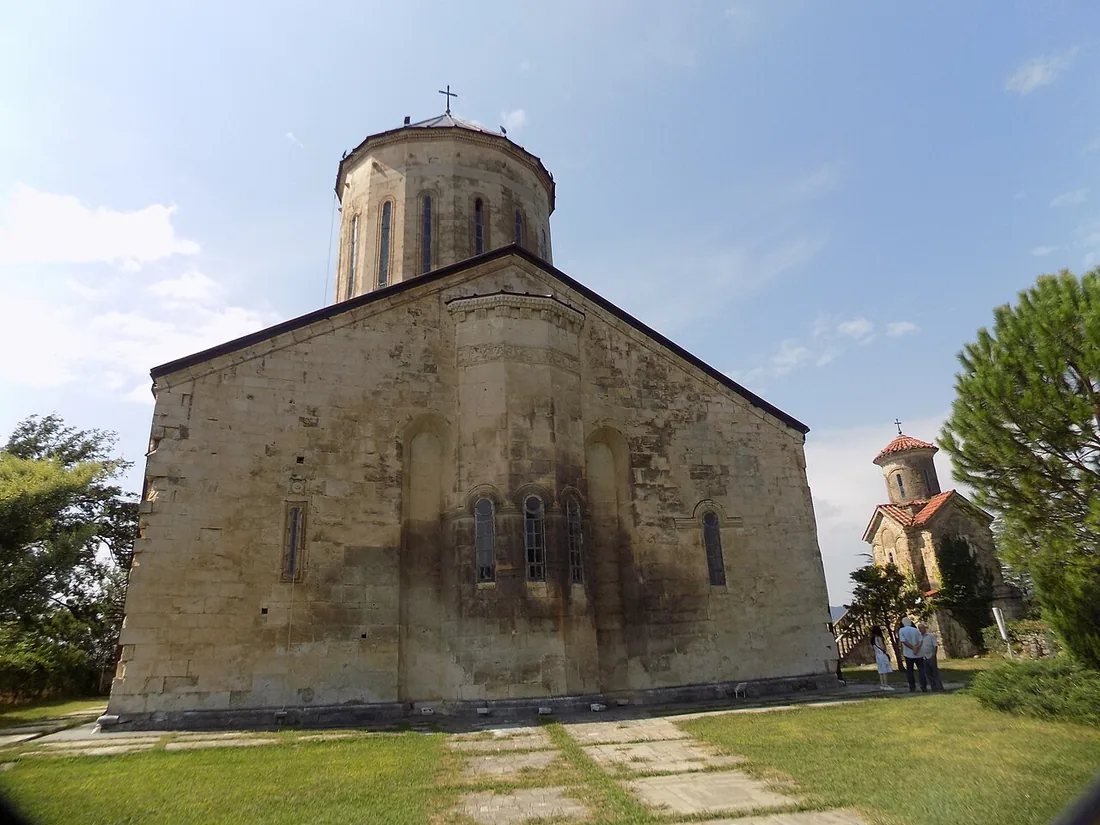
On the hill where Mingrelians once worshipped an oak, the cathedral of Chkondidi, carved with Daniel and his lions, looks out over Imereti and Samegrelo.
- Time needed
- 1.5 h
- From Tbilisi
- 280 km · 4:15
- Road
- Paved
- Car needed
- Economy class
- Season
- All year
- Entry
- free
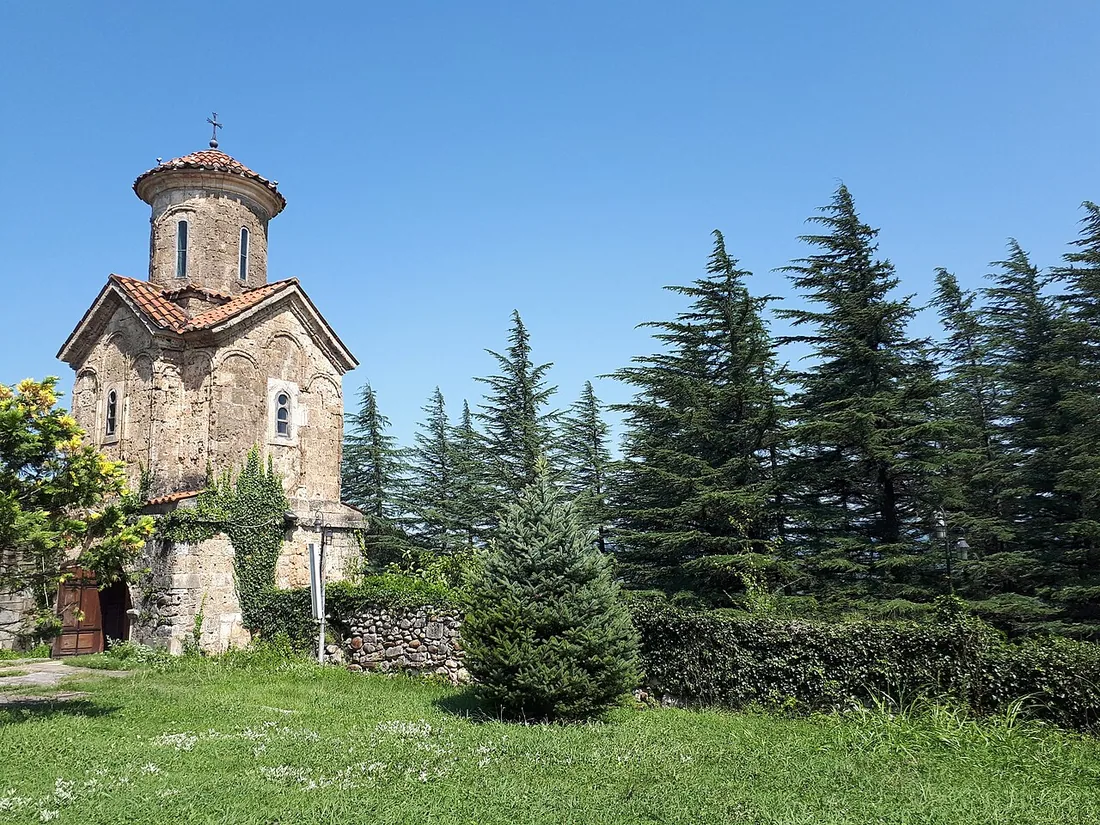
Before there was a church on this hill there was an oak, and, tradition says, people offered it their children. The local story tells of a giant sacred tree on the summit, a shrine of fertility and family fortune where priests sacrificed infants. When Christianity came the oak was felled, and the first church, dedicated to St Andrew the First-Called, rose over its roots. The Mingrelian word for oak, chkoni, survives in the place's second name: Chkondidi, "great oak".
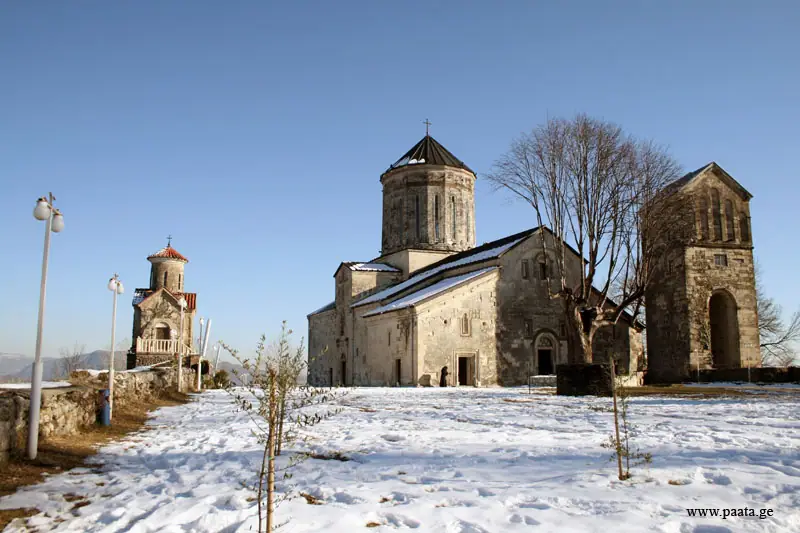
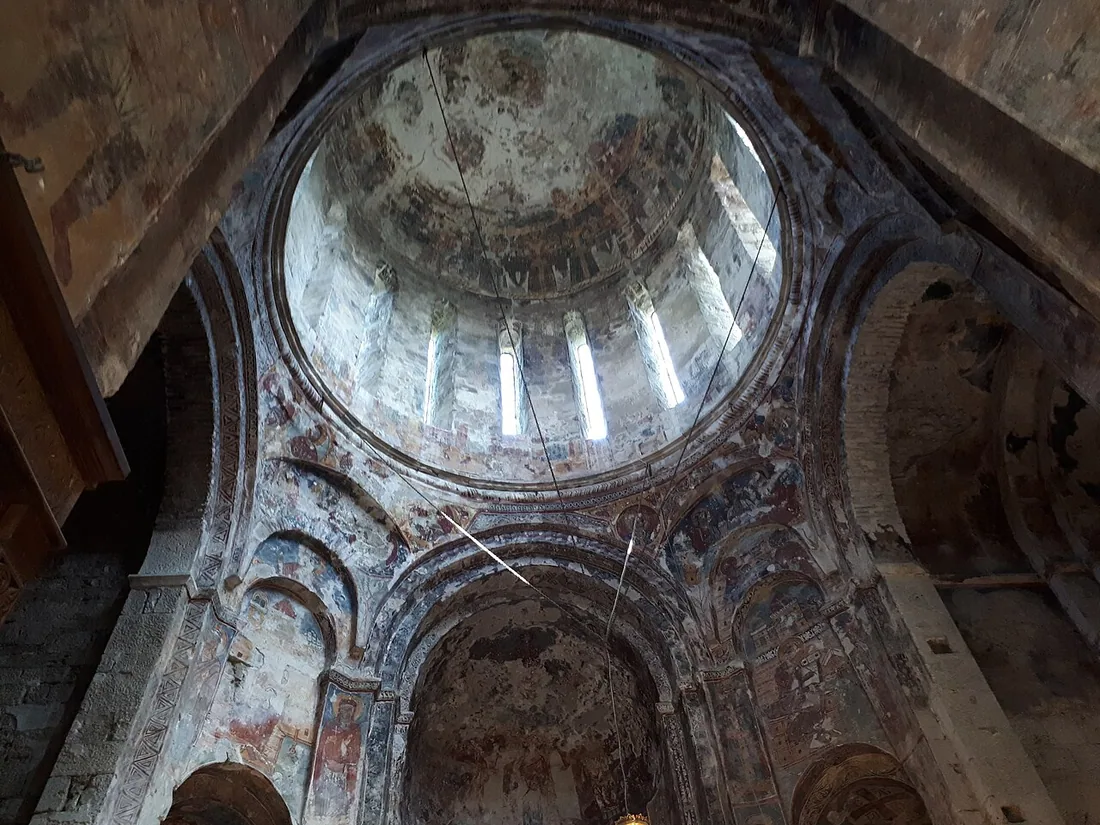
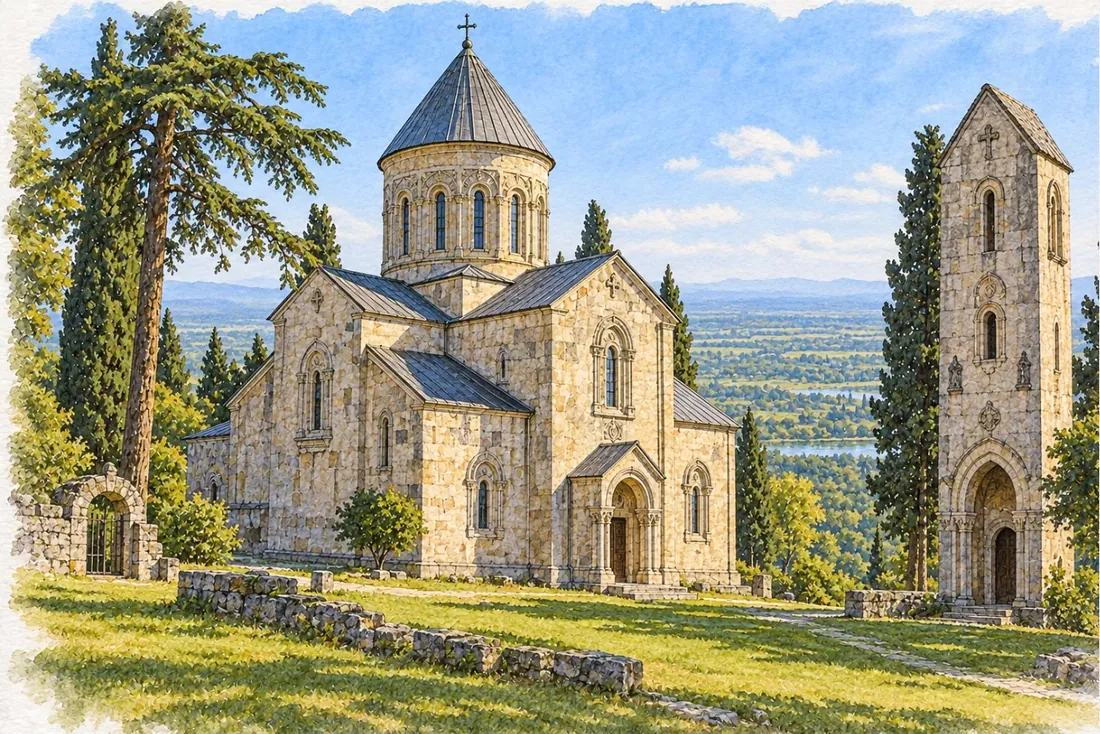
The domed cathedral of the Dormition was built in the 7th century and thoroughly rebuilt in the 10th under King George II of Abkhazia. Its plan echoes the Jvari church at Mtskheta, but its proportions are its own, and the space inside feels lighter and wider. Walk round the outside for the carved friezes: Daniel in the lions' den, Samson and the lion, Christ's Ascension borne by four angels. Inside, frescoes of the 14th, 16th and 17th centuries survive; the finest is the Virgin of Martvili in the conch of the apse.
In the Middle Ages this hill held real power. After the Ruisi-Urbnisi council of 1103, the bishop of Chkondidi usually also served as mtsignobartukhutsesi, the king's first minister. The most famous of them, Giorgi Chkondideli, was tutor to David the Builder, and the chronicle Kartlis Tskhovreba says King Bagrat IV lies buried here. West of the church stands a stone pillar; tradition says the monastery's last stylite lived in a cell on top.
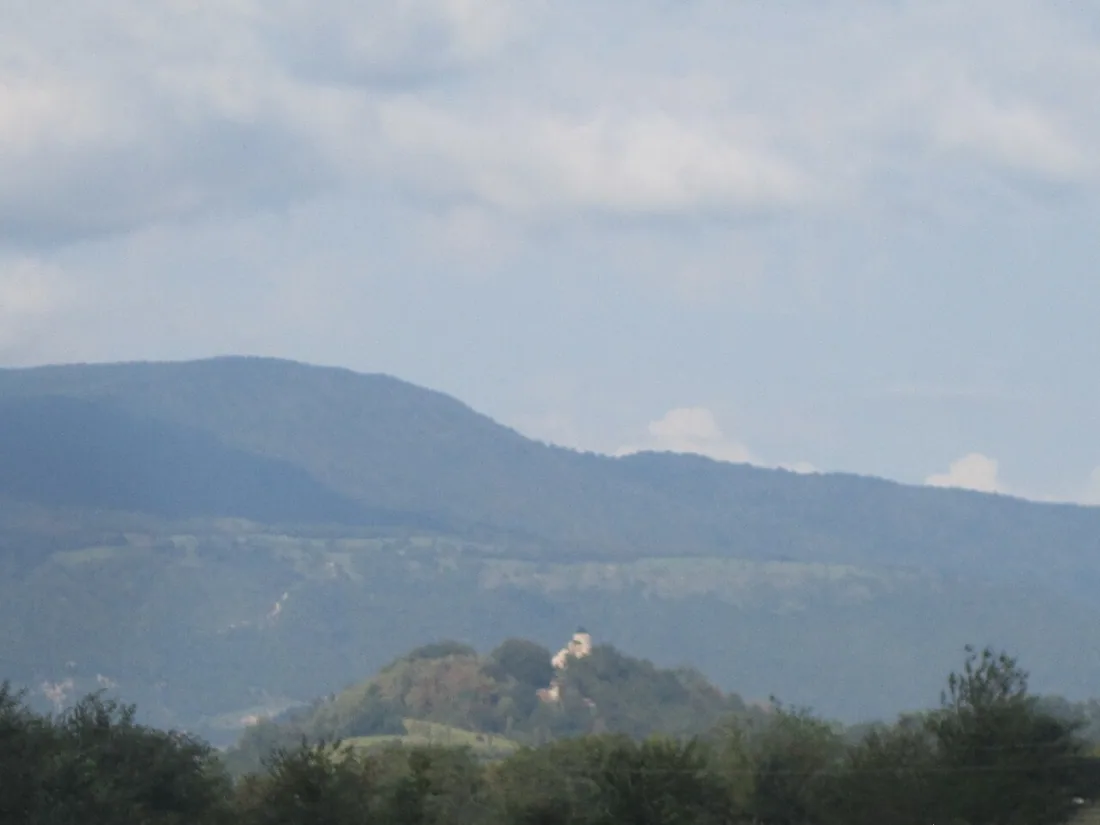
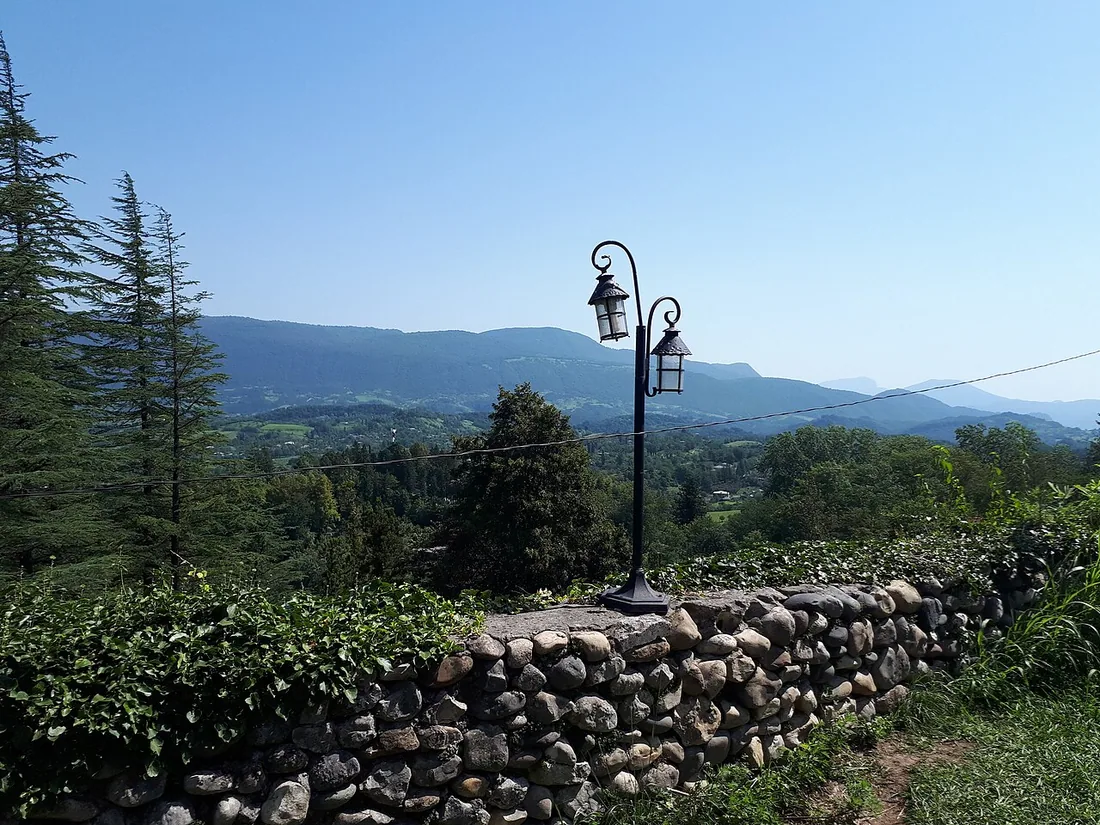
Abandoned in the Soviet years, the monastery revived in 1998 and now houses both monks and nuns. Stand by the wall at sunset: the valleys of the Tskhenistskali and the Abasha open below, and the old oak hill still feels like the centre of the world.
Gallery
Practical advice
The dress code is enforced: shoulders and knees covered, headscarves for women — wraps are usually available at the gate. Come early: by midday, groups from Martvili Canyon, ten minutes away, arrive in waves. An old Soviet cable car climbs from the town for a few coins, but it does not run every day; otherwise drive the short paved road to the top and park below the walls. There is no café on the hill — eat in Martvili, which has a few good places. Allow an hour and a half, including time at the wall for the view.
How to get there from Tbilisi
About 280 km and 4 hours 15 minutes from Tbilisi. Take the E60 motorway west past Gori, over the Rikoti Pass and round Kutaisi to Samtredia, then on to Abasha, where the Martvili road turns north. The asphalt is good all the way, and a short paved serpentine lifts you from the town to the monastery gate. Refuel in Kutaisi or Samtredia; Martvili has stations too. An economy car is enough all year. The monastery pairs naturally with Martvili Canyon and Salkhino for a full, unhurried day.
Click a marker for details. Coloured lines are ready-made road trips.
Nearby places
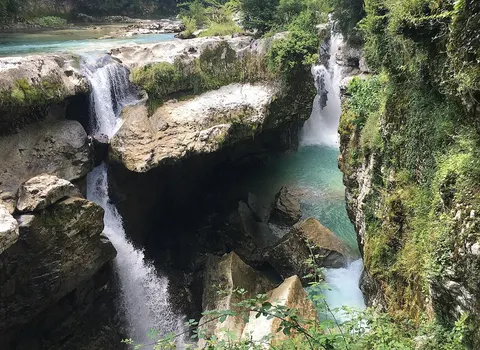
Martvili Canyon
The Abasha river's deep green water between limestone walls up to 70 m high: a 700 m walkway, a short boat ride and the Dadianis' bathing place.
Balda Canyon
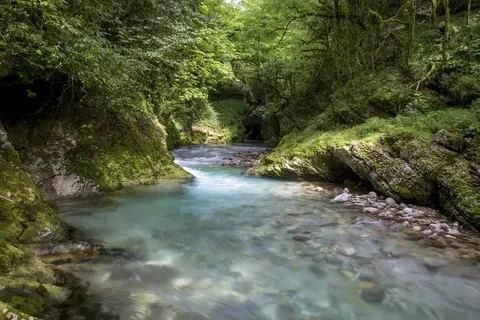
A 1.4 km limestone slot cut by the Abasha river beside Balda monastery: narrow, green-walled and far quieter than Martvili Canyon.
Salkhino Dadiani Residence
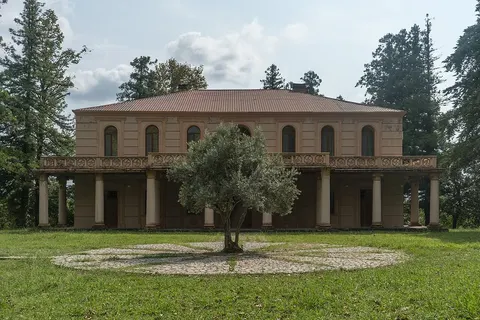
The Dadiani 'house of feasting' north of Martvili: a stone palace with a qvevri set into its great hall, near the old home of the Ojaleshi grape.
Best car for this trip
Guides
- Driving in Georgia: What the Distances Actually Cost You Georgia is a small country with slow roads. Here is what 267 measured drives from Tbilisi say about how long y
Pickup locations
Car Rental at Kutaisi Airport — 27 km (straight line)
Booking and enquiries
The easiest way to reach these places is by car — you pick the route and the stops.