
Kutaisi Green Bazaar
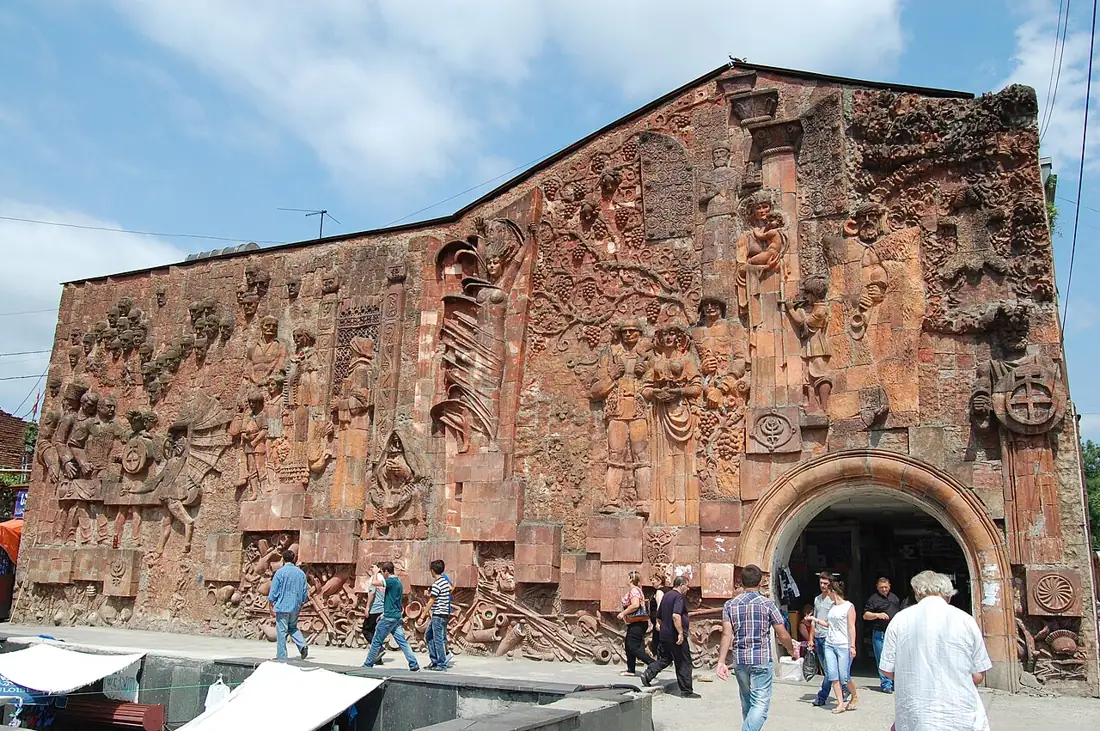
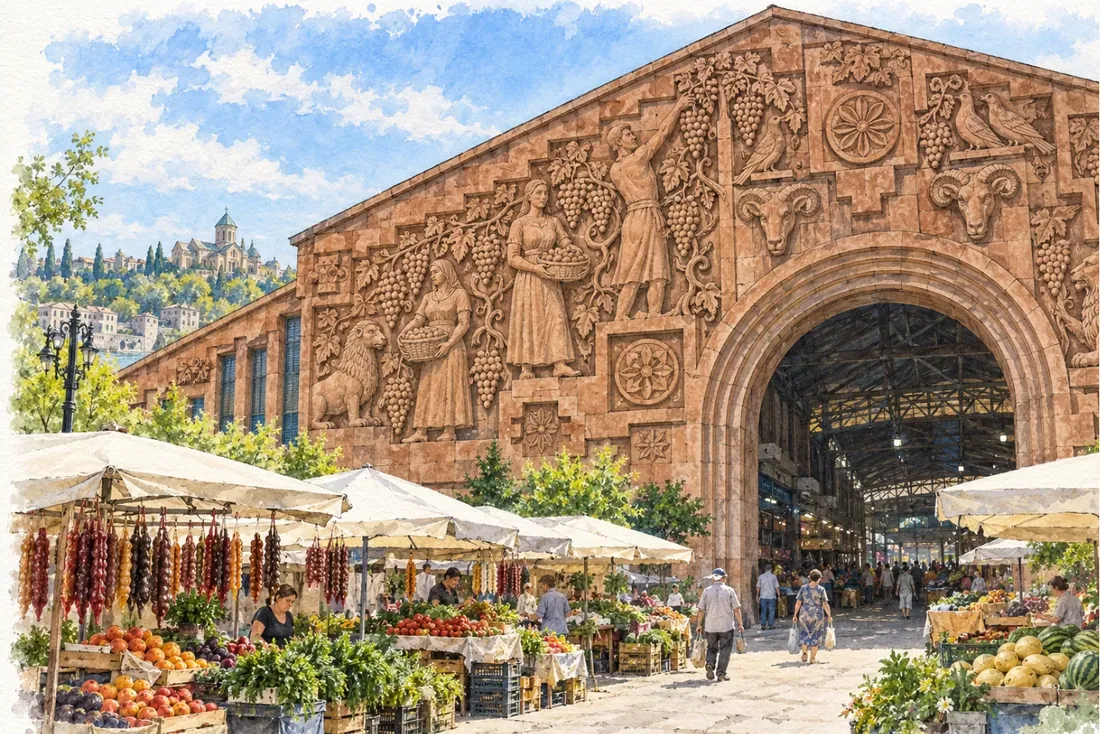
Kutaisi's two-storey central market: young Imeretian cheese, blue fenugreek by the scoop and churchkhela hanging in rows like strings of amber beads.
- Time needed
- 1 h
- From Tbilisi
- 230 km · 3:10
- Road
- Paved
- Car needed
- Economy class
- Season
- All year
- Entry
- free
The Green Bazaar is Kutaisi talking to itself — loudly, generously, across a counter of fresh cheese.
In the 1830s the French-speaking naturalist Frédéric Dubois de Montperreux passed through and called it “a bazaar which, just like in Athens, is the central point of life and movement.” Market days then were Wednesday and Friday, and people came as much for news, greetings and messages to absent relatives as for anything they meant to buy. Nearly two centuries on, the trading has moved into a two-storey covered hall off Paliashvili Street and overflowed into the lanes around it, but the talk has not changed its tempo.
Walk in and follow your nose:
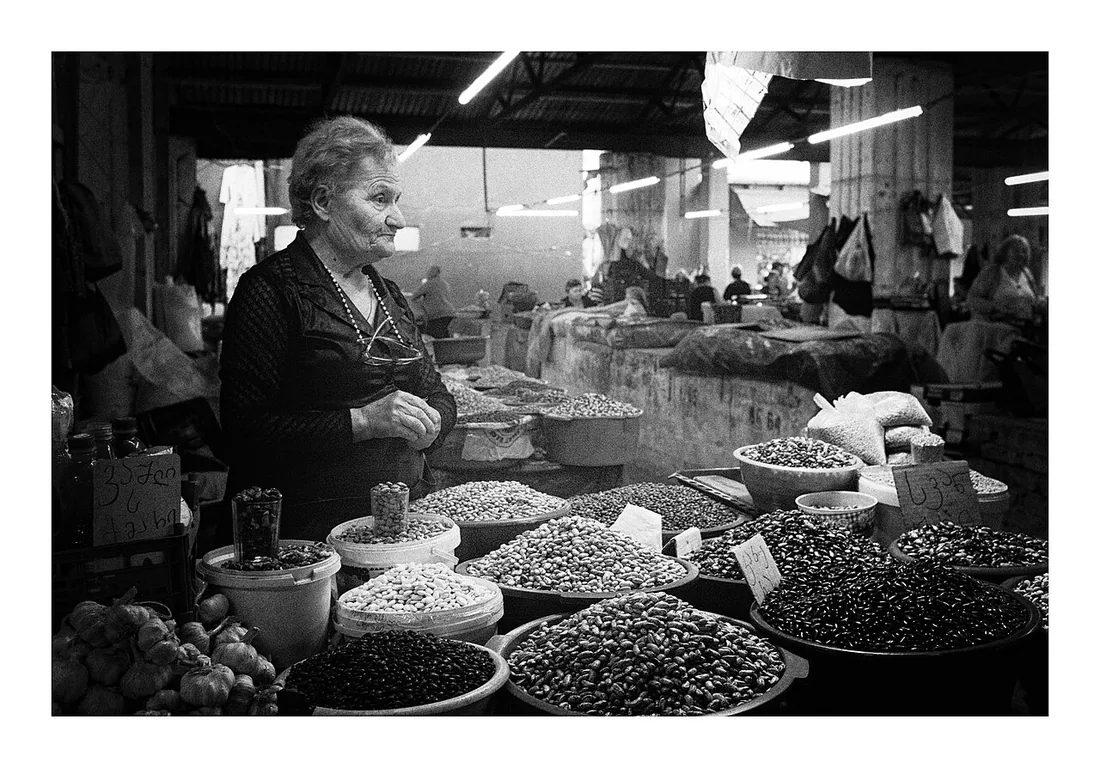
- Imeretian cheese — young, salty, brought in from the villages; a sliver is usually offered before you ask
- Spices by weight — utskho suneli (blue fenugreek), dried marigold petals, Svan salt and adjika
- Churchkhela and tklapi — walnuts dipped in thickened grape must, and sheets of sour fruit leather
- Herbs, mushrooms, honey and village wine, changing with the season
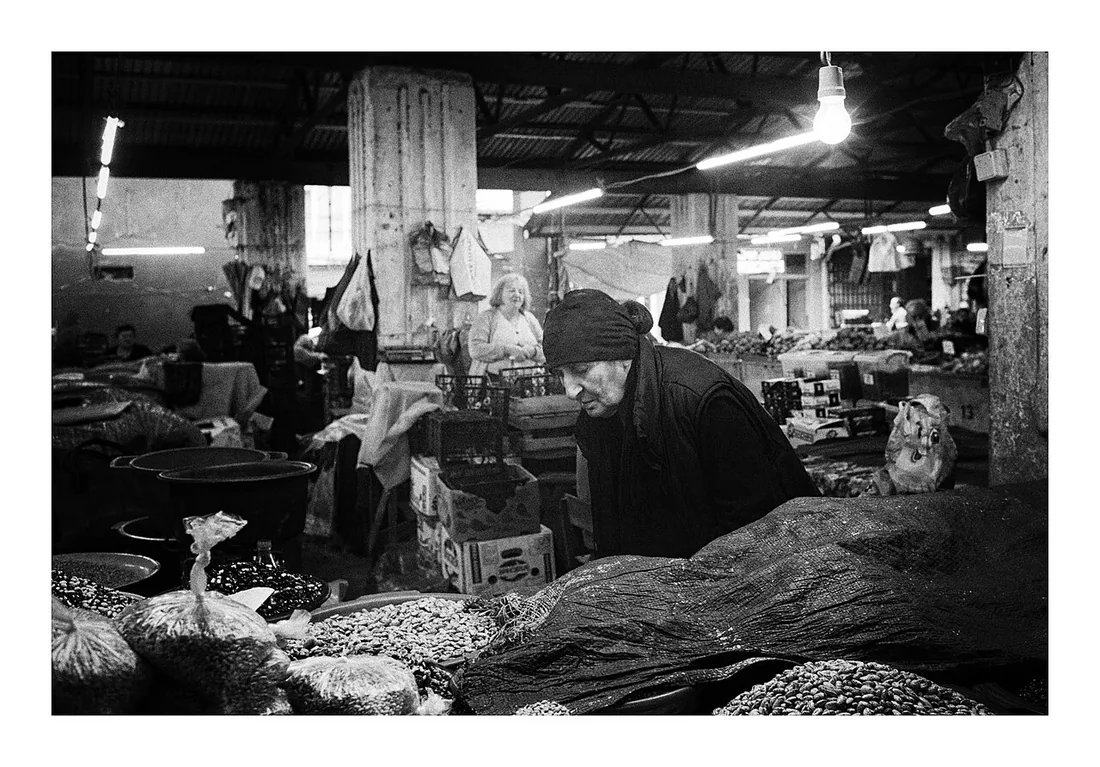
The bazaar has a long memory for kindness, too. In the 1940s a boy named Eremia Svanadze, later an actor, went to the market with his father and noticed that the herb sellers kept sending their customers to one particular woman. His father explained: she had lost her husband and was expecting a child, and the others were making sure she sold what she could while she was still able to work.
That is the real currency here. Haggle a little, taste what you are offered, buy from the person who fed you — and let someone talk you into a cheese you had no intention of buying.
Gallery
Practical advice
Come in the morning, when the produce is freshest and the aisles are at their noisiest; by mid-afternoon many stalls pack up. Carry cash in small notes — most sellers do not take cards. Tasting is part of the ritual, but it is good manners to buy from whoever gave you a taste. Dried spices and churchkhela survive a suitcase well; seal spices in a zip bag, and keep cheese in a cool bag. Watch your pockets in the crowded rows. Bagrati Cathedral, the old Jewish quarter and the botanical garden are all within a kilometre, so one parking spot covers the lot.
How to get there from Tbilisi
From Tbilisi the S1 (E60) motorway runs west through the Rikoti tunnel to Kutaisi — about 230 km, a little over three hours. Entering the city, follow signs for the centre; the bazaar lies a short walk from the central square, off Paliashvili Street. Refuel on the way in Khashuri or Zestafoni. The whole route is asphalt and an economy car is all you need. Do not try to park beside the market itself: the surrounding streets are narrow and jammed, and a space two or three blocks away will save you twenty minutes of circling.
Click a marker for details. Coloured lines are ready-made road trips.
Nearby places
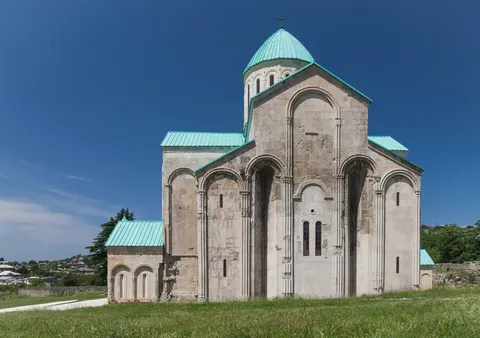
Bagrati Cathedral and central Kutaisi
Bagrat III's cathedral of 1003 on Ukimerioni Hill, blown up by an Ottoman garrison and controversially rebuilt, above the old heart of Kutaisi.
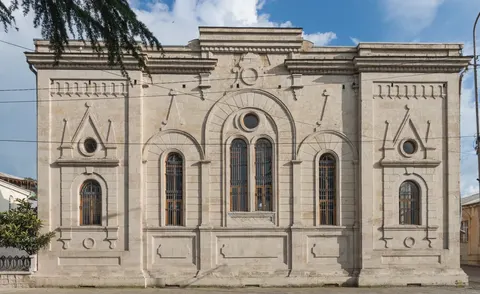
Kutaisi Jewish Quarter
Three synagogues on one Kutaisi street, left by a community that made up a tenth of the city in 1897.
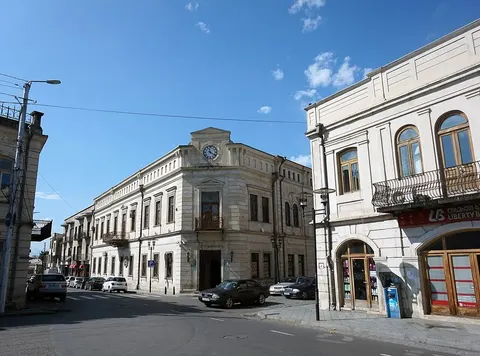
Kutaisi State Historical Museum
Colchian bronzes, a 2,500-year-old silver coin, church silver of western Georgia and eight manuscripts of Rustaveli, on Pushkin Street.
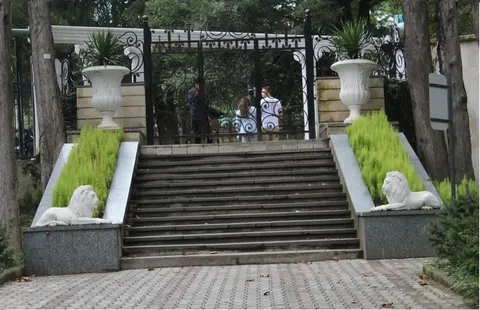
Kutaisi Colchic Botanical Garden
A terraced garden near Bagrati where East Asian species outnumber Caucasian ones almost nine to one, and a tiny chapel hides inside a 400-year-old oak.
Best car for this trip
Guides
- Driving in Georgia: What the Distances Actually Cost You Georgia is a small country with slow roads. Here is what 267 measured drives from Tbilisi say about how long y
Pickup locations
Car Rental in Kutaisi — 1 km (straight line)