
Kutaisi Jewish Quarter
Three synagogues on one Kutaisi street, left by a community that made up a tenth of the city in 1897.
- Time needed
- 1 h
- From Tbilisi
- 231 km · 3:20
- Road
- Paved
- Car needed
- Economy class
- Season
- All year
- Entry
- free
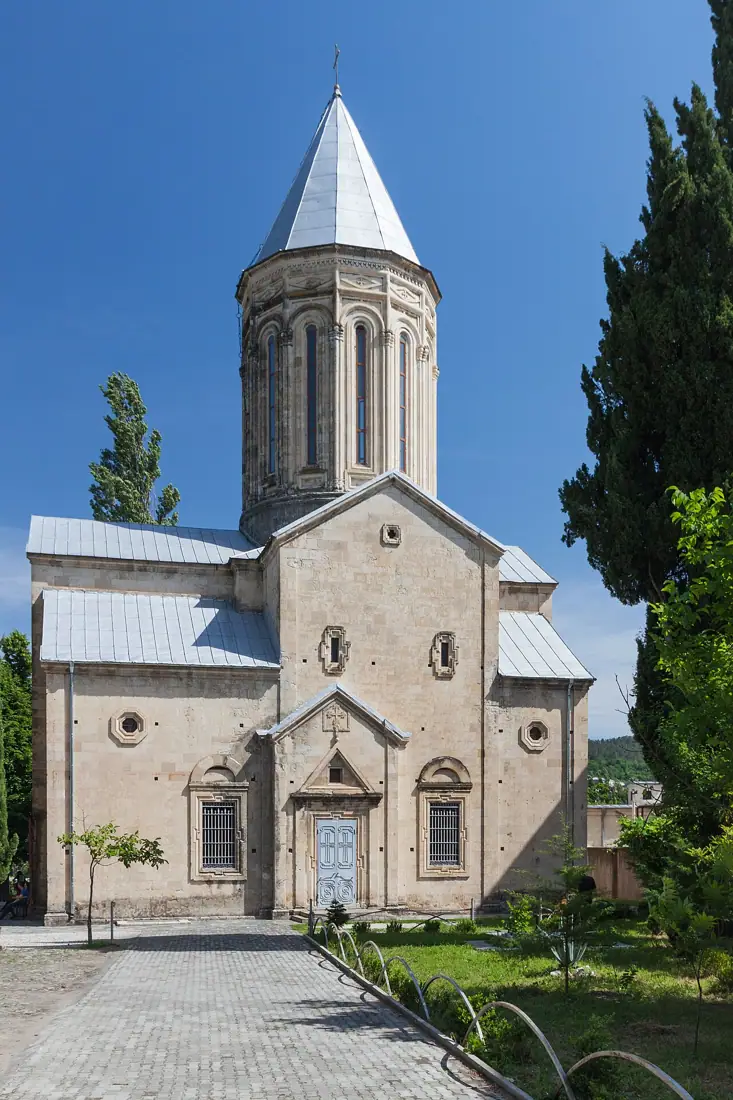
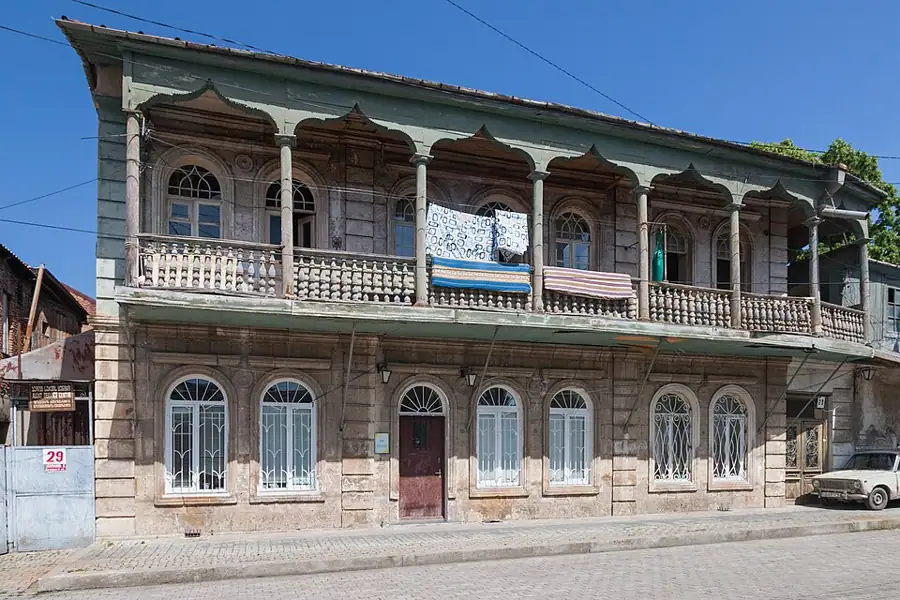
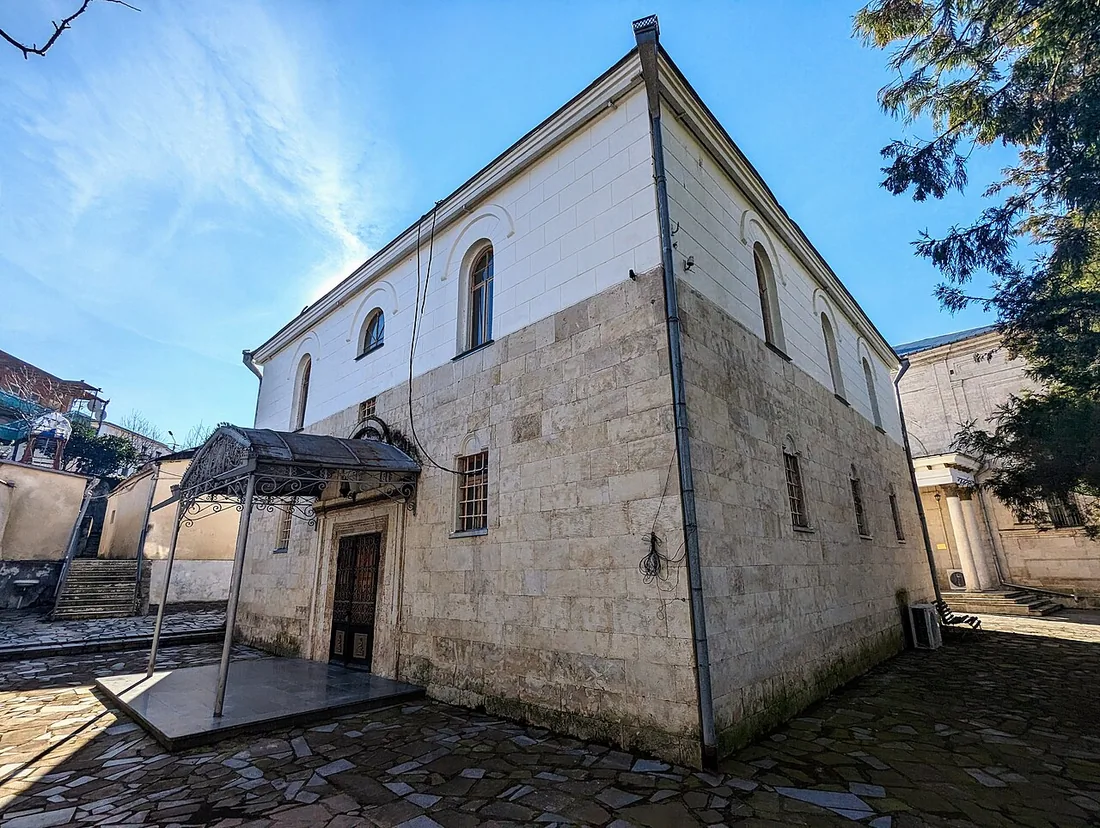
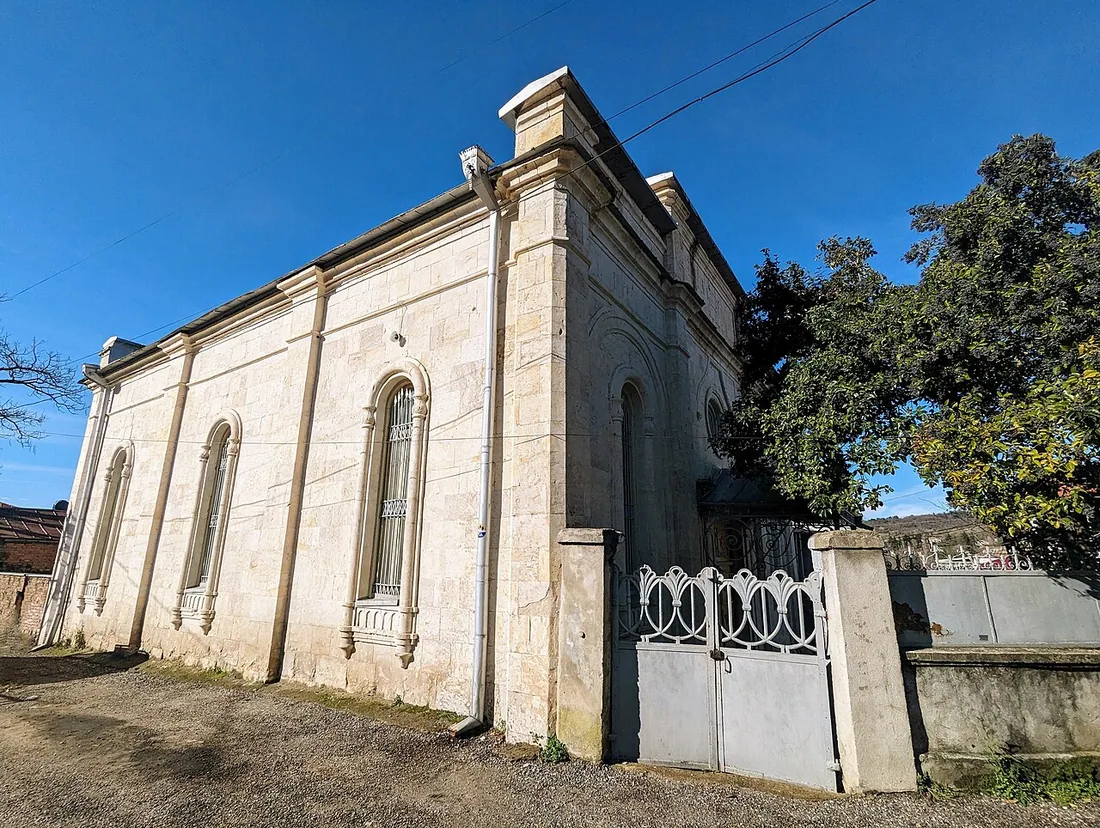
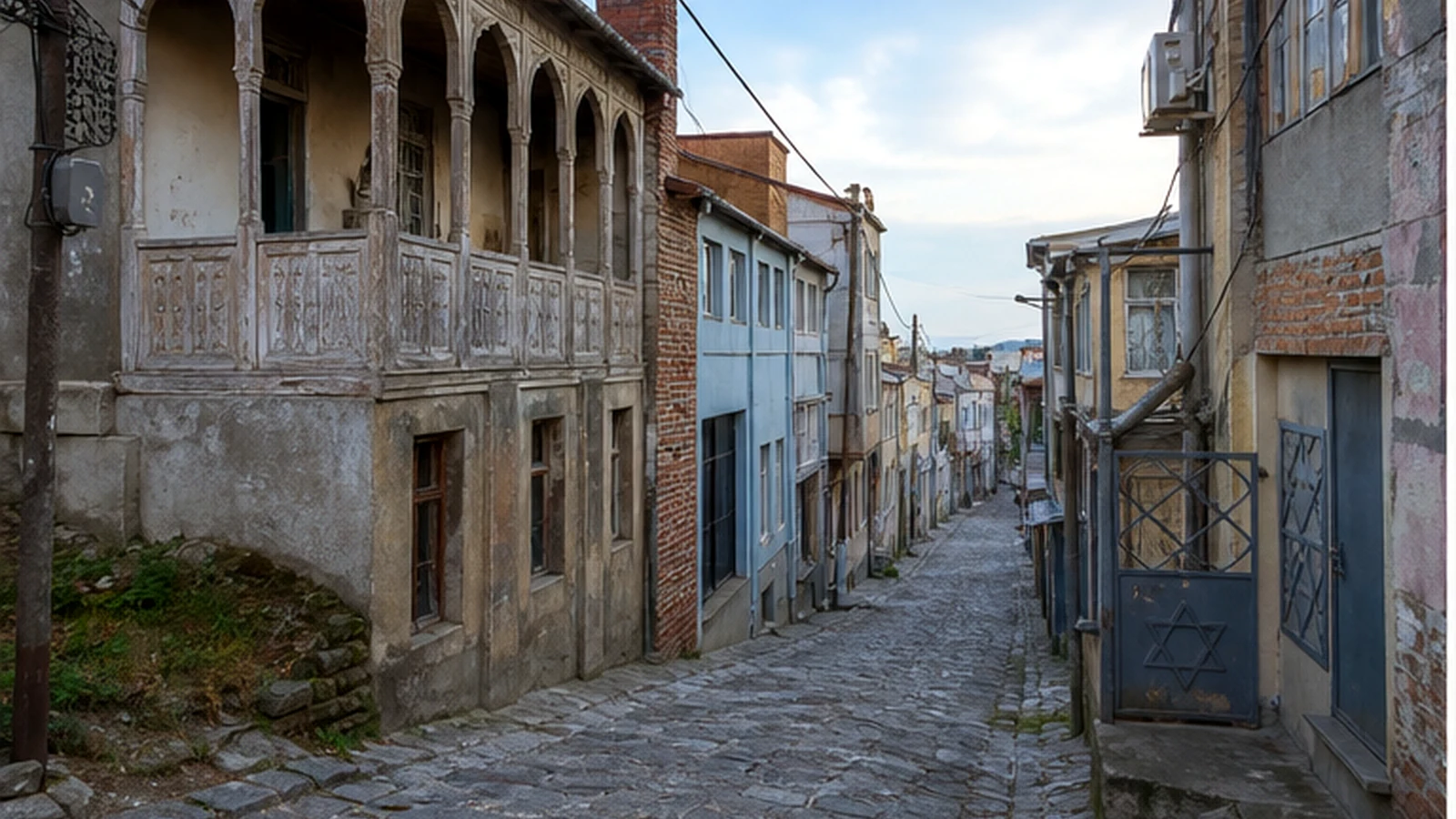
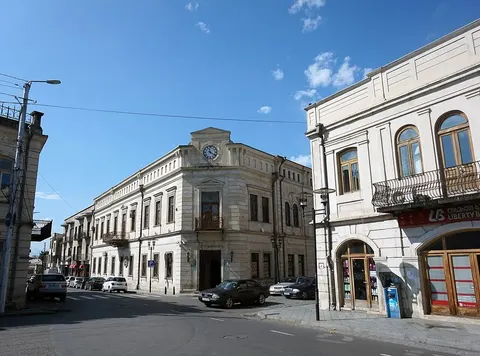
In 1897 one Kutaisi resident in ten was Jewish, and the houses of prayer they built still stand, three of them on a single street. The Russian imperial census of that year counted 3,419 Jews in the city, 10.5 per cent of its people. Their street is Boris Gaponov Street in old Sapichkhia, a ten-minute walk north-east of the Colchis Fountain.
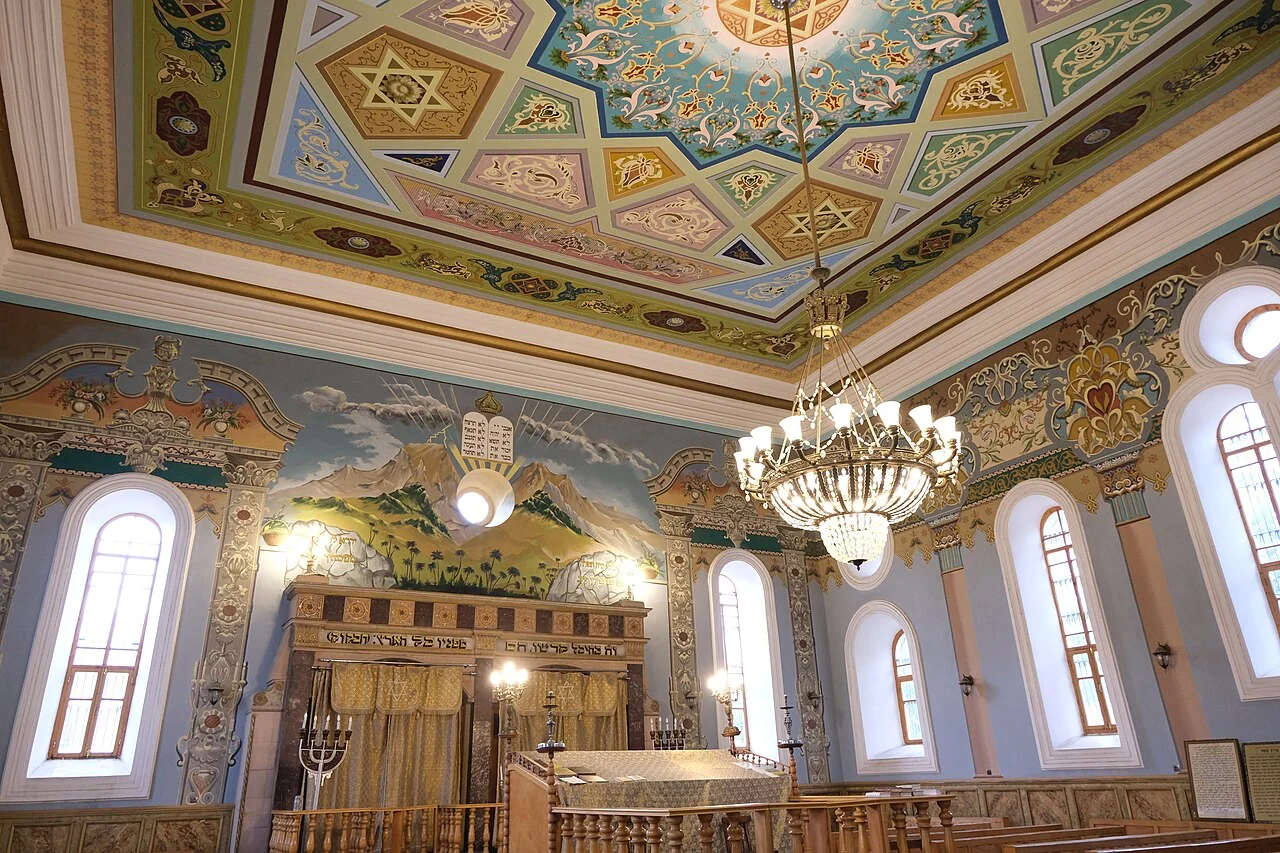
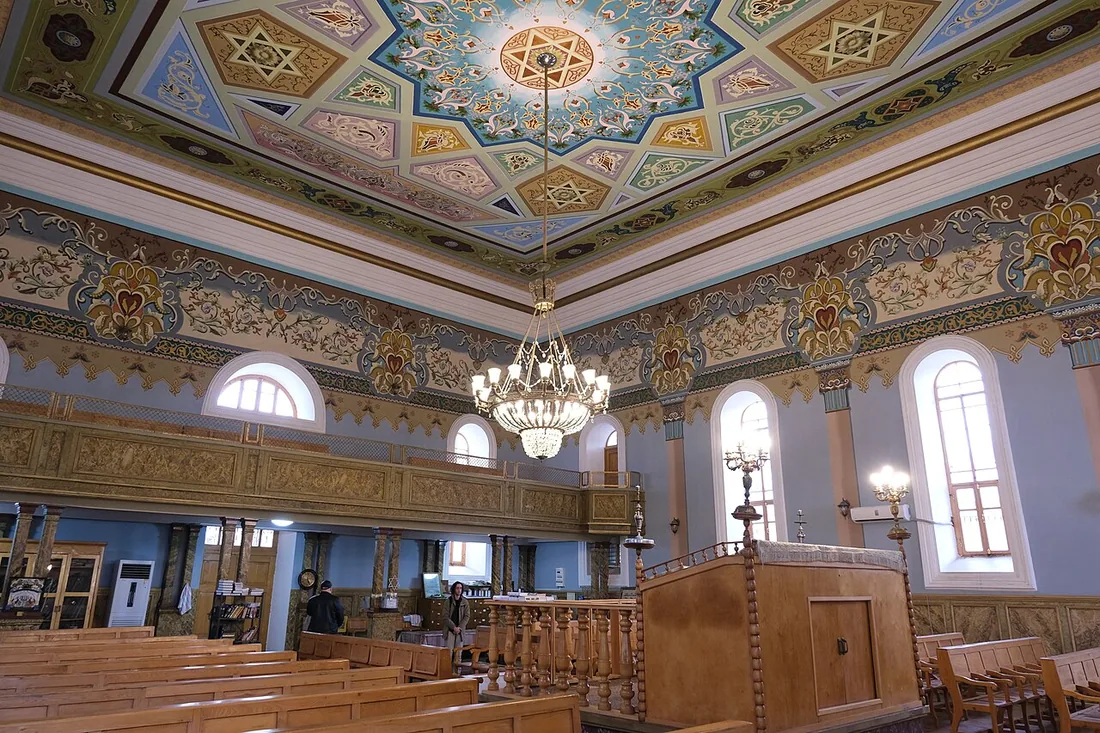
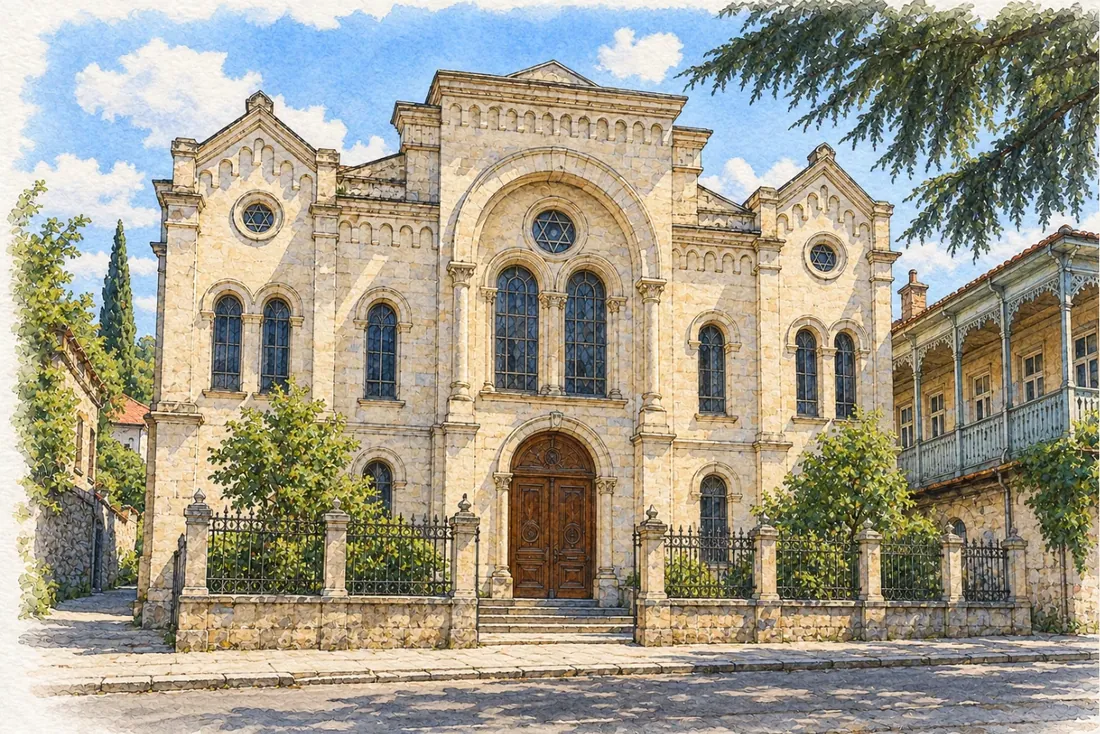
The largest building is the Great Synagogue of 1886, the second largest in Georgia: a stone facade with a triple arcade and tall arched windows, and a hall painted from wall to ceiling. Its two smaller neighbours are harder to date: sources give 1815 or 1852 for the oldest, around 1863 or 1912 for the other. The smaller house of prayer is the community’s working heart, where Hebrew is taught, rites are kept and matzah is baked in its own ovens.
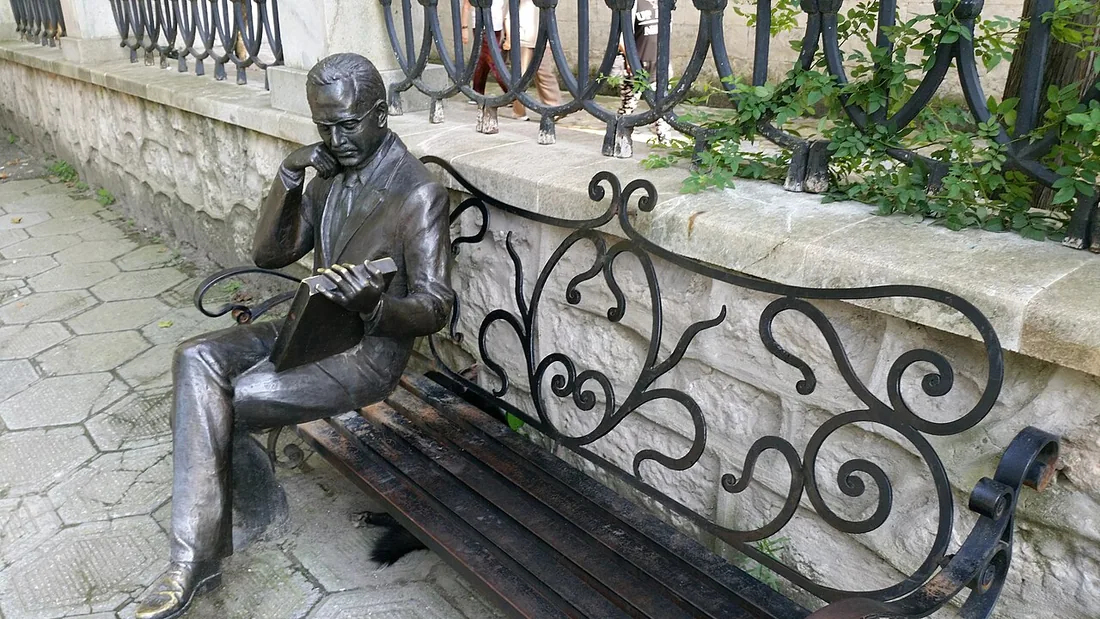
By the Great Synagogue’s door stands a memorial, raised in 2014, to the man the street is named after. Boris Gaponov was born in Yevpatoria, in Crimea, in 1934 and came to Kutaisi in 1941, a seven-year-old evacuee. His grandfather, a rabbi, taught him Hebrew. He worked for Kutaisi newspapers, spent fifteen years on a Hebrew phraseological dictionary, and in the 1960s set about putting Rustaveli’s The Knight in the Panther’s Skin into Hebrew. The translation appeared in Israel in 1969 and won the Tchernichovsky Prize the following year. Gaponov emigrated in 1971 and died in Ramat Gan a year later, aged thirty-eight.
Most of his neighbours followed him. The great departures of the 1970s and the 1990s emptied the quarter of its families, though not of its buildings. What remains is an ordinary Kutaisi street, and on it a few doors that still open for prayer.
Gallery
Practical advice
Allow an hour. These are houses of prayer, not museums: doors are often shut, and the best approach is to ask politely at the gate. Men cover their heads inside and everyone dresses modestly; ask before taking photographs. Avoid Friday evening and Saturday, when the community keeps the Sabbath and visitors are not appropriate. Parking in Sapichkhia’s narrow streets is awkward, so leave the car in the centre and walk. The Green Bazaar, ten minutes away by the river, is the place for cheese, fruit and churchkhela.
How to get there from Tbilisi
Take the E60 (S1) west from Tbilisi to Kutaisi: 231 km, about three hours twenty including city traffic. Head for the centre and look for parking around the Colchis Fountain on David Aghmashenebeli Square; street spaces fill up during the day. The quarter is a ten-minute walk north-east, on the same bank of the Rioni, so there is no bridge to cross. Fuel in Zestaponi or on the approach to Kutaisi. An economy car is all you need, and the quarter itself is best seen on foot.
Click a marker for details. Coloured lines are ready-made road trips.
Nearby places
Bagrati Cathedral and central Kutaisi
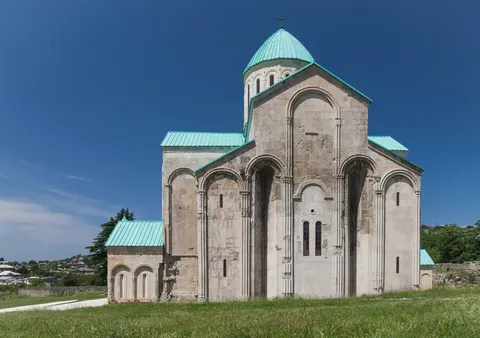
Bagrat III's cathedral of 1003 on Ukimerioni Hill, blown up by an Ottoman garrison and controversially rebuilt, above the old heart of Kutaisi.
Kutaisi Colchic Botanical Garden
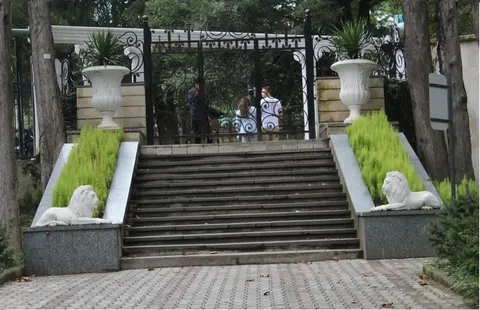
A terraced garden near Bagrati where East Asian species outnumber Caucasian ones almost nine to one, and a tiny chapel hides inside a 400-year-old oak.
Kutaisi Green Bazaar
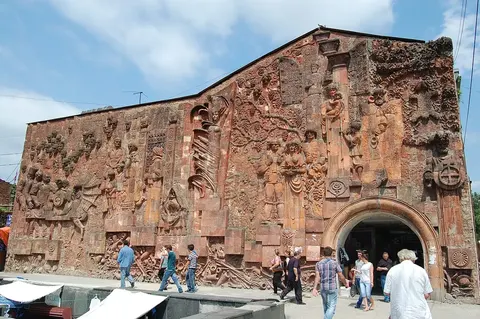
Kutaisi's two-storey central market: young Imeretian cheese, blue fenugreek by the scoop and churchkhela hanging in rows like strings of amber beads.
Kutaisi State Historical Museum
Colchian bronzes, a 2,500-year-old silver coin, church silver of western Georgia and eight manuscripts of Rustaveli, on Pushkin Street.
Part of these road trips
- Imeretian and Megrelian Flavours 4 days · 610 km
Best car for this trip
Guides
- Driving in Georgia: What the Distances Actually Cost You Georgia is a small country with slow roads. Here is what 267 measured drives from Tbilisi say about how long y
Pickup locations
Car Rental in Kutaisi — 1 km (straight line)