
The Kukushka narrow-gauge railway and the Tsagveri bridge
A 37-kilometre, 900-mm line of 1902 climbing from Borjomi to Bakuriani over a lattice bridge that tradition credits to Gustave Eiffel.
- Time needed
- 4 h
- From Tbilisi
- 162 km · 2:25
- Road
- Paved
- Car needed
- Economy class
- Season
- All year
- Entry
- check locally
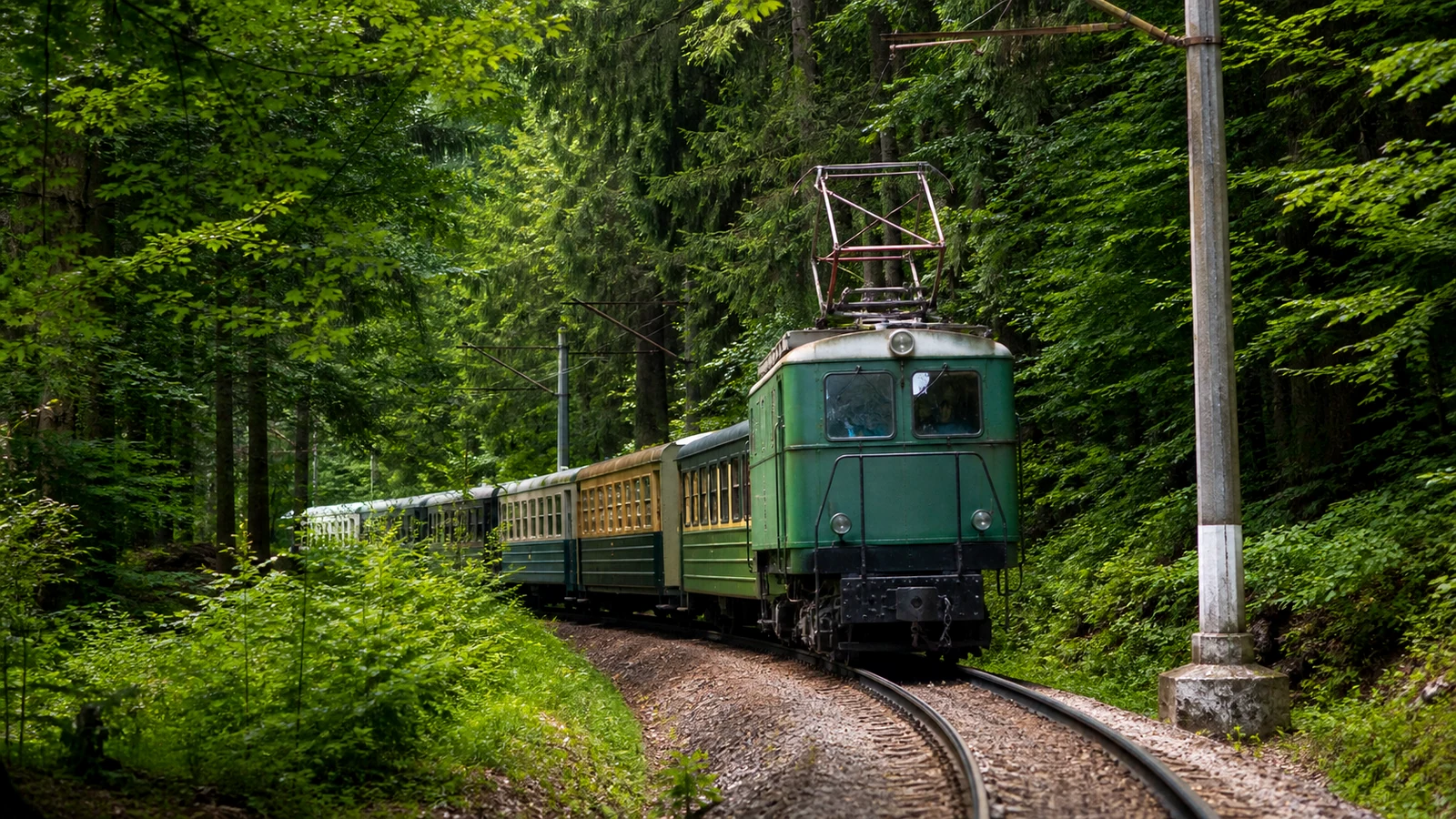
For more than a century the Kukushka has taken two and a half hours to cover 37 kilometres, and that slowness is exactly the point.
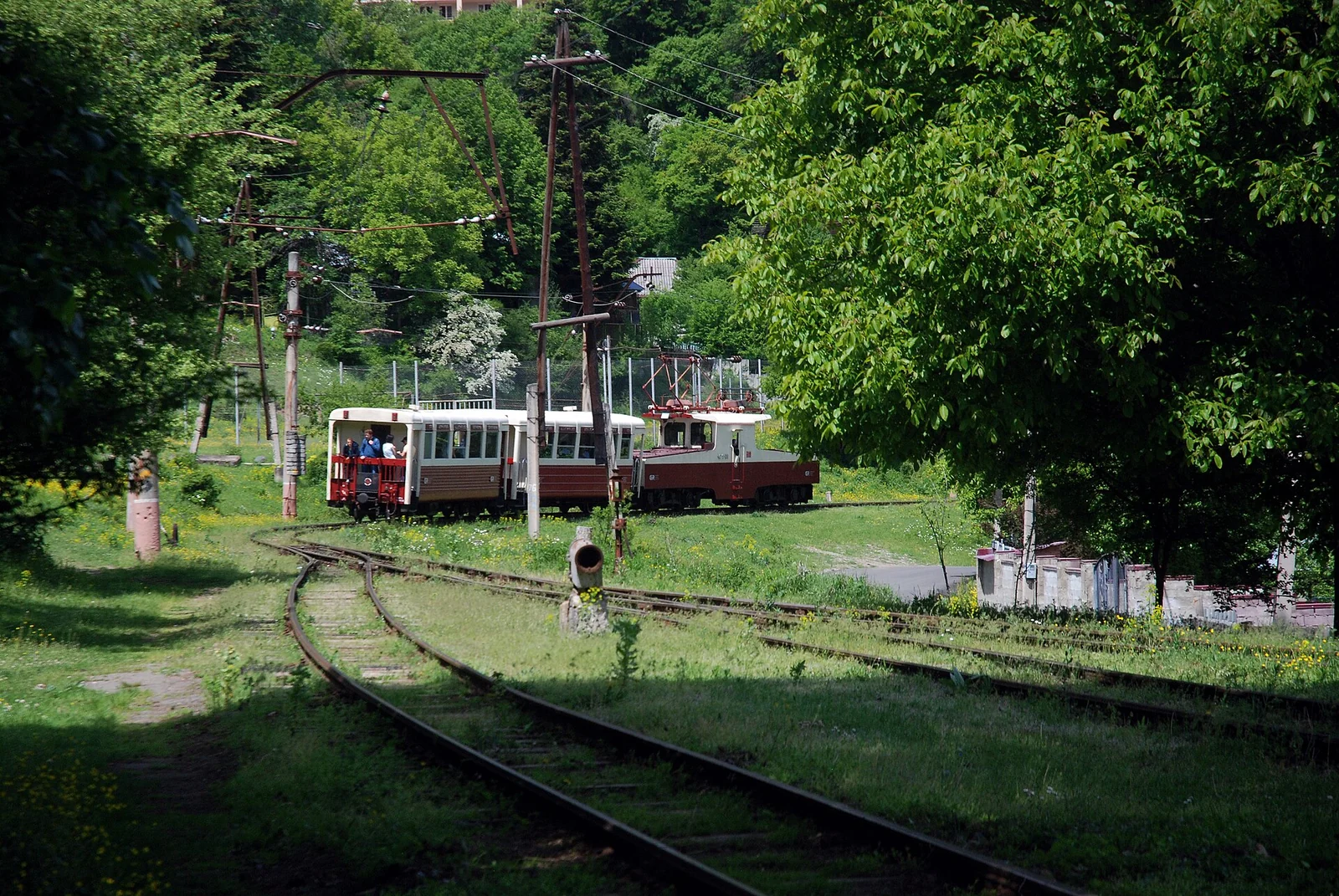
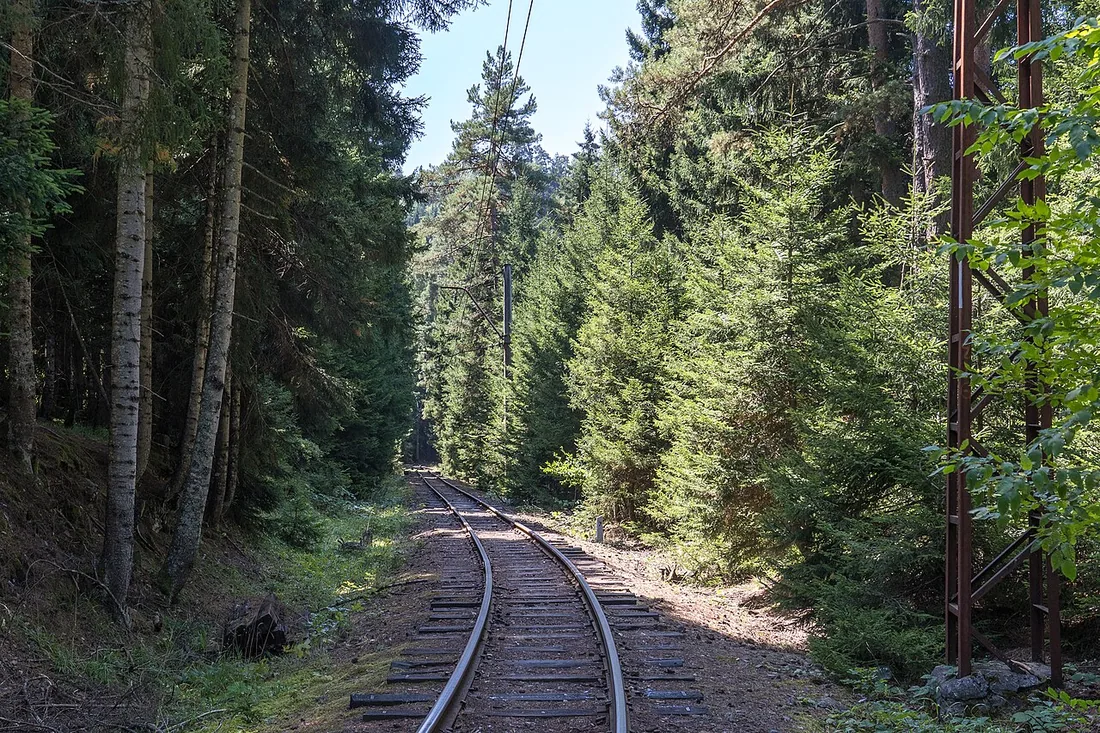
Work on the line began in 1897, when Georgia was part of the Russian Empire. The terrain was so difficult that construction took four years, and the first train ran in January 1902. The track is 900 millimetres wide, and between Borjomi at 820 metres and Bakuriani at 1,700 it climbs almost 900 metres at an average of 15 km/h. Its name is Russian for "little cuckoo".
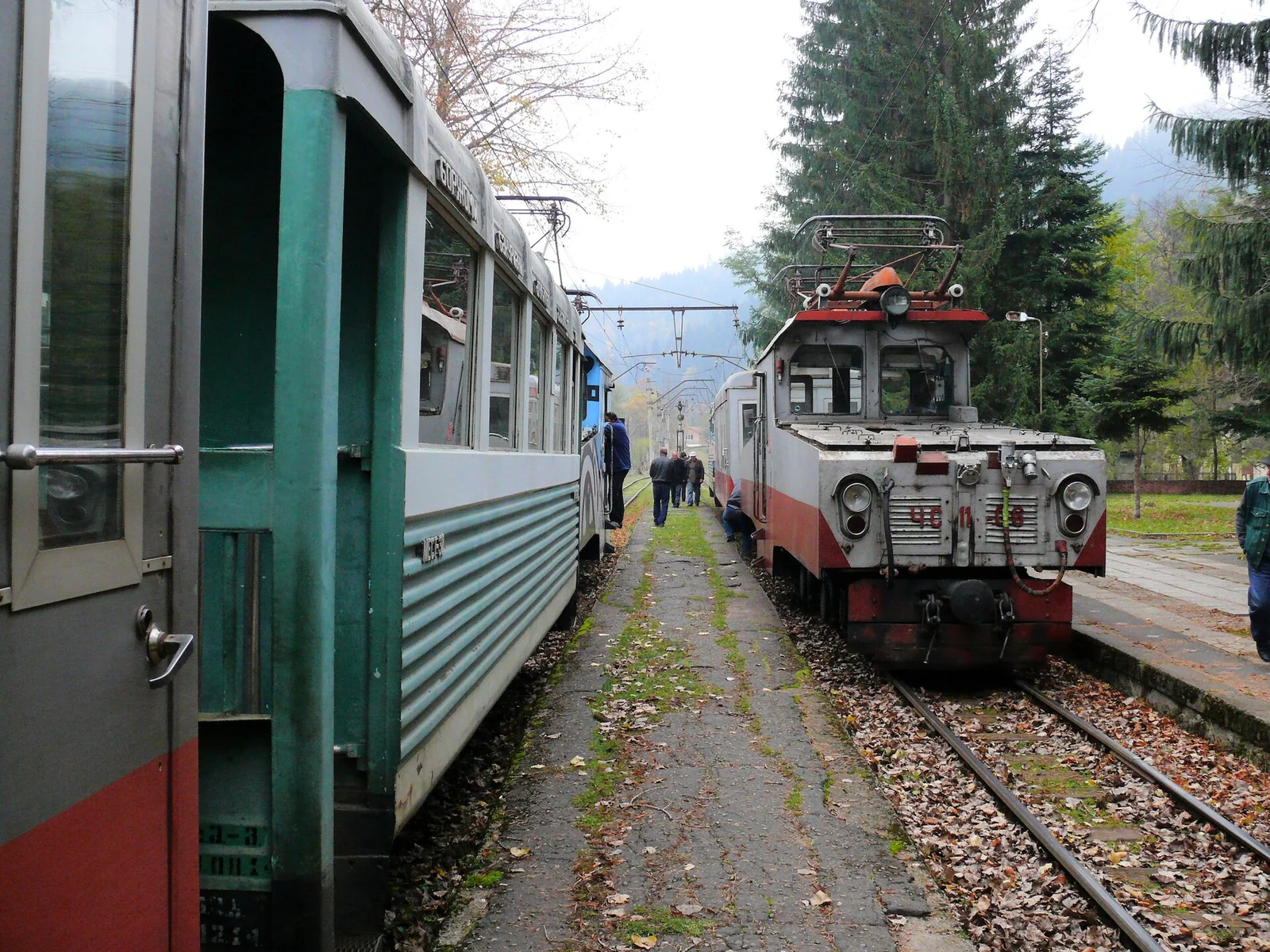
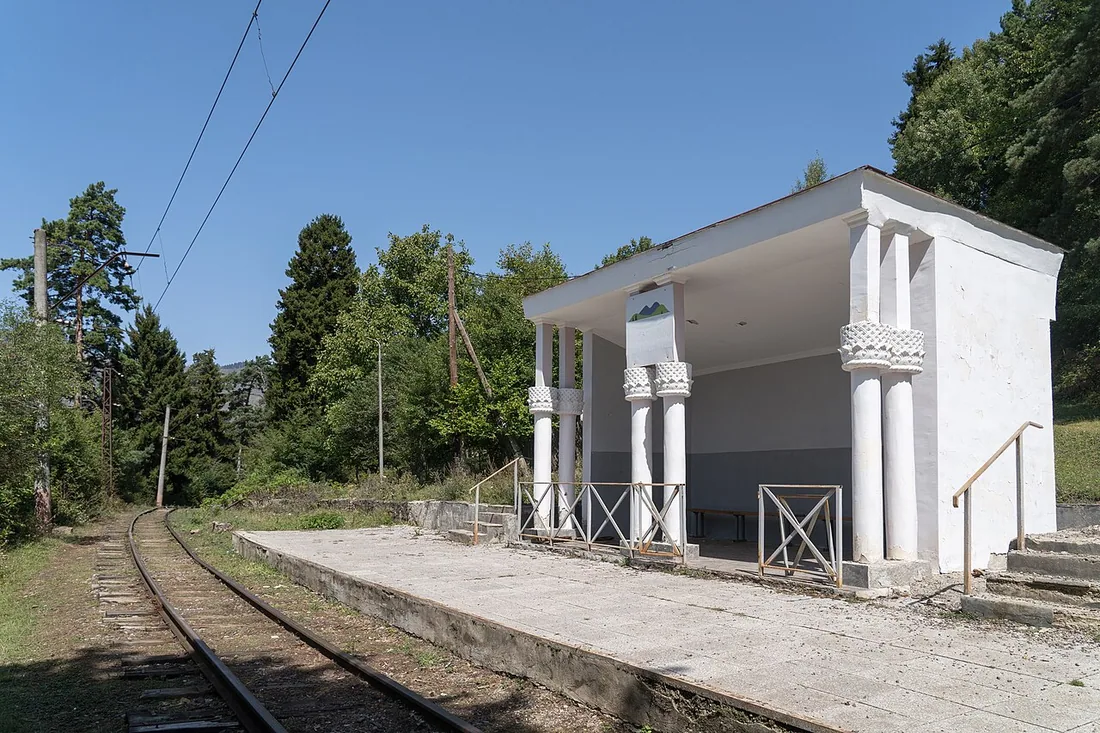
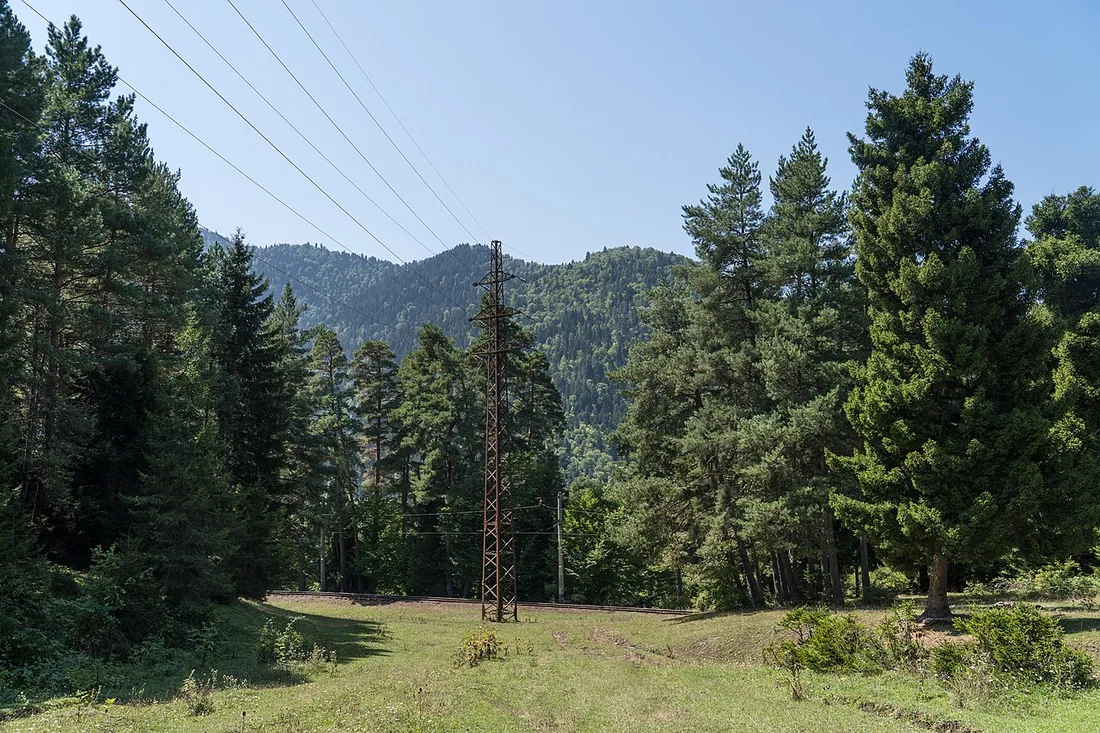
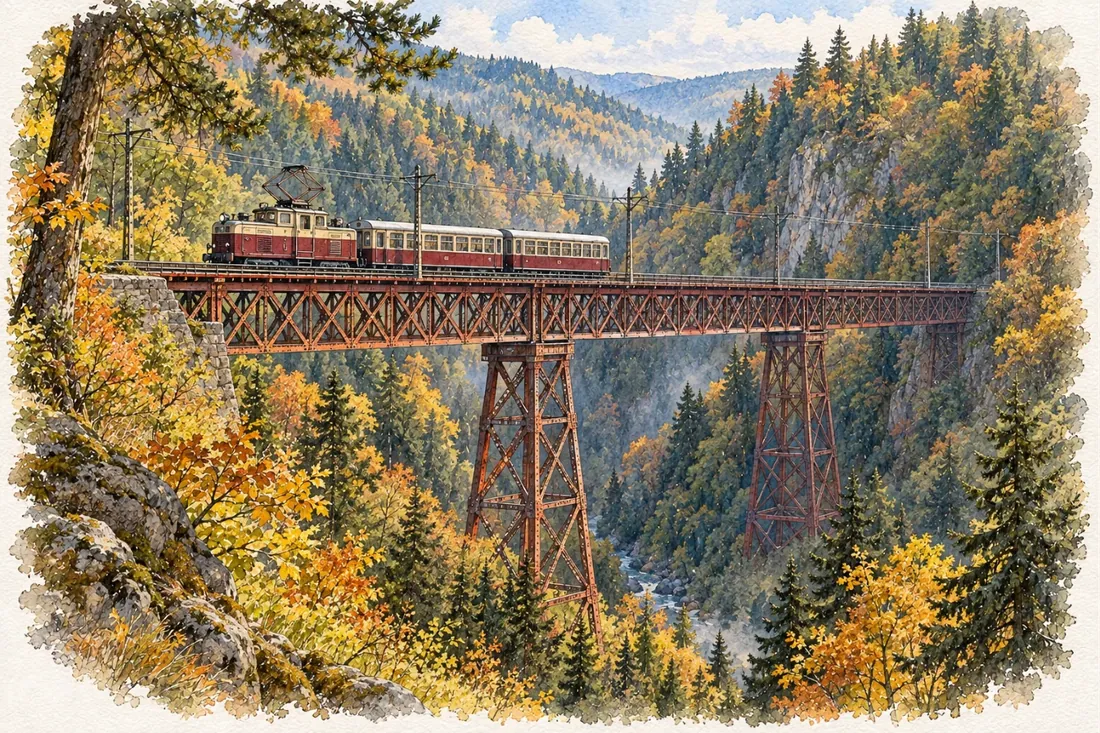
The first engine was a small steam locomotive built by H.K. Porter in America, and passengers rode in open carriages with handrails. In 1966 the line was electrified and the steam engine gave way to Škoda "crocodile" locomotives from Czechoslovakia. Until 1991 the trains also hauled andesite down from a mine near Bakuriani.
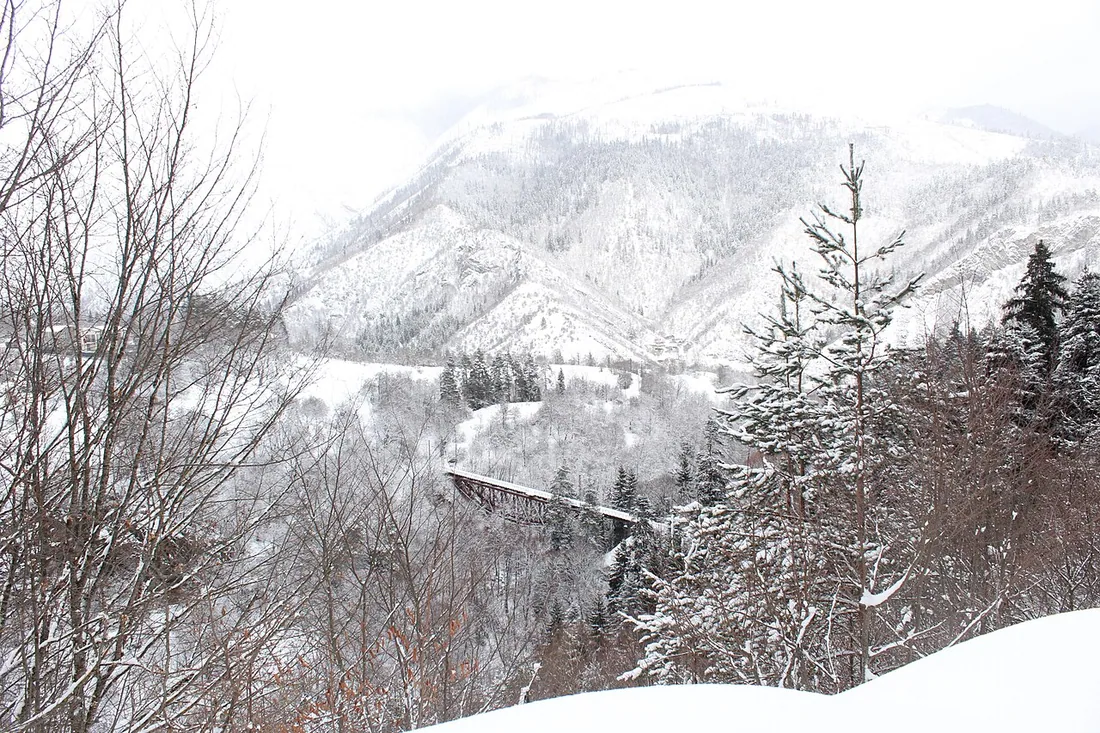
The set piece lies between Tsagveri and Tsemi stations: a rust-red steel lattice bridge on slender trestles over the Tsemistskali ravine, begun in 1897. Tradition says Grand Duke Mikhail Nikolayevich ordered it from Gustave Eiffel. The attribution rests on thin evidence, but the bridge needs no famous name to earn a stop.
Be ready for the line's uncertain present. Service was suspended in 2022, and the Bakuriani Development Agency has been working to restore it. If the train is running, ride it uphill; if not, drive to Tsagveri and look at the bridge. A cuckoo, after all, is heard far more often than it is seen.
Gallery
Practical advice
Before planning a day around the train, check at Borjomi station or with Georgian Railway whether it is running. When it runs, the journey takes two and a half hours each way, so most people ride up and return by road. There is no toilet on board, and nowhere useful to buy food along the way. Bakuriani is noticeably colder than Borjomi, so take a warm layer even in summer. To find the bridge, set your navigator to 41.8010, 43.4704. Look from the road or the bank, and never walk onto the bridge or the track.
How to get there from Tbilisi
From Tbilisi take the E60/S1 west to Khashuri, about 130 km, then the S8 south to Borjomi: 162 km, roughly 2 hours 25 minutes, asphalt throughout. The narrow-gauge station is in the centre of Borjomi, a few minutes' walk from the Central Park, with street parking nearby. To see the bridge without the train, take the Sh20 Bakuriani road out of Borjomi as far as Tsagveri; the bridge stands about half a kilometre from the road. Fill up in Khashuri or Borjomi. An economy car is enough, with winter tyres from December to March.
Click a marker for details. Coloured lines are ready-made road trips.
Nearby places
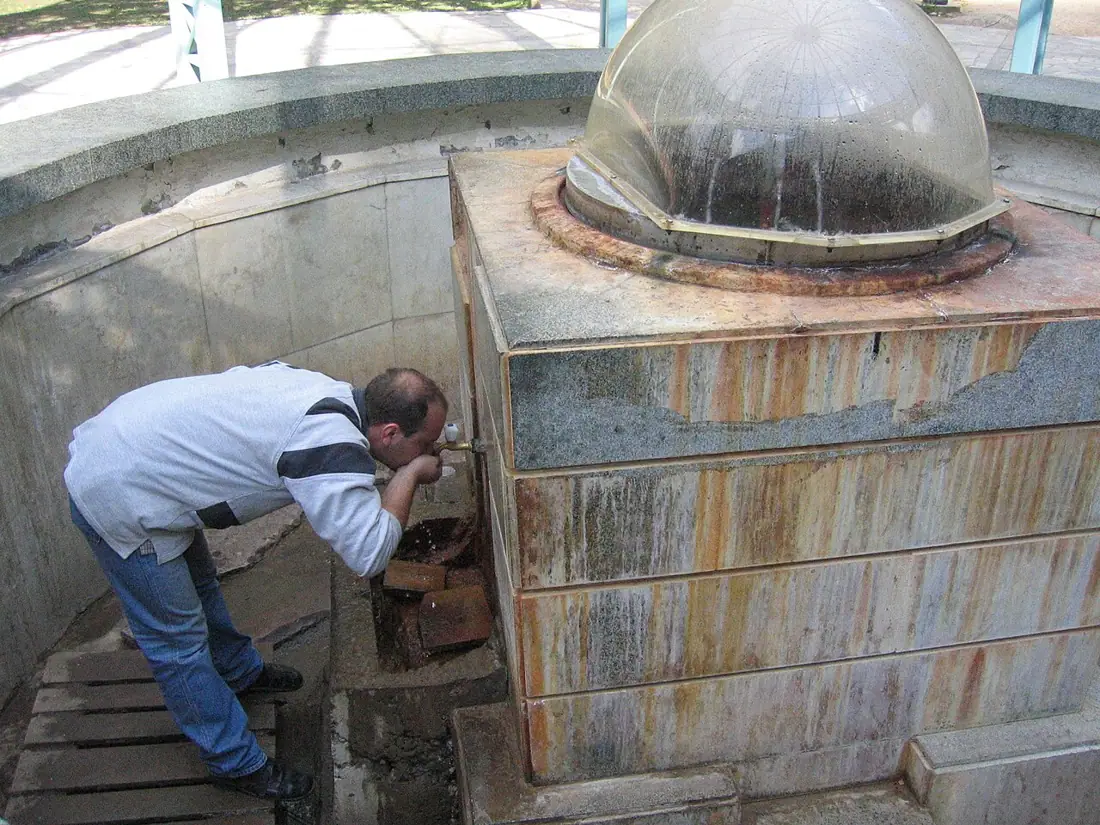
Borjomi Central Park and Mineral Springs
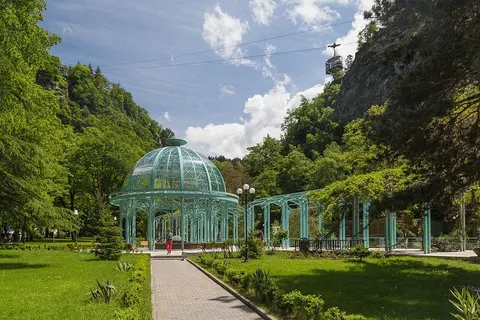
A 19th-century spa park in a narrow wooded gorge, where you fill your own bottle with salty, faintly warm Borjomi water straight from the spring.
Bakuriani
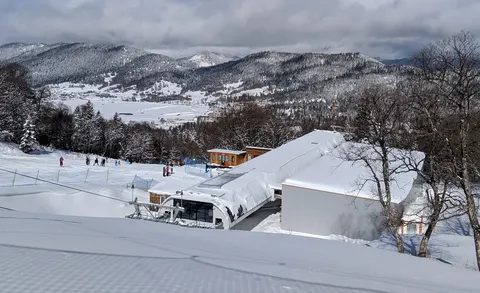
Georgia's oldest winter resort, 1,700 metres up in a spruce-dark volcanic basin above Borjomi: gentle pistes in winter, cool air all summer.
Likani Palace (the Romanov summer residence)
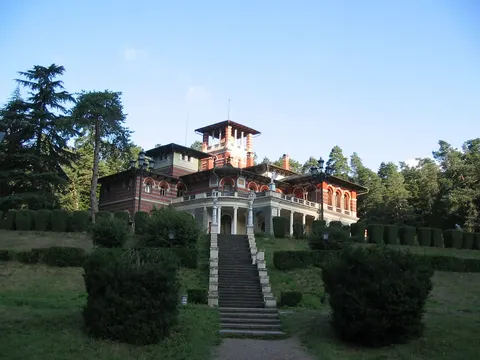
The Romanovs' red-brick summer palace on the Mtkvari just outside Borjomi, lit in 1898 by what is called the first hydroelectric plant in the Russian Empire.
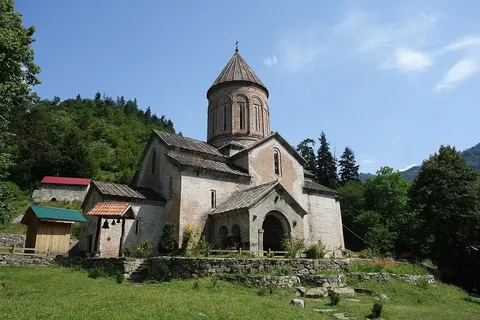
Timotesubani Monastery
A rose-brick church of Queen Tamar's age in the Gujareti valley near Tsagveri, painted inside in 1205–1215 by some of Georgia's finest masters.
Part of these road trips
- Family Georgia in Seven Easy Days 7 days · 820 km
Best car for this trip
Guides
- Driving in Georgia: What the Distances Actually Cost You Georgia is a small country with slow roads. Here is what 267 measured drives from Tbilisi say about how long y
Pickup locations
Car Rental in Kutaisi — 74 km (straight line)
Booking and enquiries
The easiest way to reach these places is by car — you pick the route and the stops.