
Dzalisi Archaeological Site
The excavated remains of Zalissa, a town Ptolemy listed among Iberia's chief cities: palaces, Roman-style baths and one of the Caucasus's oldest mosaics.
- Time needed
- 1 h
- From Tbilisi
- 47 km · 0:50
- Road
- Mostly paved
- Car needed
- Economy class
- Season
- All year
- Entry
- check locally
In the 2nd century AD the geographer Ptolemy wrote the name Zalissa into his list of Iberia's principal towns; under the fields of the Mukhrani valley, archaeologists believe they have found it.
People lived at Dzalisi from roughly the 2nd century BC to the 8th century AD, and the town was at its height in the 1st–3rd centuries AD; beneath the classical layers lie several Bronze Age strata. Some scholars go further and see it as a second seat of the kings of Kartli, beside Mtskheta. The first systematic campaign ran from 1972 to 1977, and excavation has continued since.
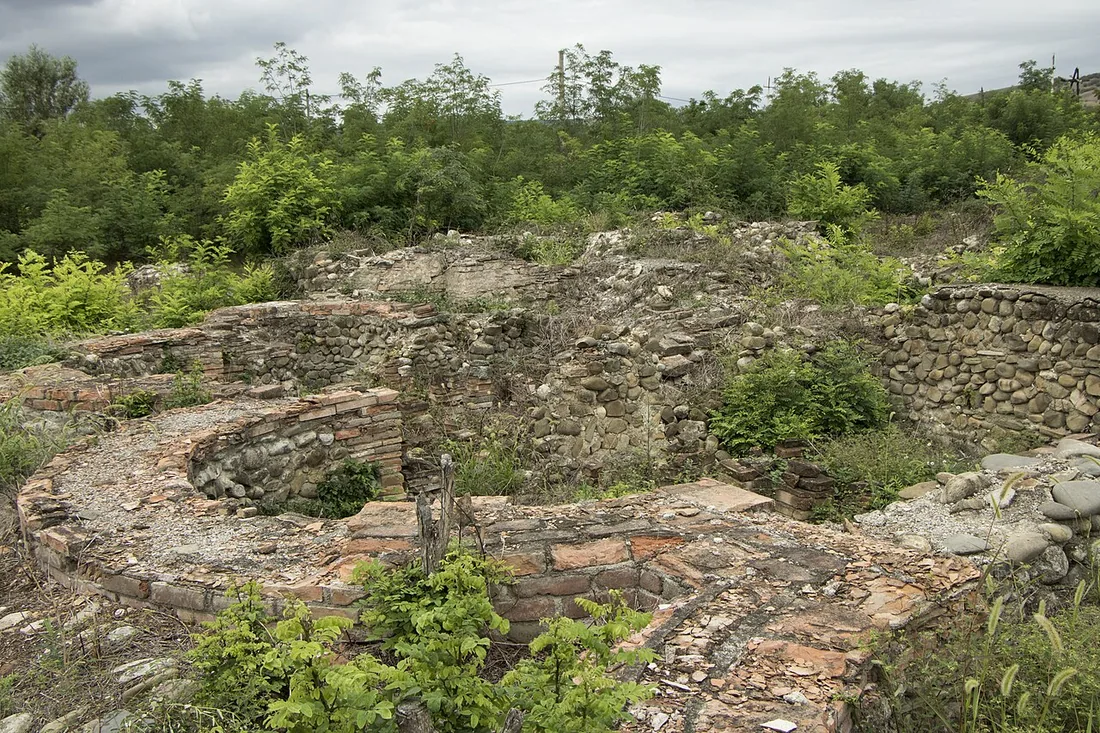
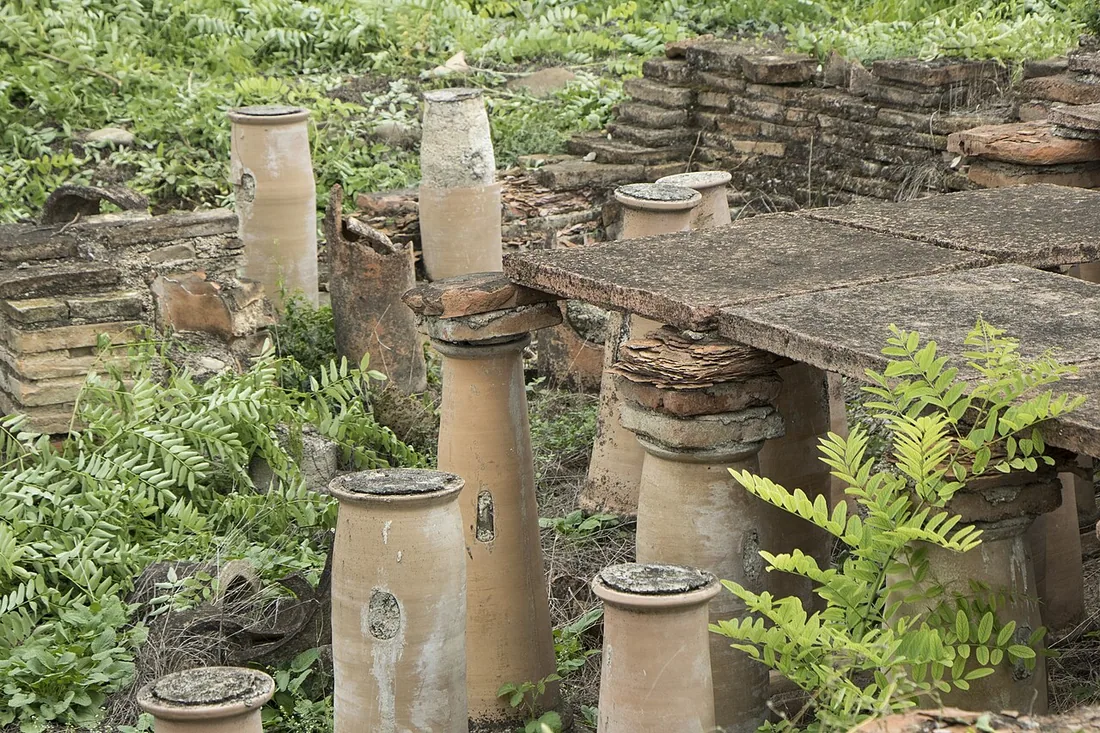
The finds read like the plan of a small capital on the edge of the Roman world: four palaces, an acropolis, a temple, barracks, administrative buildings, burial grounds and a water-supply system. The largest palace spreads over more than 2,500 square metres around a courtyard with a fountain — described as the largest palace yet excavated in Georgia — and some of its rooms, bedchambers included, had their own water supply. The bath-house was heated from below by a hypocaust, with hot, warm and cold rooms in the Roman manner and a swimming pool that had no known parallel in Georgia when it came to light.
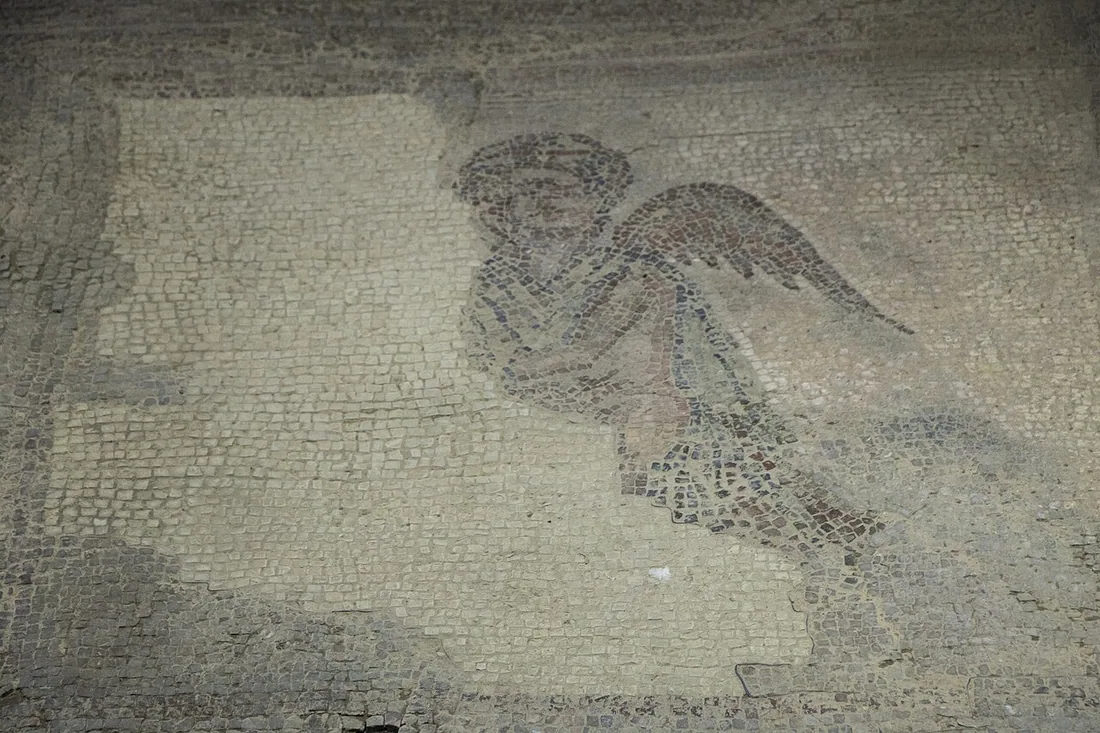
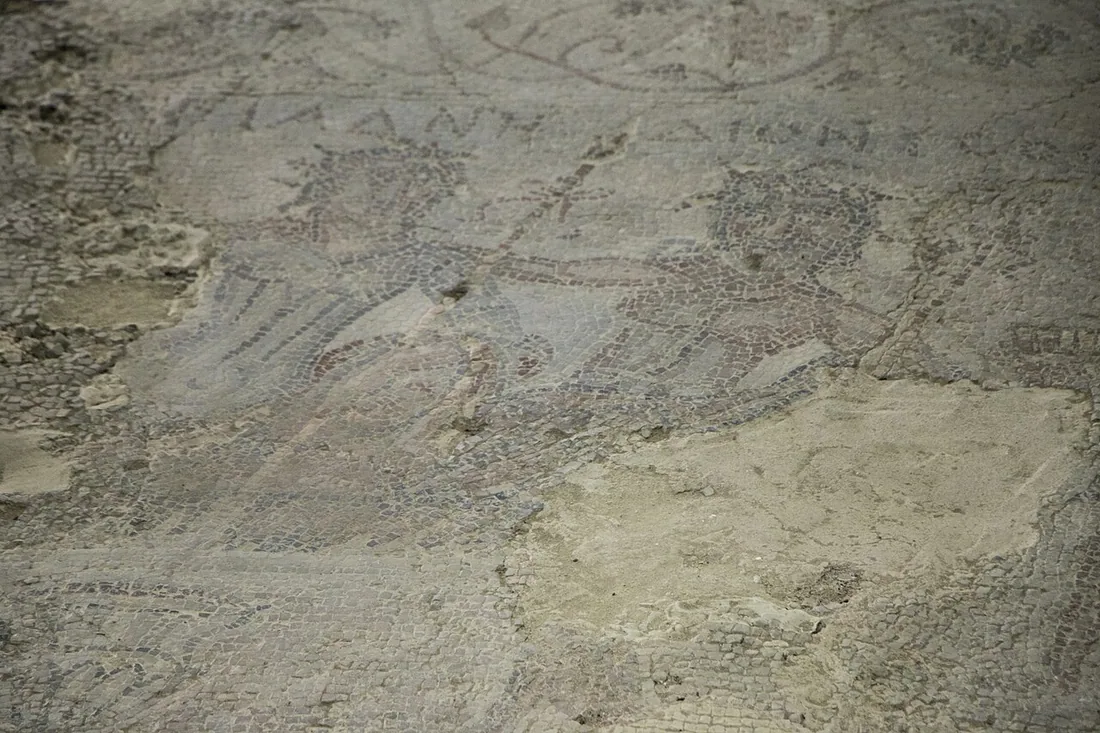
The treasure lies in one of the villas: a floor mosaic whose centre shows Dionysus and Ariadne at a banquet. Its style points to around AD 300, and together with the mosaics of Pitiunt on the Black Sea coast it ranks among the oldest ever found in the Caucasus.
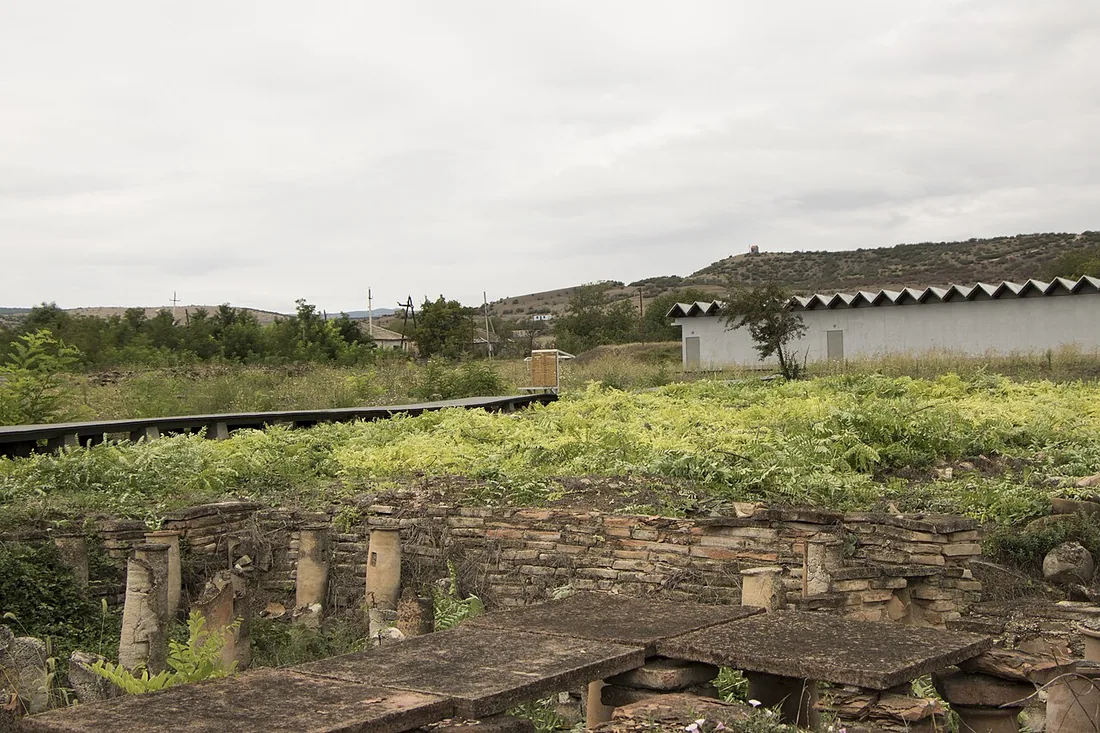
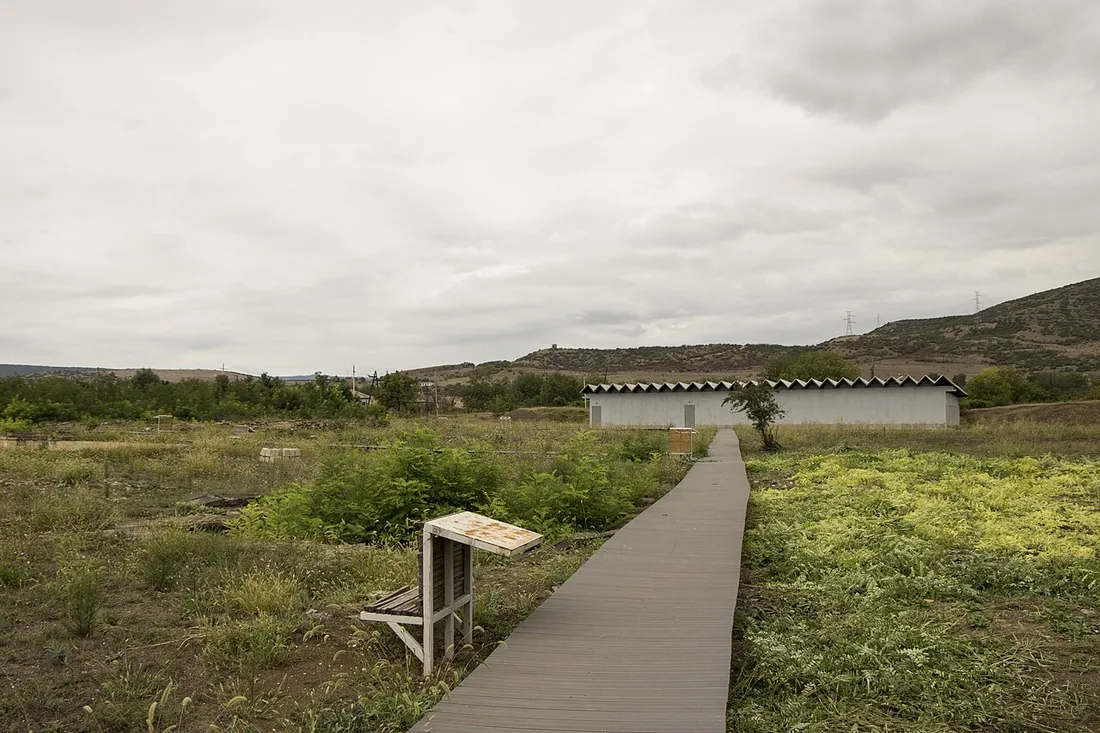
What you walk through today are low walls and foundations open to the sky; a boardwalk with information boards crosses the site, and a long shelter protects part of the excavation. Stand at the edge of the baths and consider the arithmetic: while Rome was still Rome, someone in this valley was stepping into warm water on a winter morning.
Gallery
Practical advice
None of the sources we checked publishes opening hours or an entrance fee, so treat both as something to confirm on arrival. This is an open-air excavation: wear shoes with grip, bring water and a hat in summer, and after rain expect mud between the trenches. Stay off the walls and exposed floors — they are the exhibit. Mosaics at excavations are often covered or sheltered for protection, so if you have come for Dionysus and Ariadne, ask whoever is on site whether the shelter is open and the floor can be seen. Allow about an hour. Tsilkani Cathedral (5 km) and Chateau Mukhrani, with its restaurant, round off the day.
How to get there from Tbilisi
From Tbilisi take the S1 (E60) north-west past the Mtskheta junction and stay on the motorway towards Gori for roughly another 20 km. Leave it for the Sh28, the Akhalgori road, and after about 3 km turn onto the Sh151, which runs a few kilometres through farmland into Dzalisi village and on to the excavation. Allow 47 km and about 50 minutes. Asphalt covers almost all of it; only the final approach to the site may be a dirt track, fine for an economy car when dry — take it slowly after rain. Fill up on the S1; there are no stations in the valley villages we can vouch for. The Sh151 continues 5 km to Tsilkani.
Click a marker for details. Coloured lines are ready-made road trips.
Nearby places
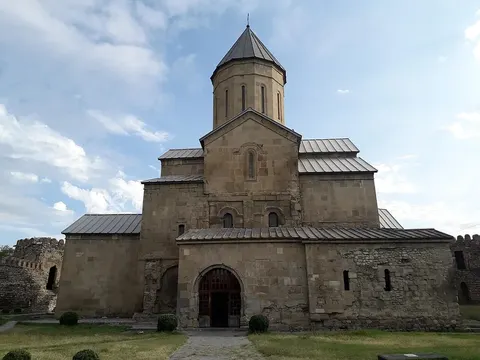
Tsilkani Cathedral
A 4th-century foundation remade in dressed sandstone and ringed by an 18th-century fortress wall, in a quiet village just north of Mtskheta.
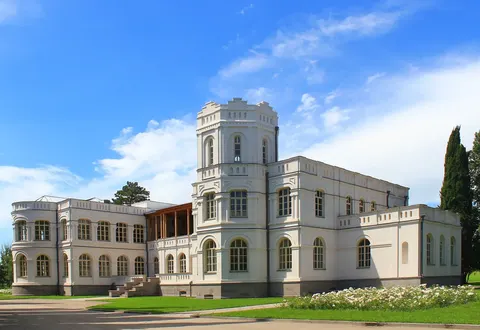
Château Mukhrani
The 19th-century palace and winery of Prince Ivane Mukhranbatoni, whose European-style wine won gold in Paris in 1889, working again on the Mukhrani plain.
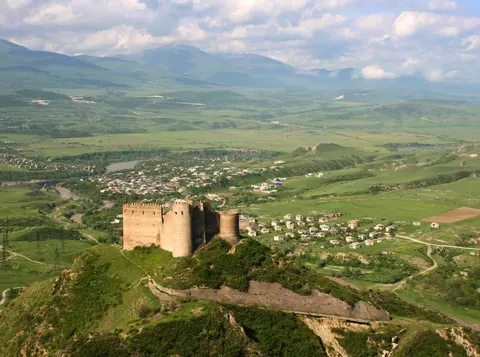
Ksani Fortress
A 16th-century stronghold of the Mukhrani princes on Mount Sarkineti, half-ruined but still keeping watch where the Ksani meets the Mtkvari.
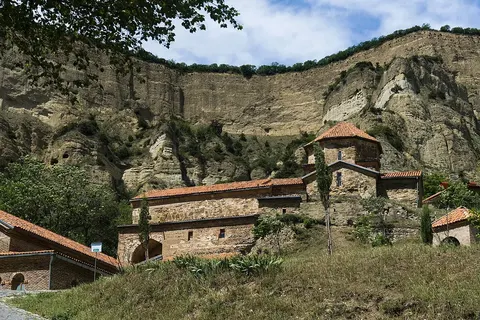
Shio-Mgvime Monastery
A 6th-century monastery deep in a pale limestone gorge west of Mtskheta, grown around the cave where the hermit Shio chose to live, die and be buried.
Best car for this trip
Mostly paved
Guides
- Driving in Georgia: What the Distances Actually Cost You Georgia is a small country with slow roads. Here is what 267 measured drives from Tbilisi say about how long y
Pickup locations
Car Rental in Tbilisi — 34 km (straight line)
Booking and enquiries
The easiest way to reach these places is by car — you pick the route and the stops.