
Berta Monastery
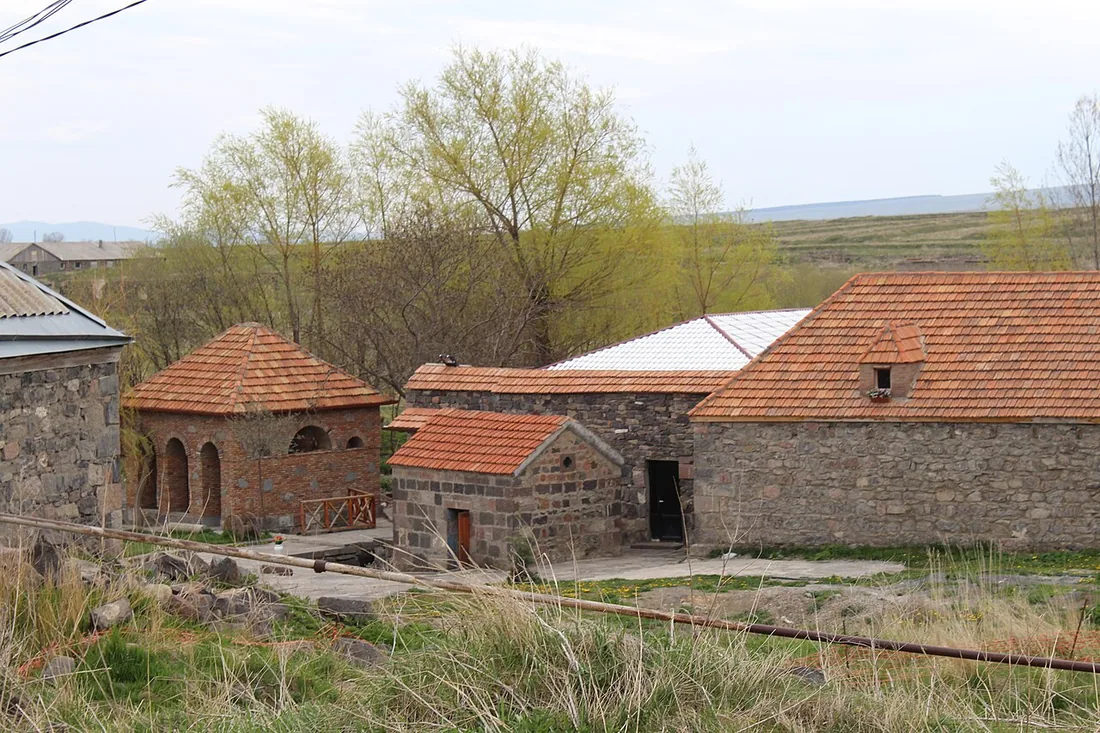
A monastery on the western shore of Tsalka Reservoir whose main church stands over a karst spring — with trout living in the pool beneath the floor.
- Time needed
- 1 h
- From Tbilisi
- 114 km · 2:15
- Road
- Unpaved sections
- Car needed
- Crossover / SUV
- Season
- May–October
- Entry
- free
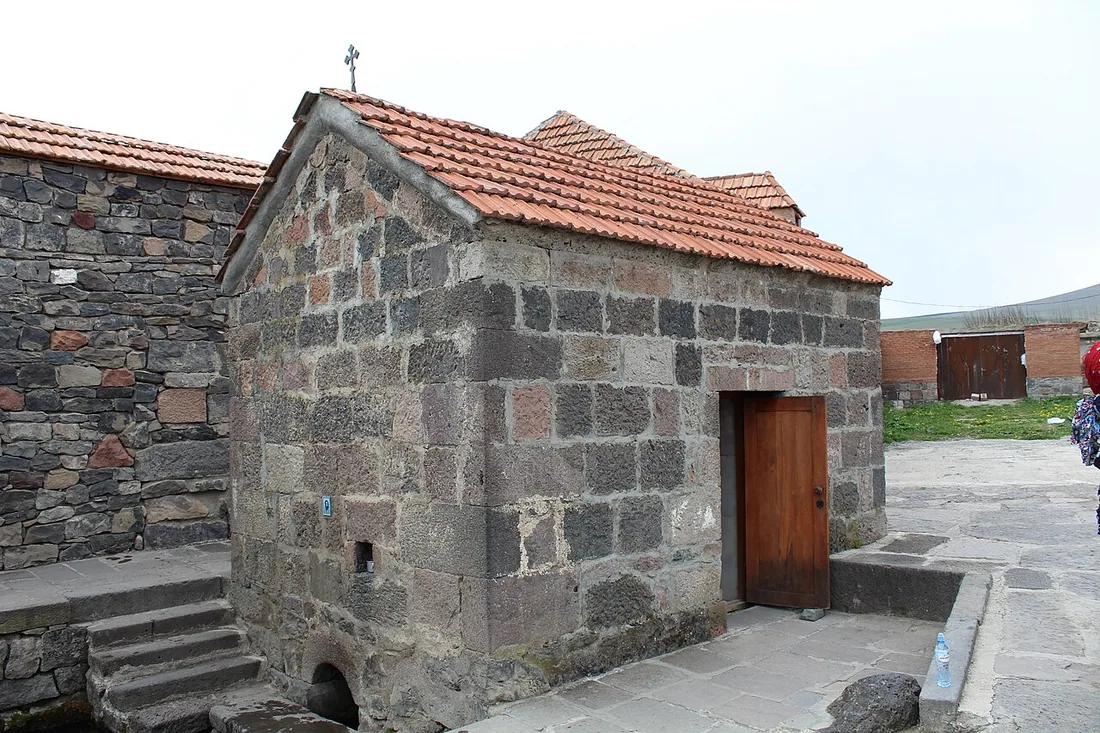
At Berta the church stands on water: a karst spring rises beneath the main church and gathers in a stone basin where river trout swim below the feet of the faithful.
The monastery sits on the western shore of the Tsalka Reservoir, more than 1,500 metres up on the Trialeti plateau, and its first church is dated to the 6th–7th centuries. Its later life follows the fortunes of the plateau. In the 19th century the Pontic Greeks of Tsalka restored it and consecrated it as a Greek Orthodox church. For generations Greeks were the heart of this district; after Georgian independence most of them left, and today they are under 7 per cent of a municipality whose population has shrunk from about 45,600 in 1959 to under 20,000. In 2004 Berta was re-established as a Georgian Orthodox monastery for men, dedicated to the Three Holy Hierarchs and stauropegial — answering directly to the Patriarch.
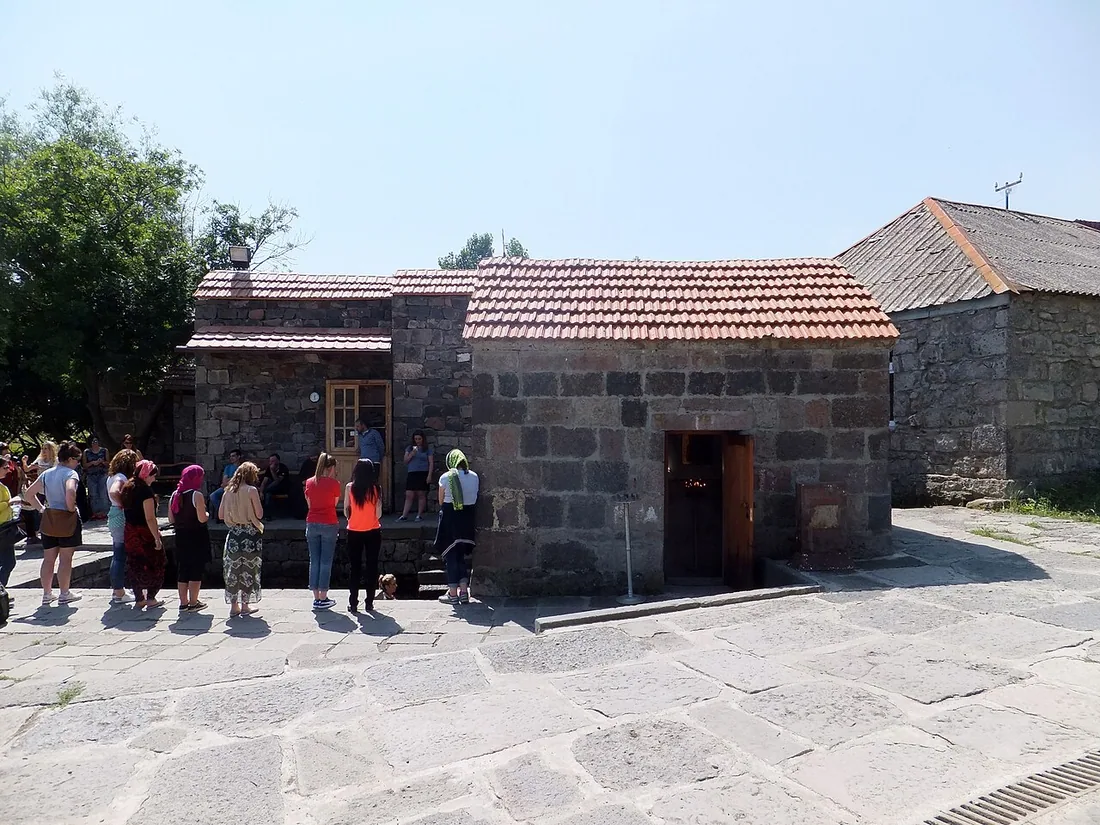
The spring is the reason to come. You can see the water from the courtyard, or through an opening in the church floor, collecting in its stone basin. Trout live and breed in the pool, though nothing stops them swimming away. Local tradition holds that touching the fish, or drinking the water, eases illness — a belief, not a promise.
Elsewhere, pilgrims walk to the spring. At Berta, the spring came into the church.
Practical advice
Entry is free, but this is a working men's monastery: long trousers for men, a skirt and headscarf for women, quiet voices, and ask before photographing the monks or the spring. If you want to follow the custom of touching the trout, ask a monk first rather than reaching in. Allow about an hour. At over 1,500 metres the plateau is cool even in summer, so pack a warm layer. There is nothing to buy beyond Tsalka — eat and fill up there (the Pontia restaurant in town is a common tip). Sakdrioni's caravanserai ruins, which you pass on the way, make a natural second stop.
How to get there from Tbilisi
Leave Tbilisi through Tskneti on the Sh36 Tbilisi–Manglisi road, then continue on the Sh31 through Manglisi, across the Trialeti highlands, to Tsalka — roughly 85 km of asphalt with a long climb. From Tsalka stay on the Sh31 west along the reservoir for about 16 km, passing Sakdrioni, then turn off onto the village road for the last 5–6 km to Berta; this final stretch is unpaved and deeply rutted after rain. In all, 114 km and about 2 h 15 min. Take an SUV: the clearance matters on the dirt, and outside May–October mud and snow can make it impassable for an economy car. Last fuel is in Tsalka.
Click a marker for details. Coloured lines are ready-made road trips.
Nearby places
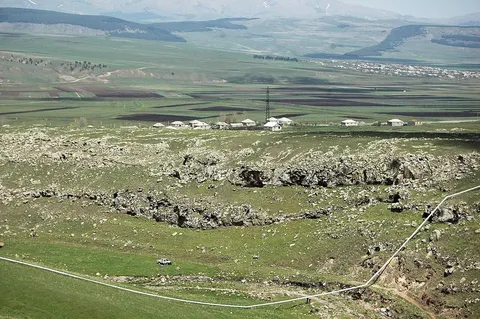
Trialeti Petroglyphs (Gantiadi)
About a hundred deer, horses, goats, fish and tiny archers cut into basalt near Gantiadi: Georgia's only prehistoric rock art of its kind.
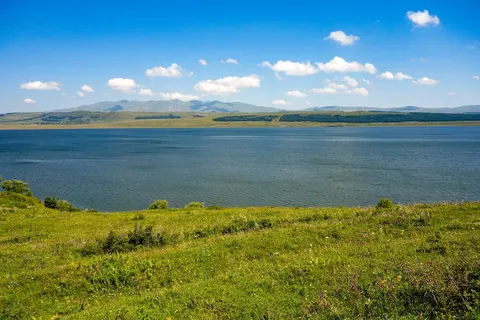
Tsalka Reservoir
Georgia's largest reservoir by surface: 33.7 km² of cold, wind-whipped water at 1,506 m on the Tsalka plateau, where Bronze Age gold came out of the ground.
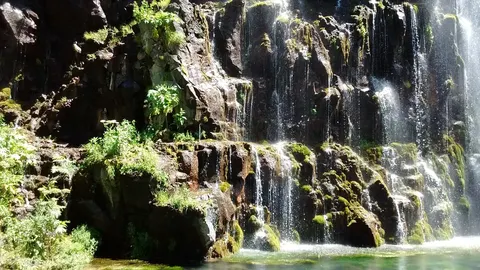
Dashbashi Canyon
An eight-kilometre basalt gorge near Tsalka where springs burst from the rock as waterfalls, while the glass Diamond Bridge hangs overhead.
Best car for this trip
Unpaved sections
Guides
- Do You Need a 4x4 in Georgia? We rate the road surface and the minimum car class for all 267 places in our database. 227 of them need nothin
- The Best Time to Visit Georgia, Counted Month by Month Georgia does not have one season. It has two countries: a 60% country from November to April and a 99% country
Pickup locations
Car Rental in Tbilisi — 78 km (straight line)
Booking and enquiries
The easiest way to reach these places is by car — you pick the route and the stops.