
Barisakho
The gateway village of Khevsureti on the Aragvi: guesthouses, a hot meal and a long memory before the road turns into a 4x4 track.
- Time needed
- 0.5 h
- From Tbilisi
- 108 km · 2:30
- Road
- Unpaved sections
- Car needed
- Crossover / SUV
- Season
- May–October
- Entry
- free
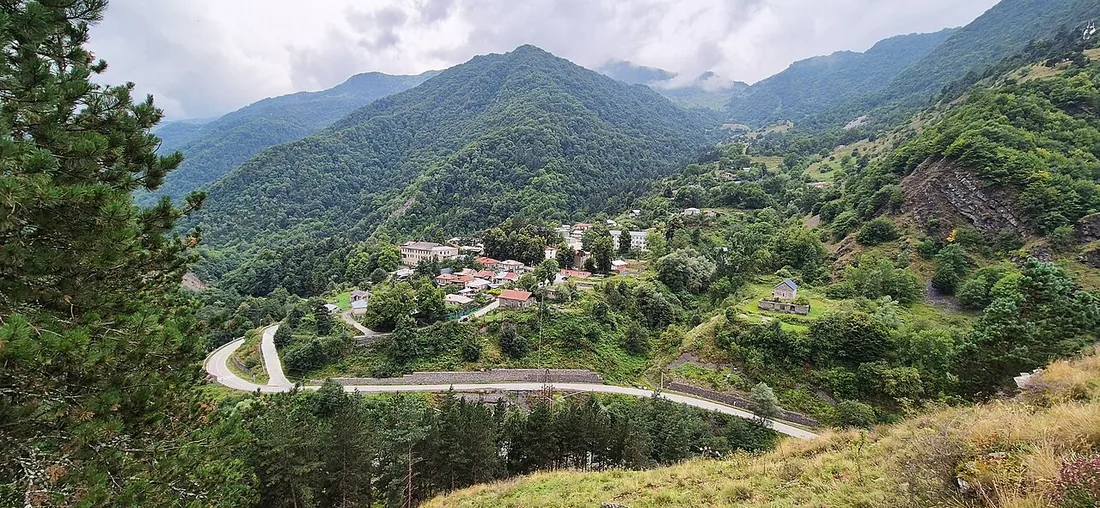
The only road into Khevsureti runs through Barisakho, and for many travellers the day's driving ends here: a hot meal, a bed, and the Aragvi talking all night below the window.
The village stands on the right bank of the Khevsureti Aragvi, on the eastern slope of the Gudamakari range. It is the centre of the Khevsureti community, an administrative knot that ties together more than thirty villages, among them Korsha, Roshka, Gudani and Akhieli. At the 2014 census, 153 people lived here.
A quiet place with a hard past. In 1813, near Barisakho, rebel Khevsurs fought a Russian army and were beaten. In the second half of the nineteenth century the village counted 46 households. In 1934 the road from Dusheti, begun in 1930, was opened here with ceremony. It is the road you arrive on.
Barisakho's most precious object lives in Tbilisi. The Georgian National Museum keeps a ritual water vessel from the village, decorated with a lion and made between the twelfth and fourteenth centuries, dedicated to the shrine-angel Khmala. A later inscription, of the seventeenth or eighteenth century, records that a man named Saghira offered it to Khmala and the Archangel on behalf of a son. Then the words break off.
Today Barisakho is above all a base camp. Beyond it the road climbs over the Datvisjvari pass to Shatili, or turns towards Roshka and the Abudelauri Lakes, and from there only a 4x4 will do. In Barisakho you still set the pace; past it, the mountains do.
Gallery
Practical advice
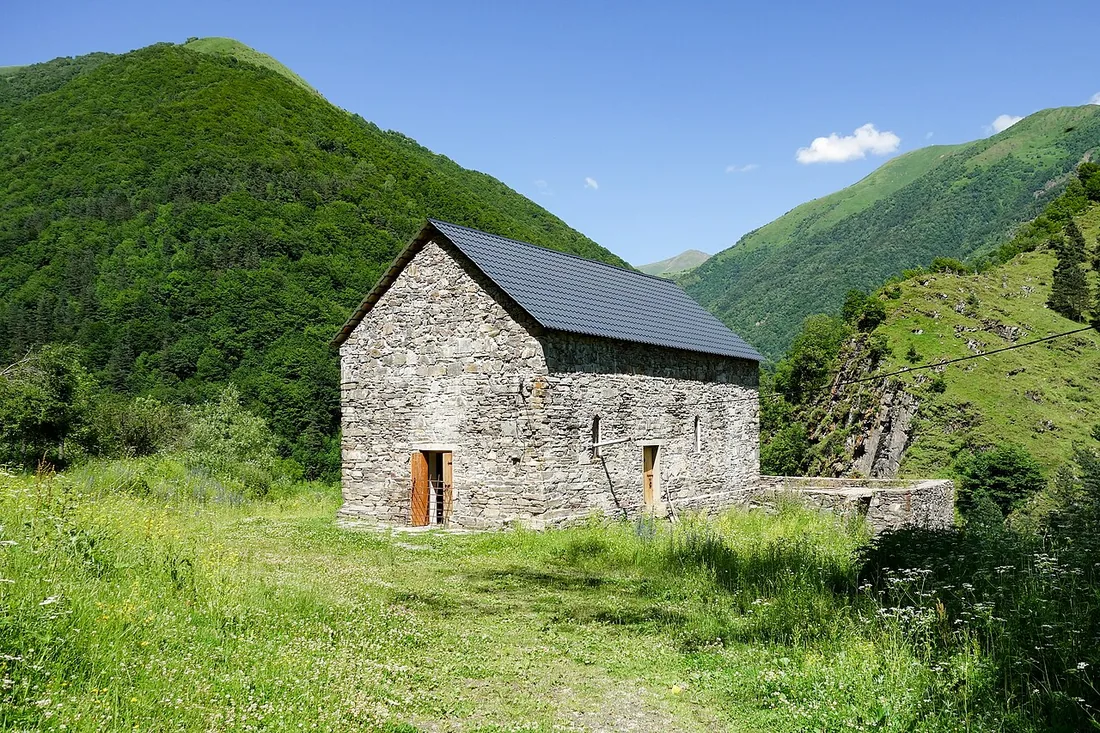
There is no entry fee: this is a living village, not a site. Treat it as your overnight stop and book a guesthouse ahead in July and August, when Shatili-bound drivers fill the beds; carry cash, as small places rarely take cards. The season runs roughly May to October; outside it, mud and snow can close the approach. A public minibus from Didube runs only on Wednesdays and Saturdays in season, so a car gives you freedom. Khevsureti shrines are still active sacred places: admire any stone enclosure from outside rather than walking in.
How to get there from Tbilisi
From Tbilisi take the S3 (Georgian Military Road) north past Mtskheta to Zhinvali, about an hour. At the reservoir turn off onto the Sh26 towards Barisakho and Shatili and follow the Aragvi upstream. The first stretch is asphalt; the approach to the village is gravel, dusty in summer and slippery after rain. Allow about 2 hours 30 minutes for the 108 km. Fill the tank on the S3 before the turn-off and do not count on fuel further up. An SUV is the sensible choice: a careful driver can manage in a small car in dry weather, but clearance helps, and beyond Barisakho you will need a genuine 4x4.
Click a marker for details. Coloured lines are ready-made road trips.
Nearby places
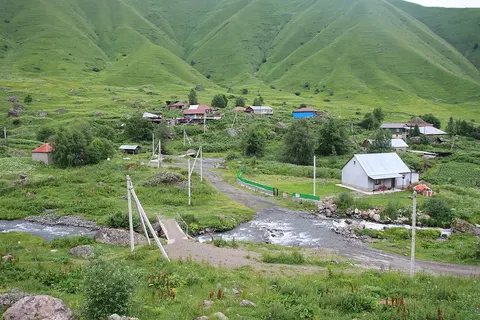
Roshka
A stone village of Khevsureti at 2,000 m under the teeth of Chaukhi, with house-sized glacial boulders above it and the Abudelauri lakes beyond.
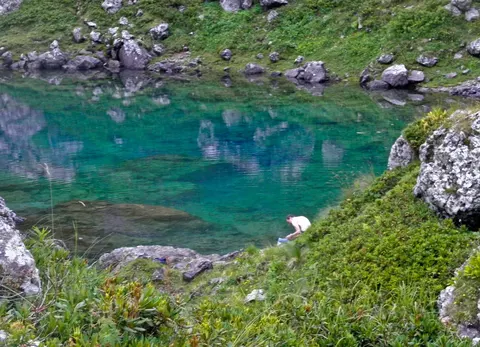
Abudelauri Lakes
Three glacial lakes under Chaukhi, green, blue and a milky white one at the glacier's foot above 2,800 m, seven kilometres on foot or horseback from Roshka.
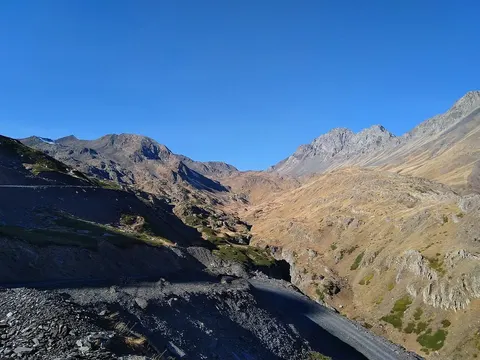
Arkhoti Valley
A Khevsur border valley beyond the end of the road, reached only by jeep track or on foot, where two villages still keep their hearths burning.
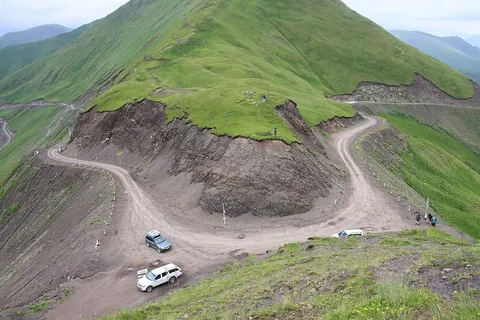
Datvisjvari Pass
The 2,680-metre gravel pass on the Caucasus watershed that splits Khevsureti in two: the only road to Shatili, open only in the warm months.
Best car for this trip
Unpaved sections
Guides
- Do You Need a 4x4 in Georgia? We rate the road surface and the minimum car class for all 267 places in our database. 227 of them need nothin
- Winter Driving in Georgia: What Closes, What Opens, Which Car Of the 267 places we map, 161 are in season in winter and 52 are flagged as not reachable year-round. The pass
Pickup locations
Car Rental in Tbilisi — 87 km (straight line)
Booking and enquiries
The easiest way to reach these places is by car — you pick the route and the stops.