
Bakuriani Alpine Botanical Garden
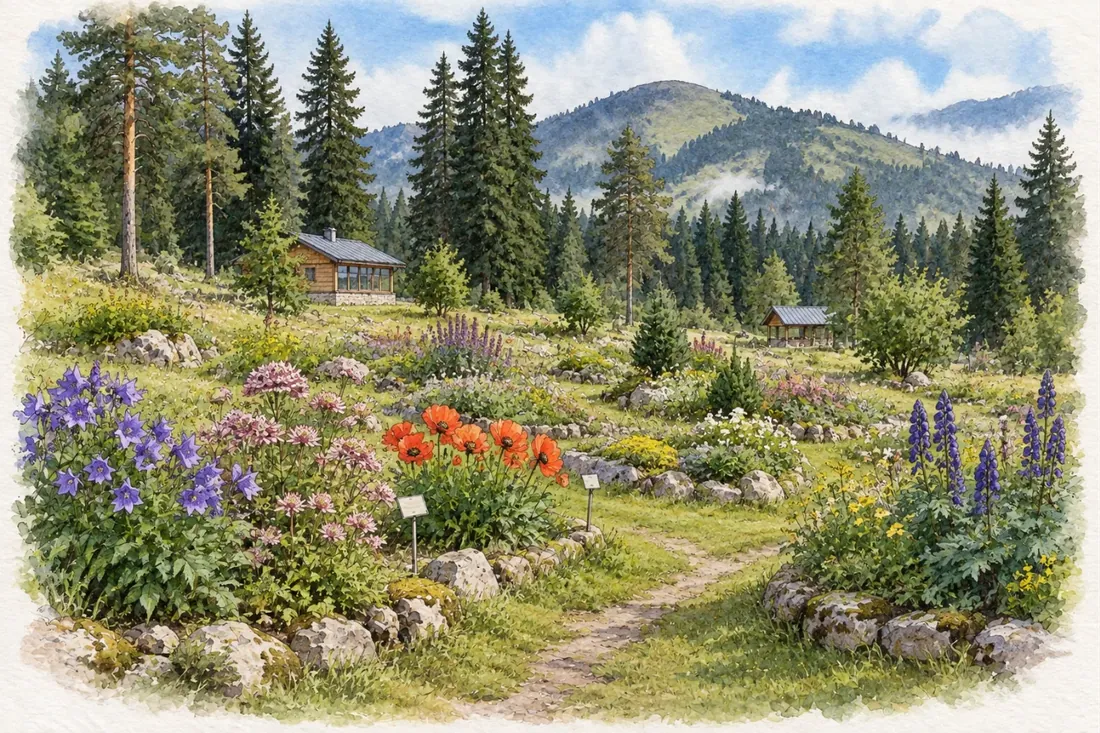
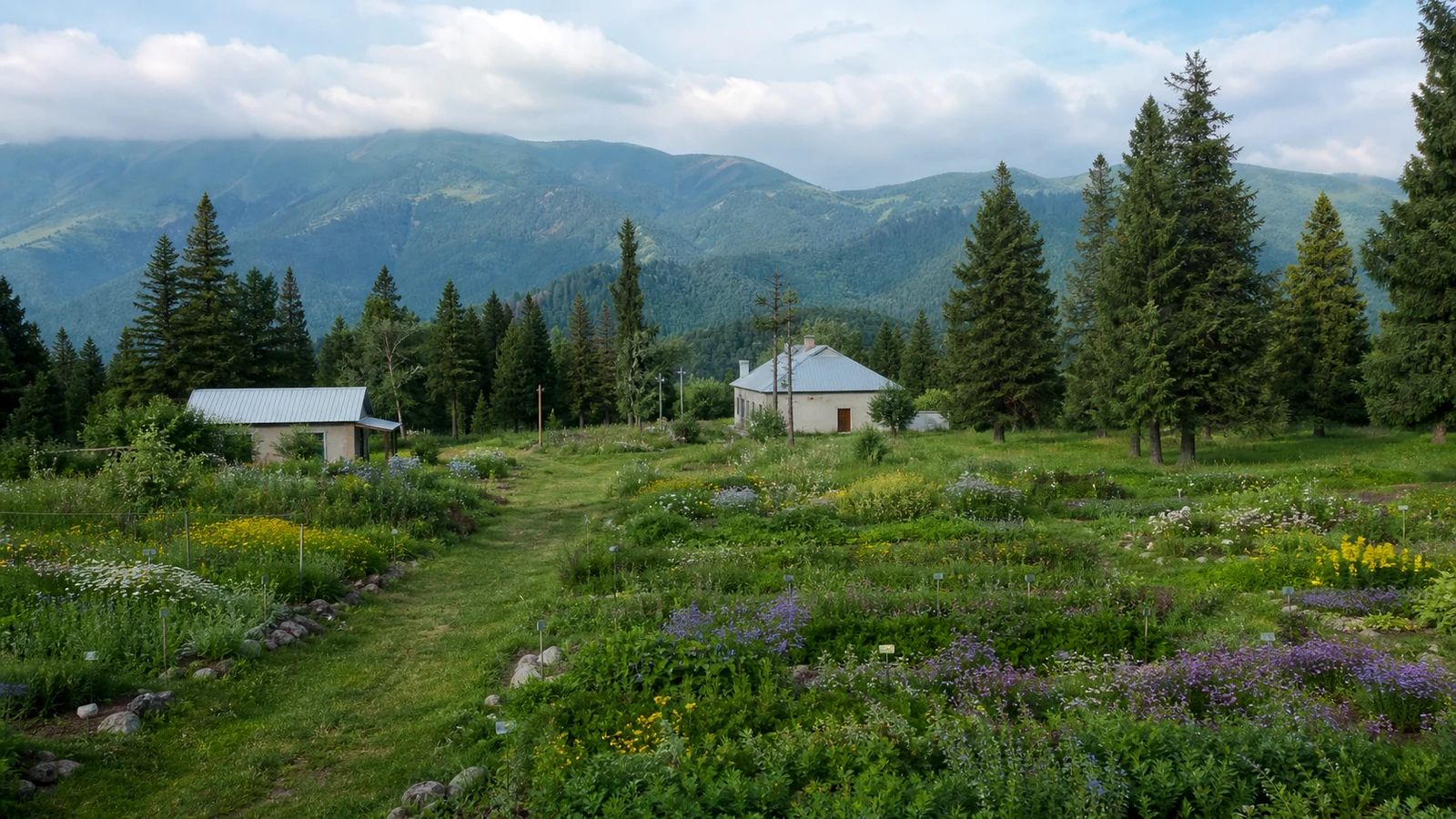
Seventeen hectares at 1,700 metres on the edge of Bakuriani, where scientists have been coaxing plants of the high Caucasus into bloom since 1910.
- Time needed
- 1.5 h
- From Tbilisi
- 187 km · 2:55
- Road
- Paved
- Car needed
- Economy class
- Season
- May–October
- Entry
- 2 ₾
In Bakuriani most people look up at the ski runs; in this garden the point is to look down, at flowers barely taller than your boot. The garden lies at about 1,700 metres on the western edge of the resort. It was founded in 1910 on the western slope of Mount Kokhta at the initiative of the botanists A. Rolov and A. Fomin, passed to the Georgian Institute of Botany in 1934 and was laid out on its present ground in 1937. Today it is the high-mountain garden of the Institute of Botany at Ilia State University, the same university that runs the Abastumani observatory, and it is still an experimental station rather than a park.
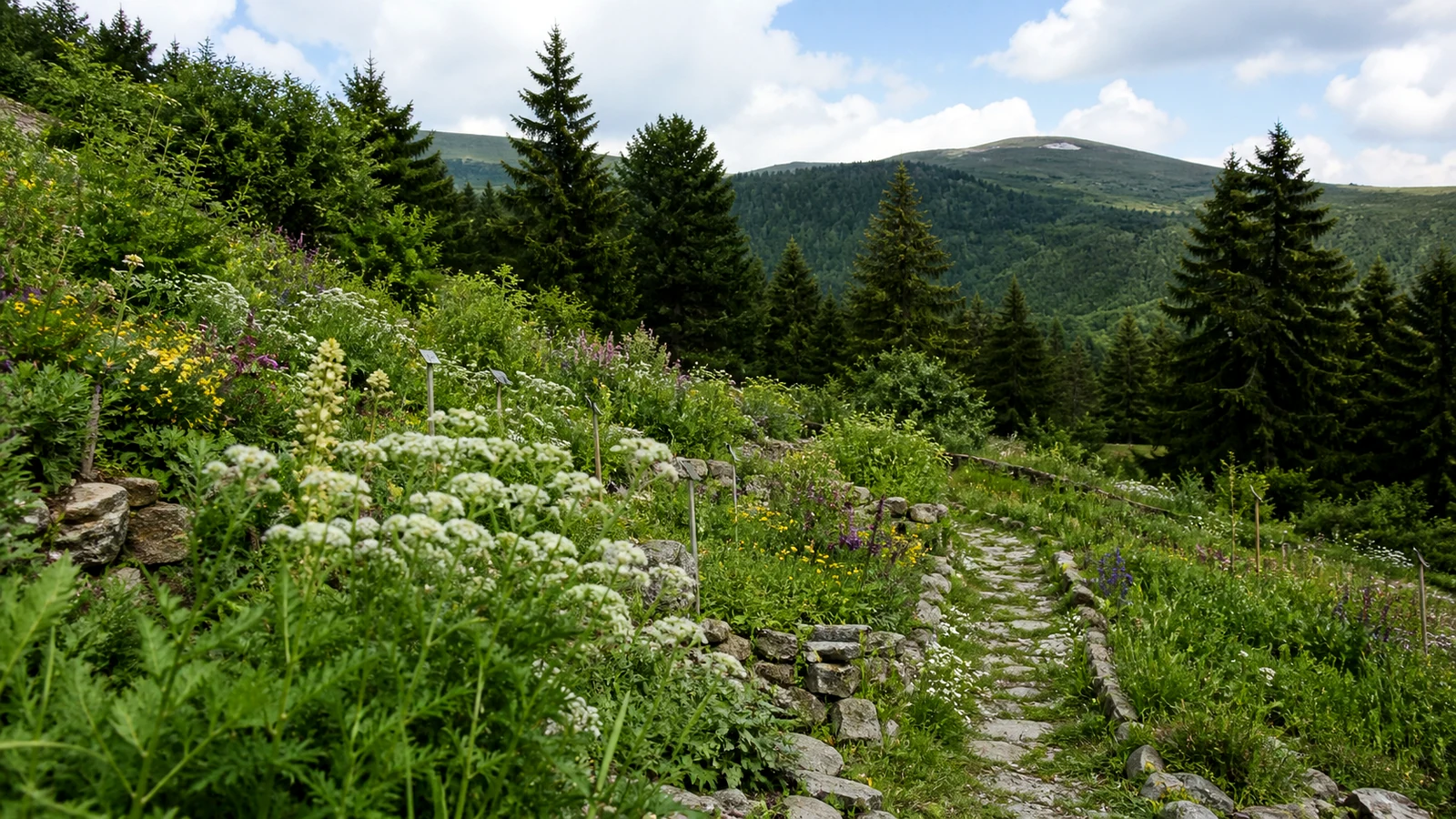
Its task has never changed: bring the plants of the high Caucasus down to this slope, see which of them settle, and learn how they live. The alpine collection gathers some 1,200 species from across the Caucasus on about a hectare and a half, oriental poppies and Pontic gentians among them, and around 300 more have come from the Altai, the Russian Far East and the Carpathians.
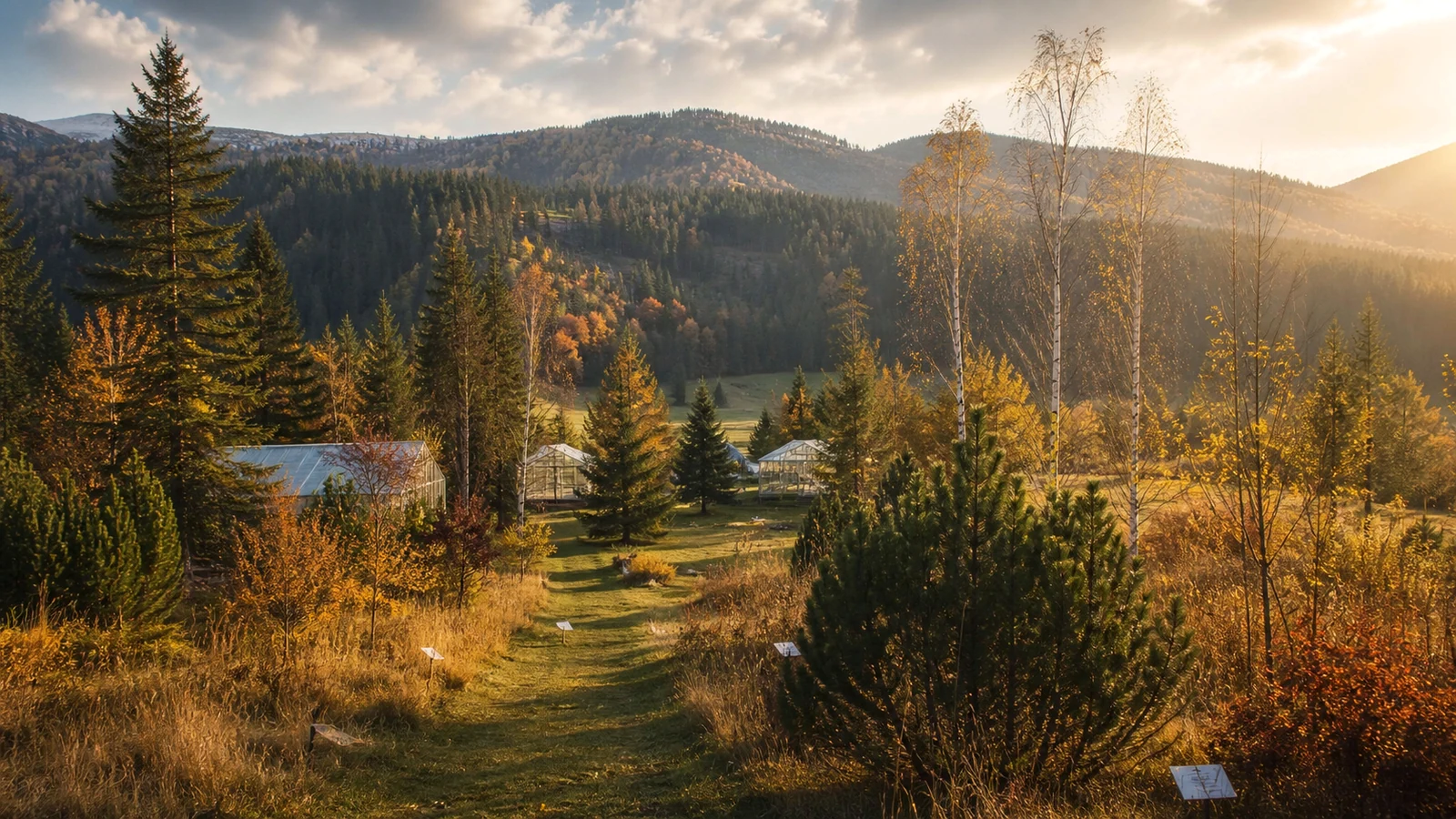
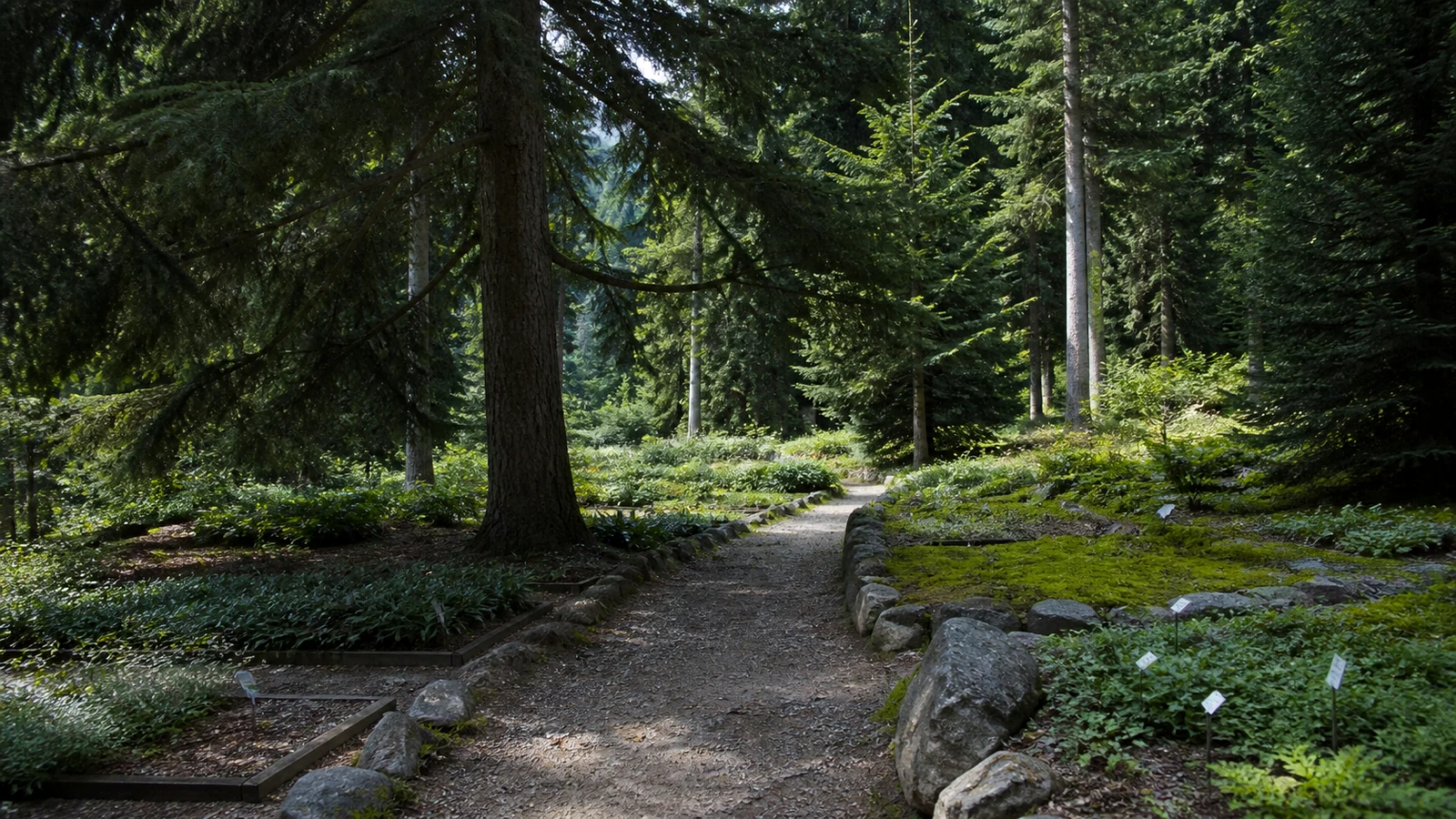
The trees tell the longer story. Beside 75 native species, Caucasian fir, high-mountain maple and rhododendron among them, stand 66 foreign guests: Douglas fir, Engelmann and blue spruce, Siberian larch, Manchurian walnut, the Amur cork tree. Planted as experiments, they now shade walks that smell of resin on warm afternoons. In 1939 the scientists added frost-hardy currants, gooseberries and Michurin apples, to learn what might crop in a place where snow lies for months.
Come at the end of June or in July, when the alpine beds flower almost all at once. Some paths are little more than tracks through the grass, and labels have gone missing. What you get instead of polish is a quiet hour, and a century-old experiment still running.
Gallery
Practical advice
An hour and a half is plenty. The garden opens in the warm season, roughly May to October, and lies under snow the rest of the year; a small fee is usually charged at the gate. The paths are earth and turn to mud after rain, so wear trainers rather than sandals. Nothing is sold inside, so bring water and eat in the village. The beds are open to the sun: a hat helps. In early May snow can still linger in shaded corners. Look, photograph, but do not pick: many of these plants are the only specimens on the slope.
How to get there from Tbilisi
From Tbilisi take the E60/S1 west to Khashuri, about 130 km, then the S8 south for 30 km to Borjomi. In the centre of Borjomi turn onto the Sh20, which climbs another 30 km through Tsagveri to Bakuriani: 187 km and a little under 3 hours in all. The garden sits on the western edge of the resort, less than a kilometre from the centre; you can also walk it from the village in a quarter of an hour. It is asphalt all the way, though the bends above Borjomi are tight, so take them slowly. Park on the verge by the gate. Refuel in Khashuri or Borjomi. An economy car is fine in the season.
Click a marker for details. Coloured lines are ready-made road trips.
Nearby places
Bakuriani
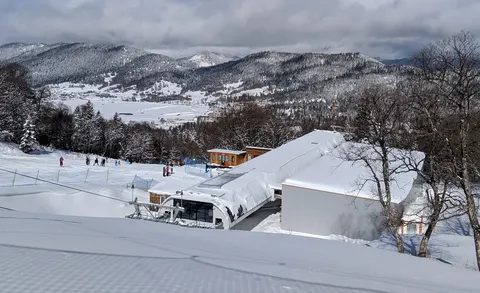
Georgia's oldest winter resort, 1,700 metres up in a spruce-dark volcanic basin above Borjomi: gentle pistes in winter, cool air all summer.
Timotesubani Monastery
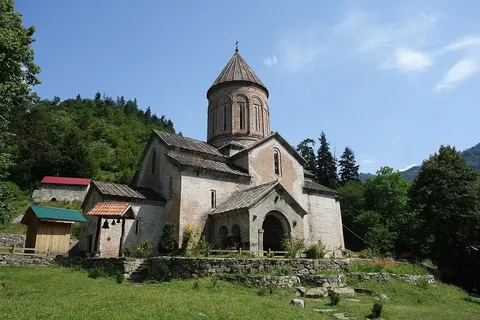
A rose-brick church of Queen Tamar's age in the Gujareti valley near Tsagveri, painted inside in 1205–1215 by some of Georgia's finest masters.
The Kukushka narrow-gauge railway and the Tsagveri bridge
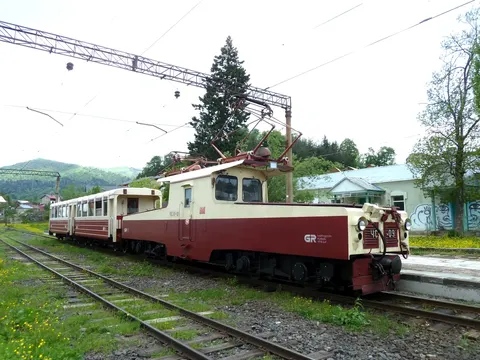
A 37-kilometre, 900-mm line of 1902 climbing from Borjomi to Bakuriani over a lattice bridge that tradition credits to Gustave Eiffel.
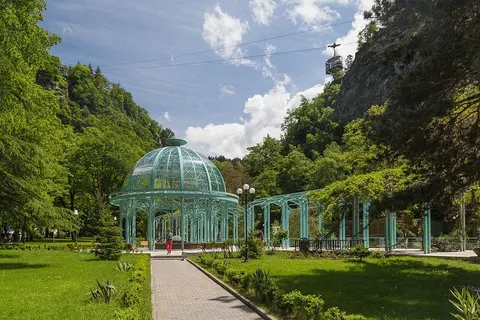
Borjomi Central Park and Mineral Springs
A 19th-century spa park in a narrow wooded gorge, where you fill your own bottle with salty, faintly warm Borjomi water straight from the spring.
Best car for this trip
Guides
- Winter Driving in Georgia: What Closes, What Opens, Which Car Of the 267 places we map, 161 are in season in winter and 52 are flagged as not reachable year-round. The pass
- The Best Time to Visit Georgia, Counted Month by Month Georgia does not have one season. It has two countries: a 60% country from November to April and a 99% country
Pickup locations
Car Rental in Kutaisi — 88 km (straight line)
Booking and enquiries
The easiest way to reach these places is by car — you pick the route and the stops.