Vanis Kvabebi
An 8th-century multi-level monks' town cut into a tuff cliff, two kilometres short of Vardzia.
- Time needed
- 2 h
- From Tbilisi
- 262 km · 4:15
- Road
- Mostly paved
- Car needed
- Crossover / SUV
- Season
- May–October
- Entry
- free
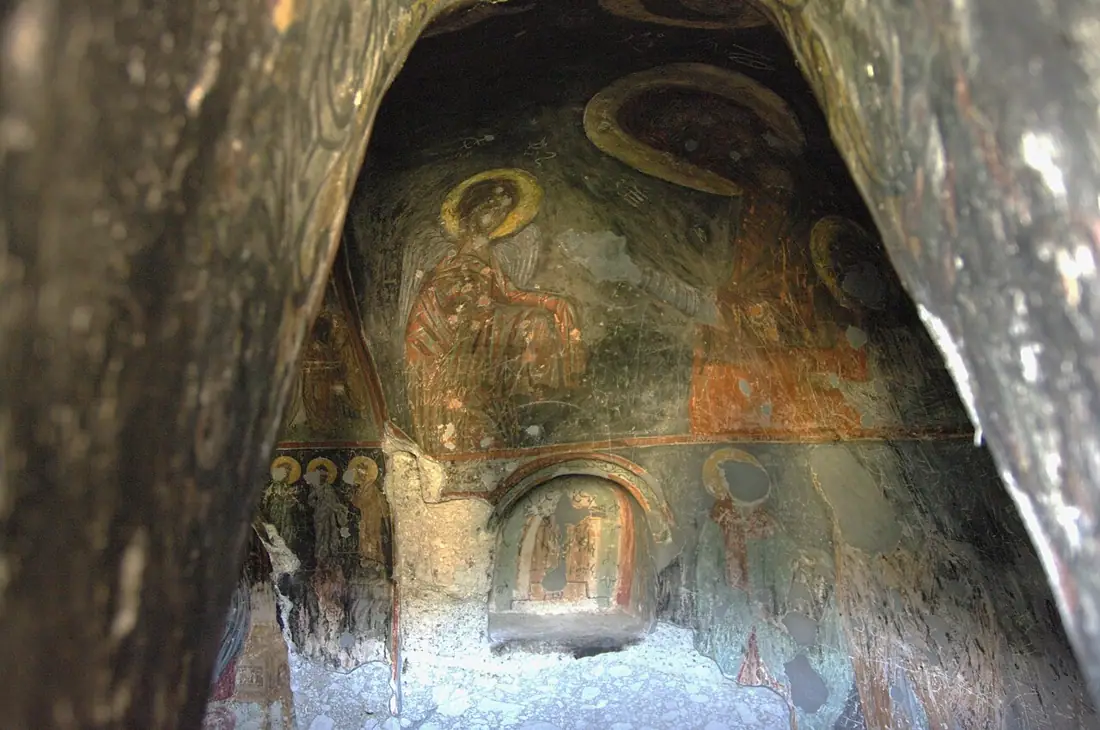
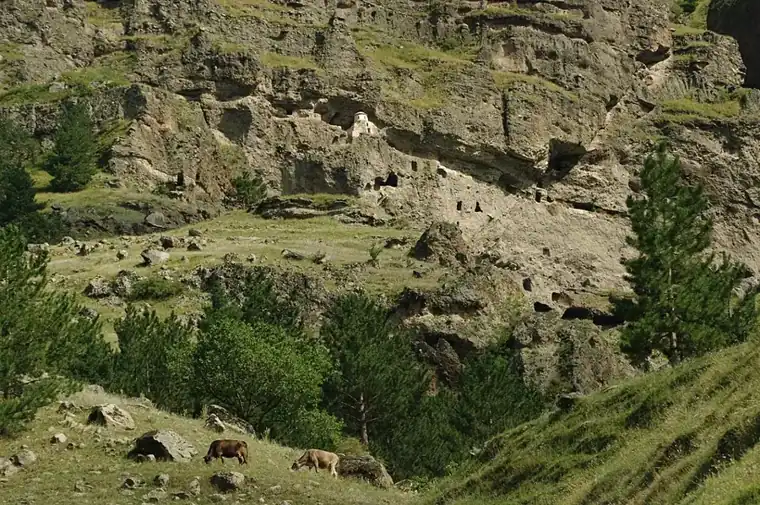
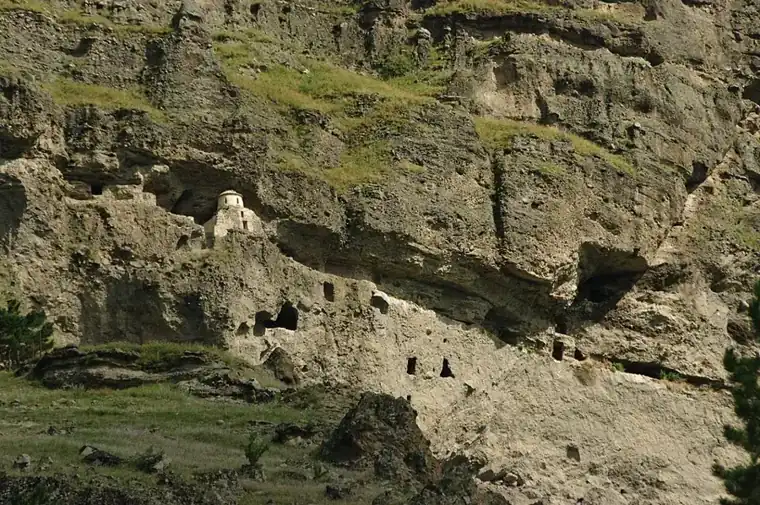
Vanis Kvabebi is four hundred years older than Vardzia and, to be honest, a great deal wilder. The complex was founded in the 8th century, and several hundred chambers are cut into the steep tuff face, arranged on several levels and linked by narrow tunnels, cut steps and shafts. This is not one monastery but an entire vertical settlement built into rock.
At the end of the 12th century a defensive wall was raised across the face, with arched openings, set directly against the cliff. That is what you see from the road and what you meet first. Behind it the caves proper begin: refectories, cells, water cisterns and chapels.
There are two churches: St George on the lower level, and a small chapel near the very top, reached through a narrow tunnel and up an iron ladder. The upper section is the real test. The openings are low, the ledges have no railing, and there is a fifty-metre drop below. Anyone uneasy with heights should stop at the lower level, which is thoroughly worth the visit on its own.
Vardzia is the famous site, but the two were once links in a single defensive chain along the gorge together with Khertvisi and Tmogvi: from each one the next was visible, and between them they controlled the whole valley. Standing on the upper terrace here, that logic becomes obvious in a way no plan on paper can convey.
Earthquakes have brought down part of the complex, so many cells are collapsed or unreachable. A few monks live here again today, so noise and spread-out picnics are out of place.
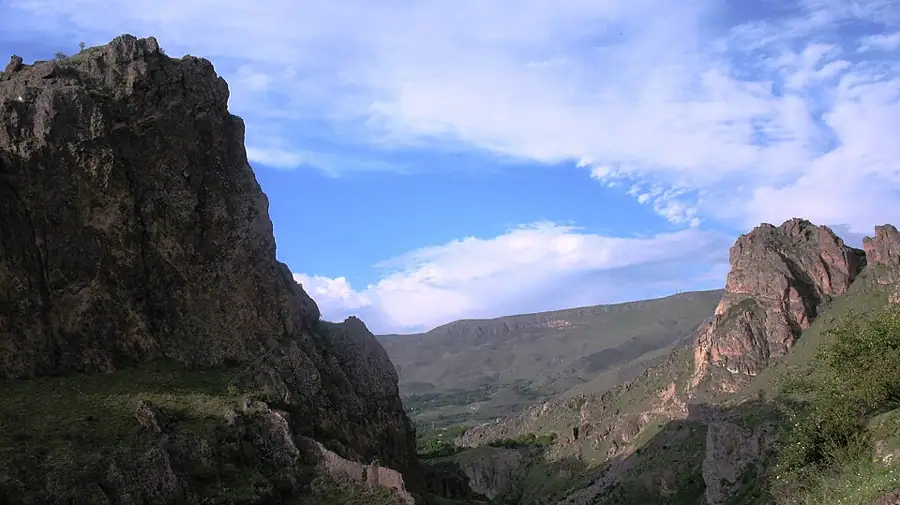
From the top the view opens along the Mtkvari valley almost as far as Tmogvi fortress, and unlike Vardzia the site is almost never busy. Vardzia's car park holds forty vehicles; at Vanis Kvabebi yours is often the only one.
Gallery
Practical advice
Allow two hours. The climb is steep and the final part is iron ladders and low tunnels, so wear shoes with grip and keep your hands free by carrying a backpack rather than a bag. In winter the upper section ices over and is not worth the risk. There is no shade and the tuff reflects heat hard, so water, a hat and sunscreen are essential. Toilets and cafes are at Vardzia, two kilometres on. This is a working monastery, so dress accordingly.
How to get there from Tbilisi
From Tbilisi drive via Borjomi and Akhaltsikhe towards Vardzia, following the Mtkvari gorge after Khertvisi. Vanis Kvabebi comes two kilometres before Vardzia, on the left of the road; the sign is small and easy to miss. The total is 262 km, about four hours fifteen. The main road is asphalt, and only the last few hundred metres are a gravel access track. In dry weather an ordinary car will get up it. Refuel in Akhaltsikhe or Aspindza.
Click a marker for details. Coloured lines are ready-made road trips.
Nearby places
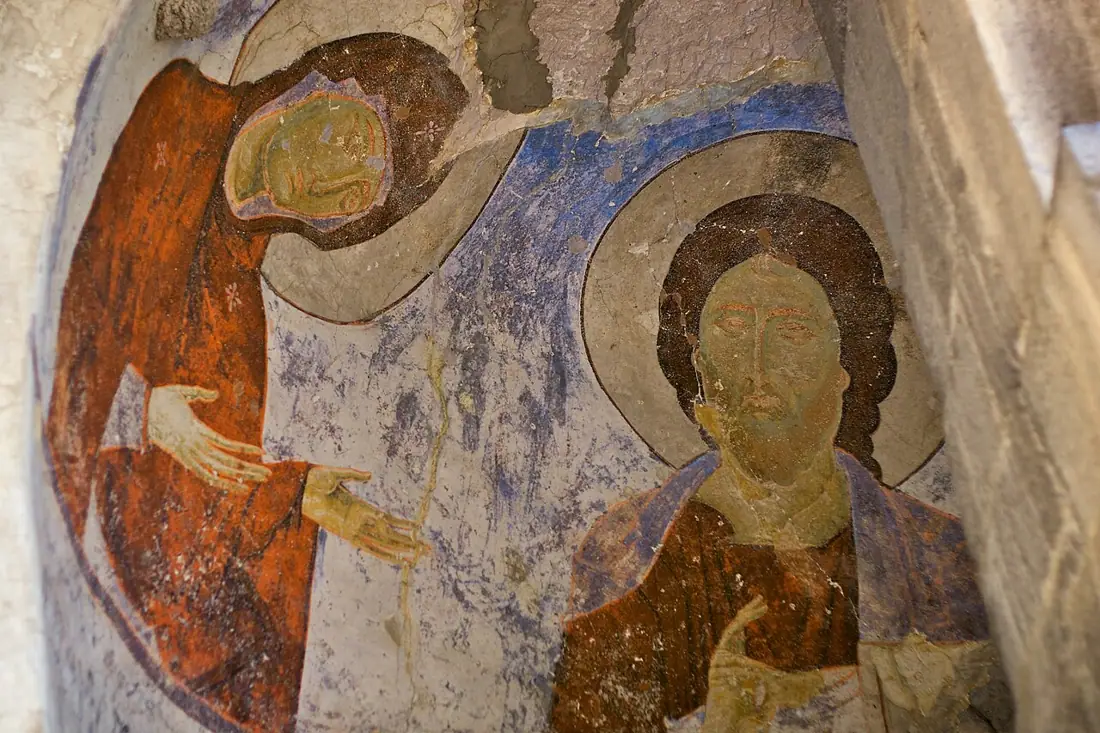 Cave
CaveVardzia
A 12th-century cave city and monastery cut into the Mtkvari gorge, the flagship monument of Queen Tamar's era.
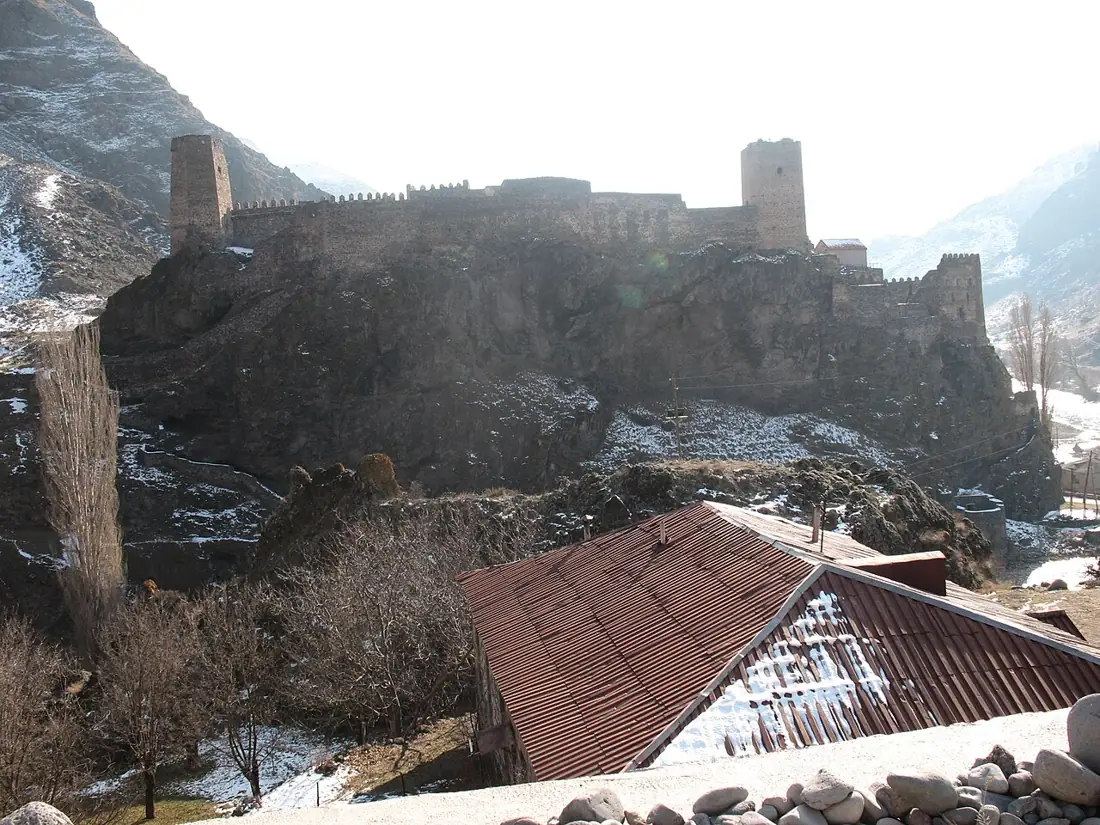 Fortress
Khertvisi Fortress
One of the oldest fortresses in Georgia, standing where two rivers meet on the road to Vardzia.
Tmogvi Fortress
A ruined fortress spread over three rocky spurs above the Mtkvari gorge, between Khertvisi and Vardzia.
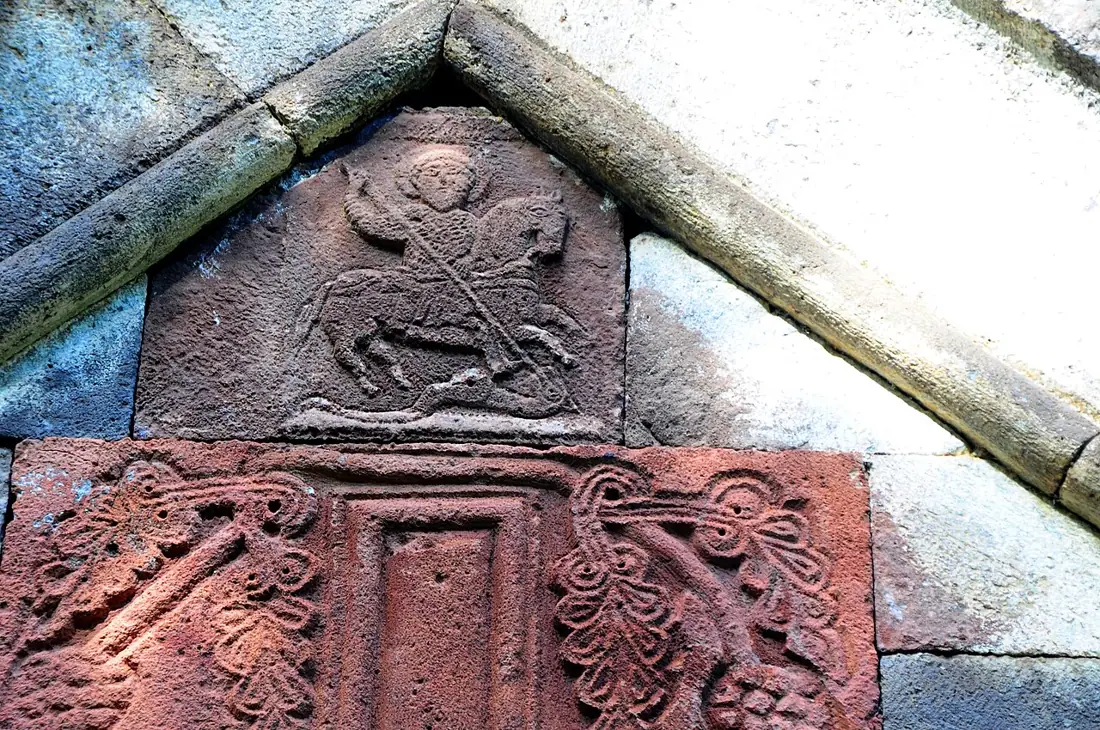 Monastery
Sapara Monastery
An active monastery hidden on a cliff terrace near Akhaltsikhe, with 13th-century frescoes.
Booking and enquiries
This site is informational — there is no online payment. Call or email us to book.