Tsutskhvati Caves
A thirteen-storey karst system in the Chishura gorge, where traces of Neanderthals have been excavated.
- Time needed
- 2 h
- From Tbilisi
- 215 km · 3:15
- Road
- Mostly paved
- Car needed
- Crossover / SUV
- Season
- May–October
- Entry
- free
Tsutskhvati is the most complicated cave system in Georgia, and it is not a show cave. It lies in Tkibuli municipality near the village of Tsutskhvati, in the Okriba-Argveti ridge, cut into the wall of the Chishura gorge at about 320 metres.
Water has hollowed thirteen storeys out of the limestone — galleries stacked one above another, each formed when the river stood at a different level. The upper floors are dry; water still runs through the lowest. The second floor is the exceptional one: a natural tunnel two hundred metres long, ten to thirty metres wide and up to twenty-eight metres high. It is also the easiest part to enter.
The archaeology runs from the Middle Palaeolithic to the Bronze Age. Excavation has produced Neanderthal material of roughly fifty thousand years ago, evidence of modern humans between eighty thousand and twelve thousand years ago, and stone tools reaching back as far as four hundred thousand years. Up to forty animal species have been identified in the bone assemblages. On the eleventh floor archaeologists found deliberately arranged bones and teeth of sacrificed animals. An international expedition has worked here since 2017.
What to expect: no lighting, no walkway, no handrail. This is a wild cave, and you need a torch, solid boots and preferably a local companion who knows the entrances. In exchange you get a silence and a sense of scale in the second-floor tunnel that no fitted-out cave will give you.
The bone deposits are the reason specialists keep coming back. Animal bone is abundant in the layers — up to forty species have been identified — and the sequence through the deposits records the climate swings of the Pleistocene. Almost none of that is visible to a visitor, but it explains why a cave with no lighting still has an archaeological camp beside it each summer.
Practical advice
Two hours including the approach. A torch — and a spare — is essential; a phone light is not enough. Wear clothes you do not mind covering in mud, as the path to the entrance is steep and slick in wet weather. Do not go in alone, and do not try to climb between the upper storeys: the connections are dangerous. In winter and early spring the water table is high and the lower levels are out of reach. There are no toilets, cafe or ticket desk; the nearest shop is in the village.
How to get there from Tbilisi
Take the E60 west from Tbilisi past Zestaponi and Terjola, then turn north towards Tsutskhvati — about 215 km in all, three hours fifteen. Asphalt runs as far as the village; the last two or three kilometres towards the gorge are gravel and earth. A crossover will manage in dry weather, but after rain you genuinely want ground clearance. Refuel in Zestaponi or Terjola. Leave the car at the end of the village where the footpath begins.
Click a marker for details. Coloured lines are ready-made road trips.
Nearby places
 Cave
CaveNavenakhevi Cave
A small lit karst cave in Terjola municipality, with a seven-metre-thick stalactite column near the exit.
 Lake
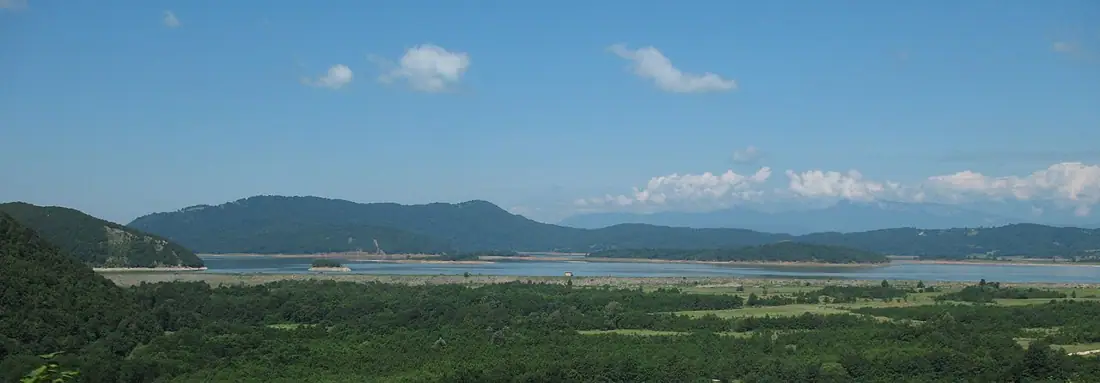
LakeTkibuli Reservoir
A man-made lake below Tkibuli under the white cliff of Nakerala — a quiet stop on the way to Racha.
 Monastery
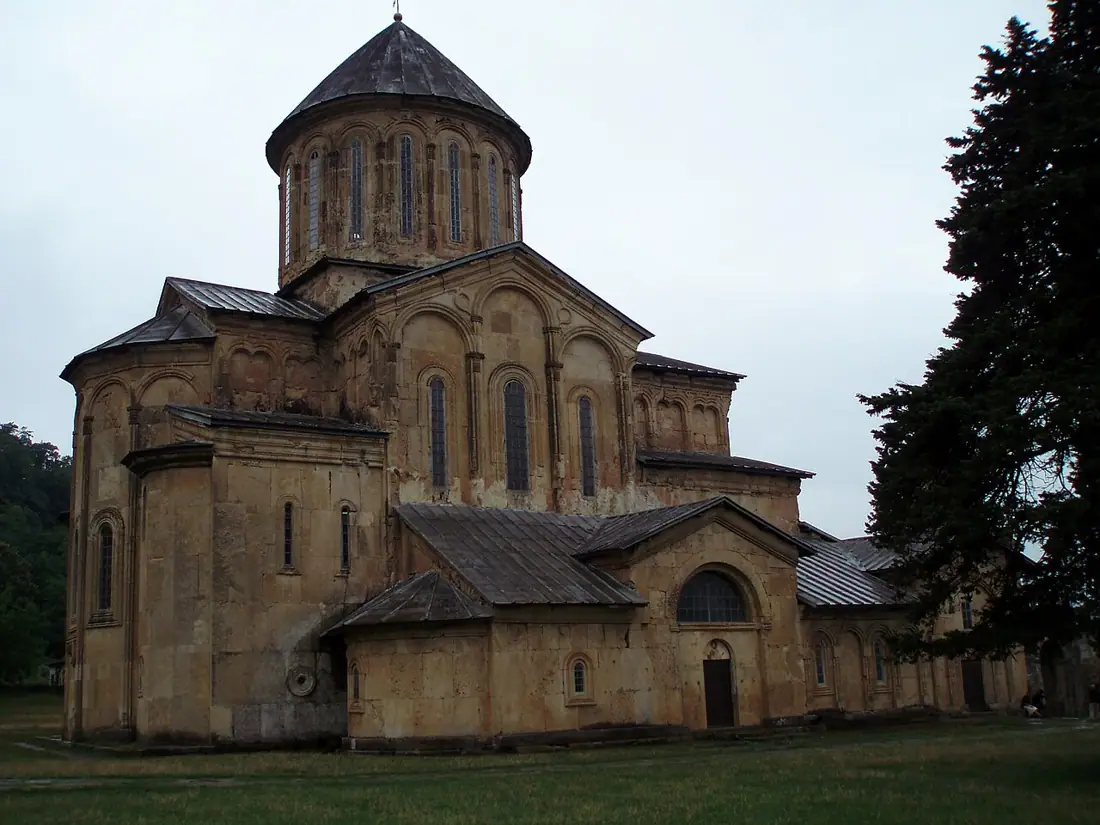
Gelati Monastery
The monastery and academy founded by David the Builder, and a UNESCO World Heritage Site.