Navenakhevi Cave
A small lit karst cave in Terjola municipality, with a seven-metre-thick stalactite column near the exit.

- Time needed
- 1 h
- From Tbilisi
- 210 km · 3:05
- Road
- Paved
- Car needed
- Economy class
- Season
- All year
- Entry
- ~15 ₾
Navenakhevi is the cave where you do not queue. It lies in Terjola municipality in the Okriba karst massif at about 235 metres, and is run by the Agency of Protected Areas as part of the Imereti Caves Protected Areas, together with Sataplia and Prometheus.
It was declared a natural monument in 2007, and the visitor works were finished in 2017: a concrete path, a handrail and lighting. The cave is cut into Cretaceous limestone, has two levels and takes in four large halls. The entrance is deliberately tight — an opening about sixty centimetres high and two metres wide, beyond which the space suddenly opens out.
Inside are the standard karst forms, but well preserved: stalactites, stalagmites, curtains and petrified waterfalls. The set piece is near the exit, a stalactite column seven metres thick running from roof to floor.
An honest comparison: Navenakhevi is far smaller than Prometheus, has no boat and no music-and-colour lighting, and one circuit takes about fifty minutes. In return the groups are small, there is no noise, and the guide often takes you round personally. If Prometheus is full of coaches or you have already seen it, this is a sensible alternative — and it is twenty minutes from Gelati.
The temperature holds at 13–15 °C all year with high humidity, which in the summer heat of the Rioni lowland is a welcome contrast.
The cave sits in the Okriba massif, a block of limestone riddled with cavities. Sataplia, Prometheus, Tsutskhvati and Navenakhevi all belong to the same system of dissolved rock, which is why so many of Georgia's accessible caves are concentrated in this small corner of Imereti. Above ground the approach runs between walnut trees and vine plots, and the walk from the car park to the entrance takes about five minutes on a made path.
Practical advice
An hour covers everything. Entry is only with a guide and groups go in turn, so expect a short wait in summer. It is 13–15 °C inside, so take a jacket or fleece even when it is thirty degrees outside. The path is concrete with a handrail but wet and slippery; smooth soles are a bad idea. Steps make it impossible with a wheelchair or pushchair. Parking, toilets and a small kiosk stand at the entrance.
How to get there from Tbilisi
Take the E60 west from Tbilisi to Zestaponi, then follow signs for Terjola and turn north towards Kveda Simoneti — about 210 km in all, three hours five. The road is asphalt throughout; the last few kilometres are a narrow but well-kept country road. The signs are the green boards of the Agency of Protected Areas. Refuel in Zestaponi or Terjola. There is free parking at the cave entrance. An economy car is entirely sufficient.
Click a marker for details. Coloured lines are ready-made road trips.
Nearby places
 Cave
CaveTsutskhvati Caves
A thirteen-storey karst system in the Chishura gorge, where traces of Neanderthals have been excavated.
 Monastery
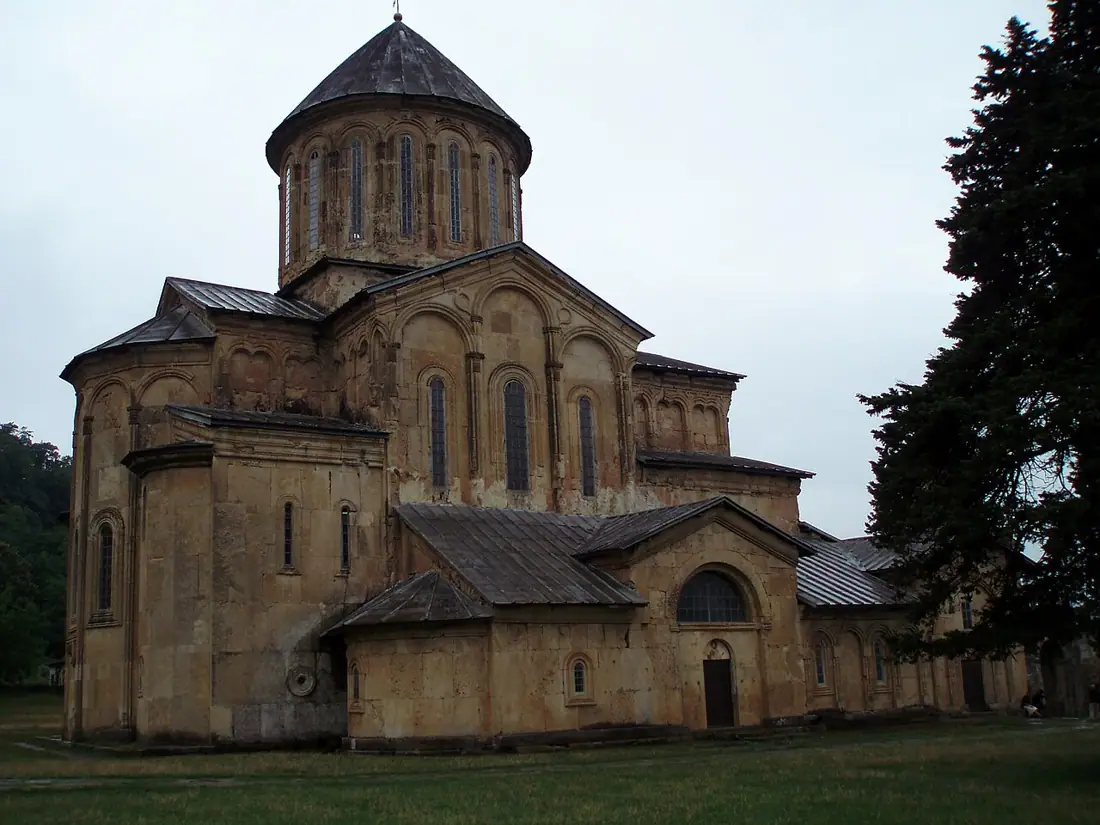
Gelati Monastery
The monastery and academy founded by David the Builder, and a UNESCO World Heritage Site.
 Monastery
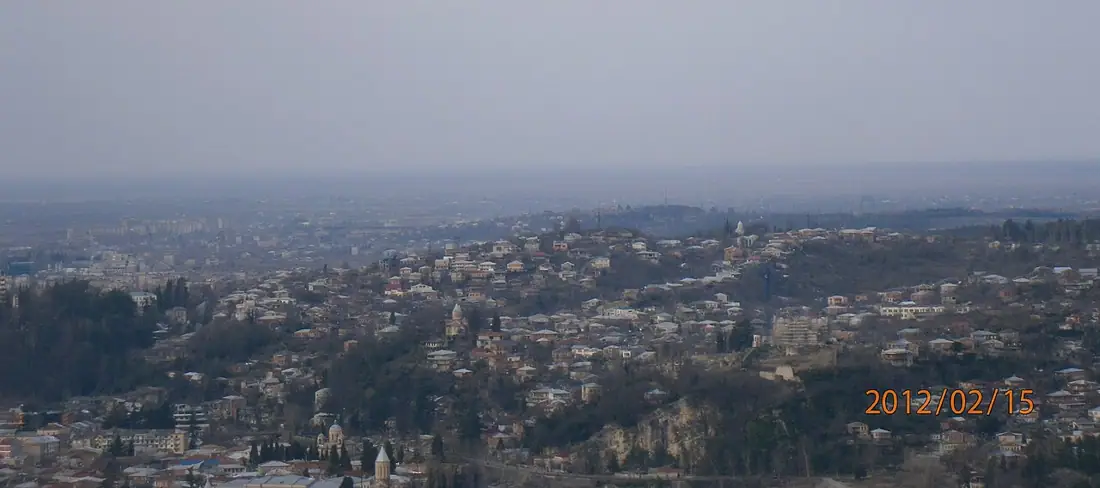
Motsameta Monastery
A small monastery on a cliff above the Tskaltsitela gorge, holding the relics of two martyred dukes.