Tsalenjikha Cathedral
The finest Byzantine wall painting in Georgia, made by a master from Constantinople, in a small Mingrelian town.
- Time needed
- 1 h
- From Tbilisi
- 345 km · 5:05
- Road
- Paved
- Car needed
- Economy class
- Season
- All year
- Entry
- free
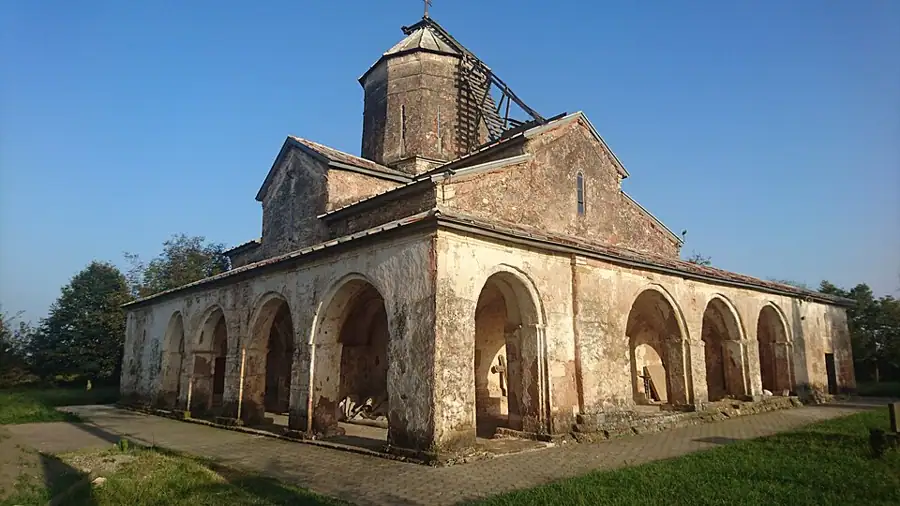
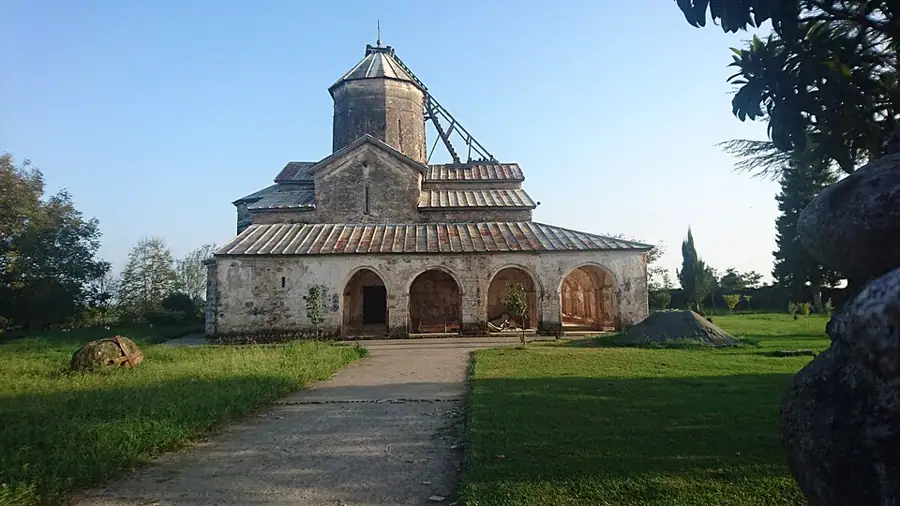
The best Byzantine wall painting surviving in Georgia is in a small Mingrelian town that most travellers drive straight past. The Cathedral of the Transfiguration of the Saviour stands in a walled yard in the middle of Tsalenjikha.
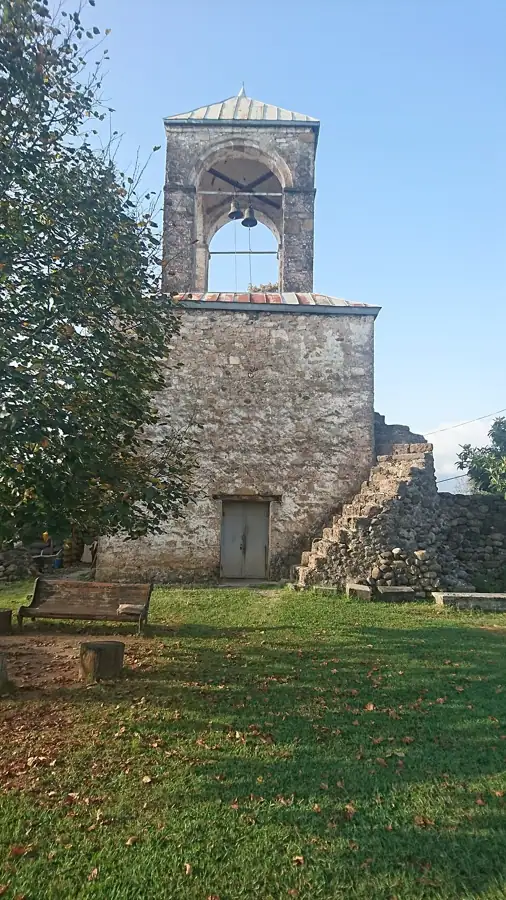
The building took shape between the twelfth and fourteenth centuries: a domed cross-in-square church with a tall drum, a separate bell tower alongside, and a chapel added in the seventeenth century by Levan II Dadiani. From outside it looks like other Mingrelian churches, its masonry patched by repeated repair. The reason to come is inside.
In the 1380s Vameq I Dadiani, ruler of Mingrelia, brought a painter from Constantinople: Cyrus Manuel Eugenikos. He signed the work in a bilingual Greek and Georgian inscription on the south-western pier, which makes him one of the very few painters of the Byzantine world whose name we know at all.
What he left is late Palaiologan painting of the first rank: elongated figures, deep folds, faces modelled over a green underlayer with thin white highlights, and an iconographic programme containing scenes rarely found in Georgian churches. The dome, the drum, the apse and the vaults are entirely covered; the lower registers carry ranks of standing saints.
A second layer, added in the seventeenth century under Bishop Eudemon Jaiani and Levan II Dadiani, is coarser, easy to tell apart, and survives only in fragments.
The programme follows the Byzantine order of its day — Christ above, prophets around the drum, the feast cycle across the vaults, bishops in the sanctuary — but it is worked out with unusual density, and the smaller scenes repay a slow circuit. Damp has eaten into the lower walls and conservation has been intermittent, so some panels are clean and bright while others are still grey with grime.
Tsalenjikha was a bishop's seat, which is why the church is so large for so small a town. It pairs well in one day with the Enguri dam and the Dadiani palace in Zugdidi.
The church is dark and your eyes need time. The best moment is the middle of a bright day, when light falls through the windows of the drum and the dome slowly becomes readable. Photography rules are strict, and rightly so: flash damages pigment.
The yard is plain: grass, a few graves, the bell tower. That contrast is what stays with you — no queue, no ticket desk, no crowd, only an open door and one of the great interiors of the medieval Caucasus.
Gallery
Practical advice
An hour is enough, though anyone interested in painting will lose more time than they planned. Dress rules apply; scarves and wrap skirts are left by the door. It is dark inside, so a torch helps, but never point a light straight at the frescoes and never use flash. Ask before photographing. The church is not always open — if the door is locked, ask in the yard or the houses next door for the keyholder. Street parking is free, and there are shops and a café two minutes away.
How to get there from Tbilisi
From Tbilisi take the E60 to Senaki, continue towards Zugdidi, then head north-east from Zugdidi to Tsalenjikha — about 345 km in all and five hours. The whole route is asphalt. The last twenty-five kilometres narrow, run through villages and are slow, but the surface is decent. The cathedral sits in the town centre, a short turn off the main street, and the sign is small, so watch for the bell tower above the roofs. Refuel in Zugdidi. An economy car is enough all year, including winter.
Click a marker for details. Coloured lines are ready-made road trips.
Nearby places
 Lake
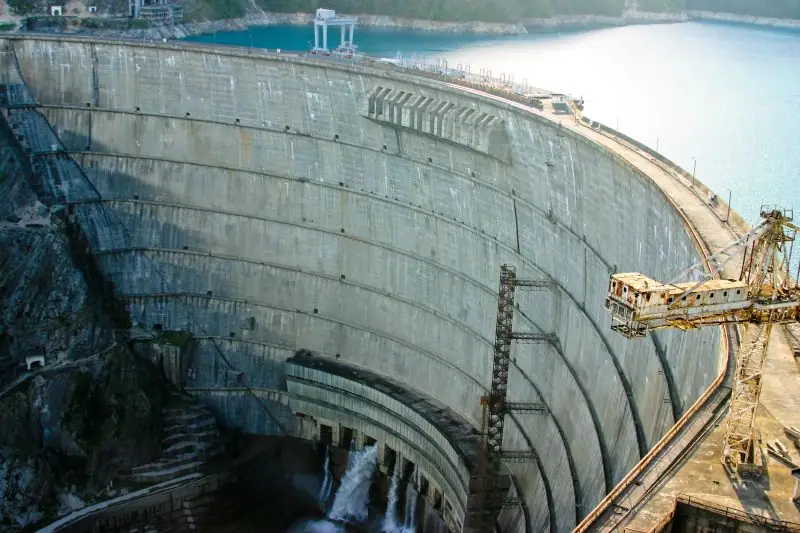
LakeEnguri Dam and Jvari Reservoir
A 271-metre arch dam on the road to Mestia, with a long turquoise reservoir stretching behind it.
 Museum
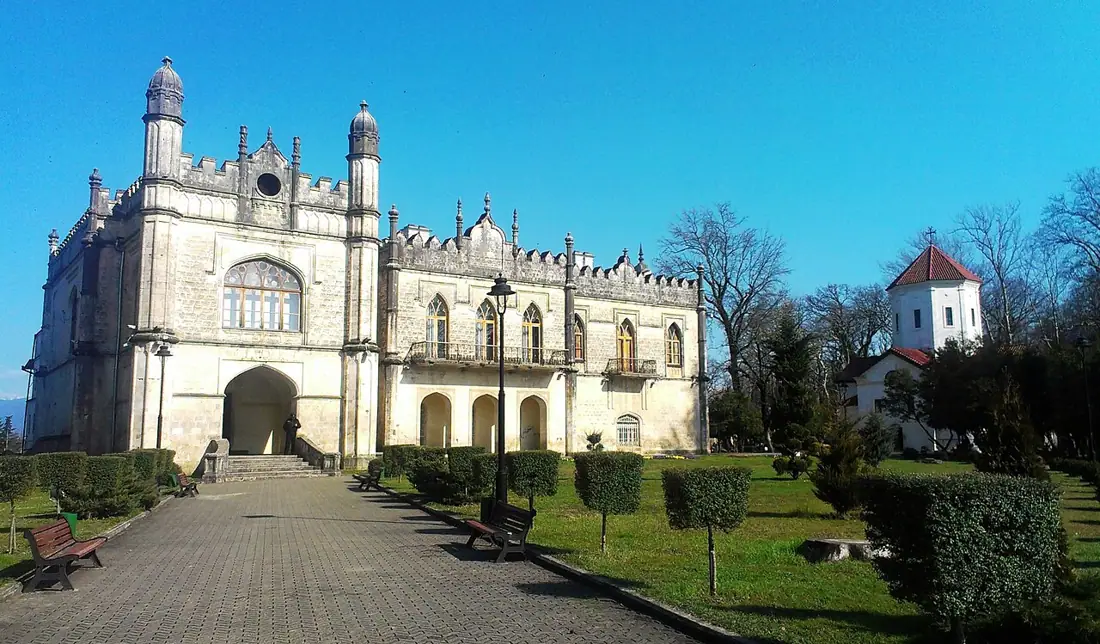
Dadiani Palace, Zugdidi
The residence of the princes of Mingrelia set in a botanical garden — Napoleon's death mask and the family collection.
 Fortress
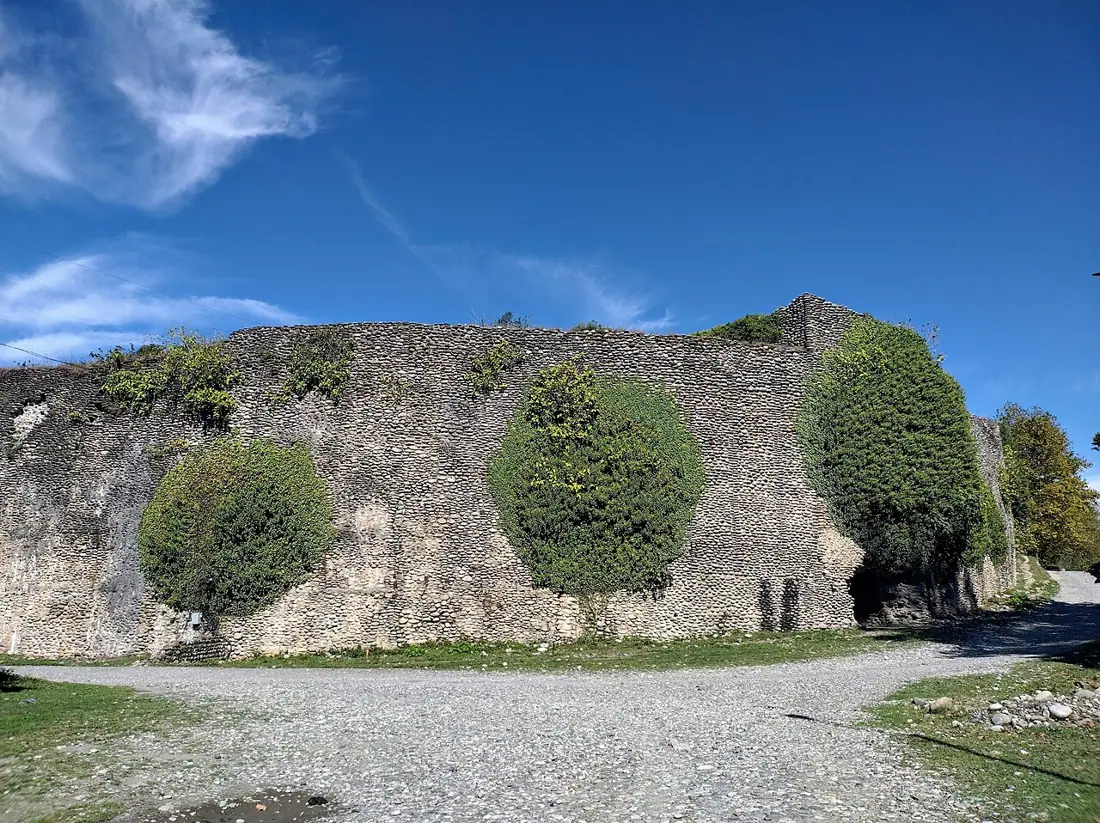
Rukhi Fortress
Levan II Dadiani’s 17th-century fortress above the Enguri, with round towers and a wide view over the floodplain.
 Monastery
Khobi Monastery
A 13th-century domeless church with carved facades, an open gallery and the burial vault of the Dadiani princes.
Booking and enquiries
This site is informational — there is no online payment. Call or email us to book.