Skhvitori — Akaki Tsereteli House-Museum
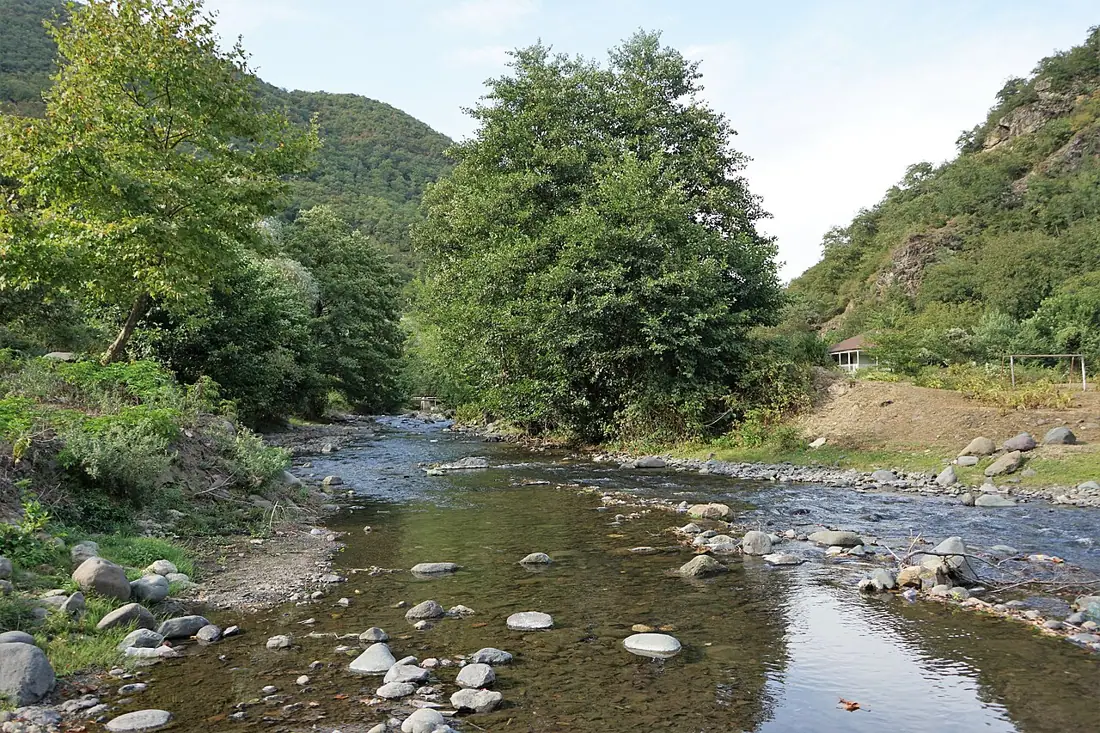
The birthplace and park of the poet Akaki Tsereteli, in the hills of Upper Imereti near Sachkhere.
- Time needed
- 1.5 h
- From Tbilisi
- 244 km · 3:35
- Road
- Paved
- Car needed
- Economy class
- Season
- All year
- Entry
- ~5 ₾
Skhvitori is the village where Akaki Tsereteli was born on 9 June 1840. His father was Prince Rostom Tsereteli; his mother Ekaterine descended from Solomon I, king of Imereti. The family house and the park around it are now a house-museum.
One detail of his childhood explains much of the life that followed. By an old Imeretian custom he was sent as an infant to be brought up by a peasant family in the village of Savane. It gave him a knowledge of village life that no other nobleman of his generation had, and it shows in the plain register of his verse.
After that came the Kutaisi classical gymnasium and, in 1863, the Faculty of Oriental Languages at the University of St Petersburg. With Ilia Chavchavadze he stood at the head of the generation that shaped the Georgian national movement in the second half of the 19th century. He wrote hundreds of poems, narrative works, satires and memoirs; the words of Suliko, long since absorbed into folk singing, are his.
A less familiar fact: it was Tsereteli who in 1879 publicised the industrial value of the manganese at Chiatura. The mining town forty kilometres away effectively begins here.
The museum holds the wooden Imeretian house with its balcony, furniture, manuscripts, photographs and personal belongings. The park is large and shaded, with a view down the valley. The display is modest and mostly in Georgian — come if the Georgian 19th century interests you, or if you are going to Sachkhere anyway.
Akaki's place in Georgian culture is hard to see from outside. With Ilia Chavchavadze he was a public figure first and a writer second: he lectured, edited, travelled the provinces and read his verse aloud to whoever gathered. His funeral in 1915 turned into a national demonstration. The modest house at Skhvitori is where that career is anchored, and Georgian school groups still come here every spring.
Practical advice
An hour and a half: forty minutes in the house, the rest in the park. Labels are mainly Georgian with limited English, though staff will often talk you through it if asked. The house is wooden and the upper floor is reached by a steep stair with no lift. Park paths are earth and turn muddy after rain. There is a toilet on site but no cafe — the nearest is in Sachkhere, five kilometres away. The house is cold in winter.
How to get there from Tbilisi
Take the E60 west from Tbilisi to Zestaponi, then north through Chiatura to Sachkhere and about five kilometres further east to Skhvitori — some 244 km in all, three hours thirty-five. The road is asphalt the whole way, though narrow and winding beyond Zestaponi. There is free parking in front of the museum. Fuel is available in Zestaponi, Chiatura and Sachkhere. An economy car is enough all year round.
Click a marker for details. Coloured lines are ready-made road trips.
Nearby places
 Fortress
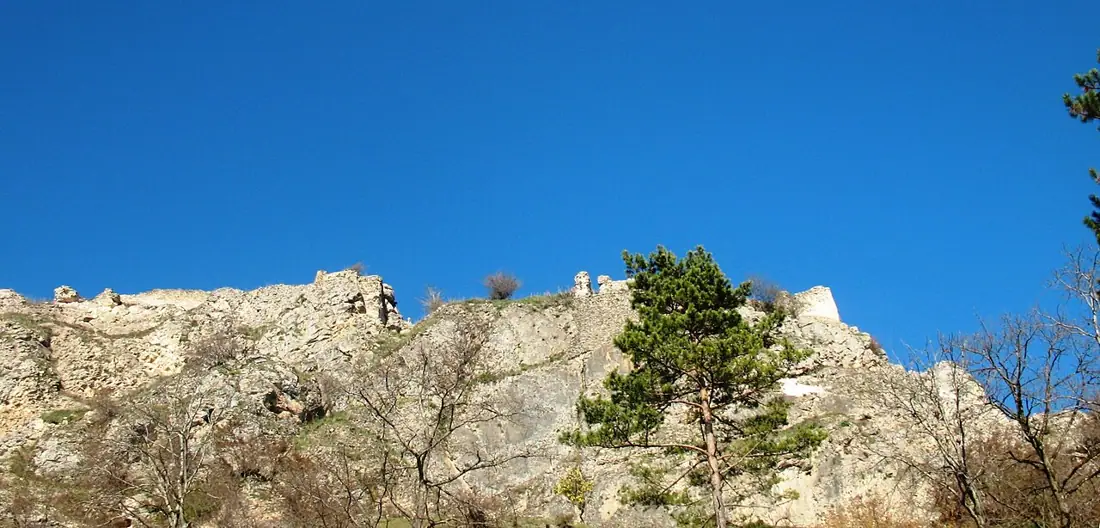
Modinakhe Fortress
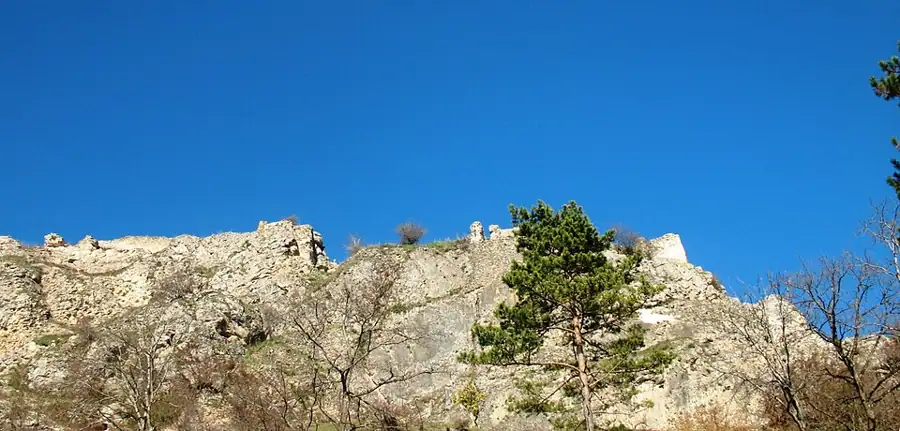
The Tsereteli family's fortress above Sachkhere, whose name means, literally, "come and see".
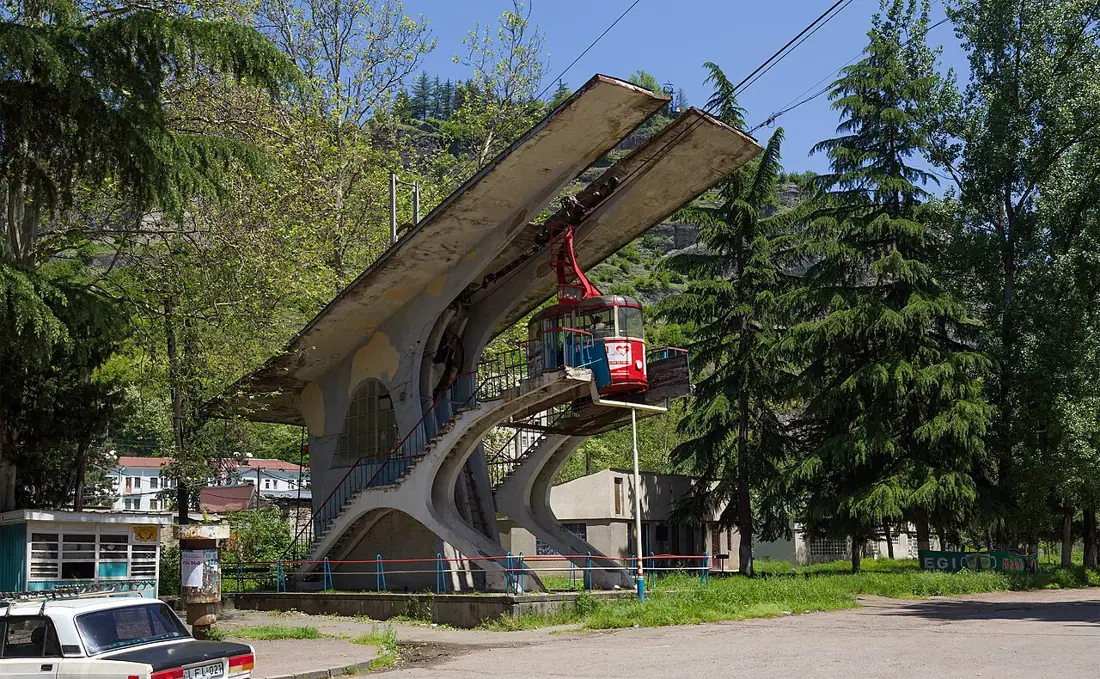 Town
TownChiatura Cable Cars
A manganese mining town wedged in the Kvirila gorge, where the public transport system runs vertically.
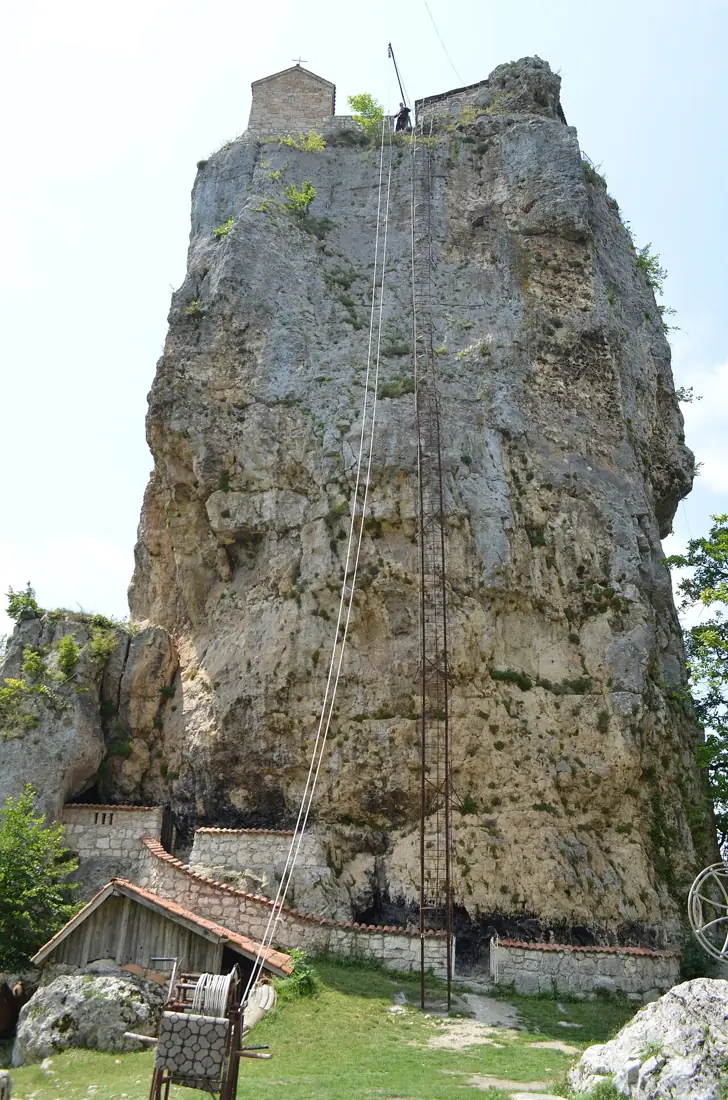 Monastery
Katskhi Pillar
A forty-metre limestone monolith with a church on top — visitors cannot climb it.