Modinakhe Fortress
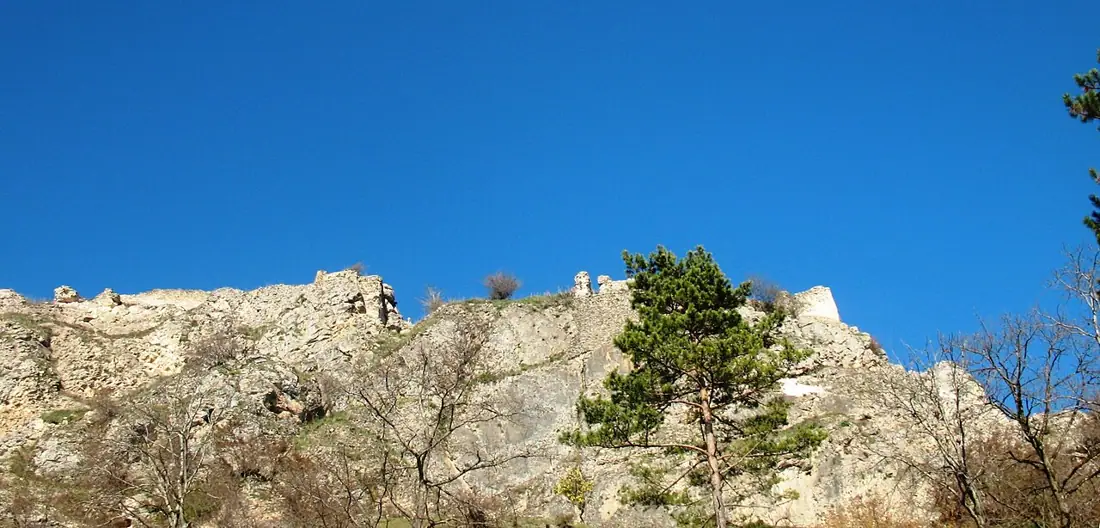
The Tsereteli family's fortress above Sachkhere, whose name means, literally, "come and see".
- Time needed
- 1 h
- From Tbilisi
- 240 km · 3:30
- Road
- Mostly paved
- Car needed
- Crossover / SUV
- Season
- May–October
- Entry
- free
Modinakhe stands on a steep ridge above Sachkhere and is visible from almost every street in the town. The date of building is not known, but for a long period it was the principal residence of the Tsereteli princes, one of the strongest families of Upper Imereti.
The name needs explaining. Modi-nakhe means exactly what it sounds like: come and look. It is a taunt aimed at a besieger — come and see whether you can take it. The position bears the boast out. On three sides the slope falls away steeply, and the fortress had its own water supply inside the walls.
Its history ended in 1810, when the Russian army took the castle during the conquest of the Caucasus. After that it was abandoned. The earthquake of 1991 delivered the final blow: much of the walling collapsed and blocks of masonry slid down the hillside, where they still lie as they fell.
What you find on top: stretches of curtain wall, the base of a tower, the remains of a cistern and stone scattered in the grass. The reason to climb is the view — the Kvirila valley, Sachkhere directly below, the Racha range to the north, and on clear days the Likhi ridge away to the east.
Treat it as an hour's stop rather than a destination in itself. It pairs naturally with Skhvitori and the Akaki Tsereteli house-museum half an hour away: two ends of the same family story.
The Tseretelis deserve a paragraph of their own. They held Upper Imereti as a half-independent principality, quarrelled with the kings of Imereti about as often as they served them, and in the 19th century produced the poet Akaki Tsereteli, born a few kilometres from here at Skhvitori. When the Russian empire absorbed the region the family kept its titles but lost the fortress, and the two things happened within a single generation.
Practical advice
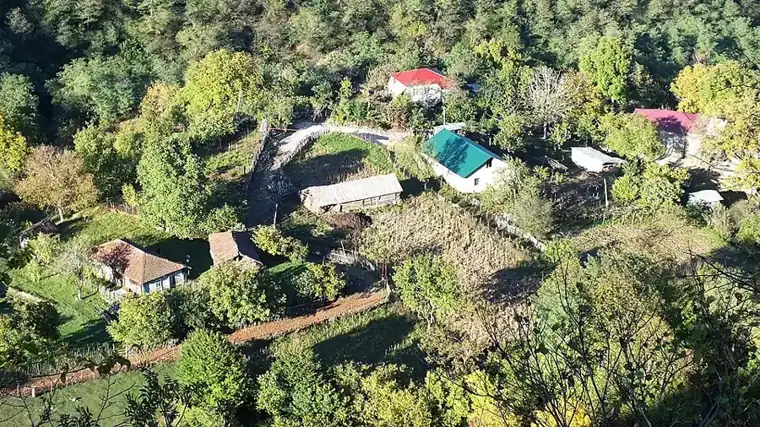
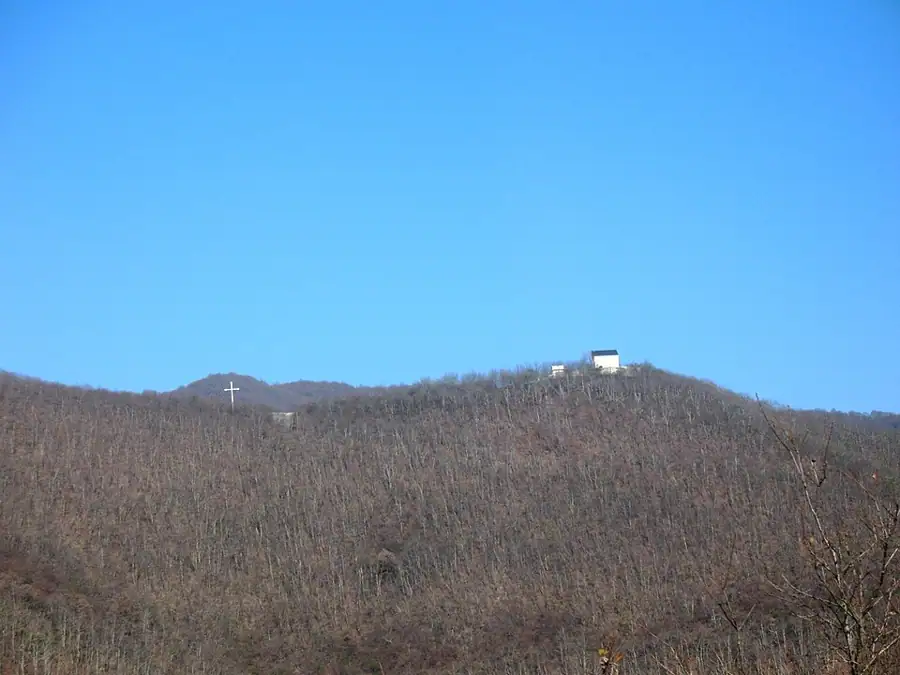
An hour, including the climb. The last section is on foot: ten to fifteen minutes of steep path through trees and over loose stone. In wet weather the clay is slippery, and in winter the path is often iced. There is no shade at the top. Do not climb on the walls; the masonry is loose and nothing has been consolidated since 1991. There is no toilet and no water, so bring your own. Cafes and shops are five minutes away in Sachkhere.
How to get there from Tbilisi
Take the E60 west from Tbilisi to Zestaponi, then head north through Chiatura to Sachkhere — about 240 km in all, three and a half hours. Beyond Zestaponi the road is narrow and winding but paved. In Sachkhere a street climbs towards the fortress, and the last two kilometres are steep gravel: a crossover manages in dry weather, but after rain or snow it is better to leave the car lower down and walk. Fuel is available in Zestaponi and Chiatura.
Click a marker for details. Coloured lines are ready-made road trips.
Nearby places
 Museum
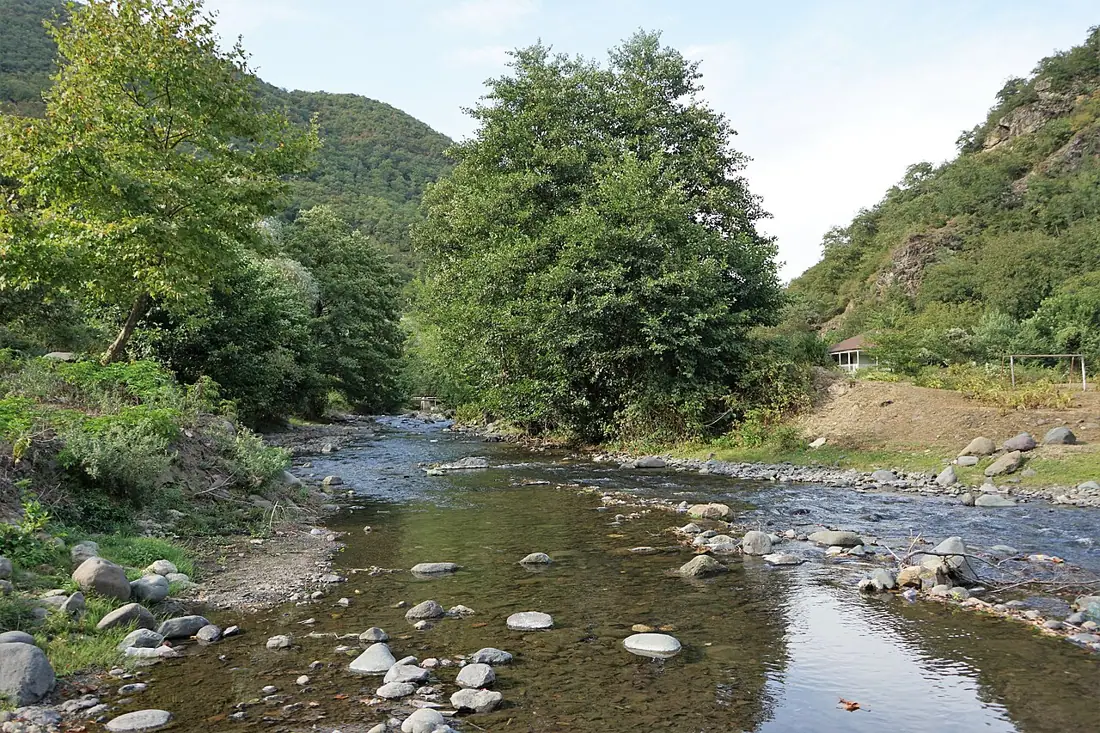
Skhvitori — Akaki Tsereteli House-Museum
The birthplace and park of the poet Akaki Tsereteli, in the hills of Upper Imereti near Sachkhere.
 Town
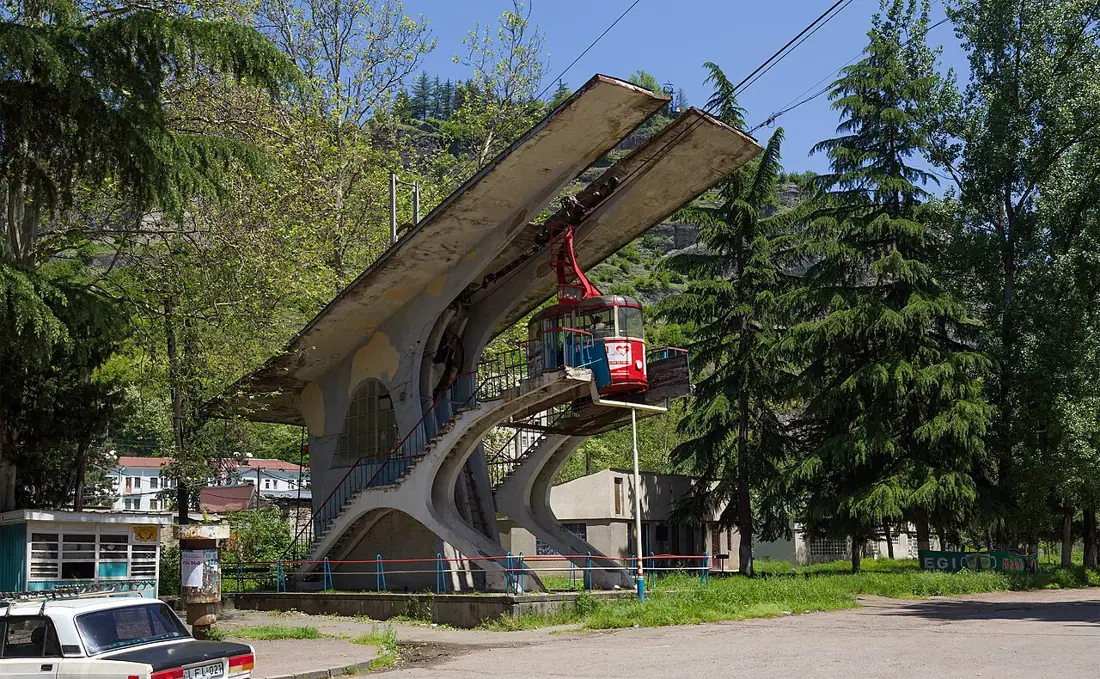
TownChiatura Cable Cars
A manganese mining town wedged in the Kvirila gorge, where the public transport system runs vertically.
 Monastery
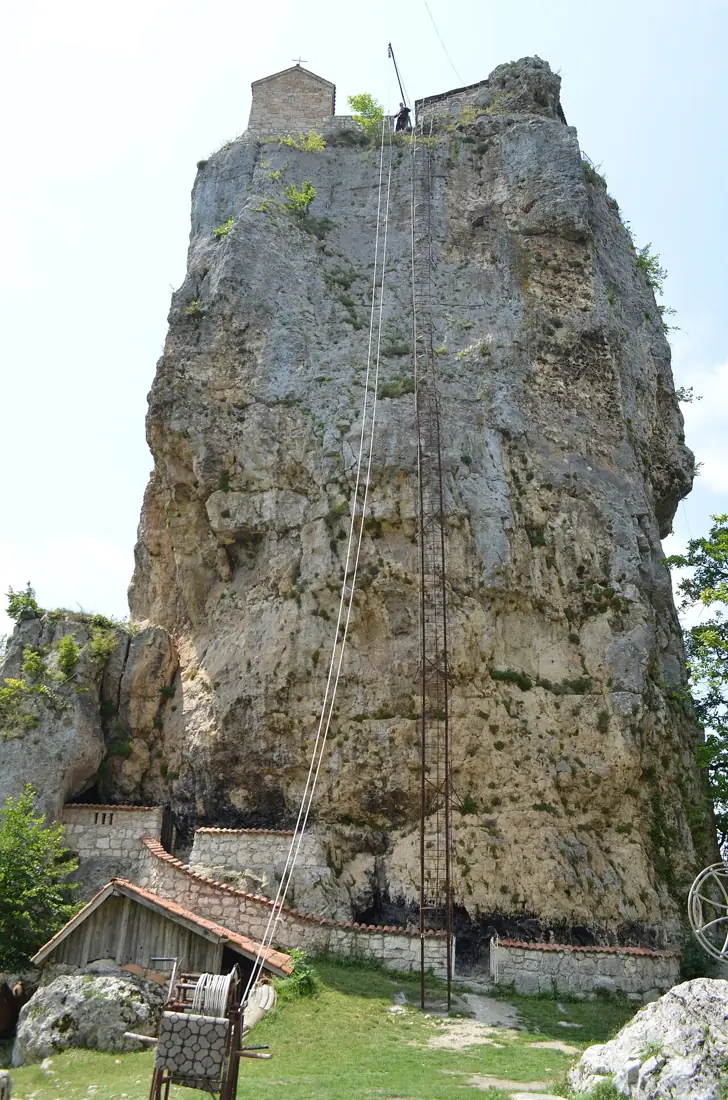
Katskhi Pillar
A forty-metre limestone monolith with a church on top — visitors cannot climb it.