Poti
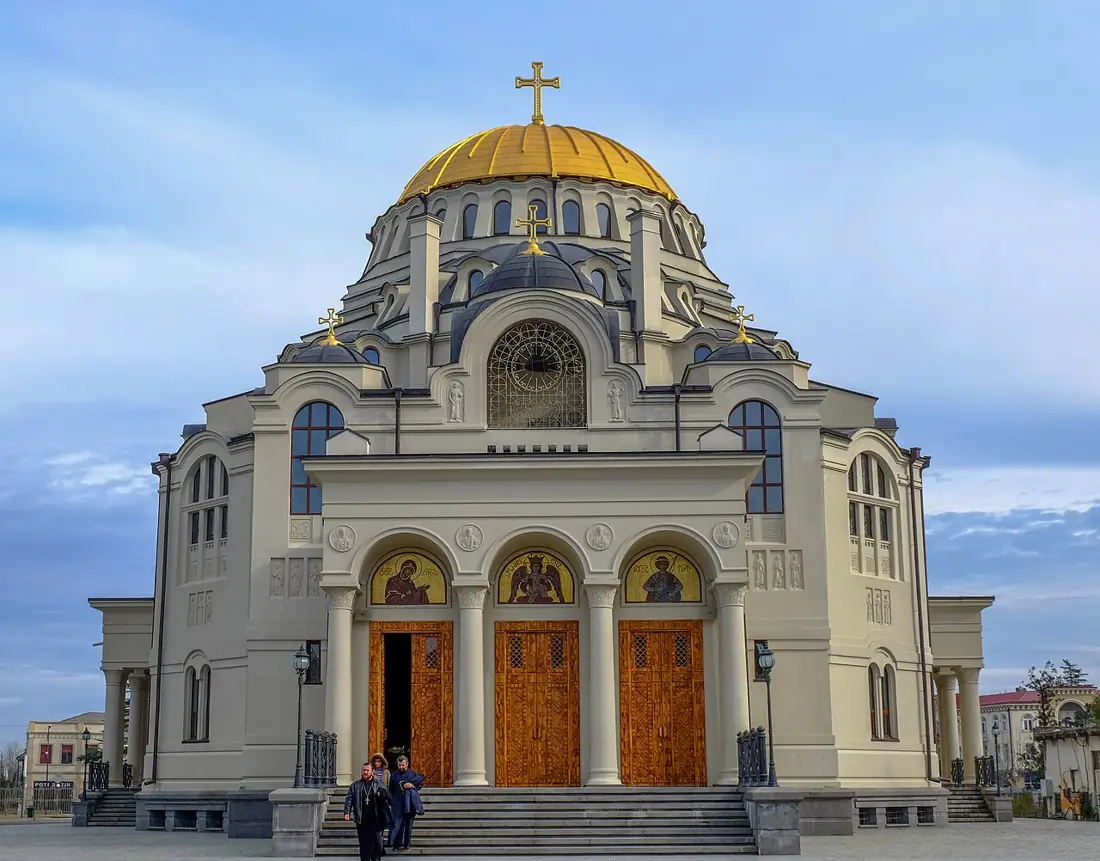
Georgia’s main sea port at the mouth of the Rioni, with an unusual circular street plan and a cathedral modelled on Hagia Sophia.
- Time needed
- 2 h
- From Tbilisi
- 320 km · 4:45
- Road
- Paved
- Car needed
- Economy class
- Season
- All year
- Entry
- free
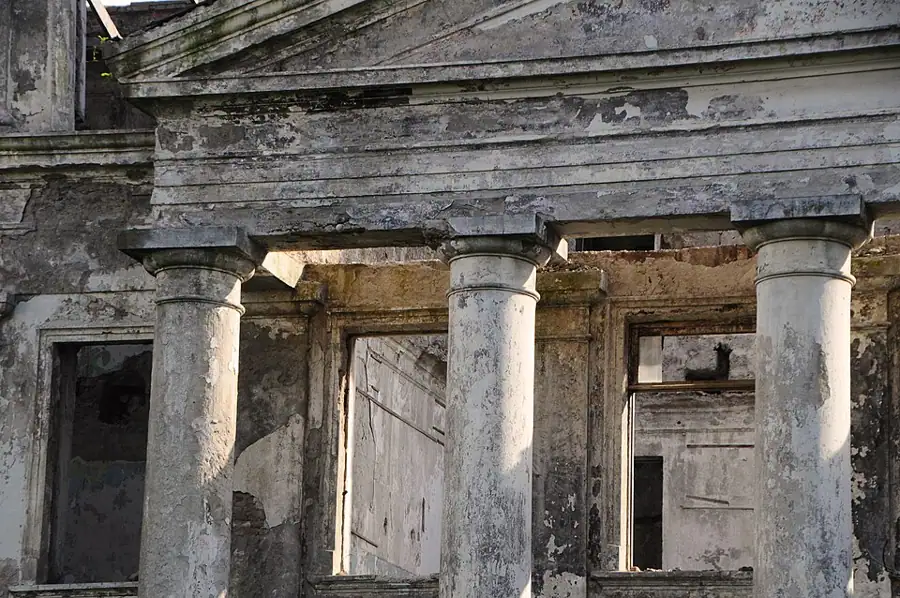
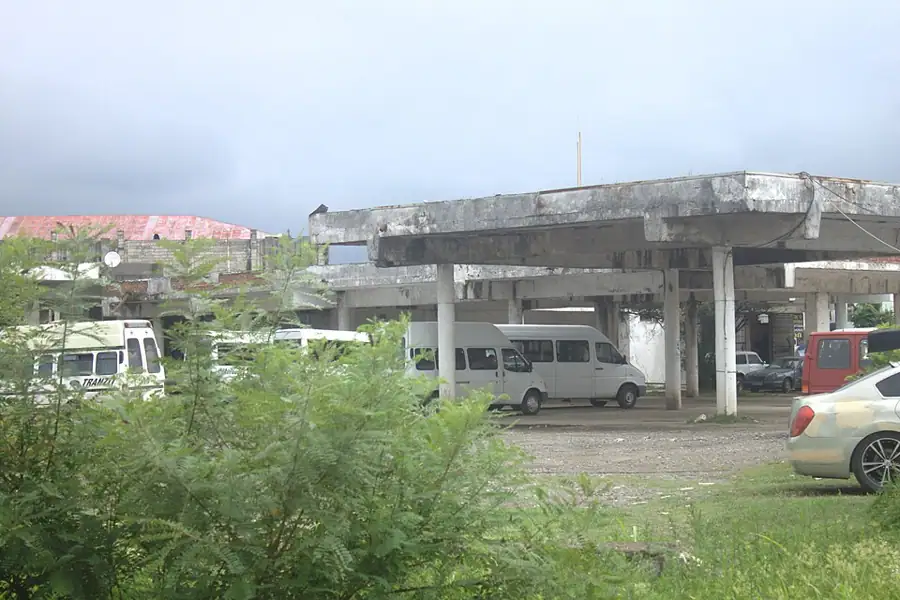
Poti is a working town, not a resort, and it is worth knowing that before you go. There are cranes, container stacks, railway sidings and a grey, windy shore. What it also has is a history and a street plan you will find nowhere else in Georgia.
The Greek city of Phasis stood somewhere very close by: a Milesian colony of the sixth century BC, the port from which the Argonaut story begins. The city is long gone, probably swallowed by sea and lagoon, and its exact site is still argued over. Modern Poti is far younger. The Russian empire founded it as a port on the edge of the marsh in 1858.
The town took its present shape under Niko Nikoladze, mayor for almost twenty years from 1894. He drained the swamp, enlarged the harbour, brought in electric light and a tramway, and laid the streets around a circular central square from which the avenues radiate like spokes. The plan is still legible on the ground.
In the middle of that square stands the Cathedral of the Nativity of the Virgin, built in 1906–07 at Nikoladze's instigation. Its model is Hagia Sophia in Constantinople: a low, wide dome carried on half-domes. It was built in reinforced concrete, a bold choice for the time. Under Soviet rule it was a theatre, returned to the church only in 2005.
The second real sight is at the river mouth: a cast-iron lighthouse made in England in 1862, shipped out in sections and bolted together here, and still in service.
The port has been the point of the place for a century and a half. It handles more cargo than any other Georgian harbour and has a free industrial zone attached to it. It has also been a target: in August 2008 Russian forces entered the town and sank several Georgian naval vessels at their moorings. The wrecks were cleared, but those weeks are remembered here.
The whole town sits at sea level, threaded with drainage canals that still have to be pumped; when a sea storm meets high water on the Rioni, the streets flood.
An hour or two covers everything — the square, the cathedral, the lighthouse, a view of the port and a market selling whatever the boats brought in. Winter here is wet and fiercely windy, summer heavy and humid. But the sun going down over the Rioni mouth gives the town a better face in the evening than it has at midday.
Practical advice
Two hours is enough unless you are also going out onto Paliastomi. The cathedral is open and free, but dress rules apply and photography inside is not always allowed, so ask first. Parking on the square is free and easy. The port itself is closed to visitors and photographing the fence is not a good idea. Eat in the centre or by the market, where the fish is fresh and the bakeries are decent. The town beach is grey and wind-blown; for swimming, Ureki or Anaklia are better.
How to get there from Tbilisi
From Tbilisi take the E60 west through Gori, Kutaisi and Samtredia to Senaki, then the signposted turn for Poti — about 320 km and four hours forty-five. The road is asphalt throughout, much of it dual carriageway and in good condition. Coming into town, aim for the circular square: every main street leads off it, so it is the easiest thing to navigate by. Refuel in Samtredia or Senaki, though there are stations in Poti as well. An economy car is entirely sufficient for the whole route, in any season.
Click a marker for details. Coloured lines are ready-made road trips.
Nearby places
 Nature
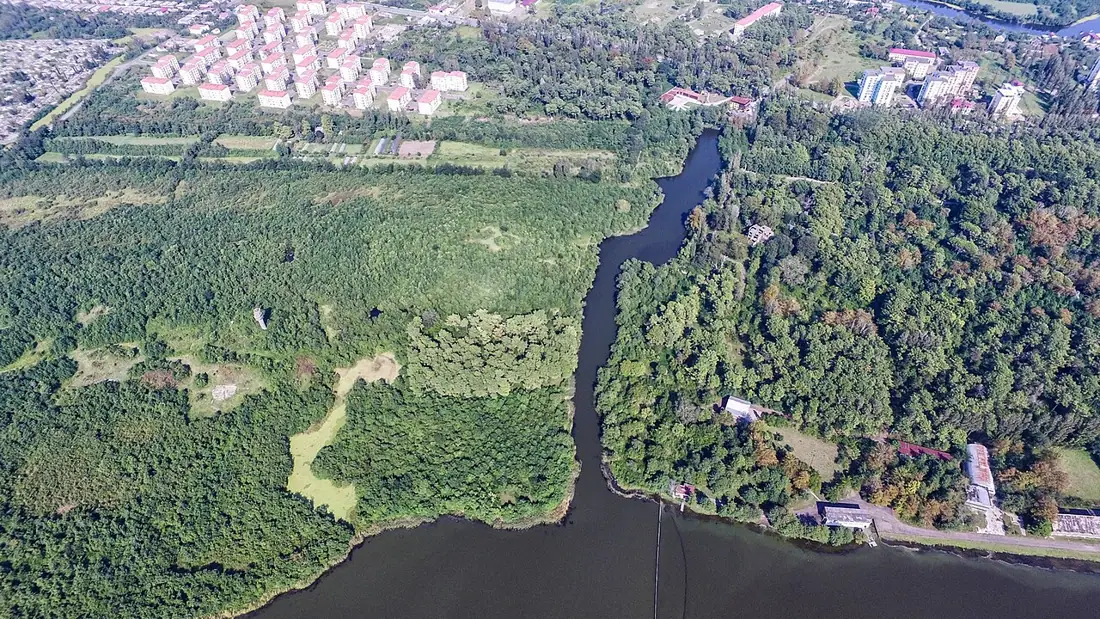
Kolkheti National Park and Lake Paliastomi
Georgia’s great coastal wetland south of Poti — peat bogs, flooded alder forest and a brackish lagoon full of birds.
 Beach
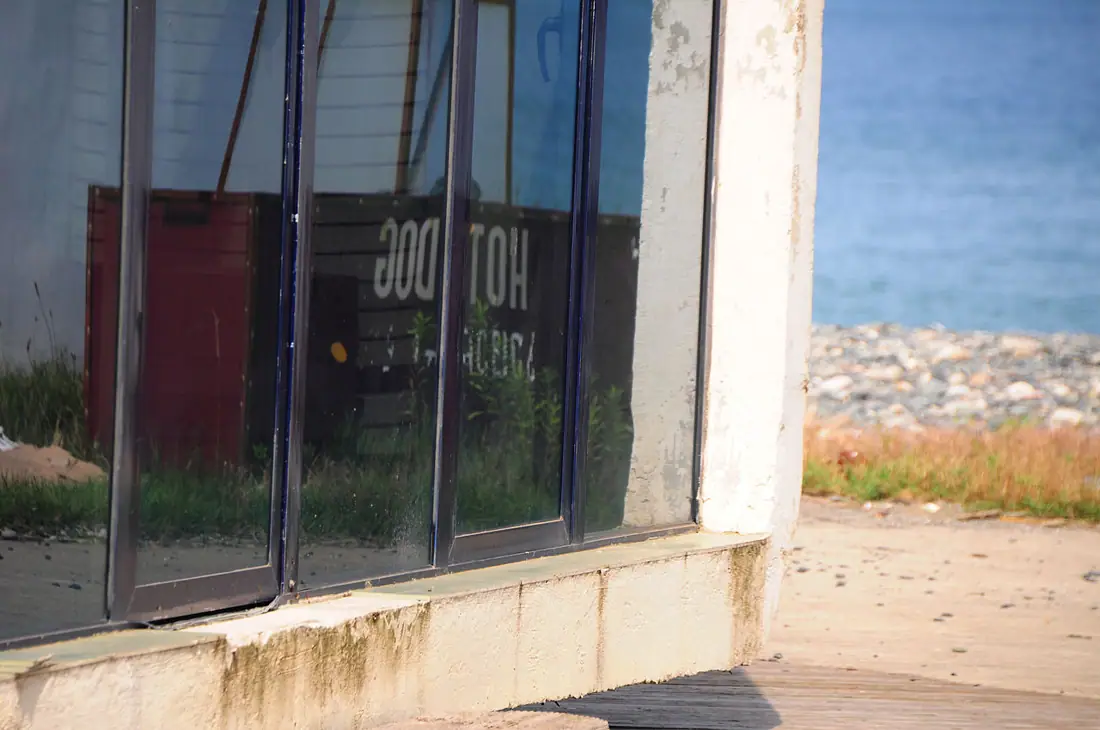
BeachAnaklia
A wide black-sand beach at the mouth of the Enguri — quiet, half-abandoned and the strangest seaside place in Georgia.
 Beach
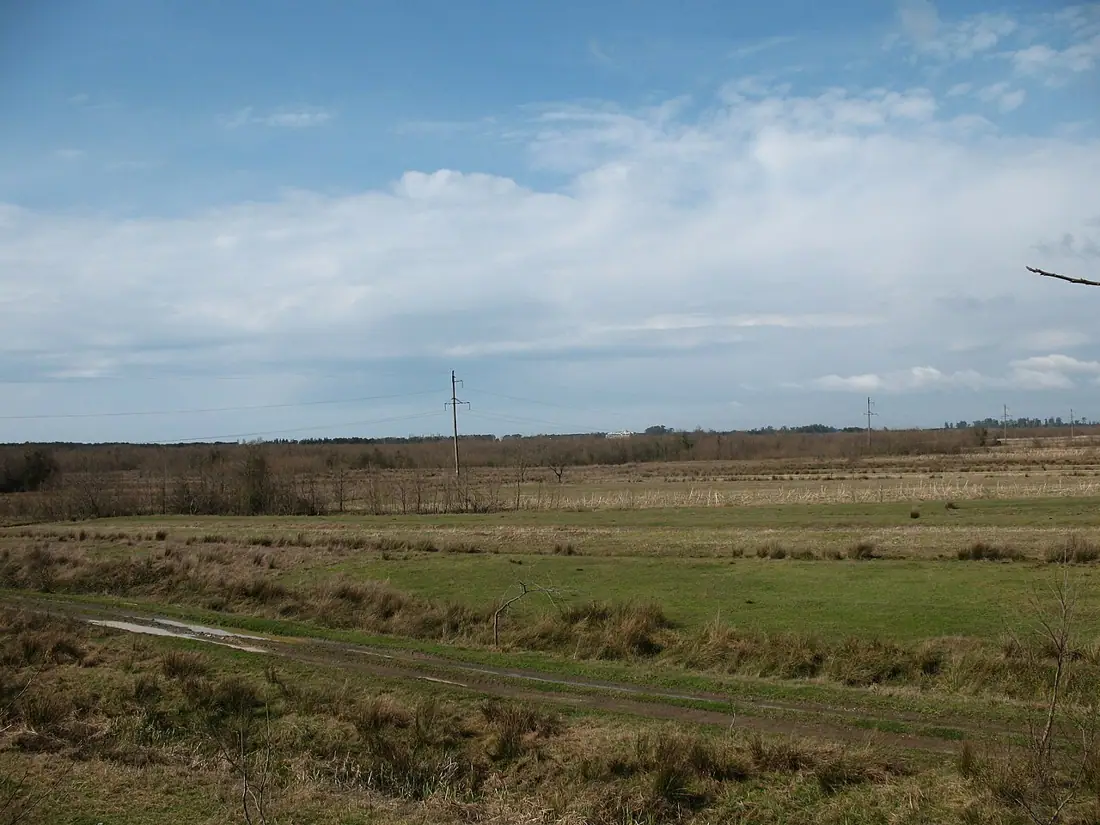
BeachUreki
A black magnetic-sand beach on the Guria coast — the region's best-known family summer resort.
 Archaeology
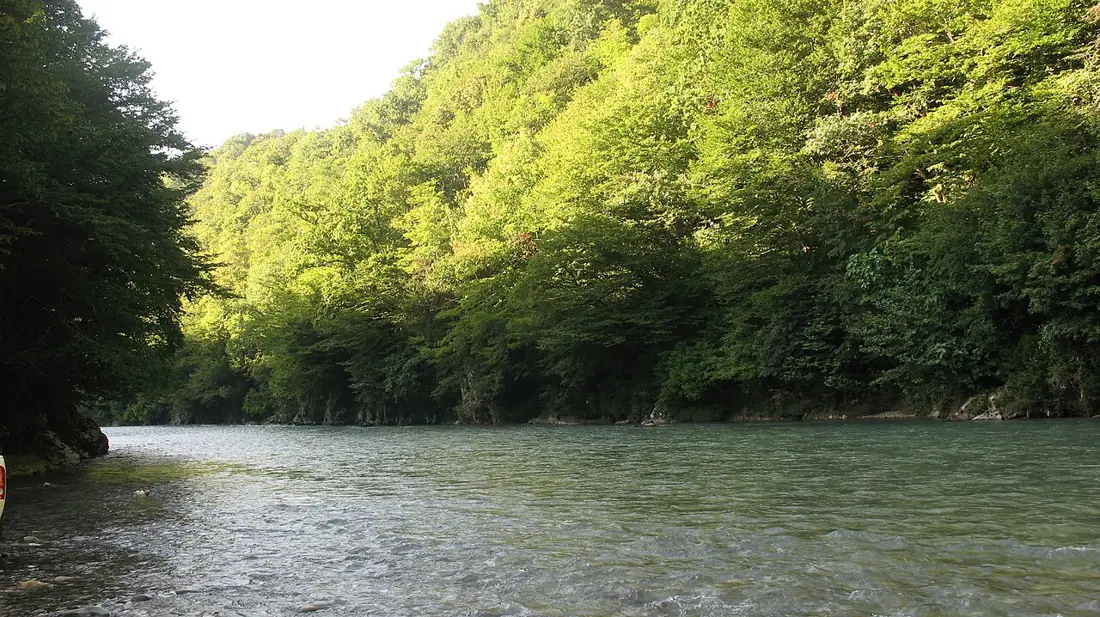
Nokalakevi (Archaeopolis)
A fortified city from the Lazic Wars above the Tekhuri river — walls, a secret tunnel and an active excavation.
Booking and enquiries
This site is informational — there is no online payment. Call or email us to book.