Kolkheti National Park and Lake Paliastomi
Georgia’s great coastal wetland south of Poti — peat bogs, flooded alder forest and a brackish lagoon full of birds.
- Time needed
- 3 h
- From Tbilisi
- 325 km · 4:55
- Road
- Paved
- Car needed
- Economy class
- Season
- All year
- Entry
- free
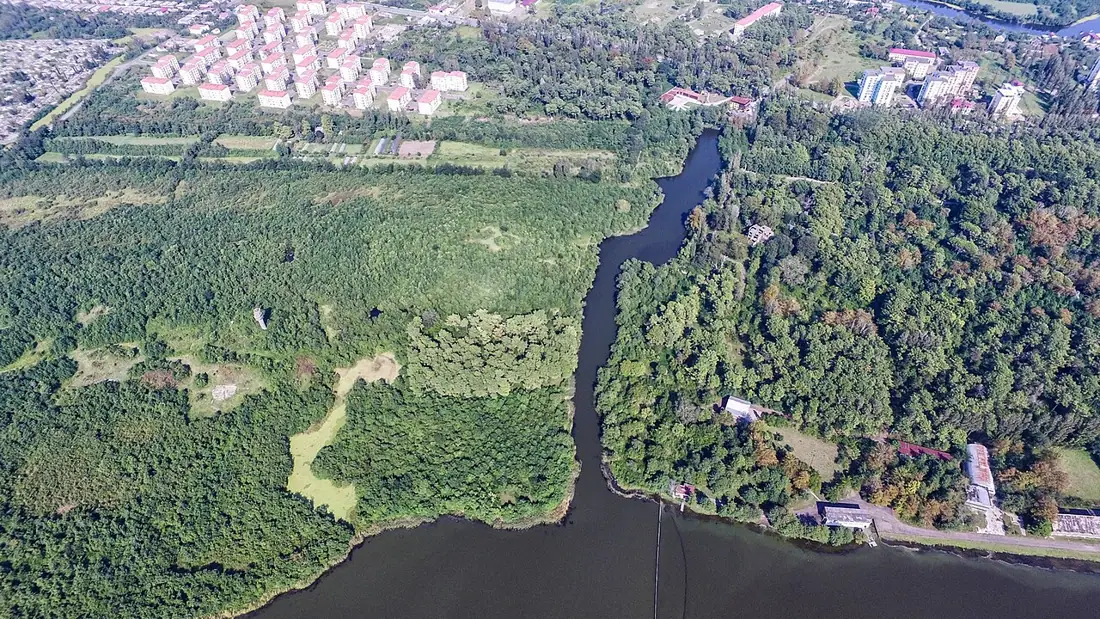
Kolkheti is what the whole Georgian Black Sea coast looked like before the drainage engineers arrived. The national park protects a little under thirty thousand hectares of it: rain-fed peat bogs, flooded alder swamp, sand dunes, the lower Rioni and Pichori rivers, and Lake Paliastomi, a shallow brackish lagoon of roughly eighteen square kilometres just south of Poti.
The bogs are why UNESCO added the park to the World Heritage list in 2021, as part of the Colchic Rainforests and Wetlands. They are domed sphagnum bogs fed only by rainfall rather than groundwater, some of them more than ten metres deep, and there is nothing quite like them at this latitude anywhere else. Peat has been accumulating here for something like ten thousand years, since the sea last drew back. On the Imnati boardwalk you can feel the entire surface flex under your feet.
Most of the Colchis lowland no longer looks like this. From the 1930s the marshes were drained and planted with eucalyptus to drive out malaria, and something close to two-thirds of the original wetland was lost. What the park holds is the remainder, and it still shrinks at the edges wherever peat is cut and channels are dug.
Paliastomi was a freshwater lake until the channel to the sea was deepened. It is brackish now, nowhere much more than three metres deep, and warm by late summer. Its reed beds and the alder woods along the Pichori are the best part of a visit. Boats leave from the landing on the north shore and run upriver between trees standing in water, past cormorant roosts and, in the right months, pelicans, glossy ibis and squacco herons.
The park lies under one of the busiest migration corridors in Eurasia. In September and October the stream of raptors that made the Batumi bottleneck famous passes overhead, and the marshes fill with waders. Spring brings breeding birds and the loudest frog chorus you are ever likely to hear.
Summer is hot, humid and full of mosquitoes; the reeds are high and the birds are quiet. Come in the shoulder seasons if you have the choice. Late autumn is the best of it, when the light lies flat on the lake and, on a clear morning, the main Caucasus range shows far off to the north-east.
Gallery
Practical advice
Allow three hours: an hour for the visitor centre and boardwalks, the rest for a boat trip. The boat is the point — without it you see very little of the park. Arrange it at the landing rather than in town. Take insect repellent from May to September, and a hat, because there is no shade at all on the water. Binoculars matter more here than a camera. Toilets and a small café are at the visitor centre; once you are on the lake there is nothing.
How to get there from Tbilisi
From Tbilisi take the E60 west through Gori, Kutaisi and Samtredia, then follow the Poti signs at Senaki — about 325 km and a little under five hours, dual carriageway for most of the way. The park administration and the main boat landing sit on the northern shore of Paliastomi, a few kilometres south of central Poti, and the turning is signposted from the Poti–Kobuleti road. The final stretch is narrow asphalt across the marsh. Refuel in Samtredia or Poti. An economy car is entirely enough.
Click a marker for details. Coloured lines are ready-made road trips.
Nearby places
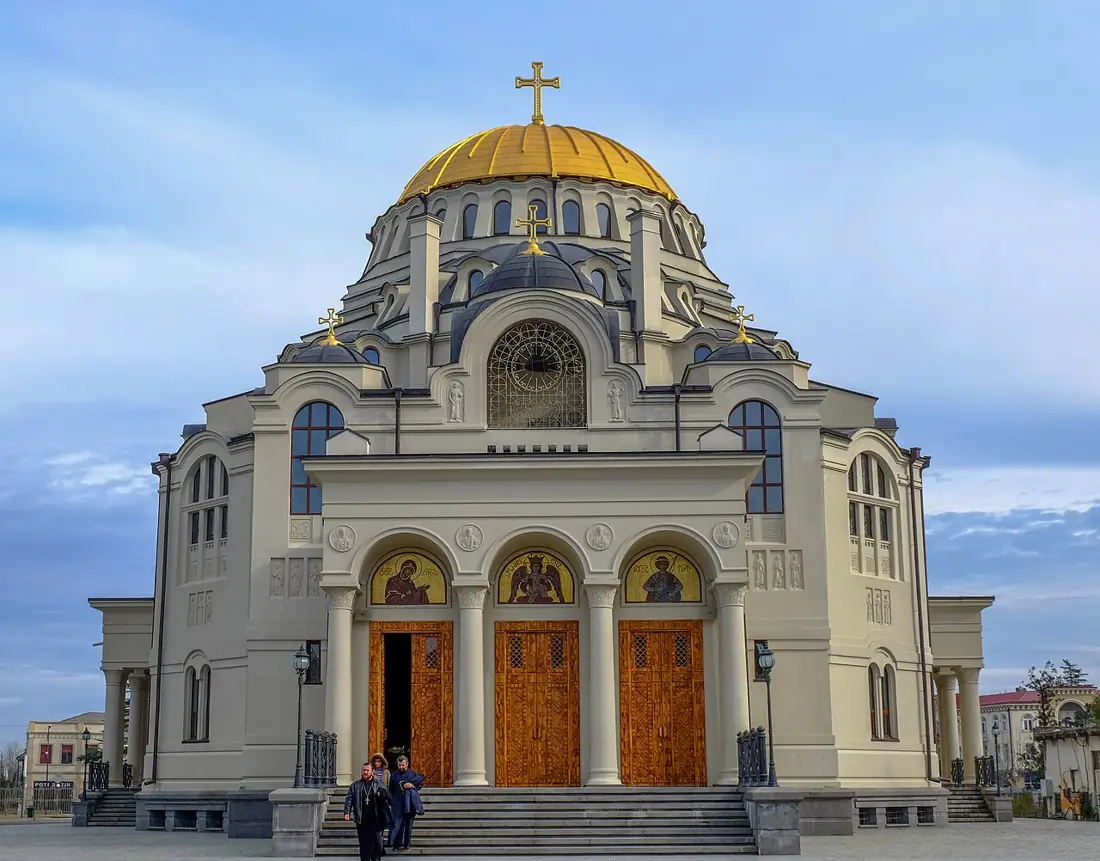 Town
TownPoti
Georgia’s main sea port at the mouth of the Rioni, with an unusual circular street plan and a cathedral modelled on Hagia Sophia.
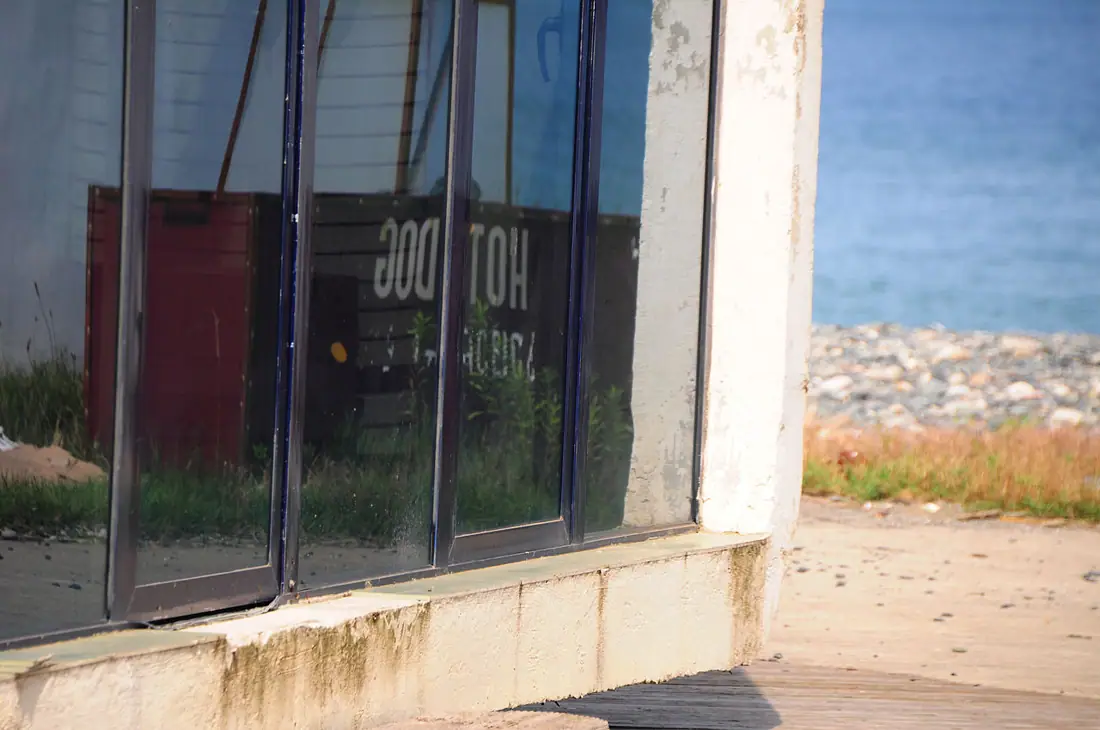 Beach
BeachAnaklia
A wide black-sand beach at the mouth of the Enguri — quiet, half-abandoned and the strangest seaside place in Georgia.
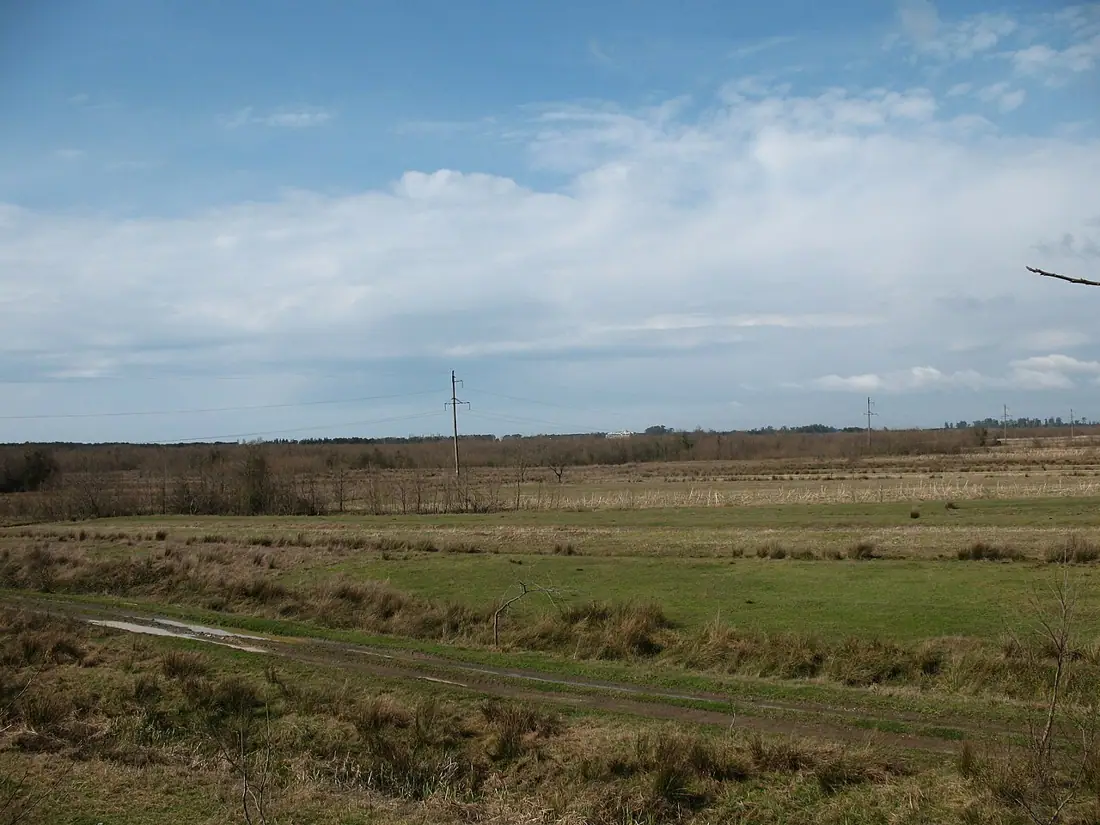 Beach
BeachUreki
A black magnetic-sand beach on the Guria coast — the region's best-known family summer resort.
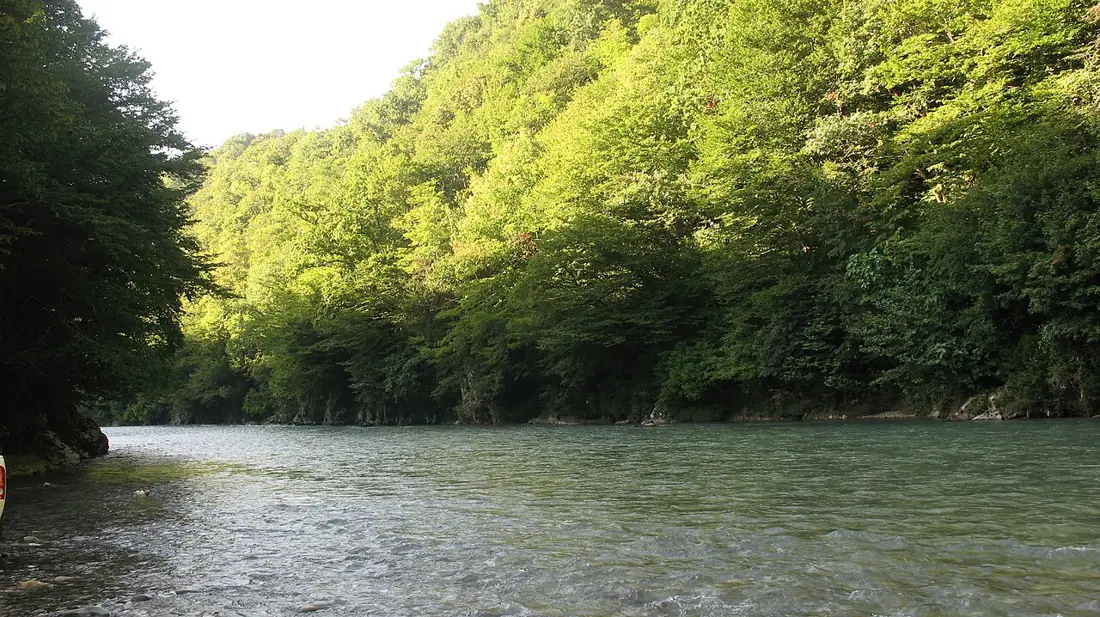 Archaeology
Nokalakevi (Archaeopolis)
A fortified city from the Lazic Wars above the Tekhuri river — walls, a secret tunnel and an active excavation.
Booking and enquiries
This site is informational — there is no online payment. Call or email us to book.