Mgvimevi Monastery
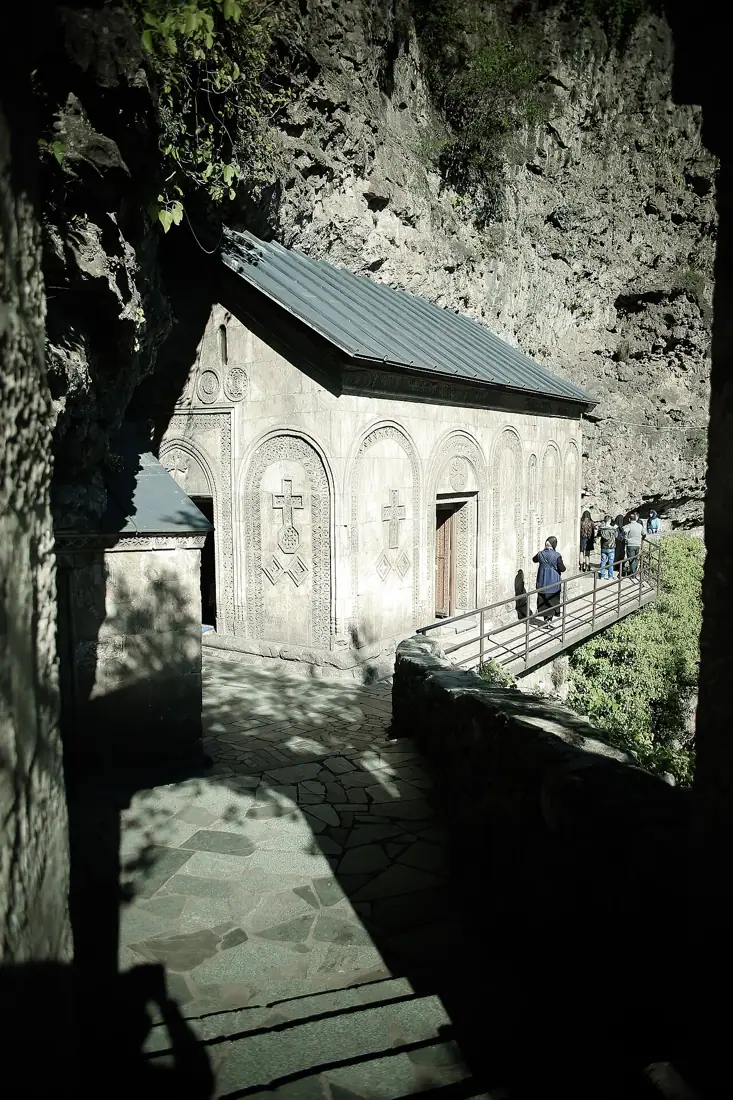
A 13th-century monastery tucked under a cliff at the eastern edge of Chiatura, at the end of a narrow ledge path.
- Time needed
- 1 h
- From Tbilisi
- 218 km · 3:15
- Road
- Paved
- Car needed
- Economy class
- Season
- All year
- Entry
- free
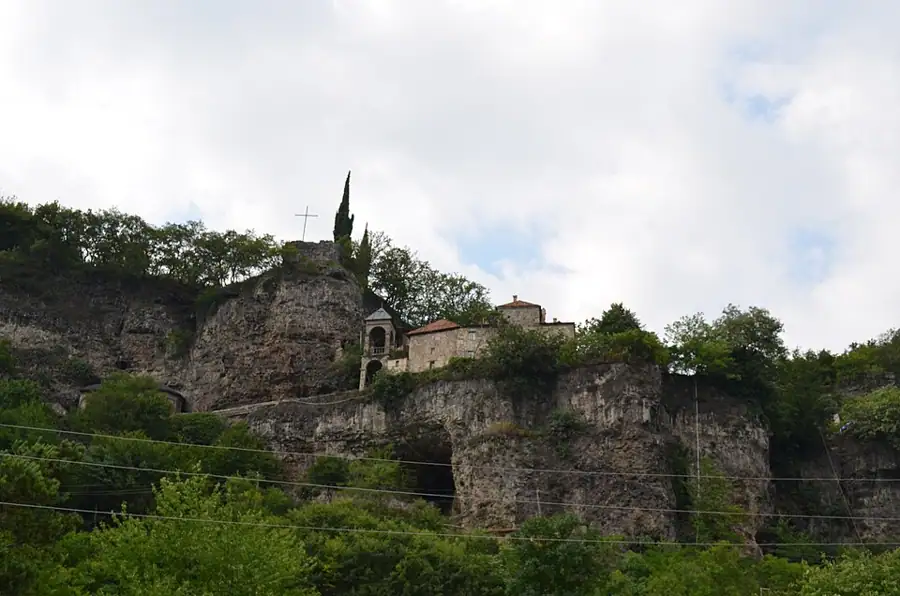
Mgvimevi hides under an overhanging rock and is easy to miss from a distance. The monastery stands at the eastern end of Chiatura, high above the Kvirila gorge, and the last stretch of the approach is a narrow path cut into the cliff that follows the rim straight into the courtyard.
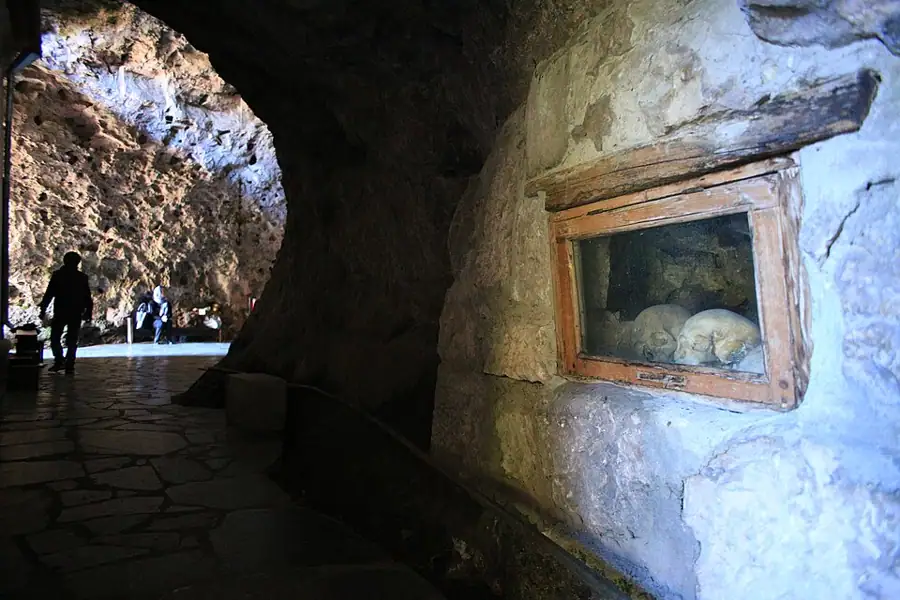
The name comes from the Georgian word for cave: the main church was built into a natural hollow in the limestone, and part of its north wall is the rock itself. The complex dates from the second half of the 13th century. The main church is a two-nave basilica, with a small hall church of St Catherine beside it; the bell-tower and the monastic dwellings are 19th-century additions, and a community of nuns was re-established here in 2014.
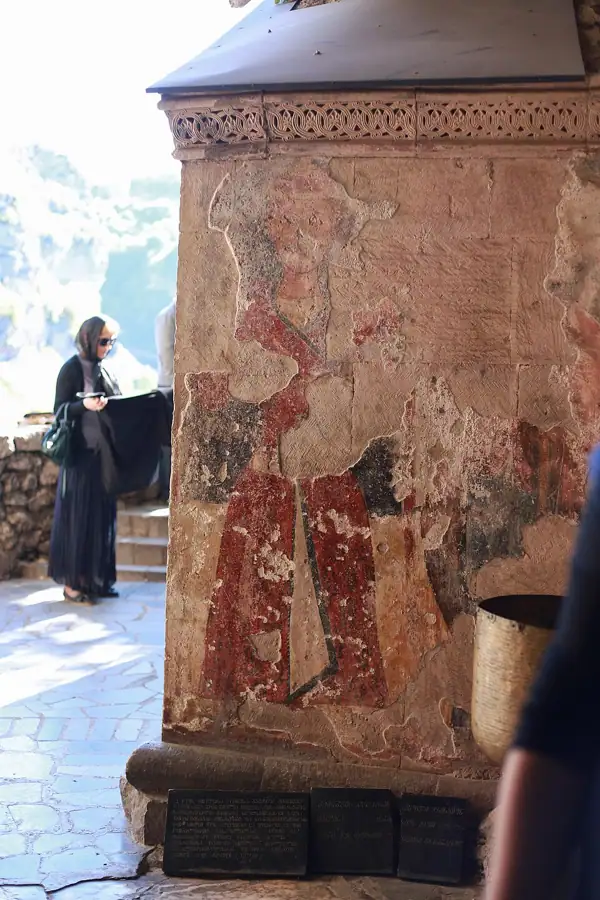
Fragments of fresco survive inside. On the north wall of the nave are portraits of the founders — Rati, eristavi of Racha, his wife Rusudan and his brother Niania — a rare medieval group portrait of a provincial ruling family. The south wall was repainted in the 16th century, so two very different hands sit side by side. The outer south wall of St Catherine's also keeps painting, weathered but still legible.
The effect of the place owes more to its position than to its architecture. The rock ceiling hangs a couple of metres above the church roof, rainwater runs down the face in wet weather, and from the yard you look out over the gorge and the mine spoil at the same time. A hundred metres higher than the town, the industrial noise of Chiatura barely reaches you.
The juxtaposition is much of the appeal. From the courtyard you can see ropeway pylons and the roofs of a Soviet mining town, and immediately behind you a 13th-century church built into a cliff. Morning light reaches the facade; from early afternoon the overhang throws the whole terrace into shade, which suits the frescoes and frustrates photographers.
Gallery
Practical advice
An hour is plenty. The last hundred metres of path are narrow and run along the cliff edge; there is a railing in places, and the stone becomes slippery in the wet, so smooth soles are a bad idea. This is a working convent: dress rules are enforced and photography inside the church is not allowed. There is a toilet in the yard; the nearest cafe is in central Chiatura, three kilometres away. Hold small children firmly on the ledge section.
How to get there from Tbilisi
Take the E60 west from Tbilisi to Zestaponi, then head north to Chiatura — about 218 km in all, three hours fifteen. In Chiatura cross the Kvirila and follow the road east towards the Mgvimevi district; the final kilometre is a narrow, steep but paved street. Leave the car at the small turning area where the path begins — from there it is on foot only. Fuel is available in Zestaponi and Chiatura. An economy car is sufficient, though take the last climb carefully in winter.
Click a marker for details. Coloured lines are ready-made road trips.
Nearby places
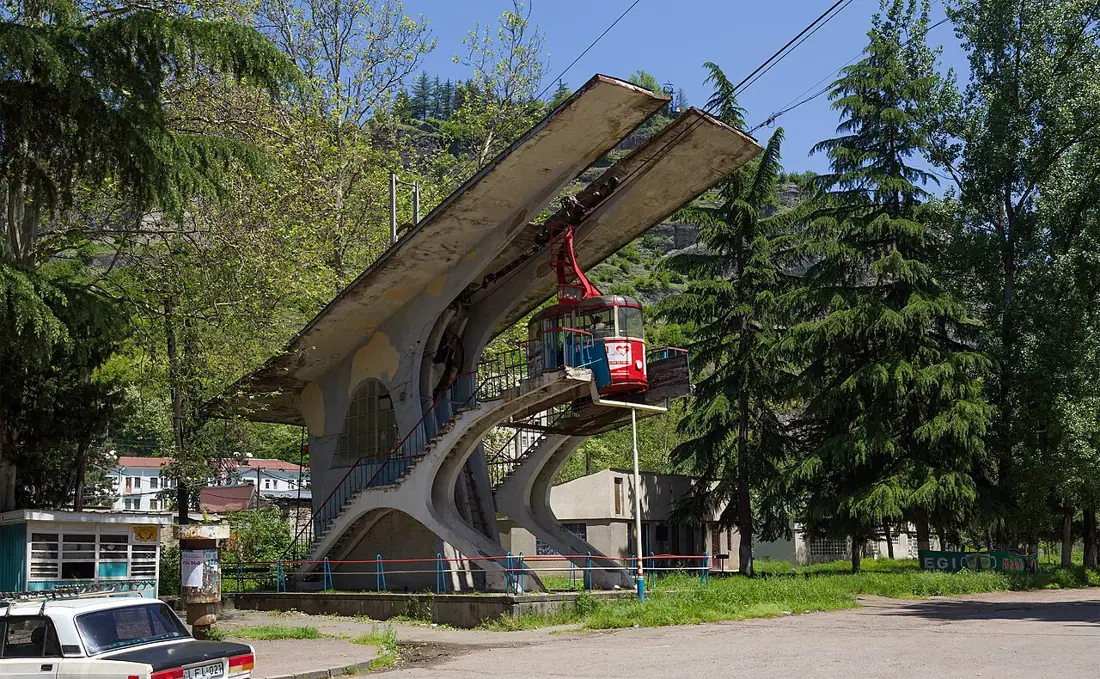 Town
TownChiatura Cable Cars
A manganese mining town wedged in the Kvirila gorge, where the public transport system runs vertically.
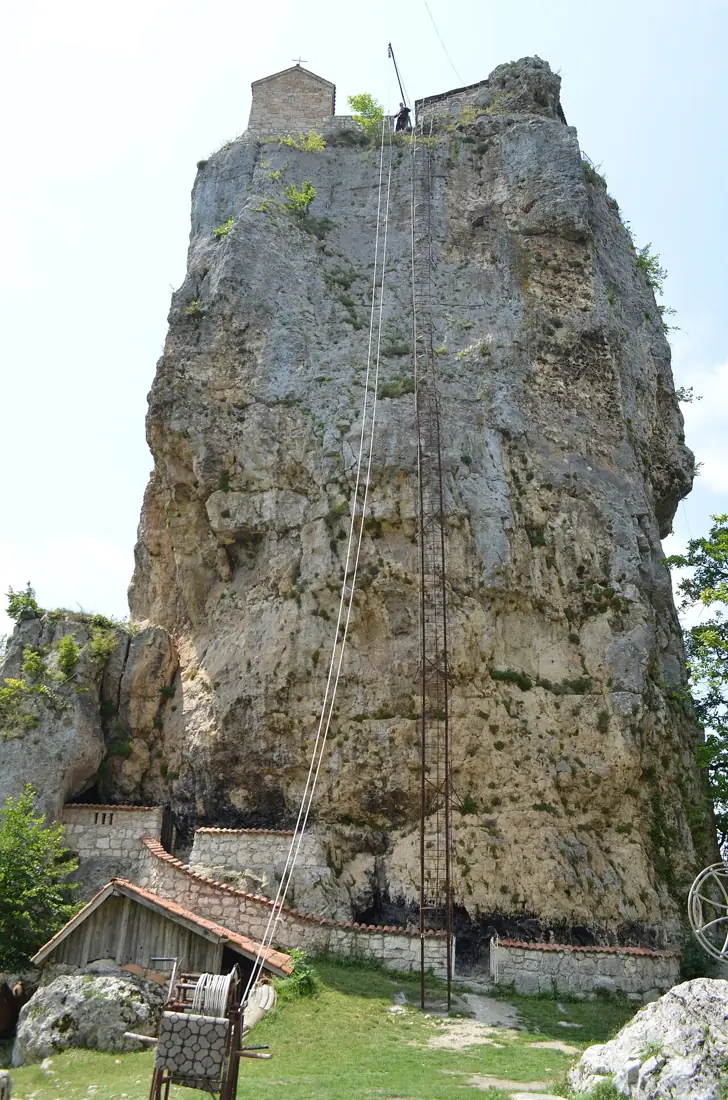 Monastery
Katskhi Pillar
A forty-metre limestone monolith with a church on top — visitors cannot climb it.
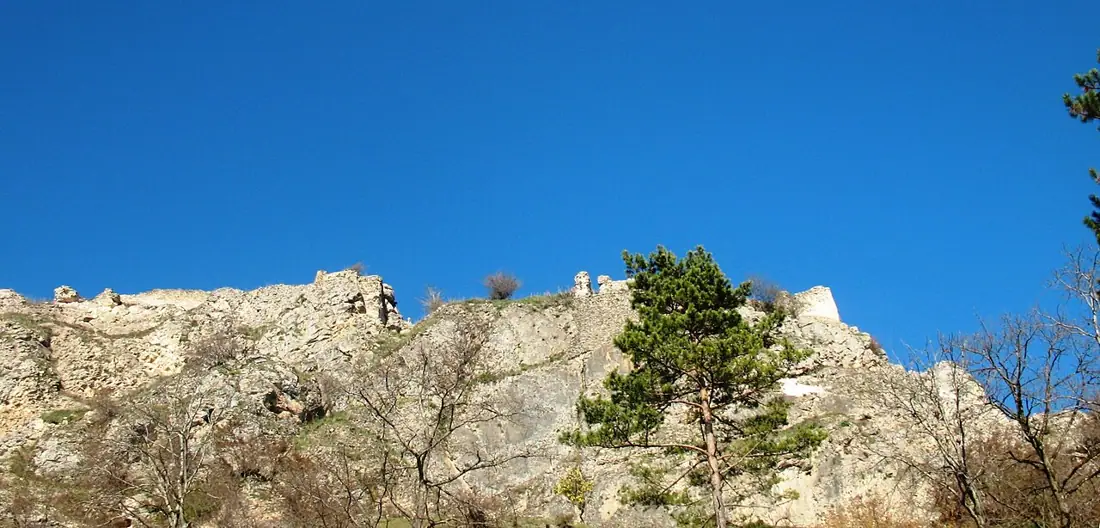 Fortress
Modinakhe Fortress
The Tsereteli family's fortress above Sachkhere, whose name means, literally, "come and see".