Lomisa Church
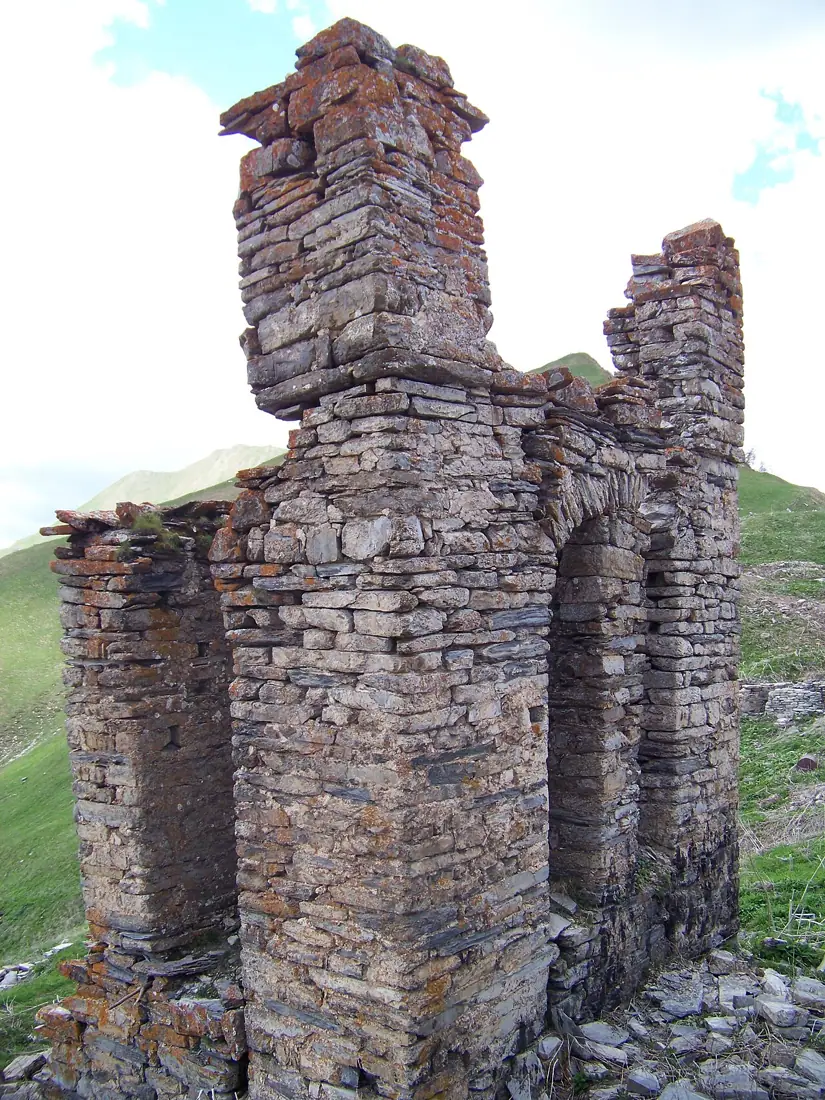
A small stone church of St George at 2,200 metres above Mleta, one of the most genuinely living shrines in eastern Georgia.
- Time needed
- 4 h
- From Tbilisi
- 108 km · 2:10
- Road
- Mostly paved
- Car needed
- Crossover / SUV
- Season
- June–September
- Entry
- free
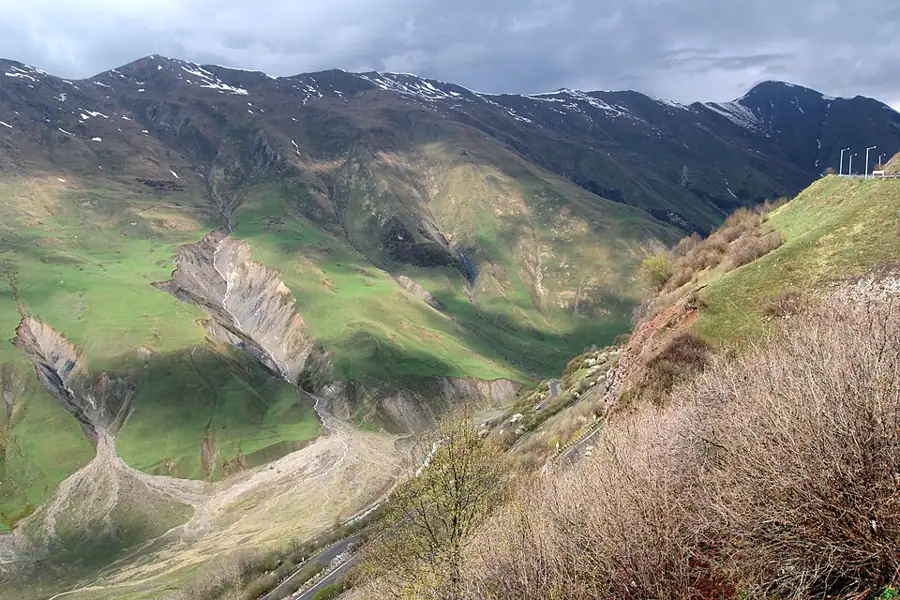
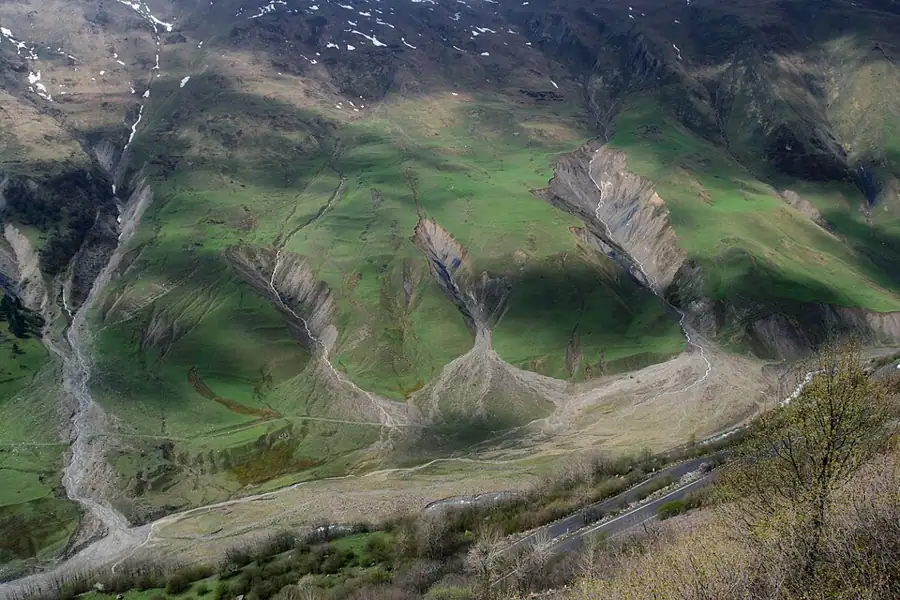
Lomisa is a small stone church on a bare ridge at about 2,200 metres, and one of the most genuinely living folk shrines in Georgia. It is reached on foot from the village of Mleta on the Military Highway — a climb of roughly two hours up a grassy spur, with the Aragvi valley dropping away behind you and the Ksani side opening ahead.
The building itself is modest: a low hall church of undressed stone, dark inside, with a small vaulted chamber and virtually no decoration. Hanging in it is a heavy iron chain. Pilgrims lift it or put it over the shoulder while making a vow, and the weight is the point — this is a shrine where things are done rather than looked at.
The story attached to the place is old and widely known. Georgians taken captive to Persia prayed to St George; an icon of the saint was carried out of captivity on the horns of a bull, and where the exhausted animal lay down the church was built. Whatever the history, the cult is older than the church and parts of it are plainly pre-Christian: animal sacrifice, oaths sworn on a chain, a shrine on a summit rather than in a village.
Lomisoba, the feast, falls on the seventh Wednesday after Easter. On that day several thousand people fill the ridge, sheep and bulls are brought up and slaughtered, and there is wrestling and drinking. It is not staged for visitors, and photographing it without asking is badly received. Some families still keep older rules about who may enter which part of the shrine; watch what local pilgrims do and follow it.
On an ordinary summer day you may find the ridge empty apart from horses, with a view running from the Kazbegi massif to the headwaters of the Ksani.
Practical advice
Count four hours from Mleta: two up, one at the top, one down, plus recovery. The path is steady rather than technical but it is exposed, with no shade and no water, and afternoon thunderstorms on the ridge are common in July and August — start early. Boots, a windproof layer and two litres of water each. Local drivers will take you most of the way up in a 4x4 for a fee, but the track is rough and not always passable. From November to May the ridge lies under snow and the climb becomes a mountaineering matter rather than a walk.
How to get there from Tbilisi
Follow the Georgian Military Highway (E117) north from Tbilisi past Ananuri and Pasanauri to Mleta, about 108 km and two hours and ten minutes on asphalt. Mleta sits at the foot of the switchbacks up to Gudauri; turn into the village and park where the road ends. An economy car reaches that point without difficulty, though the village lanes are rough enough that an SUV is more comfortable. The trail up the ridge starts above the last houses and is poorly signed, so ask. The nearest fuel and food are in Pasanauri.
Click a marker for details. Coloured lines are ready-made road trips.
Nearby places
 Mountain
Khada Valley
A side gorge of the Aragvi near Kvesheti holding some sixty medieval towers among small, nearly emptied villages.
 Ski area
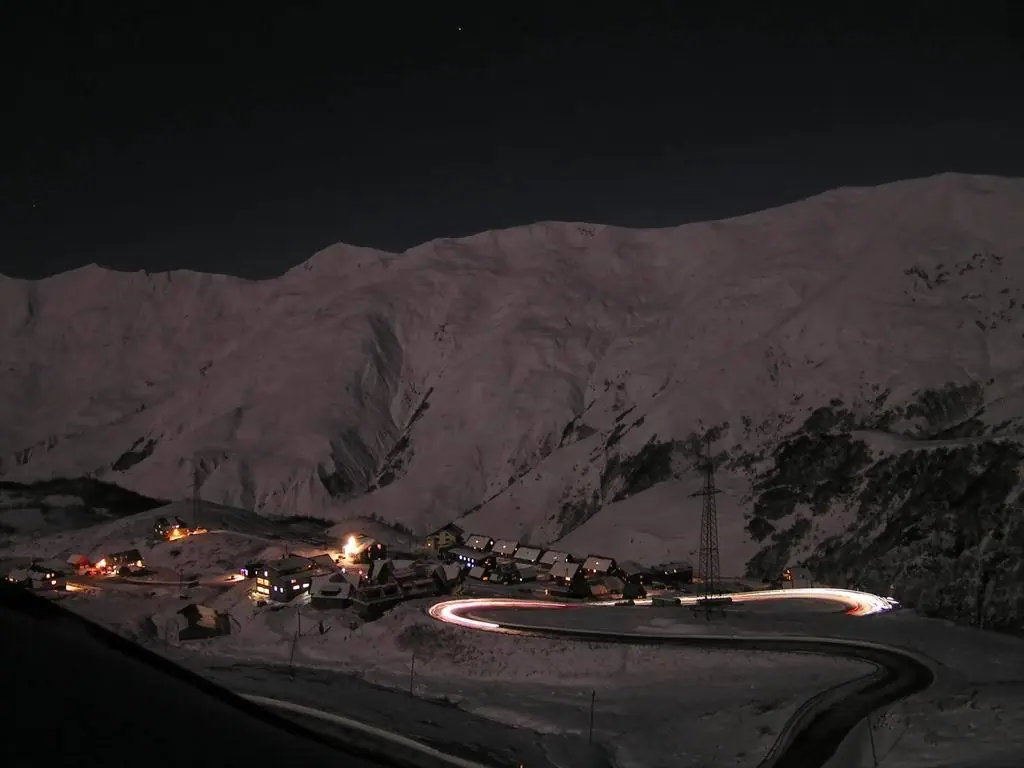
Gudauri and the Russia–Georgia Friendship Monument
Georgia's main ski resort below the Jvari Pass, with a mosaic-lined monument and an enormous mountain panorama.
 Town
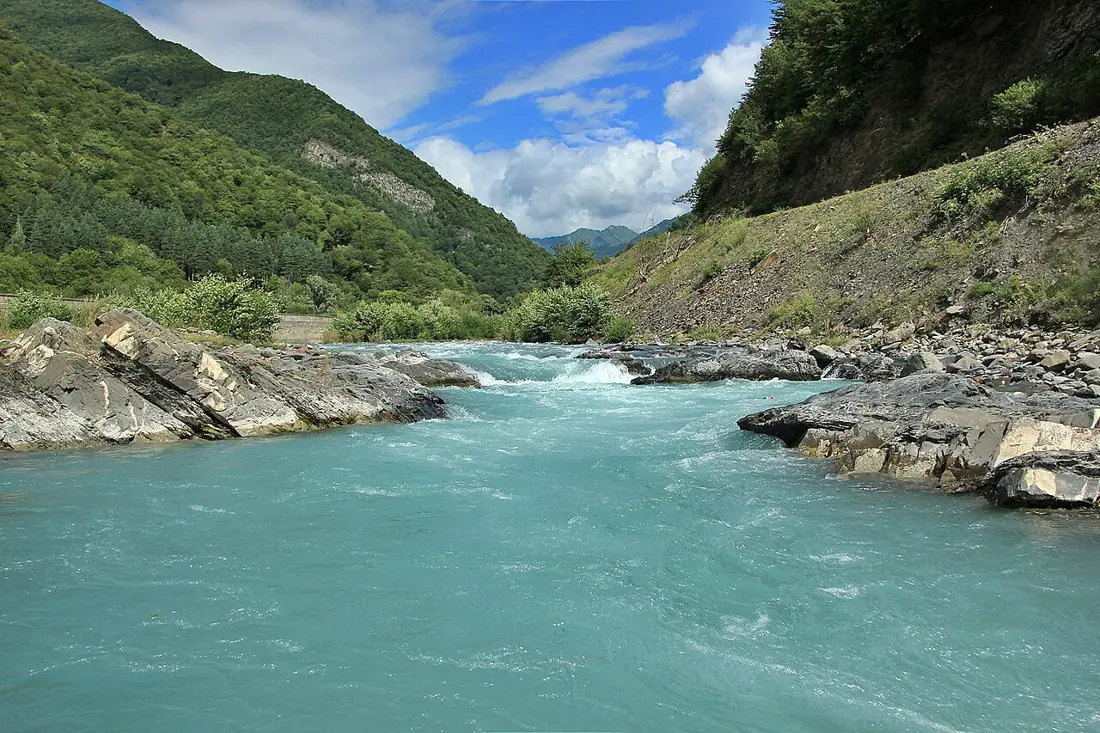
TownPasanauri and the Aragvi Confluence
A village on the Military Highway where the Black and White Aragvi meet and run side by side without mixing.
Booking and enquiries
This site is informational — there is no online payment. Call or email us to book.