Khada Valley
A side gorge of the Aragvi near Kvesheti holding some sixty medieval towers among small, nearly emptied villages.

- Time needed
- 3 h
- From Tbilisi
- 105 km · 2:15
- Road
- Unpaved sections
- Car needed
- Crossover / SUV
- Season
- May–October
- Entry
- free
Khada is a side gorge of the Aragvi with more medieval towers in it than any other valley on the Military Highway, and almost nobody turns off to see them. The mouth of the valley is at Kvesheti, about ten kilometres below the start of the Gudauri climb; from there a rough road follows the Khadistskali stream south-west between steep grass slopes for close to twenty kilometres.
Scattered along it are a dozen small villages, several with only two or three families left, and around sixty towers and tower fragments. These are not the tall slender towers of Svaneti but squat square structures of three or four storeys, built of undressed shale, with a single high entrance and hardly any windows. Some stand in villages you drive through — Tskere and Korogo are the usual first stops — while others stand alone on spurs, watching a length of the path.
The reason for so much fortification is the route. Before the Russians cut the modern road over the Jvari Pass in the 1810s and 1820s, the Khada valley was one of the ways over the ridge to the Ksani, and traffic through it had to be controlled and taxed. The towers, the ruined chapels and the graves belong to that older economy, which ended the moment the highway moved.
Two practical notes about the present. The Kvesheti–Kobi road project, a long tunnel scheme meant to bypass the highest section of the Military Highway, has its southern end near the mouth of the valley, so expect heavy machinery and construction traffic on the approach. And the valley road is unsurfaced beyond the first villages: rutted, stony and crossed by streams that swell after rain.
Late June and September are the good months, when the grass is high or the light is low and the towers throw shadows down the slopes.
Practical advice
Allow three hours if you drive to the upper villages and walk between two or three tower clusters, and a full day if you walk the valley. There is no shop, no café and no fuel, so carry water and food. The towers are unfenced ruins on private land: ask before climbing, and stay out of any with collapsed floors. One or two villages have guesthouses, but only in season. From November to April snow closes the upper valley, and even in summer a stream crossing after heavy rain can turn you back.
How to get there from Tbilisi
Take the Georgian Military Highway (E117) north to Kvesheti, about 97 km and two hours from Tbilisi, passing Ananuri and Pasanauri. Just before the road begins its serious climb towards Gudauri, a signed turning leads left into the Khada valley. From there it is roughly 8 km of unsurfaced road to the first tower villages and considerably more to the head of the valley. The asphalt ends quickly; the surface is stone and rut, with fords. An SUV with decent clearance is the right car, and low saloons should stop at the valley mouth. The last fuel is in Pasanauri.
Click a marker for details. Coloured lines are ready-made road trips.
Nearby places
 Town
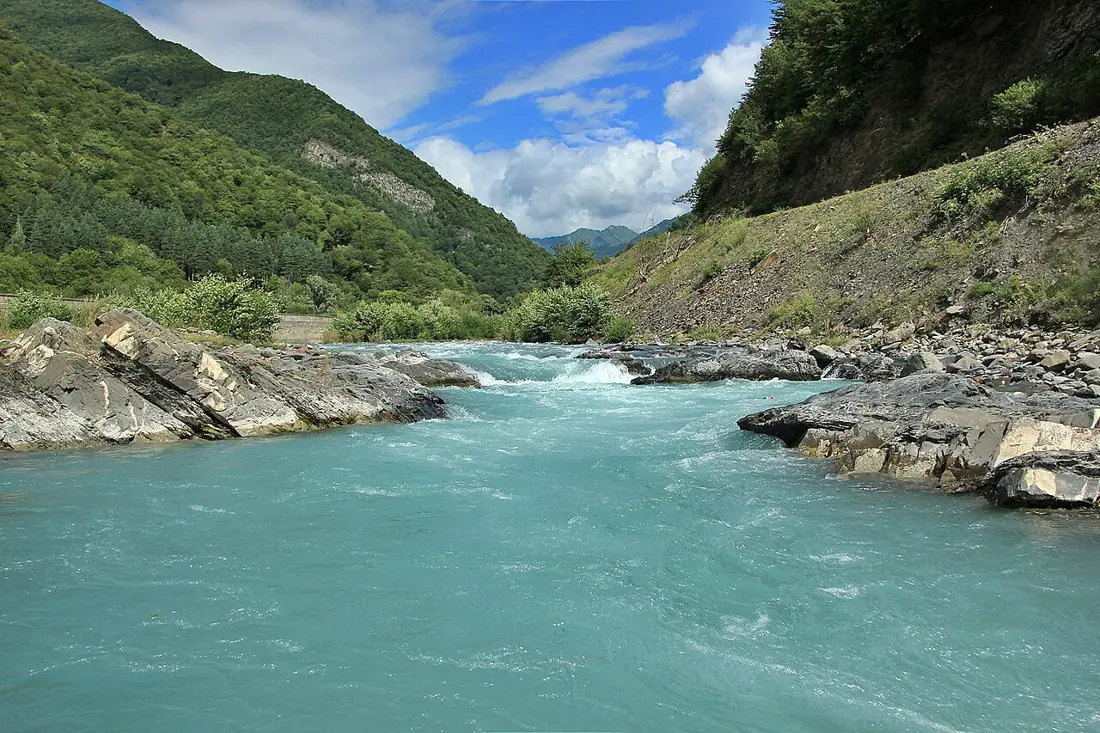
TownPasanauri and the Aragvi Confluence
A village on the Military Highway where the Black and White Aragvi meet and run side by side without mixing.
 Ski area
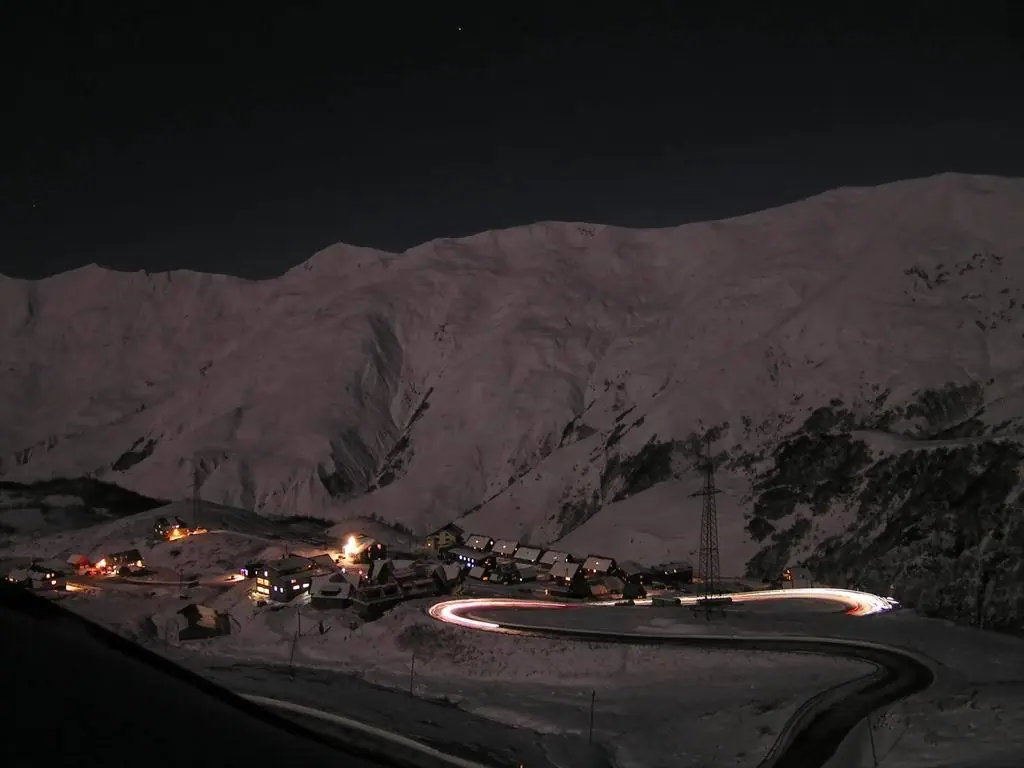
Gudauri and the Russia–Georgia Friendship Monument
Georgia's main ski resort below the Jvari Pass, with a mosaic-lined monument and an enormous mountain panorama.
 Monastery
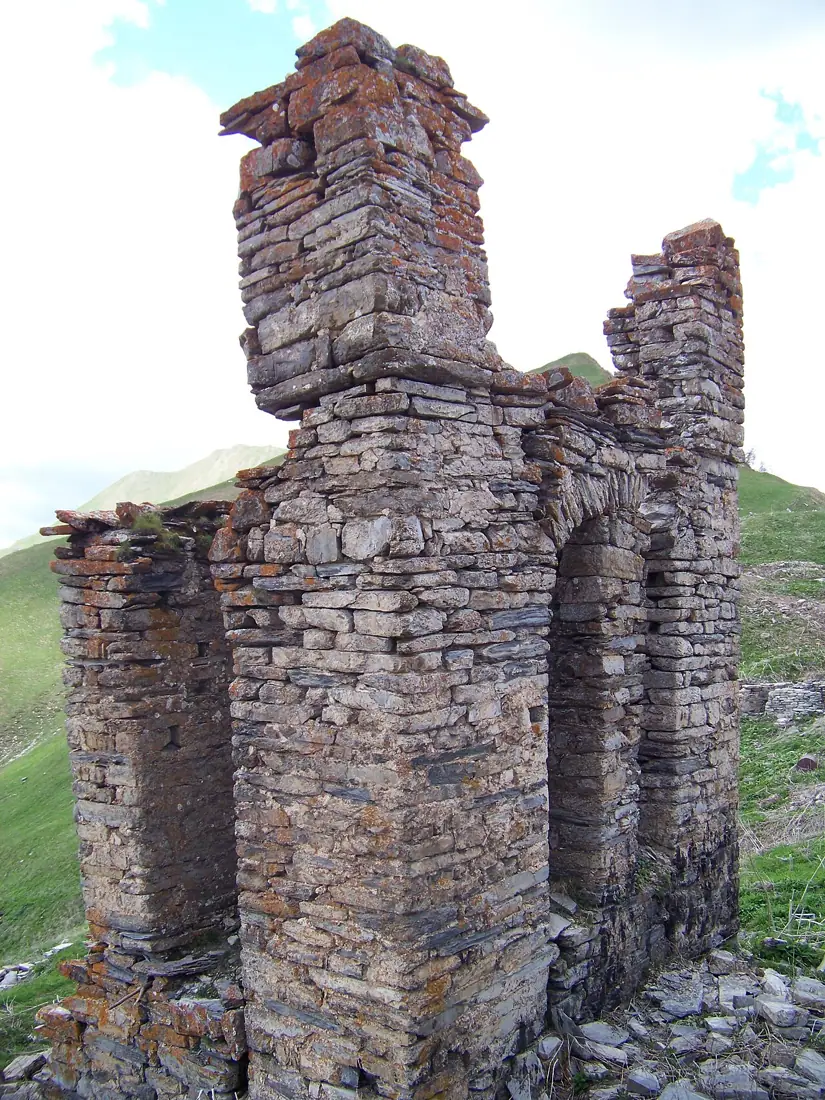
Lomisa Church
A small stone church of St George at 2,200 metres above Mleta, one of the most genuinely living shrines in eastern Georgia.
 Fortress
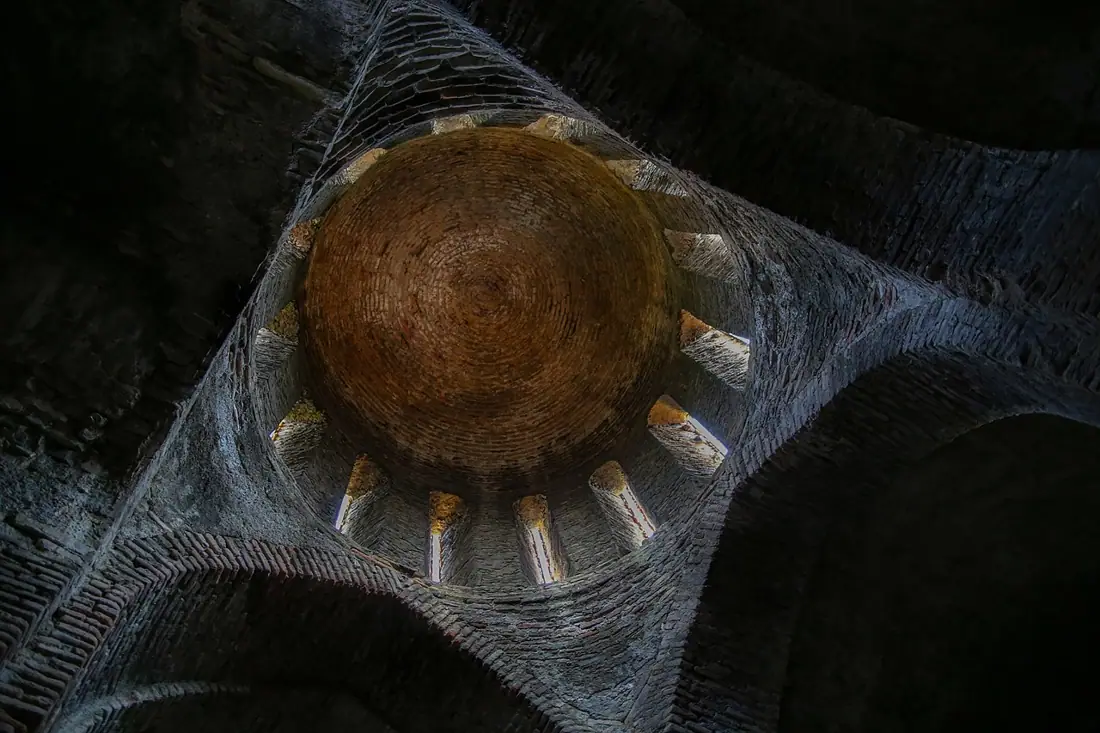
Ananuri Fortress
A 17th-century castle on the shore of the Zhinvali reservoir — the most photogenic stop on the Georgian Military Highway.
Booking and enquiries
This site is informational — there is no online payment. Call or email us to book.