Kutaisi Jewish Quarter
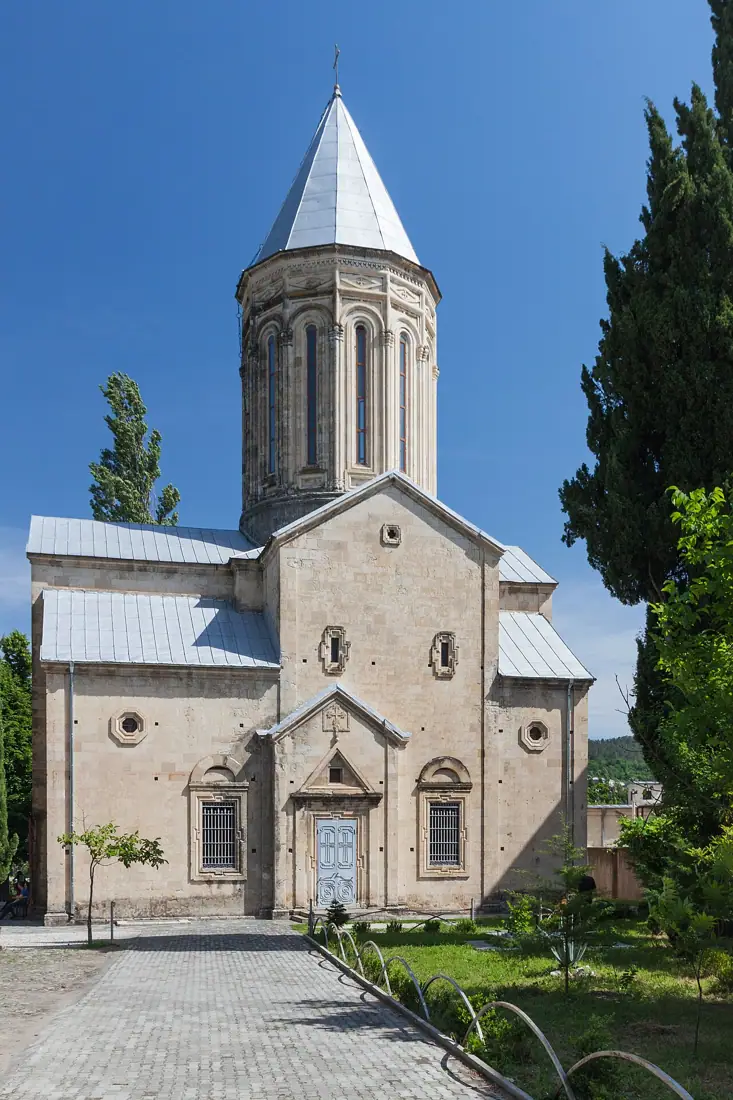
One street in the Sapichkhia district holding three synagogues, built in 1815, around 1863 and 1886.
- Time needed
- 1 h
- From Tbilisi
- 231 km · 3:20
- Road
- Paved
- Car needed
- Economy class
- Season
- All year
- Entry
- free
Kutaisi had one of the largest Jewish communities in Georgia, and its traces are concentrated on a single street. Boris Gaponov Street runs through the Sapichkhia district on the right bank of the Rioni, and within less than a hundred metres it holds three synagogues.
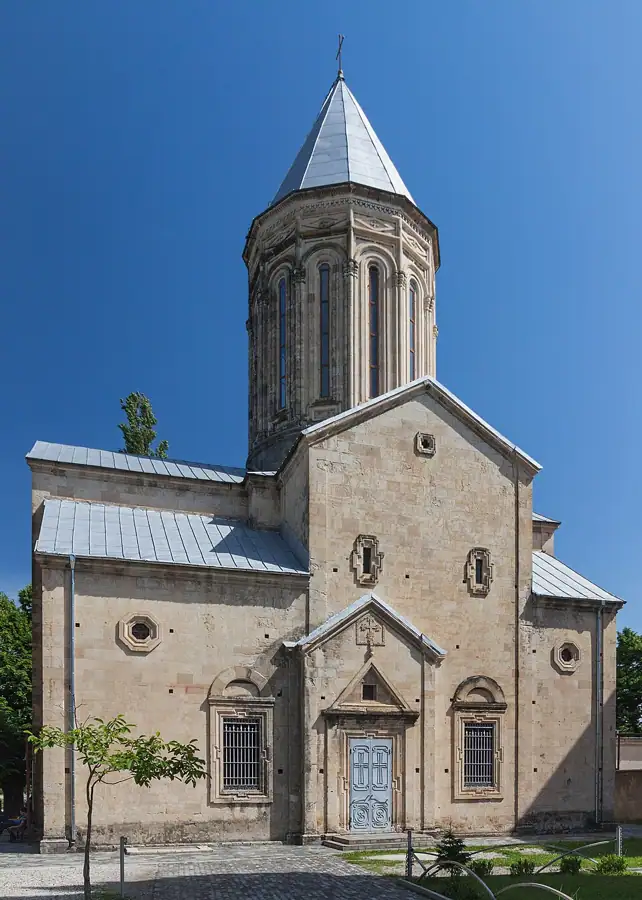
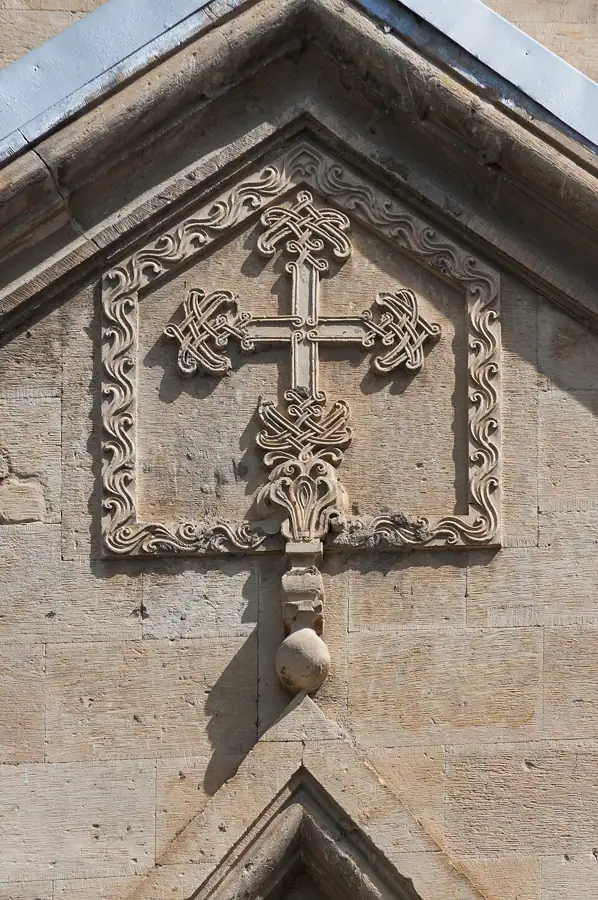
The oldest, the Small Synagogue, dates from 1815 — plain stone, almost indistinguishable from a house. A second was built around 1863. The main one, the Great Synagogue of 1886, is handled in a Romanesque Revival manner: tall arched windows, a stone facade, and inside a wooden gallery under a painted ceiling. This is the building still in use.
The street name is a story of its own. Boris Gaponov was a Kutaisi Jew who translated Rustaveli's The Knight in the Panther's Skin into Hebrew, working alone on night shifts at the local newspaper. The translation was published in Israel in 1969; he emigrated in 1971 and died soon after.
The community today is very small — most families left for Israel in the 1970s and again in the 1990s. The buildings remain, and the Great Synagogue opens several times a week; the caretaker will normally let visitors in.
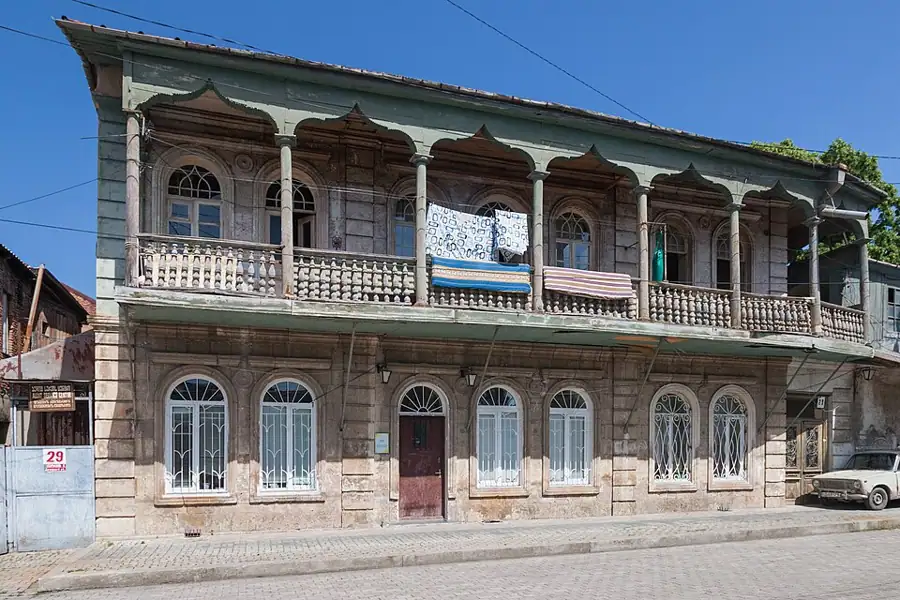
This is not a sight with an exhibition and a ticket desk. It is a fifty-minute walk along a narrow street where three buildings from three different centuries stand almost in a row, and where you see a part of Kutaisi that rarely reaches the guidebooks.
A short piece of background helps. Jews have lived in Georgia for more than two thousand years, and Kutaisi was for a long period the centre of Georgian Jewish life. By the end of the 19th century the quarter around this street held a few thousand people, with its own schools, bakeries and communal institutions, most of them trading or working in crafts. In the last decades of the 20th century that whole world moved, almost in its entirety, to Israel.
Gallery
Practical advice
An hour covers it. The Great Synagogue is not always open — look for the caretaker in the yard. Men need a head covering to go inside; kippot are kept by the door. Ask before photographing. The street is narrow and two-way, and parking is awkward, so it is easier to leave the car in the centre and walk across the bridge, about ten minutes. Cafes and the market are two blocks away. On Saturdays the community is at prayer and a tourist visit is not appropriate.
How to get there from Tbilisi
Take the E60 west from Tbilisi to Kutaisi — 231 km, about three hours twenty. In the city cross to the right bank of the Rioni by the White Bridge or the Chain Bridge and head into Sapichkhia; Gaponov Street is two blocks from the market. Street parking in the centre is free but full during the day. Fuel is available in Zestaponi and at the entrance to Kutaisi. An economy car is enough, and the quarter itself is walked end to end on foot.
Click a marker for details. Coloured lines are ready-made road trips.
Nearby places
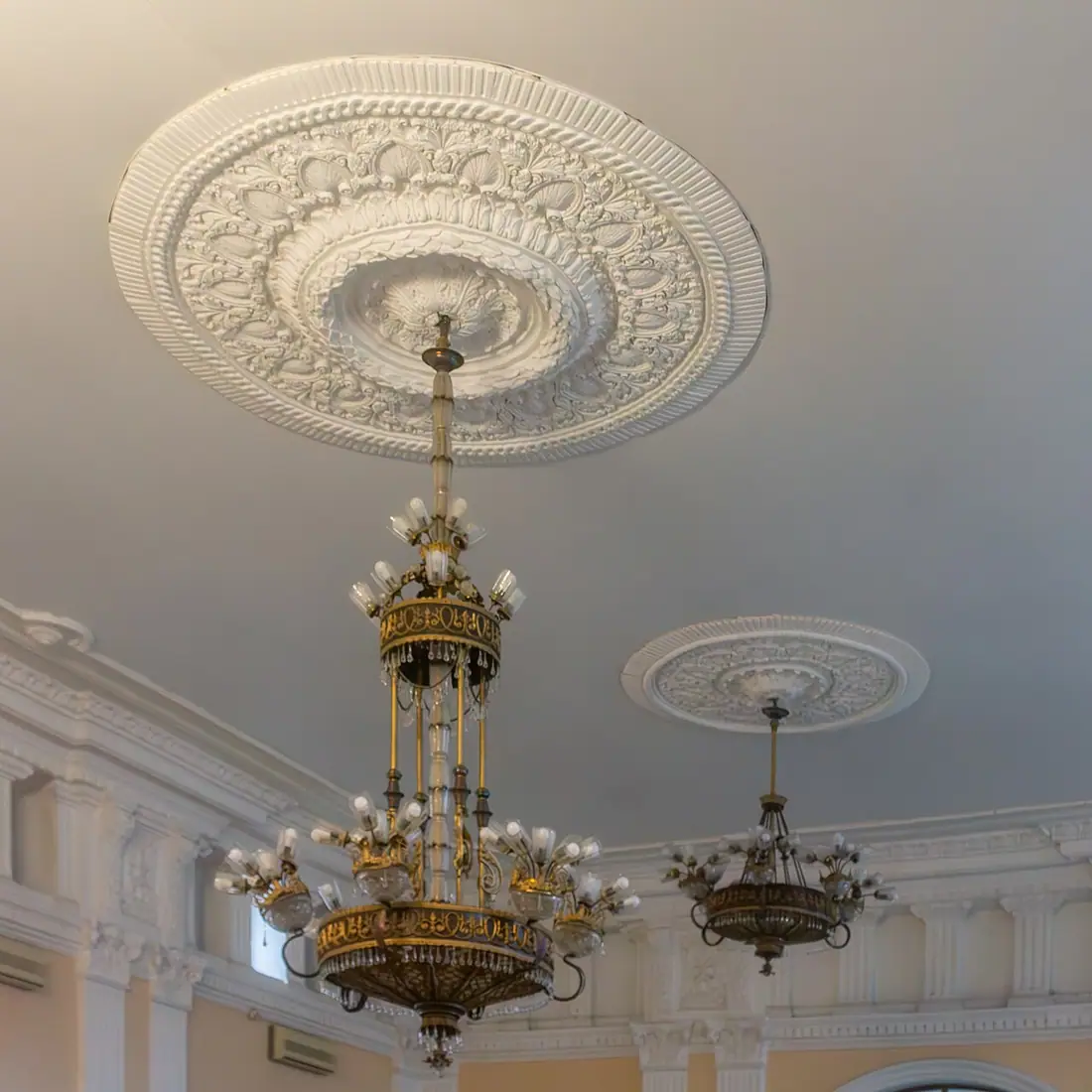 Museum
Kutaisi State Historical Museum
The Niko Berdzenishvili museum, which holds the goldsmiths' work taken from Gelati and Bagrati.
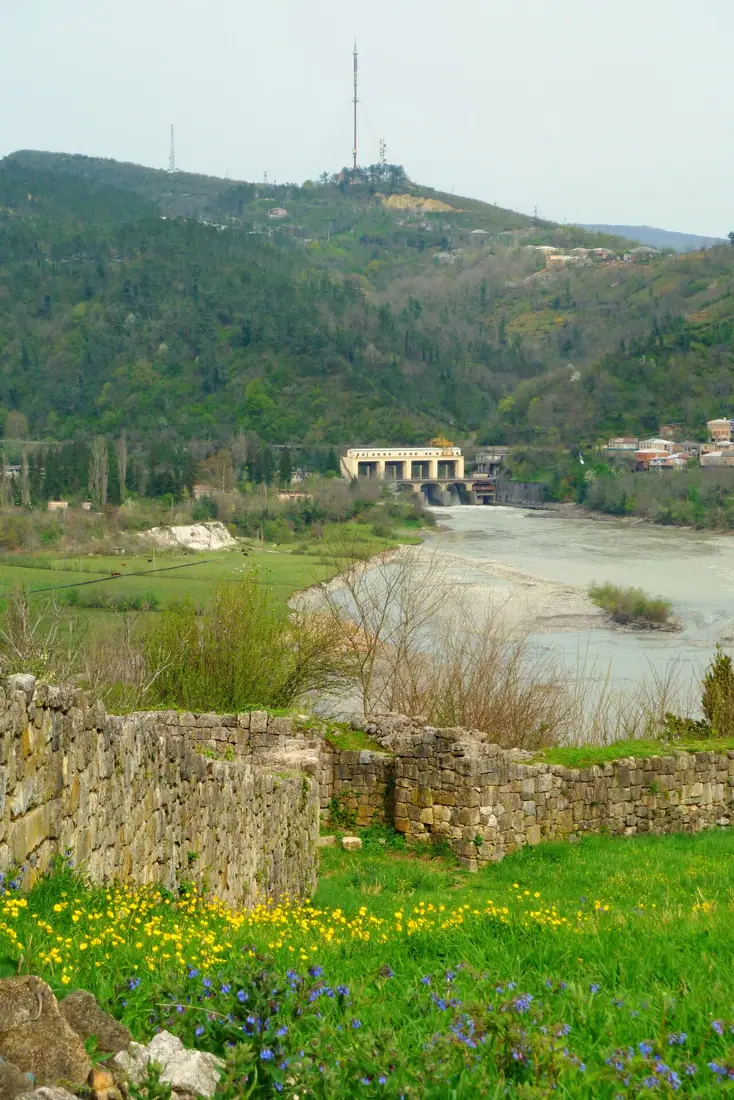 Nature
Kutaisi Colchic Botanical Garden
A garden founded in 1840 on the bank of the Rioni, with a tiny chapel hollowed into a four-hundred-year-old oak.
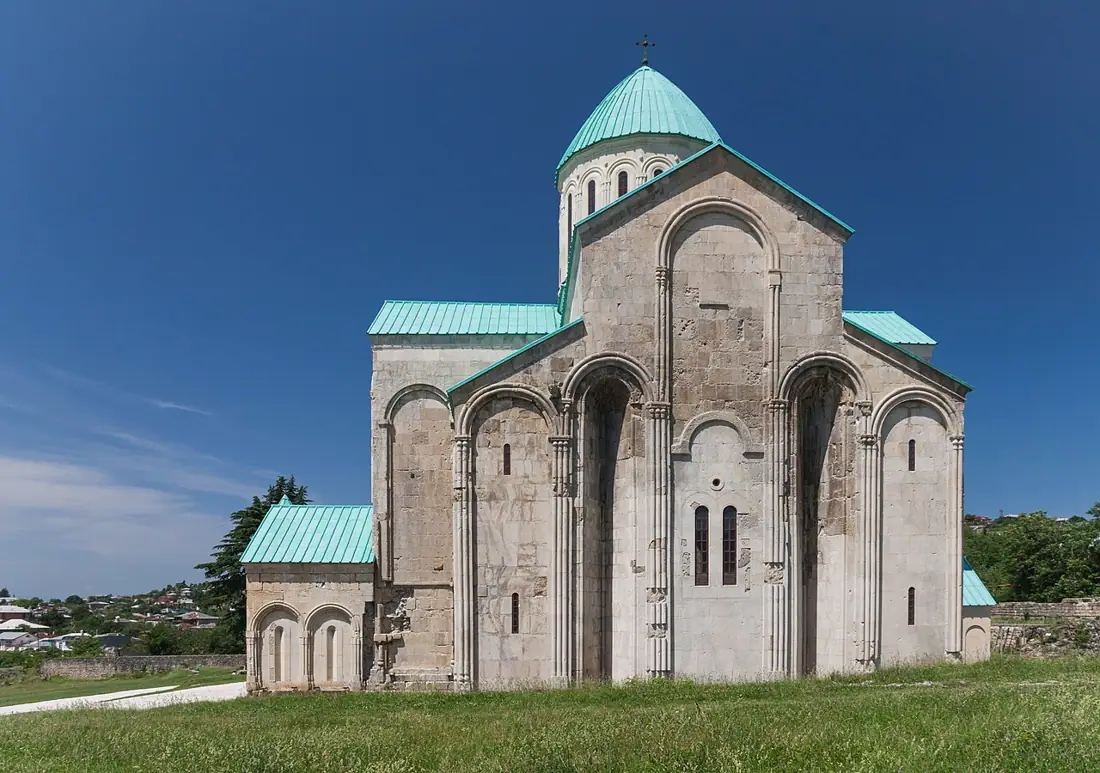 Town
TownBagrati Cathedral and central Kutaisi
The cathedral on Ukimerioni hill and the old streets of Kutaisi spread out below it.