Kutaisi State Historical Museum
The Niko Berdzenishvili museum, which holds the goldsmiths' work taken from Gelati and Bagrati.
- Time needed
- 1.5 h
- From Tbilisi
- 230 km · 3:20
- Road
- Paved
- Car needed
- Economy class
- Season
- All year
- Entry
- ~7 ₾
This is where the treasure of the western Georgian churches ended up. The museum was founded in 1921–22 and occupies the former Bank of Georgia building on Pushkin Street, five minutes from the central square. The collection runs to more than 200,000 items, shown across ten rooms on two floors.
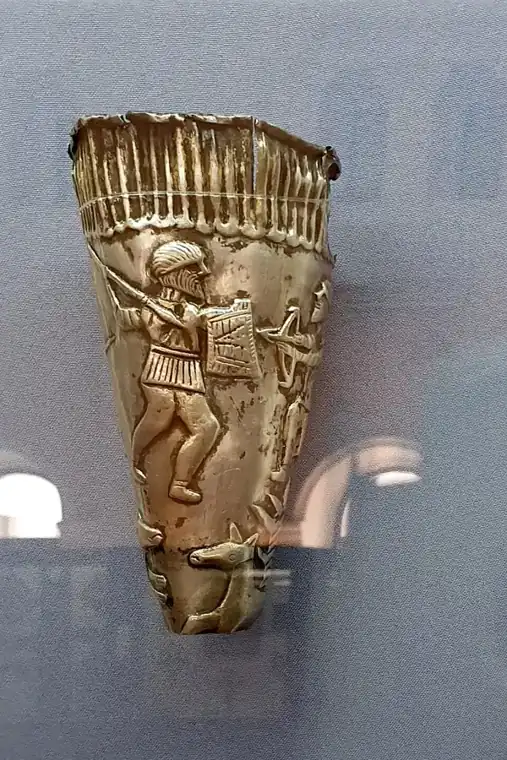
The chronology reaches from the 9th century BC to the late medieval period: Colchian bronzes, classical pottery, Roman and Byzantine coins, manuscripts, textiles, leather and woodwork. That is the ordinary content of a good regional museum, well chosen, though labelling in foreign languages is patchy.
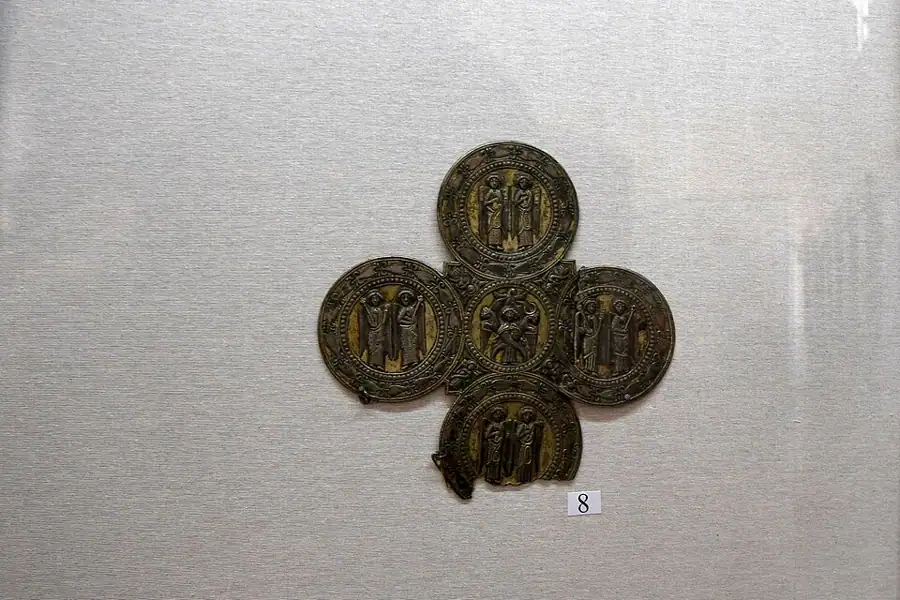
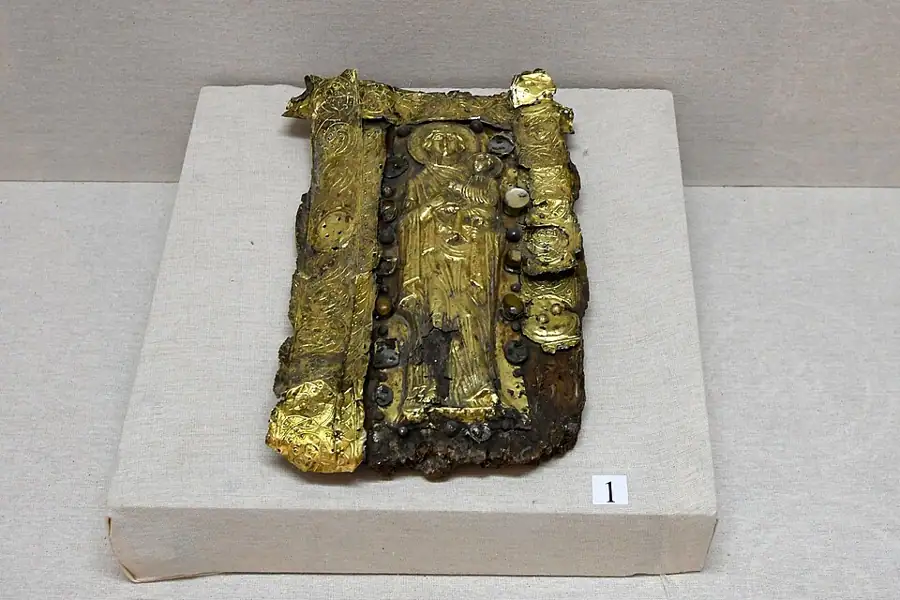
The reason to come is the Gold Treasury. When Bagrati and Gelati were closed under Soviet rule, their repoussé icons, processional crosses, book covers and liturgical vessels were brought here. The result is several centuries of Georgian goldsmithing gathered in one room: 10th to 12th-century icons in beaten silver and gold, fragments of cloisonné enamel, crosses with donor inscriptions. It completes a visit to Gelati — there you see the architecture and the mosaic, here you see what once stood inside.
The same building holds a research library of some forty thousand volumes and manuscripts. The institution is taken seriously in Georgia as a scholarly centre rather than as a tourist stop.
One honest note: much of the display is old-fashioned — glass cases, typed cards, weak lighting. A visitor after highlights only will spend thirty minutes in the treasury and leave; anyone interested in the history of the region can easily stay two hours.
Two smaller sections repay attention. The numismatic cabinet follows the currency of western Georgia from Greek issues through Byzantine and Sasanian pieces to medieval Georgian minting, which is a compact lesson in who was trading here and when. The ethnographic rooms hold Imeretian house interiors, wine vessels and farm tools of a kind that has disappeared from the villages within the last two generations.
Gallery
Practical advice
An hour and a half is a fair allowance. The Gold Treasury is kept separately and a member of staff unlocks it for you, so ask at the desk as you arrive rather than at the end. English labels are partial, so a guide or audio guide makes a real difference. Photography is restricted in some rooms. The building has two floors and no lift. There is a toilet inside. Cafes and parking are in the surrounding blocks, a five-minute walk from the central square.
How to get there from Tbilisi
Take the E60 west from Tbilisi through Gori, Khashuri, the Rikoti section and Zestaponi — 230 km, about three hours twenty. In Kutaisi follow signs to the centre and stay on the left bank of the Rioni; the museum is on Pushkin Street, a few blocks from the White Bridge. Street parking in the centre is free but fills up during the day, so it is easier to stop a block away. Fuel is available in Zestaponi and at the entrance to Kutaisi. An economy car is enough all year.
Click a marker for details. Coloured lines are ready-made road trips.
Nearby places
 Town
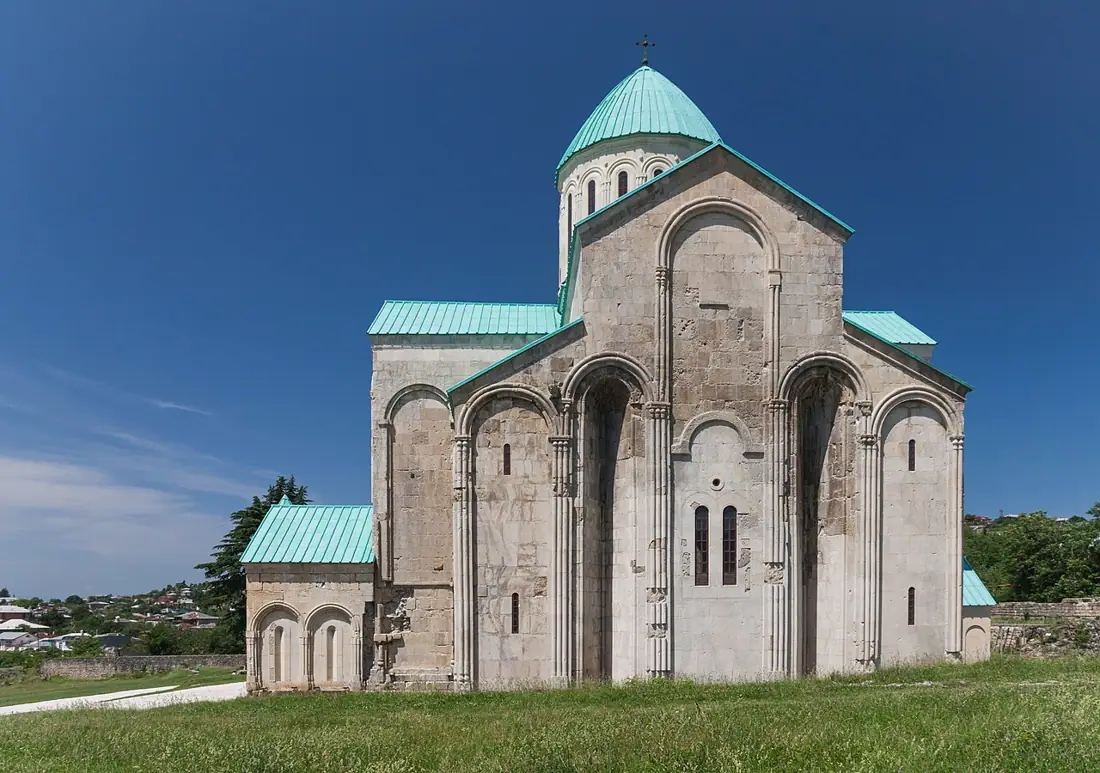
TownBagrati Cathedral and central Kutaisi
The cathedral on Ukimerioni hill and the old streets of Kutaisi spread out below it.
 Nature
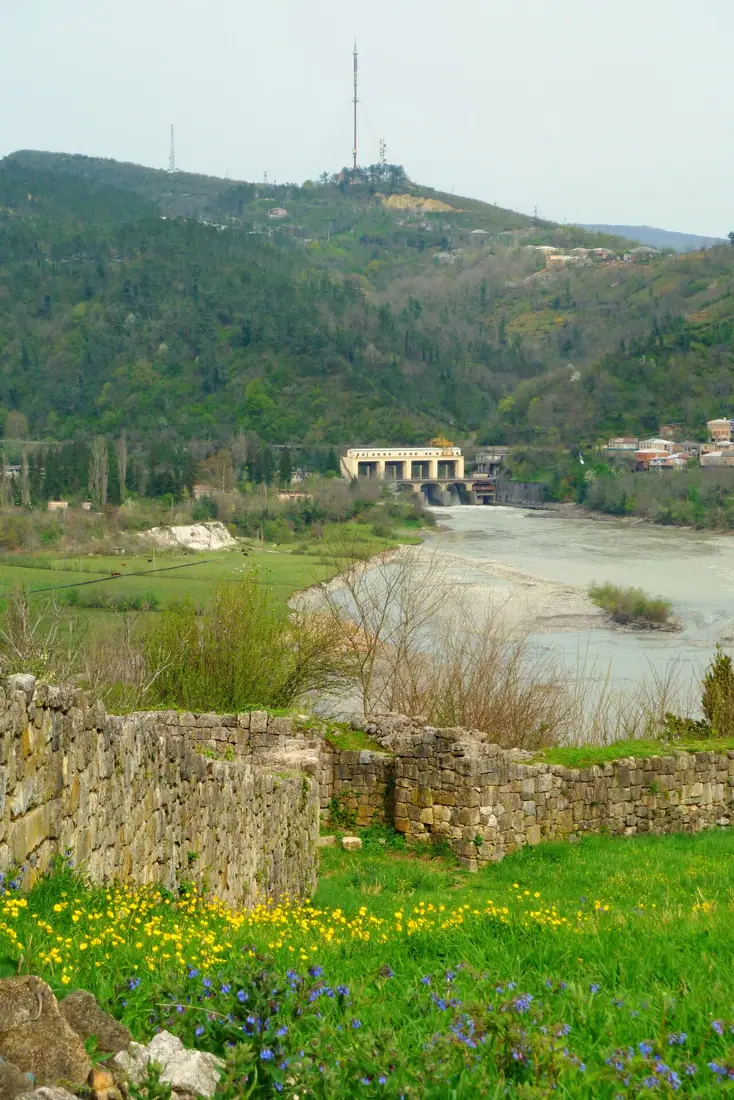
Kutaisi Colchic Botanical Garden
A garden founded in 1840 on the bank of the Rioni, with a tiny chapel hollowed into a four-hundred-year-old oak.
 Town
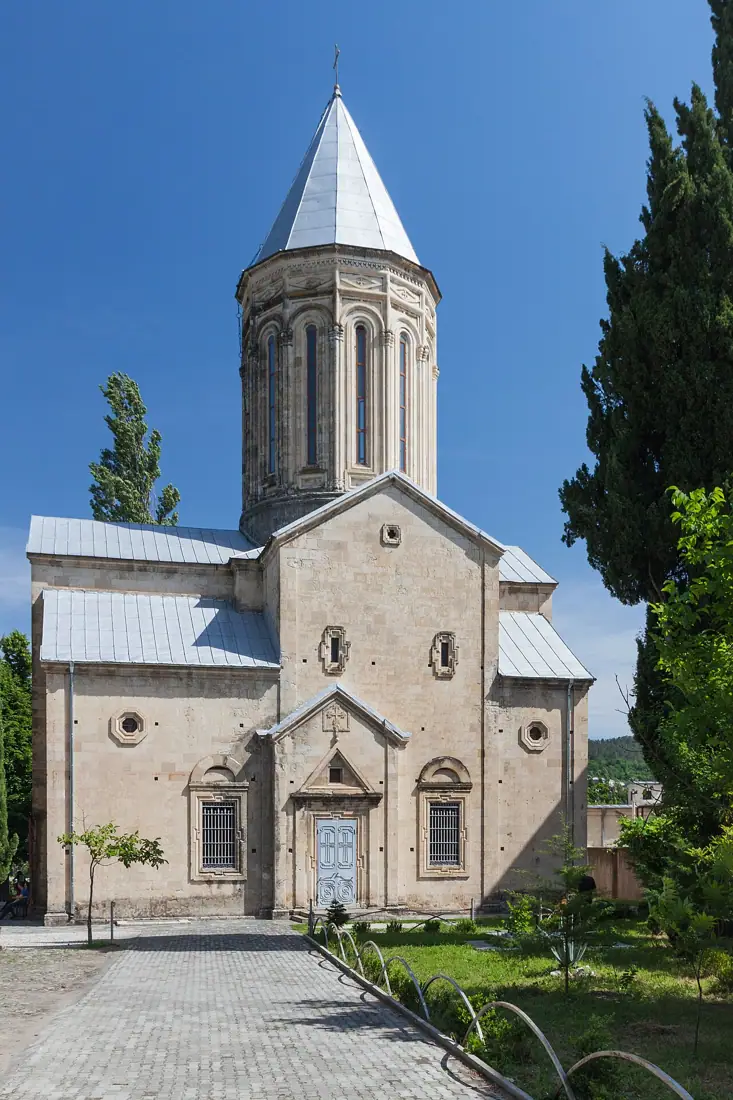
TownKutaisi Jewish Quarter
One street in the Sapichkhia district holding three synagogues, built in 1815, around 1863 and 1886.