Kutaisi Colchic Botanical Garden
A garden founded in 1840 on the bank of the Rioni, with a tiny chapel hollowed into a four-hundred-year-old oak.
- Time needed
- 1 h
- From Tbilisi
- 232 km · 3:25
- Road
- Paved
- Car needed
- Economy class
- Season
- All year
- Entry
- ~2 ₾
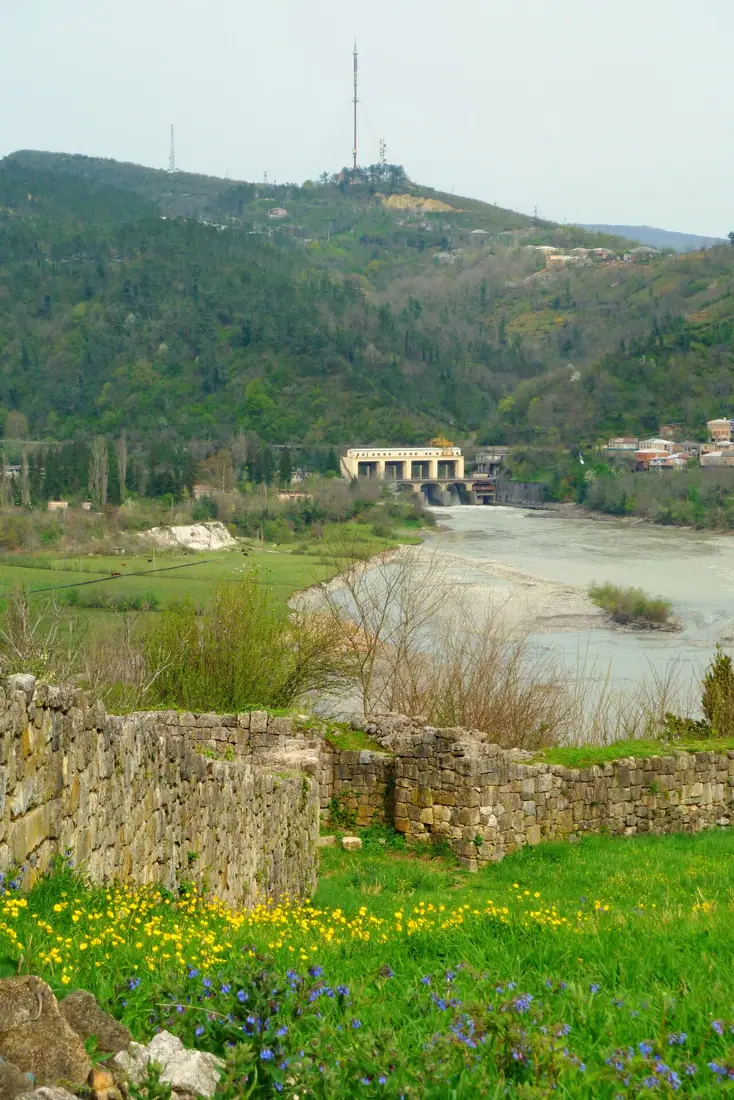
Kutaisi's botanical garden was founded in 1840 and is one of the oldest in Georgia. It lies on the bank of the Rioni about a kilometre from the central square: follow the embankment from the Chain Bridge and turn up towards the Sapichkhia side.
The garden began as a nursery, an attempt to acclimatise subtropical species in the mild, wet climate of Imereti. Today true natives of the Colchic forest — zelkova, Imeretian oak, box — stand next to introduced magnolia, bamboo, cypress and conifers. It is a small garden and an hour covers all of it; the paths are level, the shade is generous, and squirrels work the branches overhead.
One specific thing brings most visitors here: a four-hundred-year-old oak with a miniature chapel cut into its hollow trunk. It holds one person, two at a squeeze — an icon, a candle stand and bare wood. It is neither an ancient shrine nor an architectural monument, simply an odd and rather touching thing, and the people of Kutaisi are fond of it.
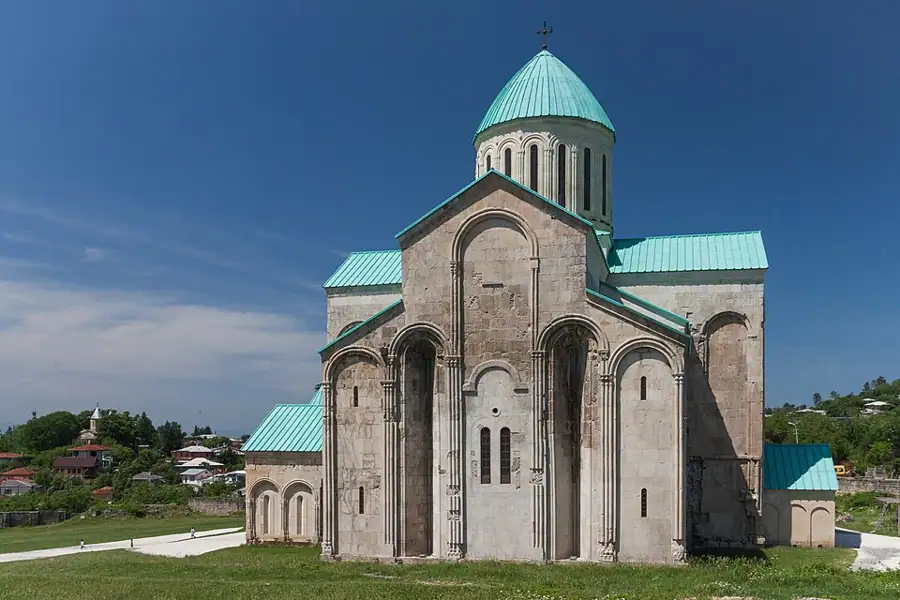
The garden fits neatly between the city's other two stops: the Bagrati hill rises above it, and the historical museum is ten minutes away across the river. If you have three or four hours in Kutaisi and have had enough of churches, this is where you get your breath back.
In spring the magnolias flower and the garden is at its best; in summer it is noticeably cooler than the streets; in autumn the colour is good. Winter strips much of it back, though the evergreen sections hold up.
The garden still works as a collection rather than as a park: labels carry Latin names, beds are grouped by origin, and benches are set along the main axis. On a weekday morning you will share it with a handful of pensioners, parents with pushchairs and perhaps a school group. It is one of the places where Kutaisi stops behaving like a city on a tourist route.
Gallery
Practical advice
An hour is enough. Entry costs a token amount, paid at the gate. Paths are gravel and mostly flat, so a wheelchair or pushchair manages most of the garden, though there are a few steps at the entrance. The oak chapel is to the right of the gate at the end of a path; the sign is small and easy to miss, so ask. There is a toilet by the entrance but no cafe inside — the nearest are on the embankment. After rain the paths turn muddy.
How to get there from Tbilisi
Take the E60 west from Tbilisi to Kutaisi — 232 km, about three hours twenty-five. In the city cross to the right bank of the Rioni and follow Mkheidze Street; the garden entrance is at the far end, five minutes from the centre. Parking is free on the street outside but the road is narrow, so it is easier to stop a block earlier. Fuel is available in Zestaponi and in Kutaisi itself. An economy car is entirely sufficient.
Click a marker for details. Coloured lines are ready-made road trips.
Nearby places
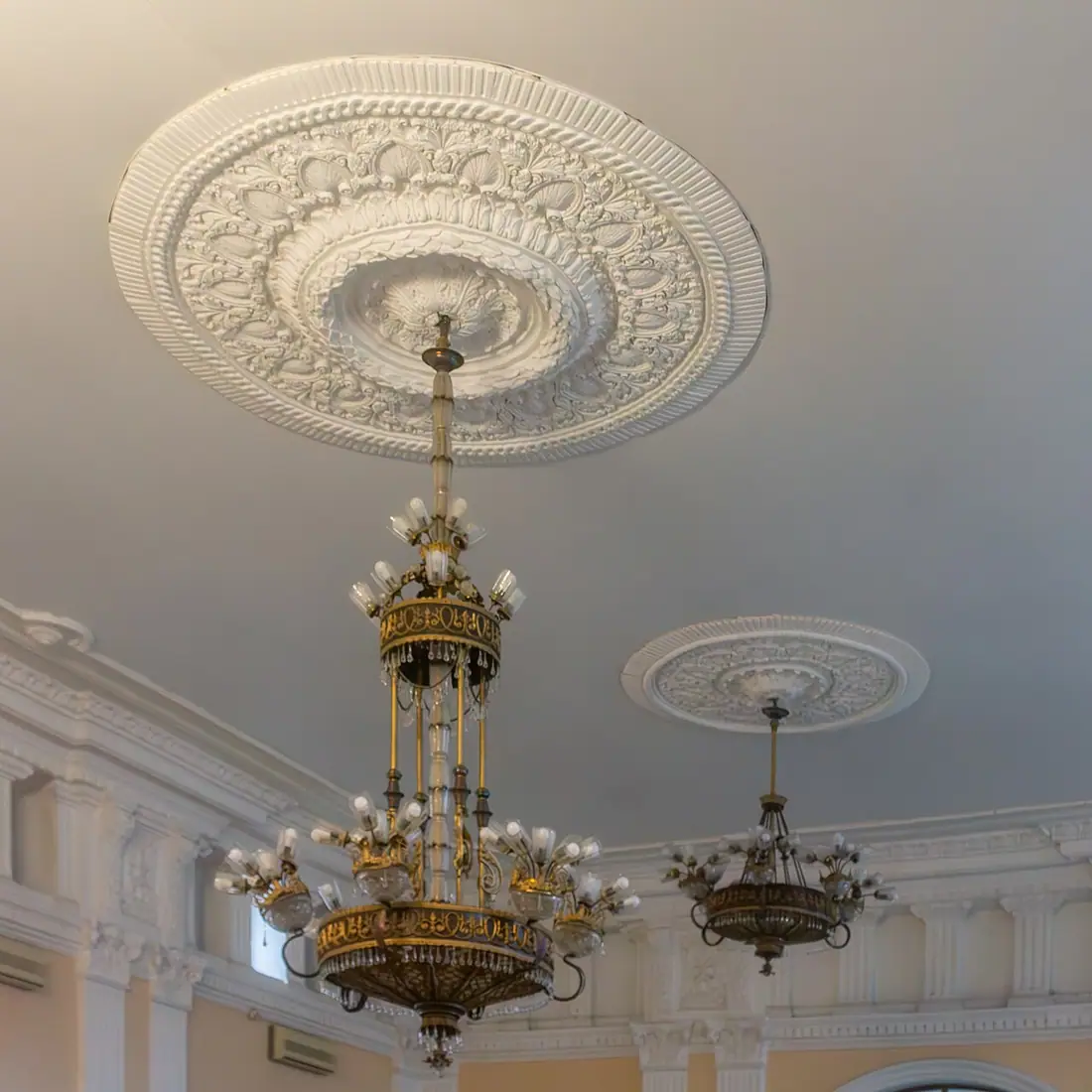 Museum
Kutaisi State Historical Museum
The Niko Berdzenishvili museum, which holds the goldsmiths' work taken from Gelati and Bagrati.
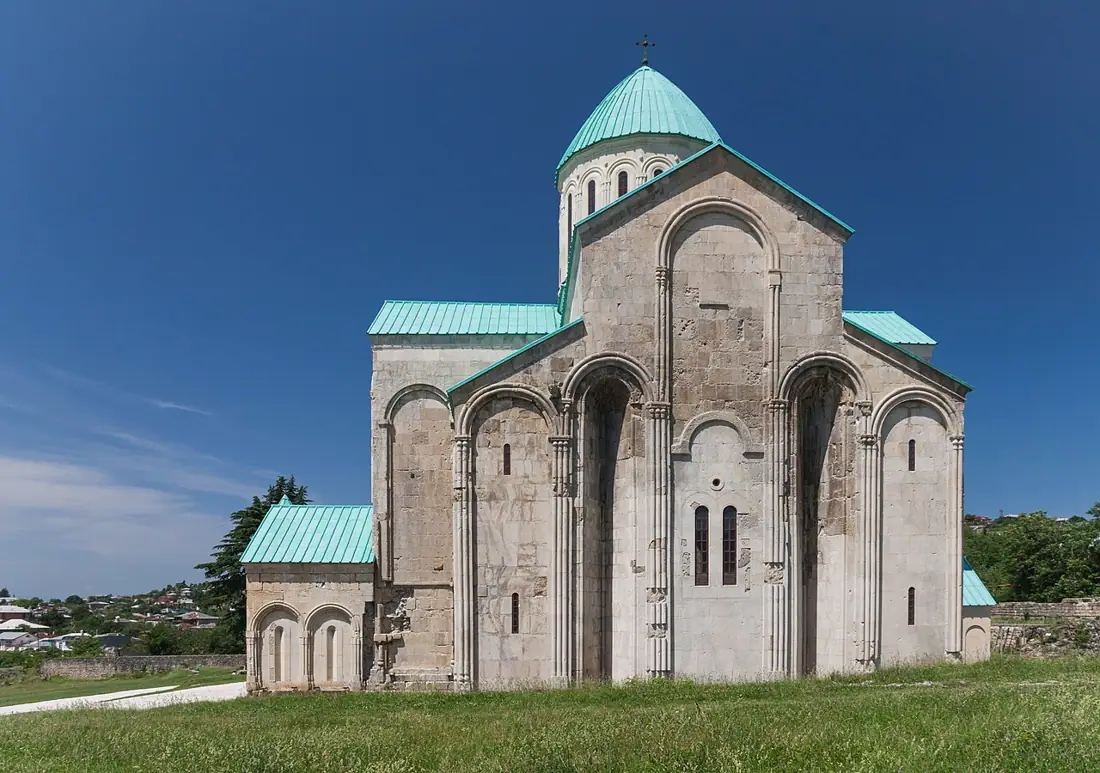 Town
TownBagrati Cathedral and central Kutaisi
The cathedral on Ukimerioni hill and the old streets of Kutaisi spread out below it.
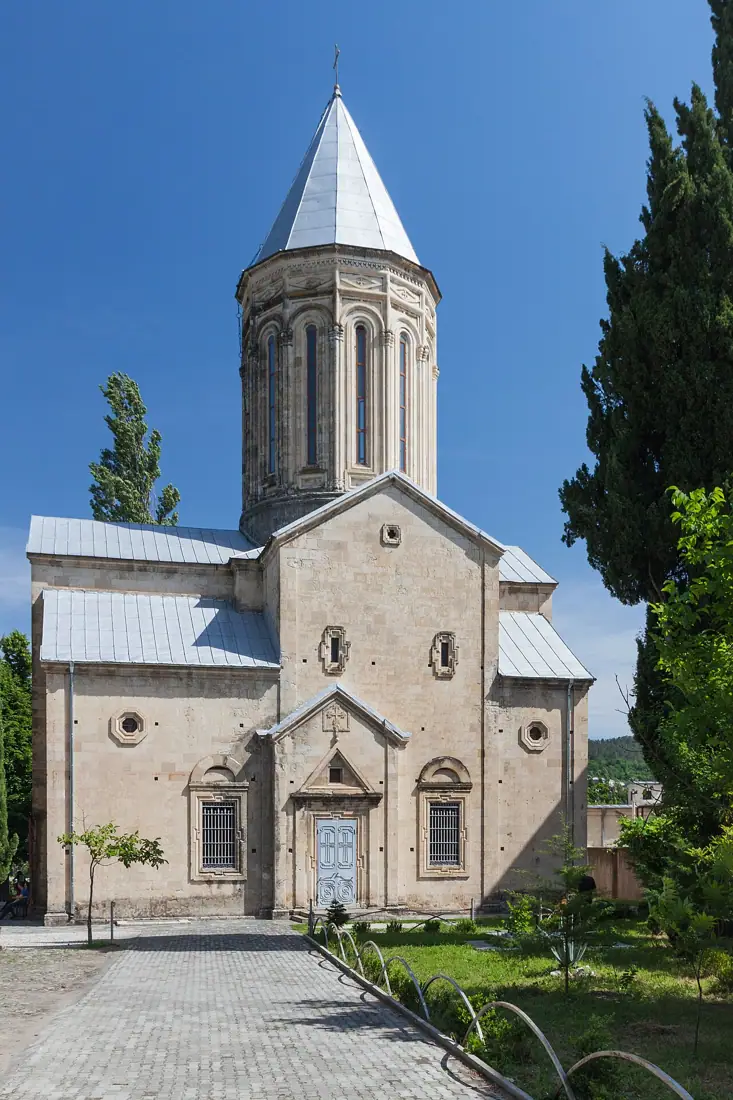 Town
TownKutaisi Jewish Quarter
One street in the Sapichkhia district holding three synagogues, built in 1815, around 1863 and 1886.