Kumurdo Cathedral
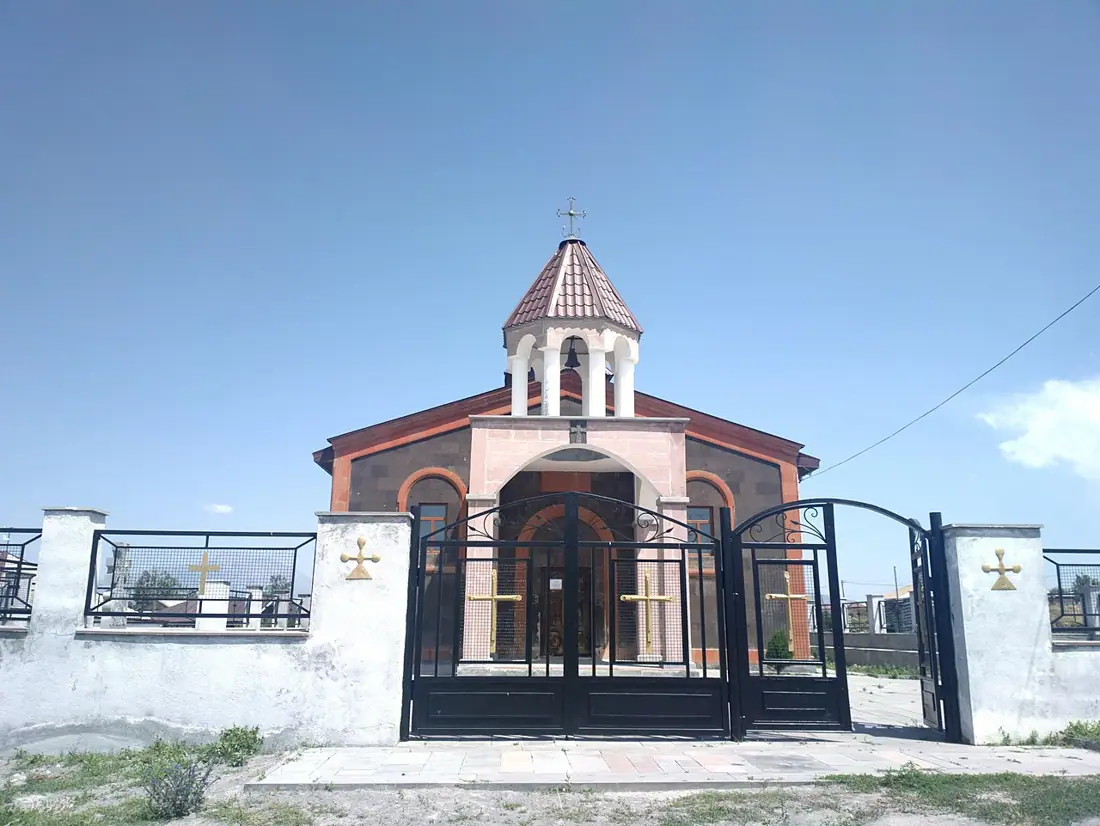
A cathedral precisely dated to 964, standing on the Javakheti plateau near Akhalkalaki on a rare six-apse plan.
- Time needed
- 1 h
- From Tbilisi
- 228 km · 4:00
- Road
- Mostly paved
- Car needed
- Crossover / SUV
- Season
- May–October
- Entry
- free
Kumurdo is one of the few Georgian monuments whose exact year of construction is known. An inscription in asomtavruli script surviving on the north apse states that the church was built in 964, in the reign of King Leon, under the care of Bishop Ioane, and that the architect was Sakotsari. The names of medieval Georgian architects are recorded in only a handful of cases; this is one of them.
The plan is strange and close to unique in Georgia: the central space is a hexagon surrounded by six apses, a centralised composition rather than the usual cross. The dome collapsed long ago and is gone, so standing inside you have open sky above you.
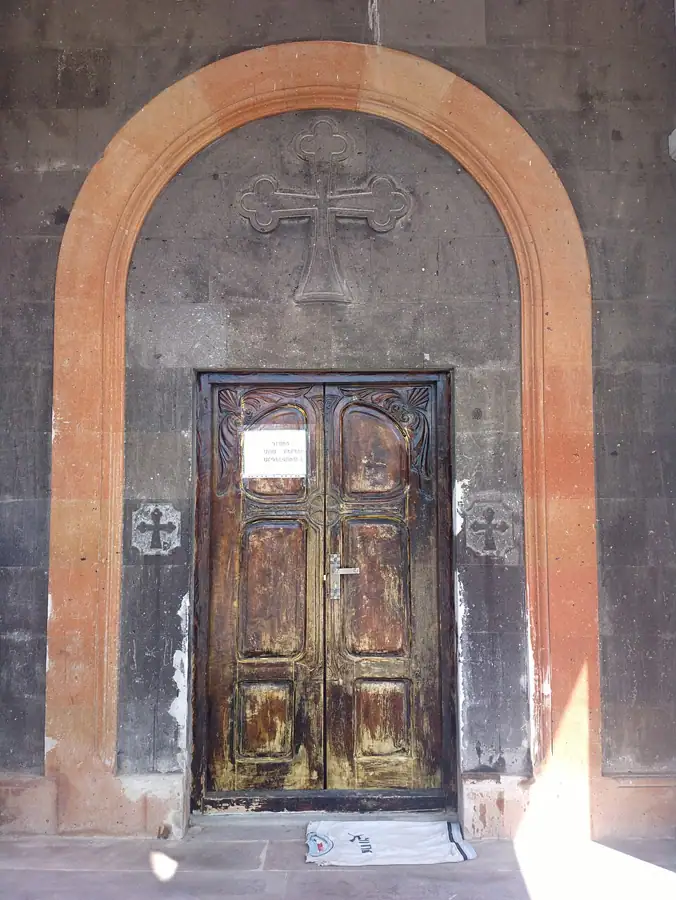
The carving deserves a slow look. The capitals, window surrounds and apse details are among the best 10th-century work in the country, geometric and vegetal at once. The material is the local volcanic stone, a dark grey that repeats the colour of the plateau itself.
It is fair to ask why a building of this scale stands in an empty field. The answer is that Kumurdo was an episcopal seat, the principal church of the Javakheti diocese, and the settlement around it was once far larger. During the 20th and 21st centuries parts of the walls were consolidated and rebuilt; the new masonry is easy to tell from the old by both colour and finish.
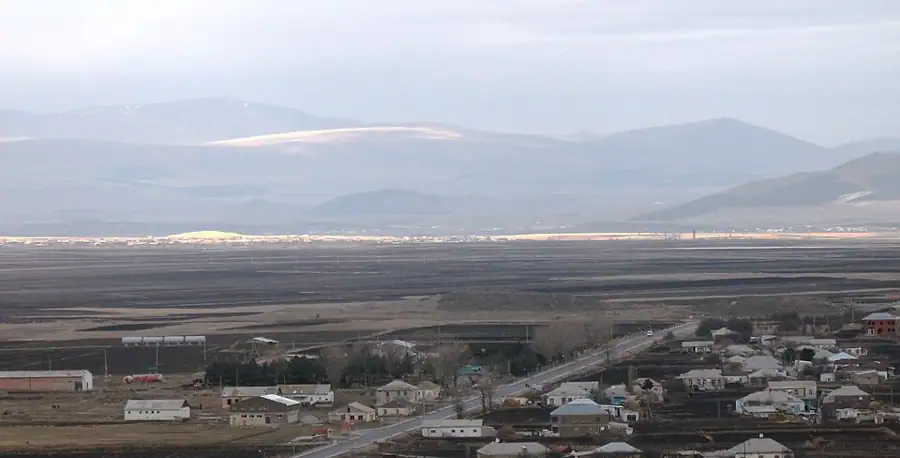
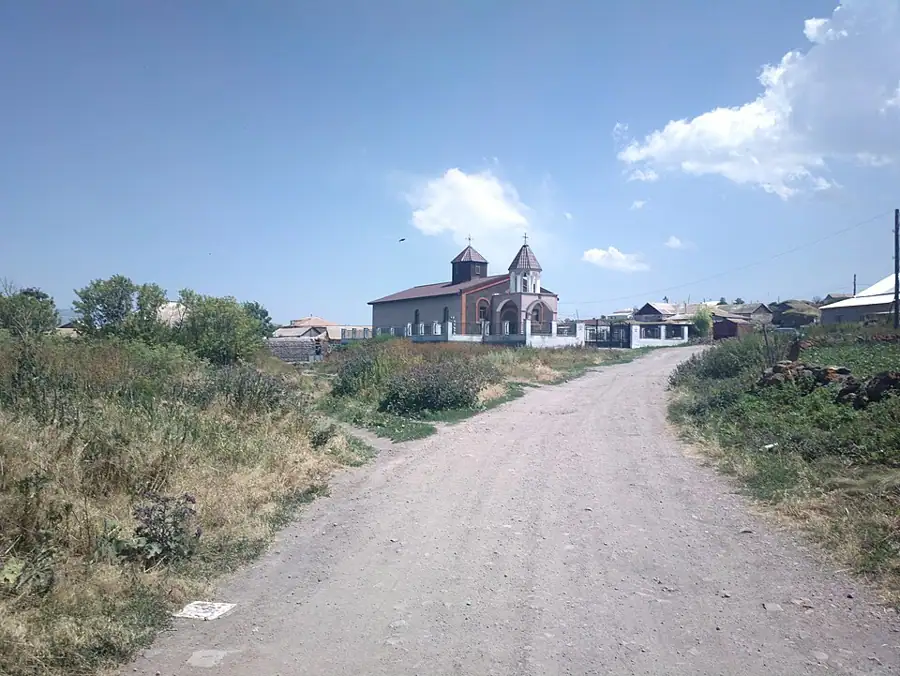
The setting is severe. Kumurdo stands about ten kilometres from Akhalkalaki on treeless upland at 1,750 metres, surrounded by fields and dry-stone walls, with hardly a tree in sight and wind blowing almost constantly. On a summer evening, when the light drops low, the dark stone warms and the place is at its best.
Winter is a different proposition. From November to April the plateau is under snow, night temperatures fall to around minus twenty, and wind redistributes the snow across the roads. Main roads are cleared; village turnings are not always.
Gallery
Practical advice
An hour covers it, though the carving can hold you longer. The church has no dome and is open to the sky, so there is no shelter if it rains. The wind is constant and a windproof layer is useful even in summer. There is no cafe, no toilet and no water on site, so buy everything in Akhalkalaki. Restoration work occasionally fences off part of the building. Normal church dress rules apply, although no priest is permanently based here.
How to get there from Tbilisi
From Tbilisi drive via Tsalka and Lake Paravani to Akhalkalaki, roughly 215 km, then continue about ten kilometres south-west towards Kumurdo village. The total is 228 km and close to four hours. The main road is asphalt, but its quality varies once you are on the plateau and progress is slow; the last few kilometres are a village road, partly gravel. Fill up in Tsalka and Akhalkalaki, since stations in between are scarce. A car with decent ground clearance is preferable.
Click a marker for details. Coloured lines are ready-made road trips.
Nearby places
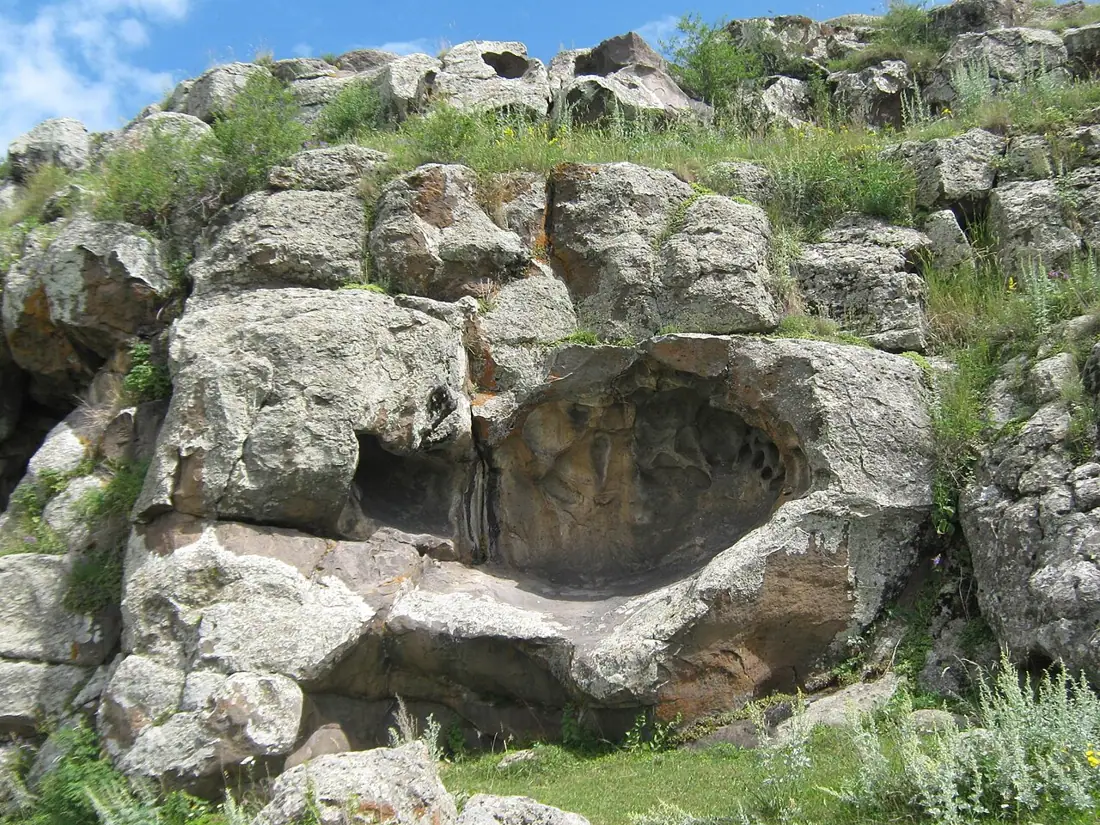 Nature
Javakheti National Park
A protected network of volcanic plateau lakes and wetlands near Ninotsminda, and Georgia's best birdwatching ground.
Poka Nunnery of St Nino
A nunnery on the shore of Lake Paravani at two thousand metres, known for its enamel and cheese workshops.
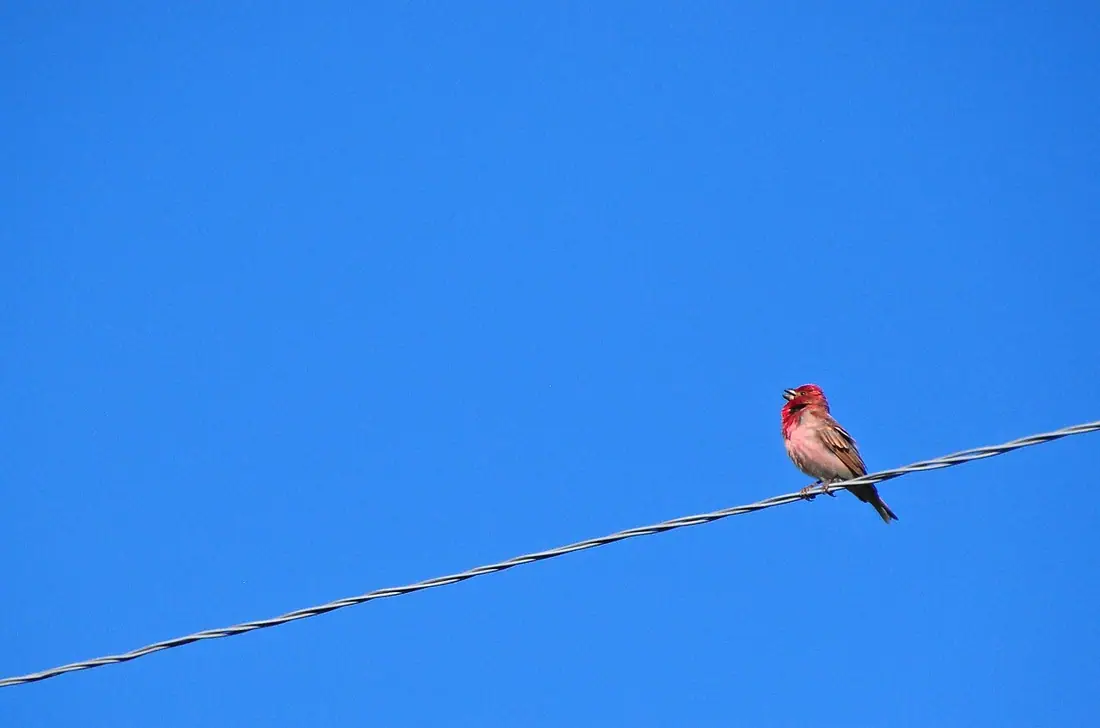 Lake
LakeLake Paravani and Lake Tabatskuri
High-altitude lakes on the volcanic Javakheti plateau at around 2,000 metres, on a major bird migration route.
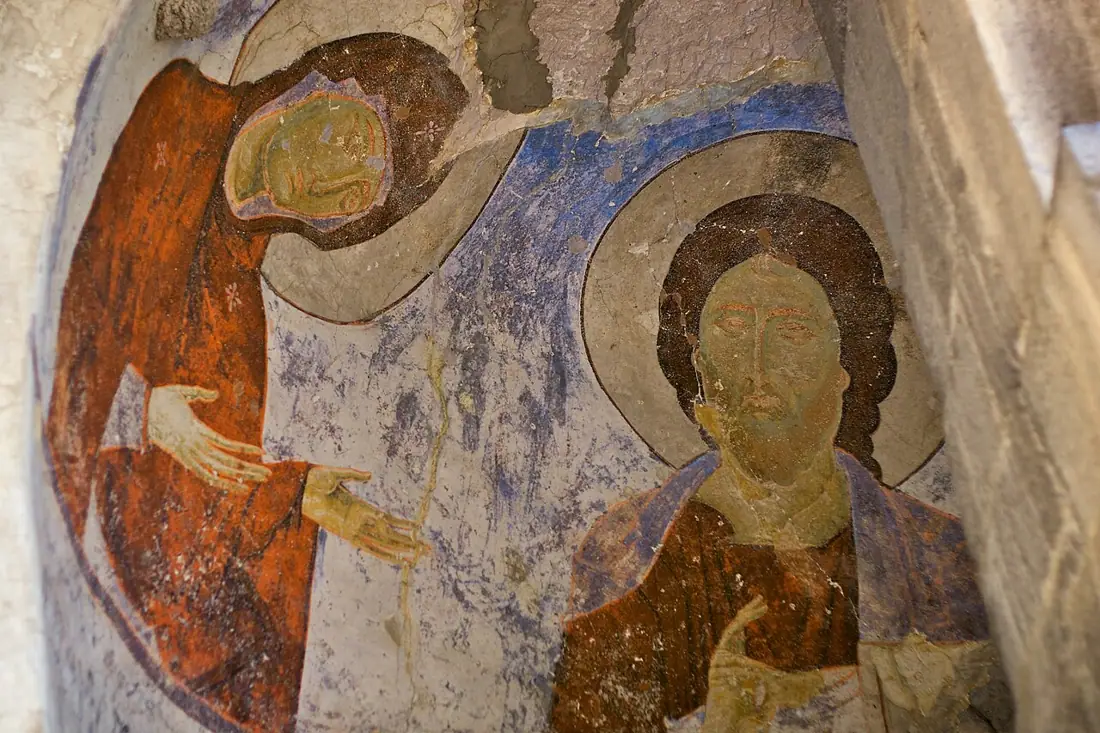 Cave
CaveVardzia
A 12th-century cave city and monastery cut into the Mtkvari gorge, the flagship monument of Queen Tamar's era.
Booking and enquiries
This site is informational — there is no online payment. Call or email us to book.