Jvari Pass and the Friendship Monument
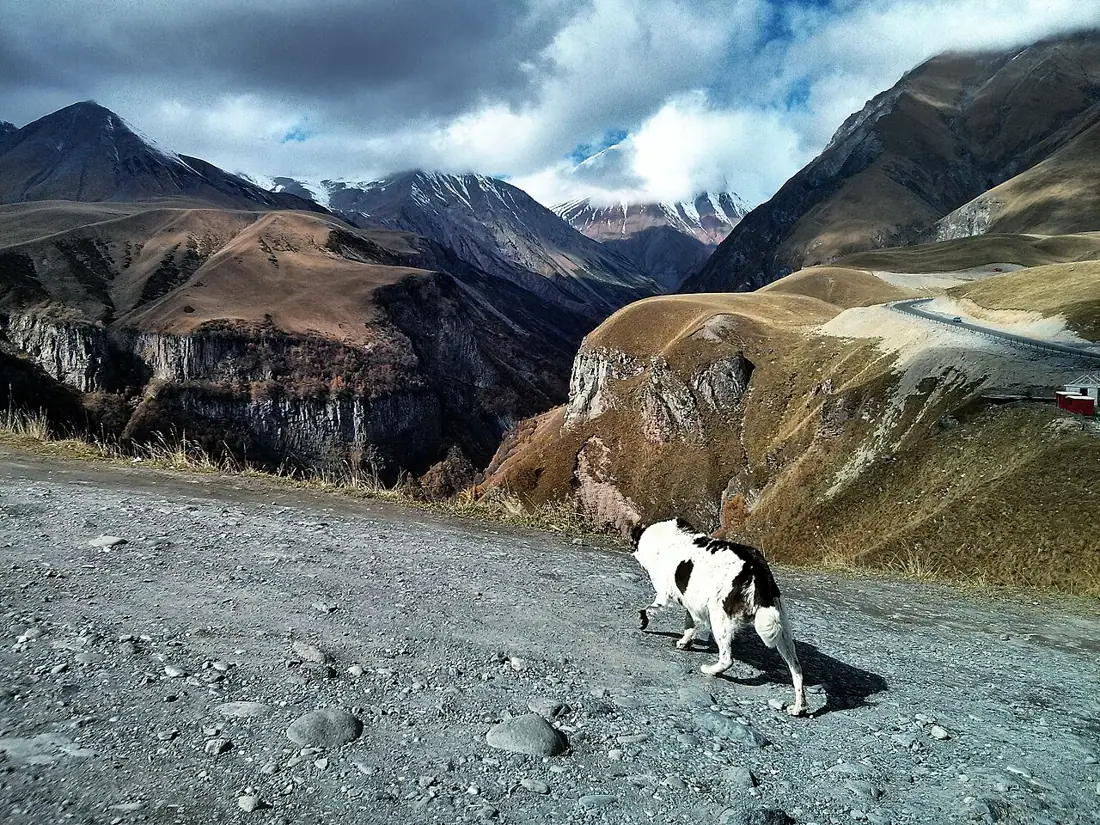
The high point of the Military Highway at 2,379 metres, with a 1983 mosaic rotunda hung over a sheer drop.
- Time needed
- 1 h
- From Tbilisi
- 125 km · 2:20
- Road
- Paved
- Car needed
- Economy class
- Season
- All year
- Entry
- free
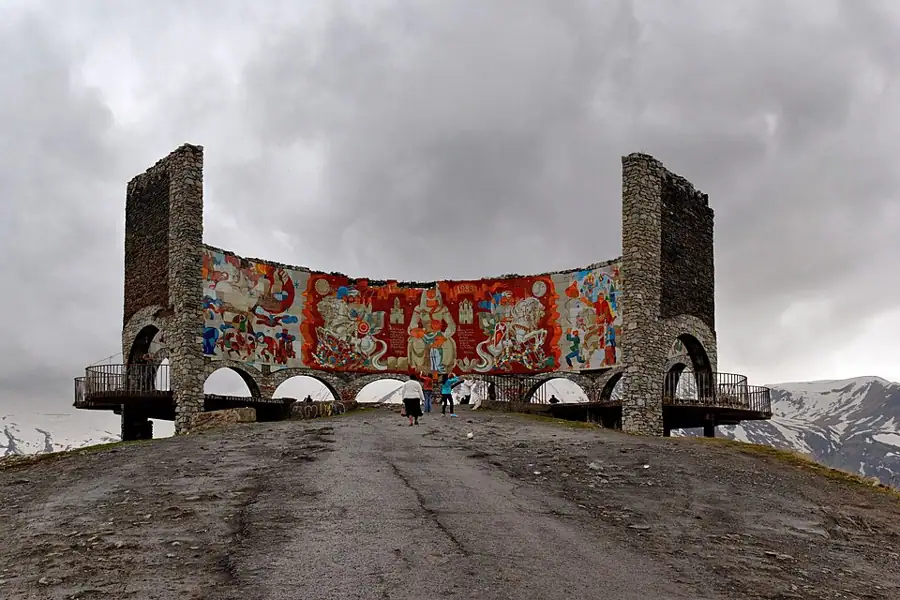
Seven kilometres above Gudauri the Military Highway reaches its top, and just below the summit stands the strangest structure on the road: a semicircular concrete terrace hanging over the edge of the Devil's Valley, its inner wall covered in a tiled mural.
The Russia–Georgia Friendship Monument was built in 1983 for the two-hundredth anniversary of the Treaty of Georgievsk, the 1783 agreement that placed the kingdom of Kartli-Kakheti under Russian protection. The mural, by a team of Tbilisi artists, runs the length of the curve in bright tile and shows scenes from the two countries' histories with quotations from Rustaveli and Pushkin. Politically the monument has aged badly and Georgians have complicated feelings about it; visually it works, because behind the parapet the ground falls several hundred metres straight into a green bowl of a valley.
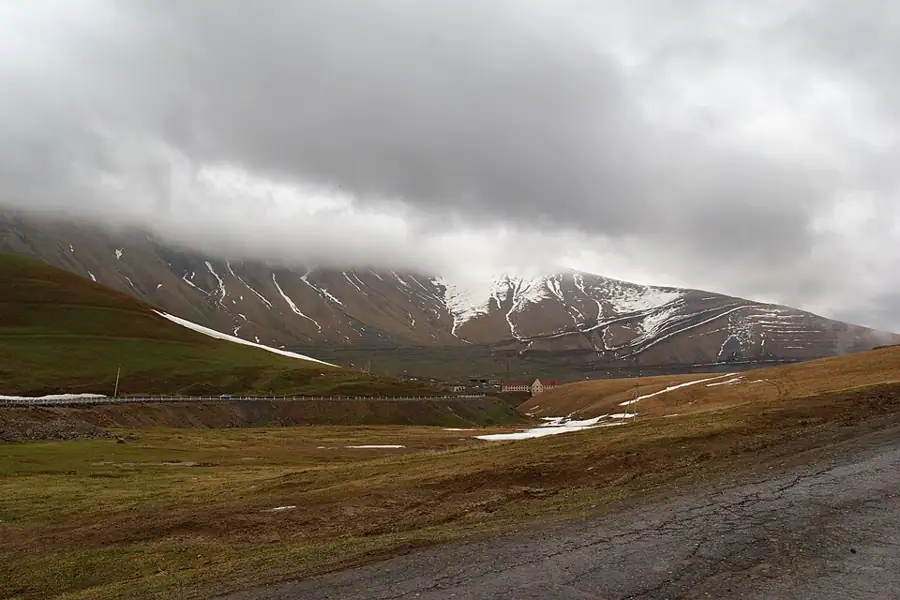
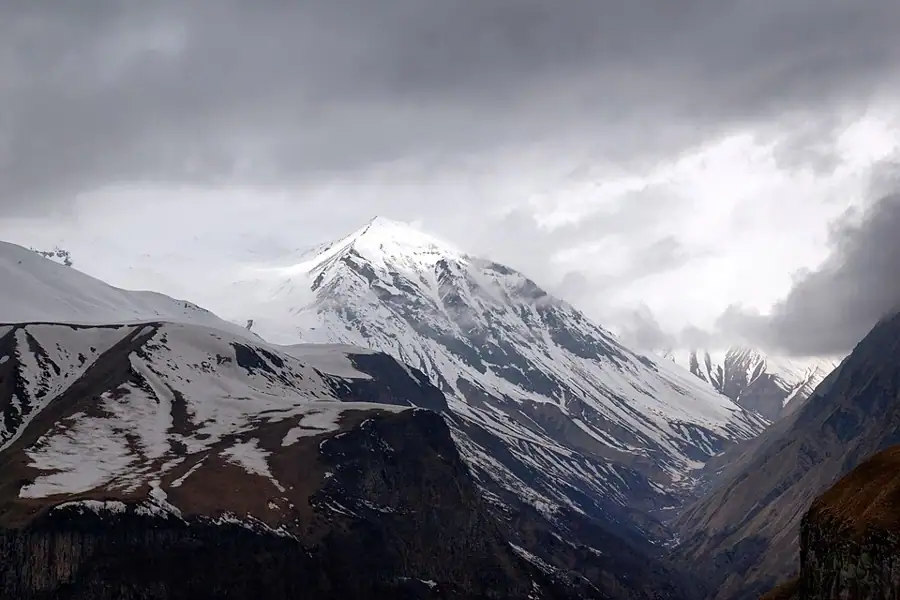
Jvari Pass itself, 2,379 metres, is a few kilometres further north and far less dramatic: a broad saddle with a marker, the watershed between the Aragvi running south and the Tergi running north. Around it stand the things that make the pass function — concrete avalanche galleries from the Soviet period, snow poles, and on the descent towards Kobi the travertine terraces and mineral springs, where iron-rich water has stained whole slopes orange.
This is the section of the Military Highway that closes. Between November and April the road over the pass is shut without warning in heavy snow, sometimes for hours, sometimes for two or three days, and lorries queue at Gudauri and Kobi. It is also where the weather changes: sun in Tbilisi, rain at Pasanauri and a whiteout here. A tunnel scheme now under construction is intended to bypass this stretch.
Gallery
Practical advice
Twenty minutes at the monument is enough, an hour if you also walk the ridge behind it. Some of the edges have no barrier and the ground is loose, so keep well back and keep children in hand. Bring a windproof jacket in any month; it can be fifteen degrees colder than Tbilisi and the wind is constant. Paragliders launch from beside the car park, and horses and souvenir vans wait for photographs. Toilets are basic and paid. In winter, check the road status before you leave Tbilisi.
How to get there from Tbilisi
The Georgian Military Highway (E117) runs from Tbilisi through Mtskheta, Ananuri, Pasanauri and Mleta, then climbs the switchbacks to Gudauri and on to the pass — 125 km, about two hours twenty in good conditions. The road is asphalt and wide enough, but the Mleta–Gudauri section is a sustained climb with heavy lorry traffic and no room to overtake. Fuel at Pasanauri and Gudauri. An economy car is fine from May to October; in winter you want winter tyres, chains in the boot and a willingness to turn around.
Click a marker for details. Coloured lines are ready-made road trips.
Nearby places
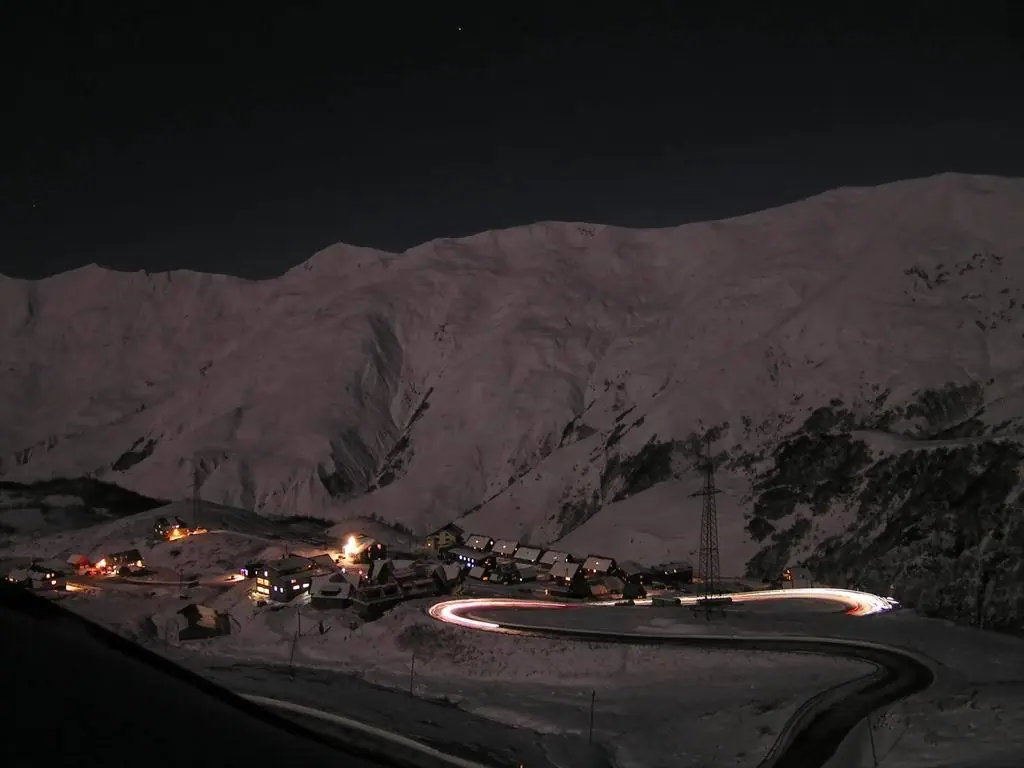 Ski area
Gudauri and the Russia–Georgia Friendship Monument
Georgia's main ski resort below the Jvari Pass, with a mosaic-lined monument and an enormous mountain panorama.
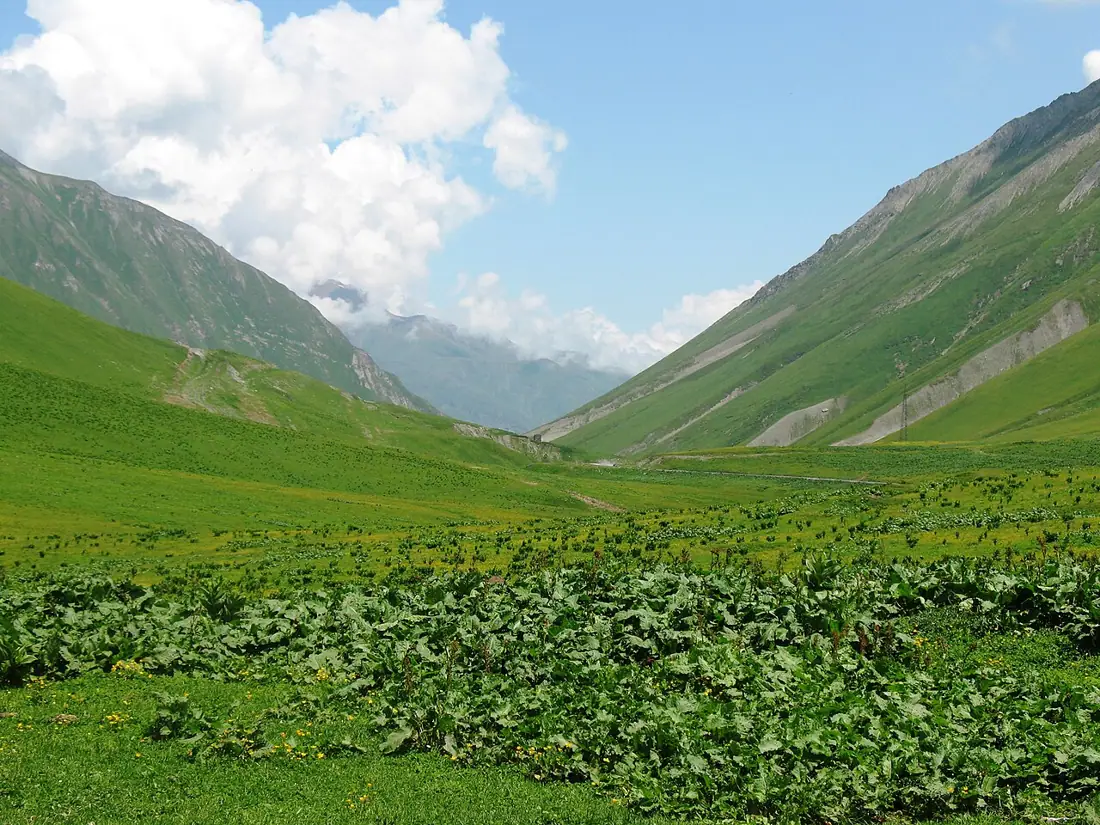 Mountain
Truso Valley
A wild valley of mineral springs, travertine terraces and abandoned towers south of Kazbegi.
 Mountain
Khada Valley
A side gorge of the Aragvi near Kvesheti holding some sixty medieval towers among small, nearly emptied villages.
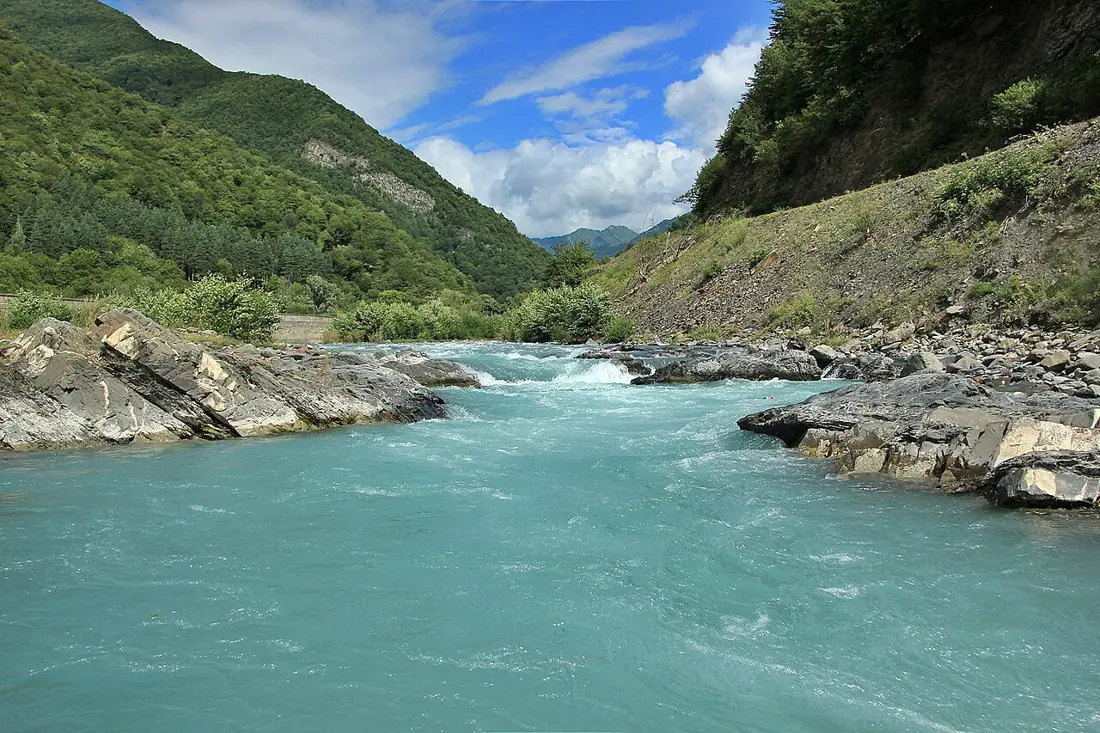 Town
TownPasanauri and the Aragvi Confluence
A village on the Military Highway where the Black and White Aragvi meet and run side by side without mixing.
Booking and enquiries
This site is informational — there is no online payment. Call or email us to book.