Glola
The last large village of Upper Racha, where the road splits towards Shovi in one direction and Ghebi in the other.
- Time needed
- 1.5 h
- From Tbilisi
- 386 km · 6:50
- Road
- Mostly paved
- Car needed
- Crossover / SUV
- Season
- June–September
- Entry
- free
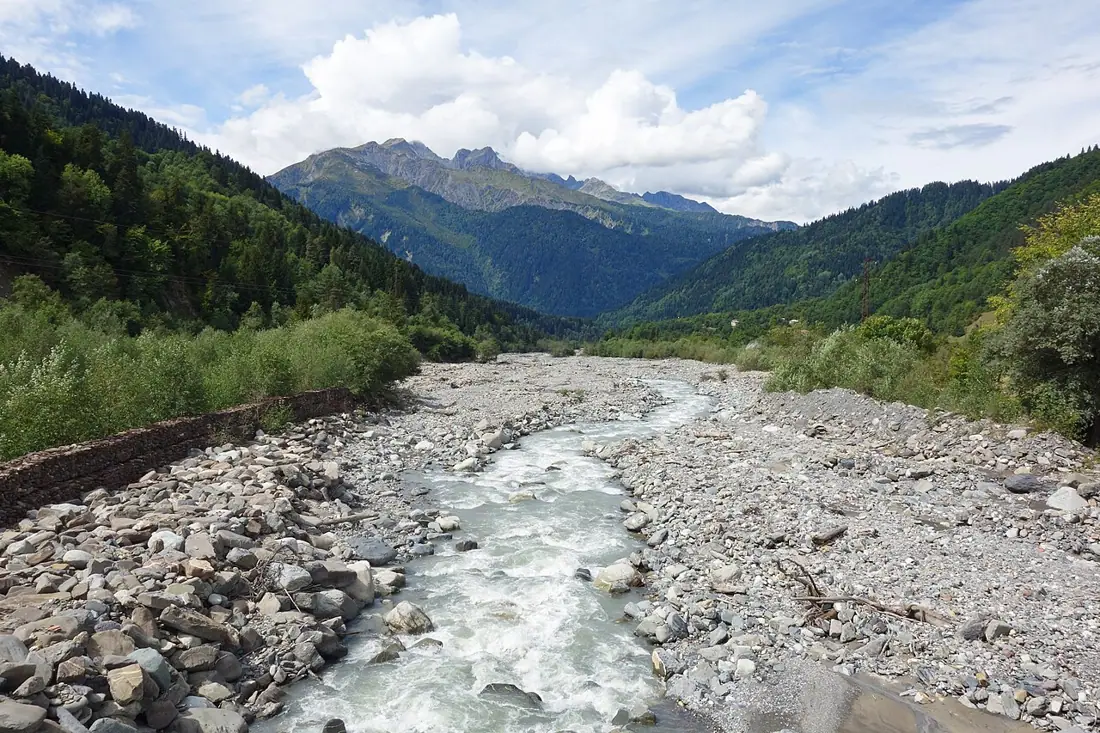
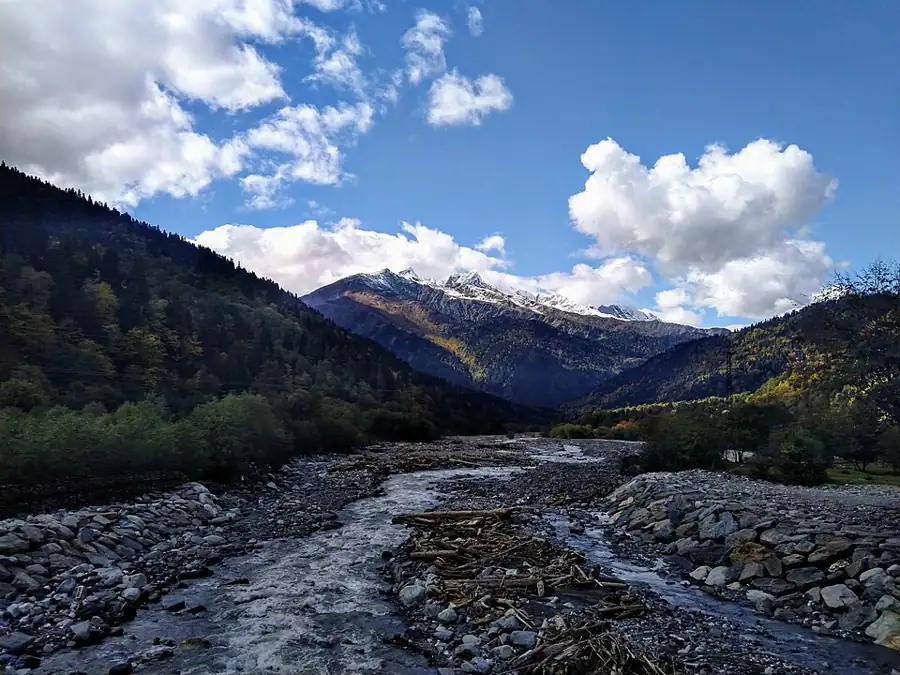
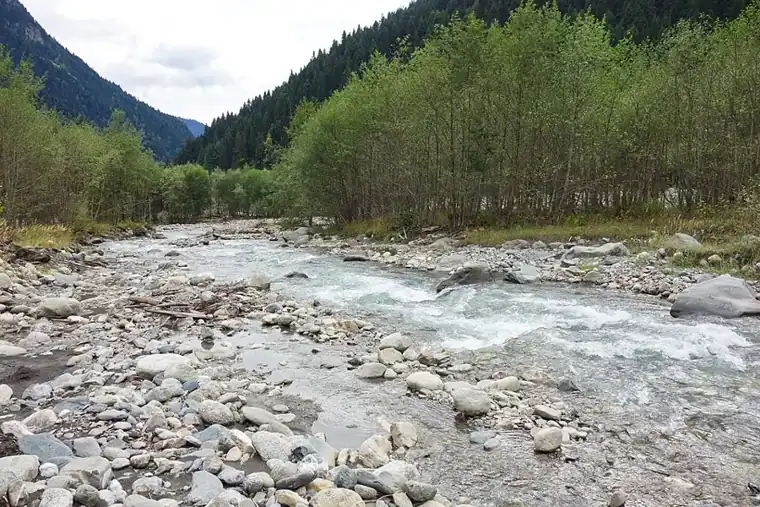
Glola is the point at which Upper Racha divides in two. The village stands at about 1,300 metres where the Chanchakhi valley joins the Rioni: one road continues up the Chanchakhi to Shovi, the other turns north-west along the upper Rioni to Chiora and Ghebi. Anyone going deeper into these mountains passes through here.
By Racha standards Glola is a big place — a few hundred people in summer, far fewer in winter. The houses are spread across the slope, stone at the base and timber above, with haystacks and walnut trees in the yards. The church stands above the village, and from there both arms of the valley are visible at once.
Glola has been hit twice. The 1991 earthquake destroyed a great many houses across Upper Racha and started an exodus that never reversed. Then on 3 August 2023 a debris flow came down the Shovi valley and did severe damage to the road and the infrastructure above the village. This is an active valley: mudflow and rockfall are a real risk here, not a theoretical one.
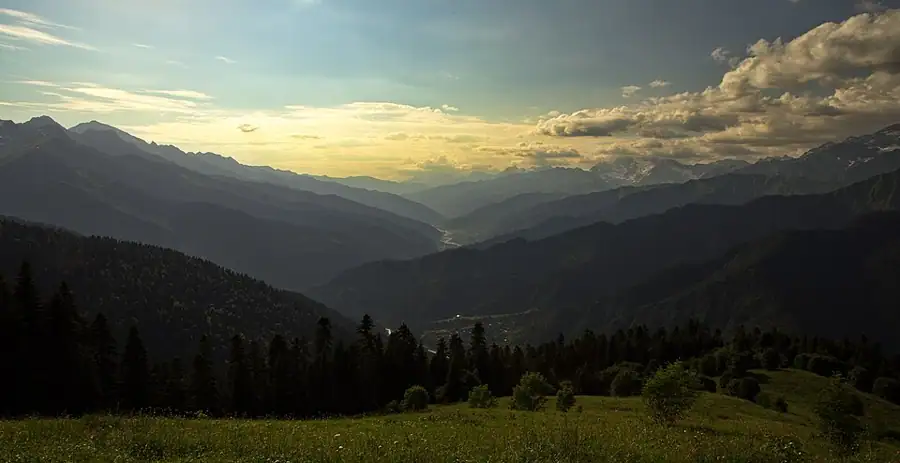
Despite that, Glola is a handsome and living place. Alpine meadows begin immediately above the houses, the Racha range closes the view to the south, and to the north the teeth of the Greater Caucasus main ridge appear on clear days. Trails lead from here towards the Shoda lakes and up the Chanchakhi.
The village has two or three family guesthouses and a small shop. Meals need to be arranged in advance. From June to September there are people about; after October it empties and the road gives way to snow.
One practical detail makes Glola matter: what divides here is not only the road but the season. The Shovi side opens from about the middle of June and stays passable into October; the Chiora and Ghebi arm opens later and closes earlier. Local people know the dates precisely, and none of it appears on any map — which is why stopping in the village and asking is more useful than trusting a navigation app.
Gallery
Practical advice
An hour or two covers Glola unless you are starting a hike. This is the last place with even a small shop — after it there is nothing until Ghebi. There is no ATM, no pharmacy and no fuel. Arrange a bed and meals at a guesthouse in advance; simply turning up is a gamble. Mobile coverage is patchy. After heavy rain the valley road can close temporarily because of slides, so ask locally about conditions before setting out.
How to get there from Tbilisi
From Oni head east up the Rioni through Utsera — about thirty kilometres, an hour. From Tbilisi the total is 386 km, roughly seven hours. Beyond Oni the asphalt is intermittent and in the last kilometres largely disappears: potholes, fallen stone, and narrow sections cut above the river. An SUV or crossover genuinely earns its keep here. The last reliable filling station is at Ambrolauri; the one in Oni works only sometimes. From November to May the road is often closed.
Click a marker for details. Coloured lines are ready-made road trips.
Nearby places
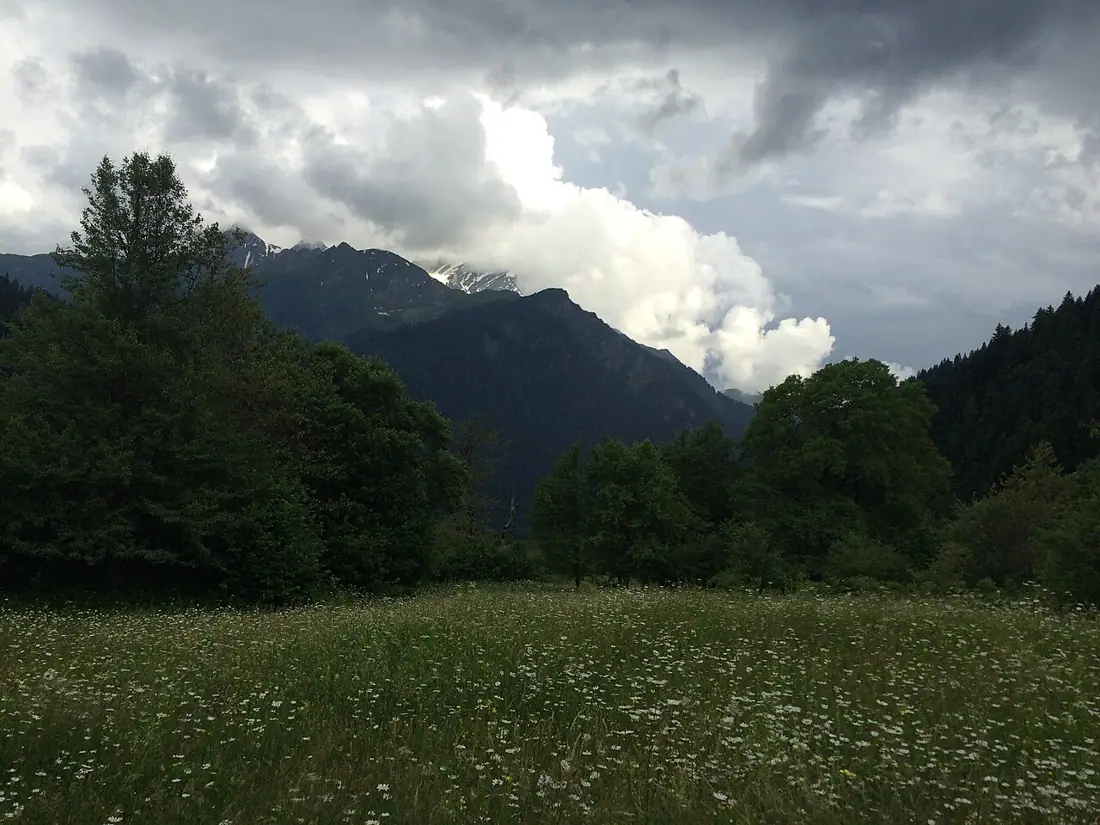 Mountain
Chiora
The village before Ghebi in the headwaters of the Rioni — a trailhead, and the start of an old crossing towards Lower Svaneti.
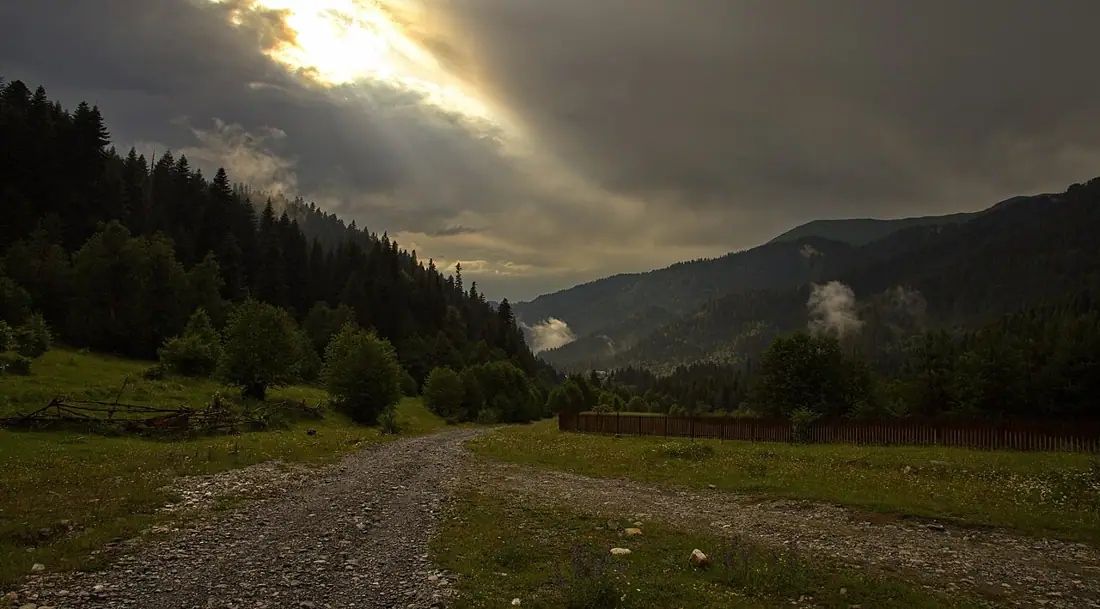 Mountain
Shovi Resort
A high mountain resort above Oni in the Chanchakhi valley — strictly seasonal and partly rebuilt after the 2023 disaster.
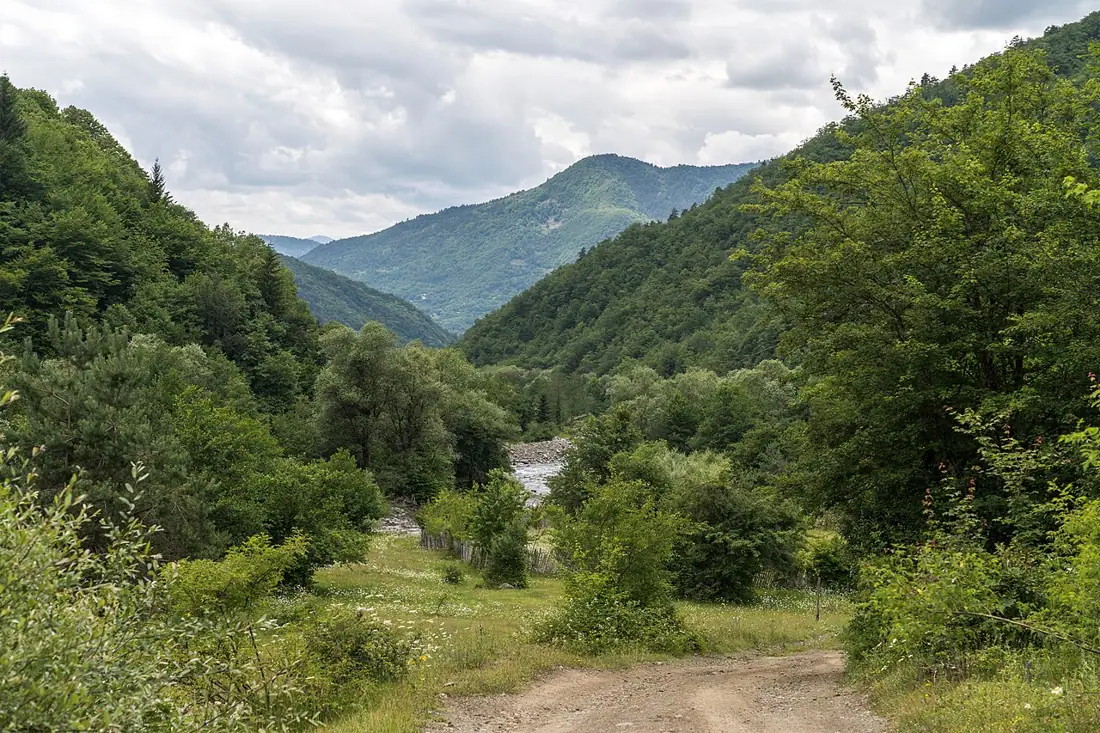 Spa resort
Utsera Mineral Springs
A village and small mineral-water spa in the Rioni valley between Oni and Shovi, just above 1,000 metres.
Booking and enquiries
This site is informational — there is no online payment. Call or email us to book.