Utsera Mineral Springs
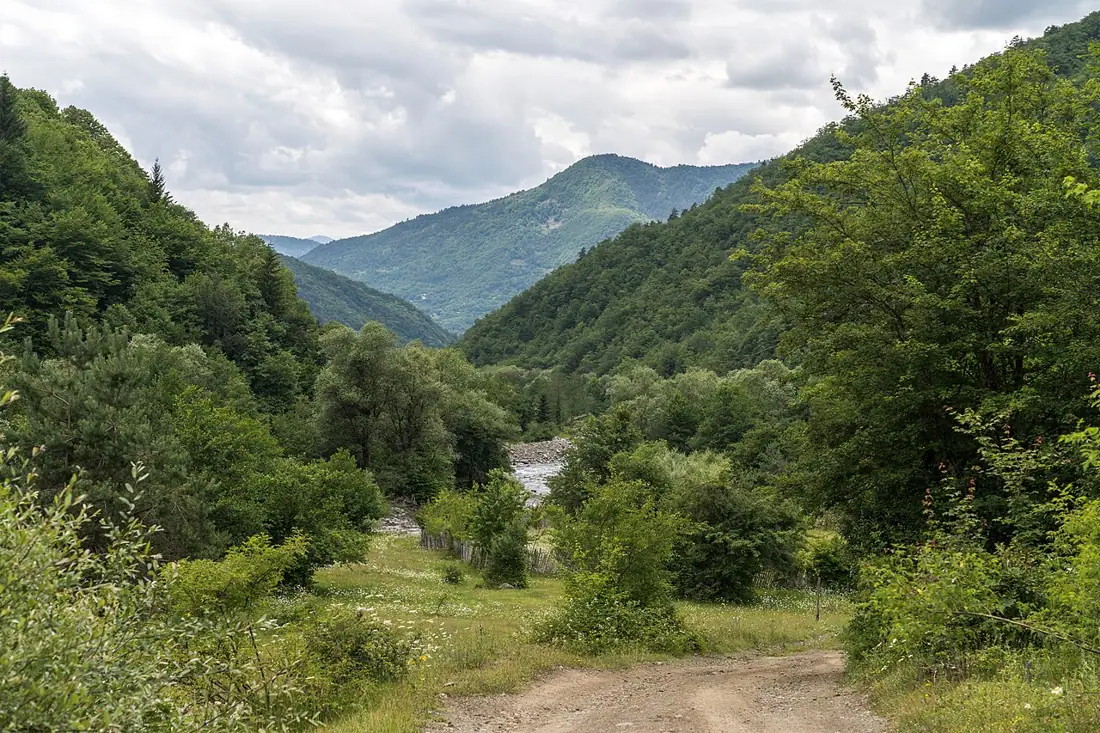
A village and small mineral-water spa in the Rioni valley between Oni and Shovi, just above 1,000 metres.
- Time needed
- 1.5 h
- From Tbilisi
- 370 km · 6:30
- Road
- Mostly paved
- Car needed
- Crossover / SUV
- Season
- May–October
- Entry
- free
Utsera is the place in Racha where the water comes fizzing out of the ground, and it is free. The village sits on the left bank of the Rioni about fifteen kilometres above Oni, at roughly 1,030 metres, on the road towards Shovi.
The water here is naturally carbonated, of the sodium-bicarbonate type, and has been used since the Soviet period for digestive complaints. Several outlets exist in the village — pipes and simple catchments from which water runs continuously. The taste is salty and faintly metallic; it comes out cold and so heavily gassed that a bottle foams for the first minute. People pull up here with plastic canisters and fill the boot of the car.
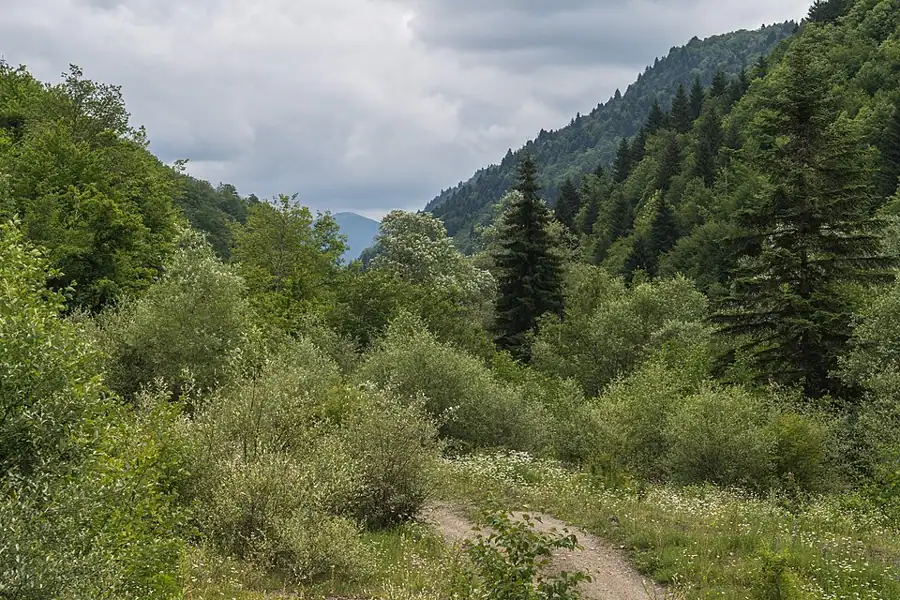
Utsera was formalised as a resort in the 1930s. Part of the sanatorium still functions and part stands abandoned, which is an ordinary sight in Racha. Around it is mixed conifer and broadleaf forest, the air cool and dry, and the valley noticeably tighter here, with the slopes of the Racha range rising to the north.
The village is small and the services minimal: two or three guesthouses, a small shop, a few seasonal stalls in summer. There is effectively no cafe, and no ATM.
Utsera is not worth a journey in itself, but on the way up to Shovi or Ghebi it is a logical and pleasant stop — half an hour at the spring, a walk under the pines, then on up the valley.
Utsera is not the only spring in this valley. Carbonated outlets follow one another in a chain along the upper Rioni — Shovi has its own, so does Sori. They mark the line of the deep Racha fault, where carbon dioxide rises into the groundwater and reaches the surface already gassed. Below the village, by the river, traces of the old bottling works survive. Within the sanatorium grounds a few paths run through the pines and make a good half hour, and to the north the outline of the Shoda-Kedela ridge shows above the trees.
Gallery
Practical advice
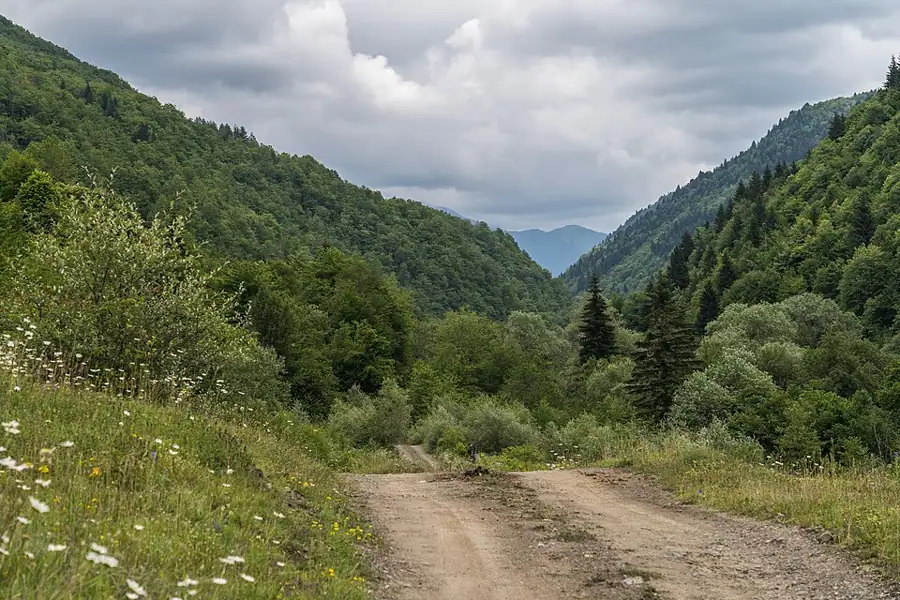
An hour or two is ample. Bring a bottle or canister: the water is free, but containers are not sold on site. Be aware that heavily mineralised carbonated water in quantity does not suit everyone. The paths down to the outlets are unsurfaced and muddy after rain. Toilets exist only within the sanatorium grounds. Plan food in advance — there is no proper eating place beyond Oni. Between November and April the road may be closed entirely.
How to get there from Tbilisi
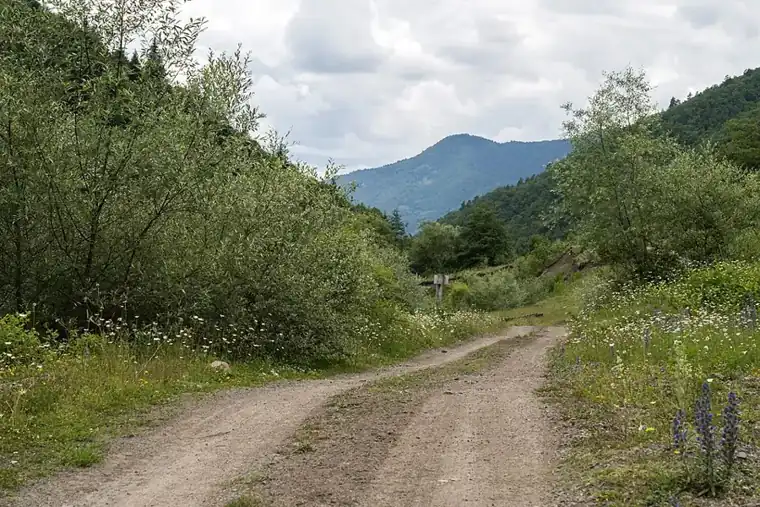
From Oni head east up the Rioni valley towards Shovi — about fifteen kilometres, twenty minutes. From Tbilisi the total is 370 km via Kutaisi, the Nakerala pass, Ambrolauri and Oni, roughly six and a half hours. Beyond Oni the asphalt is intermittent: good in stretches, completely broken in others, with potholes and fallen stone. A crossover or SUV makes a substantial difference to comfort. Take fuel for the last time at Ambrolauri. In winter snow closes this section.
Click a marker for details. Coloured lines are ready-made road trips.
Nearby places
 Town
TownOni
The main town of Upper Racha, on the Rioni at 830 metres — damaged by the 1991 earthquake and only half rebuilt.
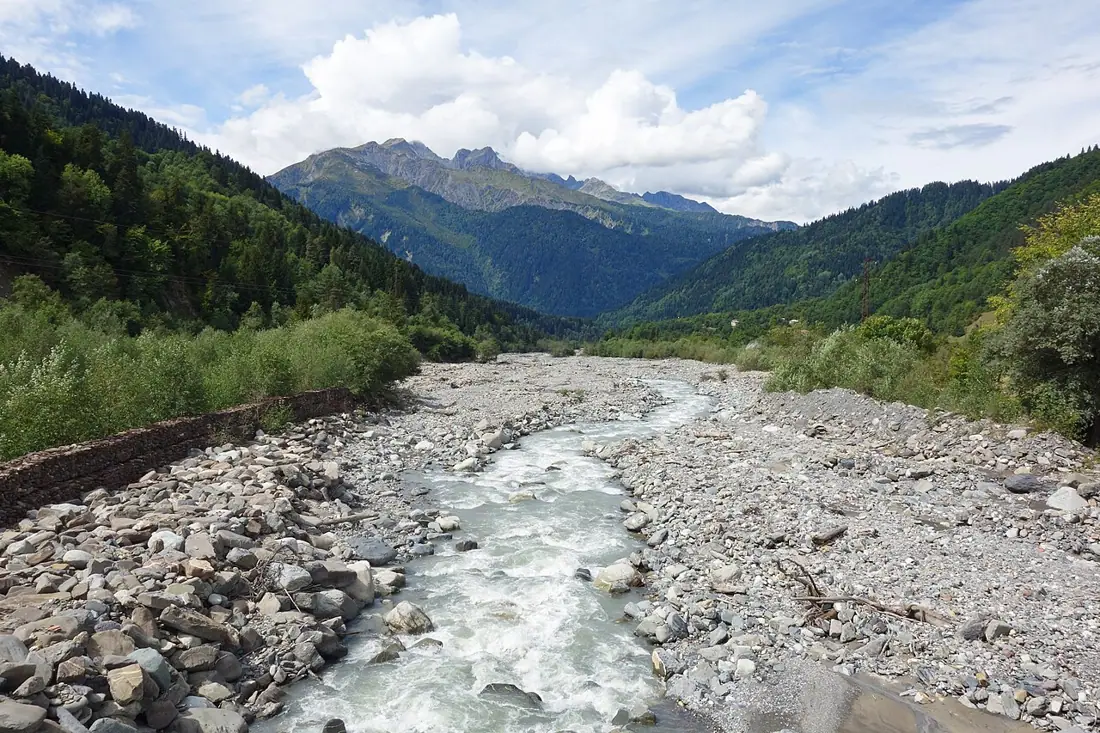 Mountain
Glola
The last large village of Upper Racha, where the road splits towards Shovi in one direction and Ghebi in the other.
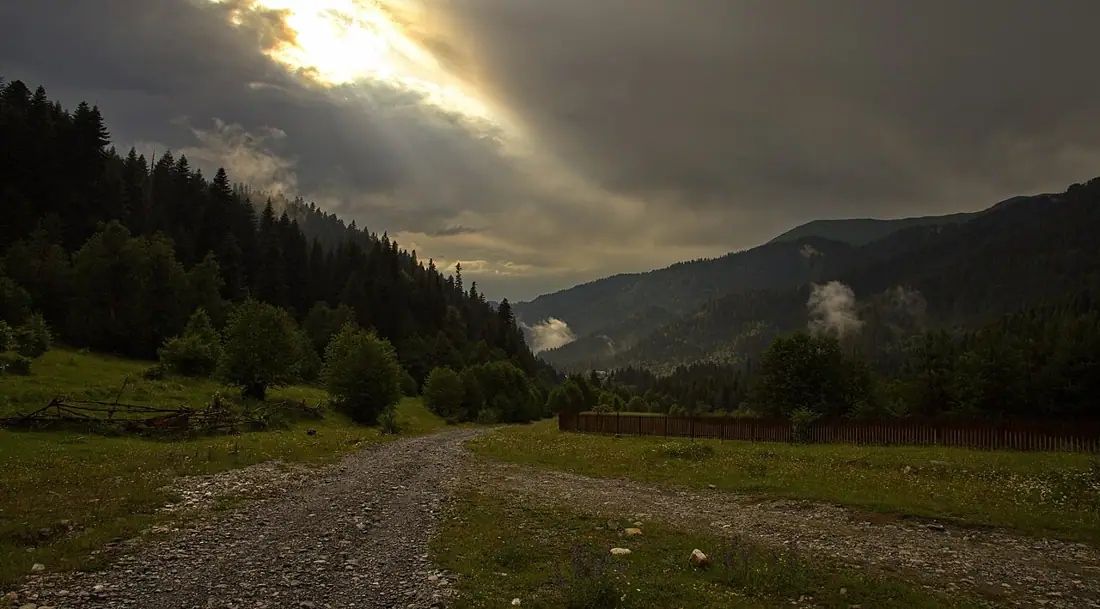 Mountain
Shovi Resort
A high mountain resort above Oni in the Chanchakhi valley — strictly seasonal and partly rebuilt after the 2023 disaster.
Booking and enquiries
This site is informational — there is no online payment. Call or email us to book.