Ajameti Managed Reserve
A relict oak and zelkova forest between Baghdati and Zestaponi, protected since 1935.
- Time needed
- 2 h
- From Tbilisi
- 205 km · 3:00
- Road
- Paved
- Car needed
- Economy class
- Season
- All year
- Entry
- free
Ajameti is a remnant of the forest that once covered the whole Colchic lowland. The reserve lies in Baghdati and Zestaponi municipalities, some fifteen kilometres from Kutaisi, between the Kvirila and the Khanistskali, both left tributaries of the Rioni.
Protection began in 1935. The Vartsikhe massif was added in 1946 specifically to preserve two Tertiary relicts:
-
the Imeretian oak, on the Red List of Georgia and surviving in the wild essentially only on this lowland
-
the Caucasian zelkova, a slow-growing tree with exceptionally hard timber, whose large stands have almost vanished from the Caucasus
The forest covers close to five thousand hectares. Around sixty woody species have been recorded, with an understorey of rhododendron, medlar, sweetbriar and hawthorn. Pastukhov's ivy, Colchic hazel and wingnut are also on the Red List.
The fauna is typical lowland: roe deer, fox, pine marten, badger, squirrel and dormouse. More than sixty bird species have been logged, though only twenty-one nest here — the rest are passing through or wintering. Bats and the Caucasian otter are separately protected.
What you actually see: flat, shaded woodland with a marked trail, some very thick oak trunks, and complete silence. There is no waterfall, no cliff and no panorama; this is a botanical site rather than a scenic one. In spring the understorey flowers, and in autumn the oak and zelkova colour unusually well.
Why a forest of oaks deserves a reserve takes some explaining. The Colchic lowland was once covered in exactly this kind of woodland; nearly all of it was cleared for farming, drained, or cut for timber during the 19th and 20th centuries, and Ajameti is the largest block left. The Imeretian oak is not simply a local form but a distinct subspecies with a very small world range. Zelkova timber, meanwhile, was so prized for tools and building that the tree was cut out of most of its historical territory.
Practical advice
Two hours on the trail is enough. The earth paths are level but hold mud for a long time after rain, so waterproof shoes help. In summer there are ticks and mosquitoes: long trousers, closed shoes and repellent. The shade makes it comfortable even in heat. There is a toilet and an information board at the entrance but no cafe, so bring food and water. Do not wander off the trail — the forest is uniform and there are few landmarks.
How to get there from Tbilisi
Take the E60 west from Tbilisi to Zestaponi, then follow signs towards Baghdati — about 205 km in all, three hours. The reserve entrance is a few kilometres off the main road, on the way to the village of Dimi, and is marked with the boards of the Agency of Protected Areas. The road is asphalt throughout, narrowing on the last stretch. Refuel in Zestaponi or Baghdati. Parking at the entrance is free. An economy car is sufficient.
Click a marker for details. Coloured lines are ready-made road trips.
Nearby places
 Museum
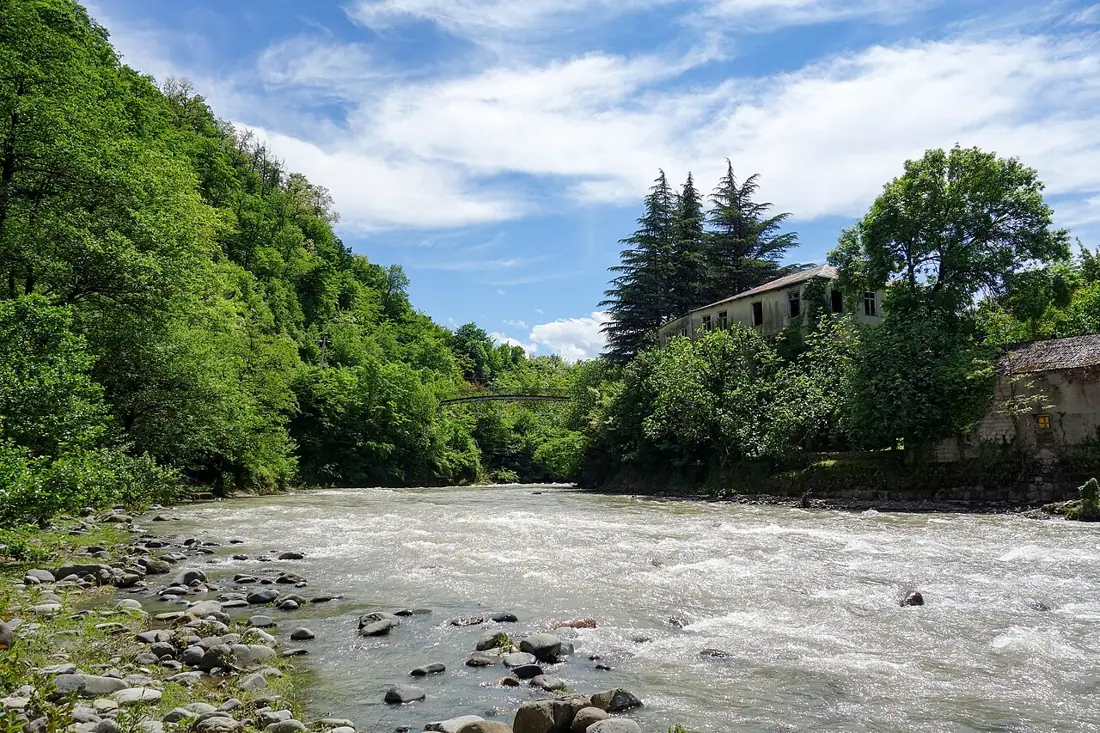
Baghdati — Mayakovsky House-Museum
The birthplace of the poet Vladimir Mayakovsky, in a small Imeretian town on the Khanistsqali.
 Museum
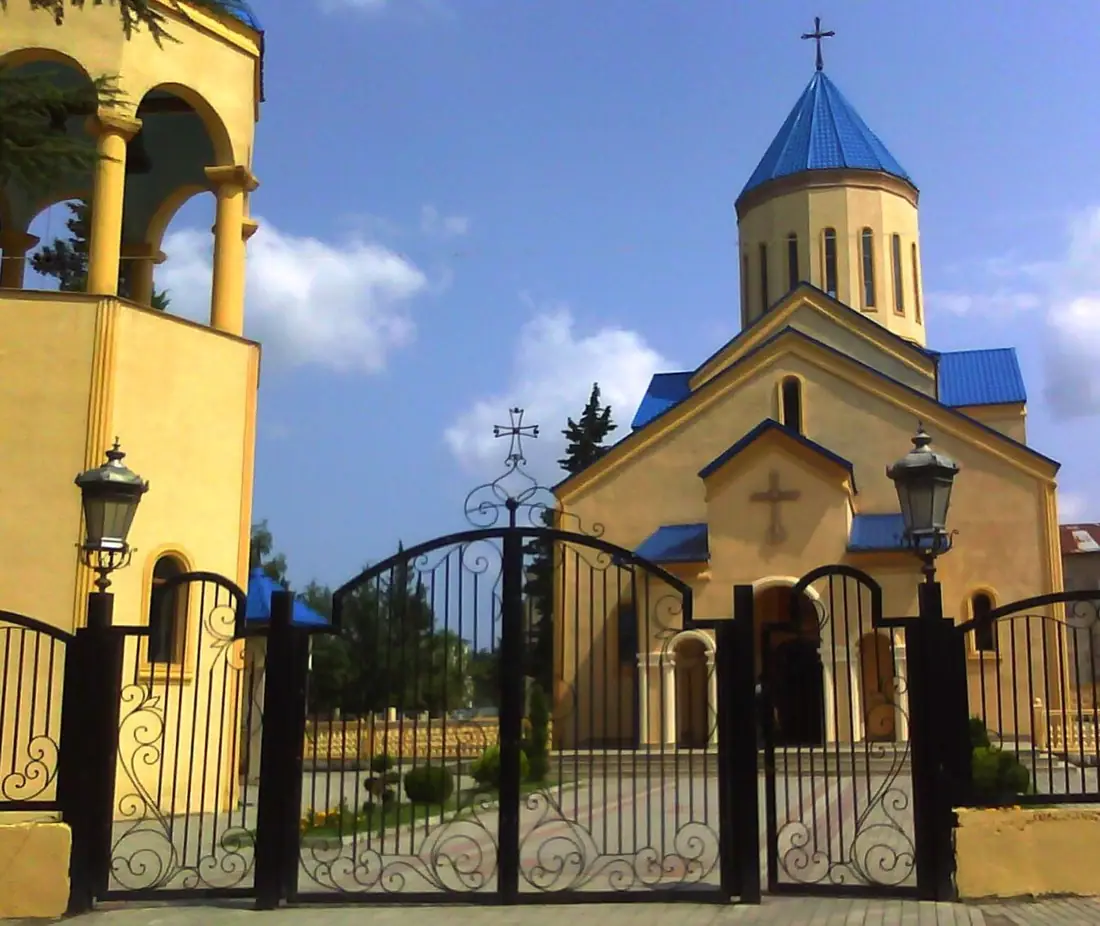
Vani Archaeological Museum
The remains of a Colchian city on a hill, and a museum holding gold made between the 4th and 1st centuries BC.
 Fortress
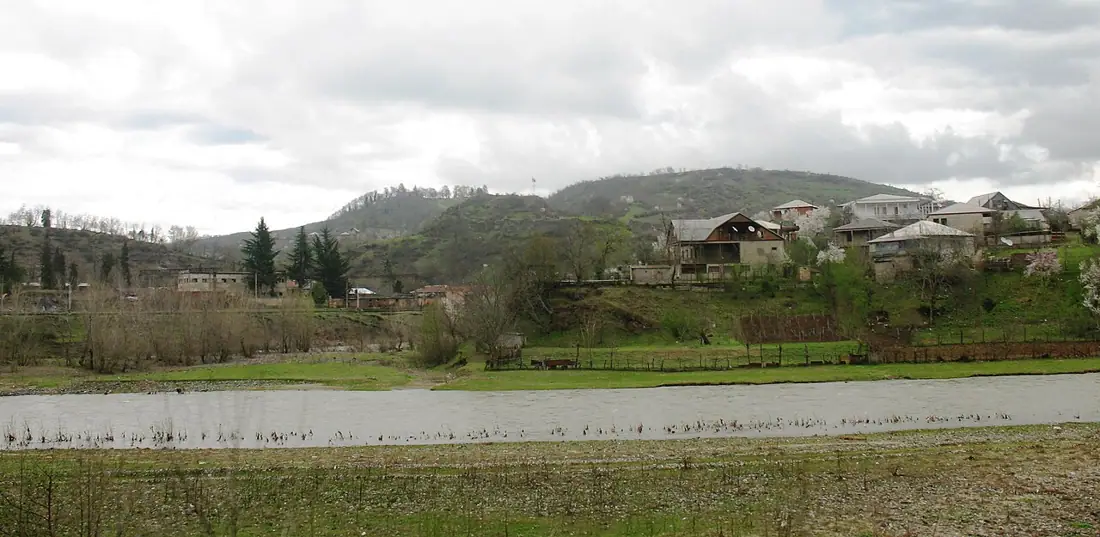
Shorapani Fortress
The ruins of a fortress on the site of ancient Sarapana, at the meeting of the Dzirula and the Kvirila.