
Zestafoni
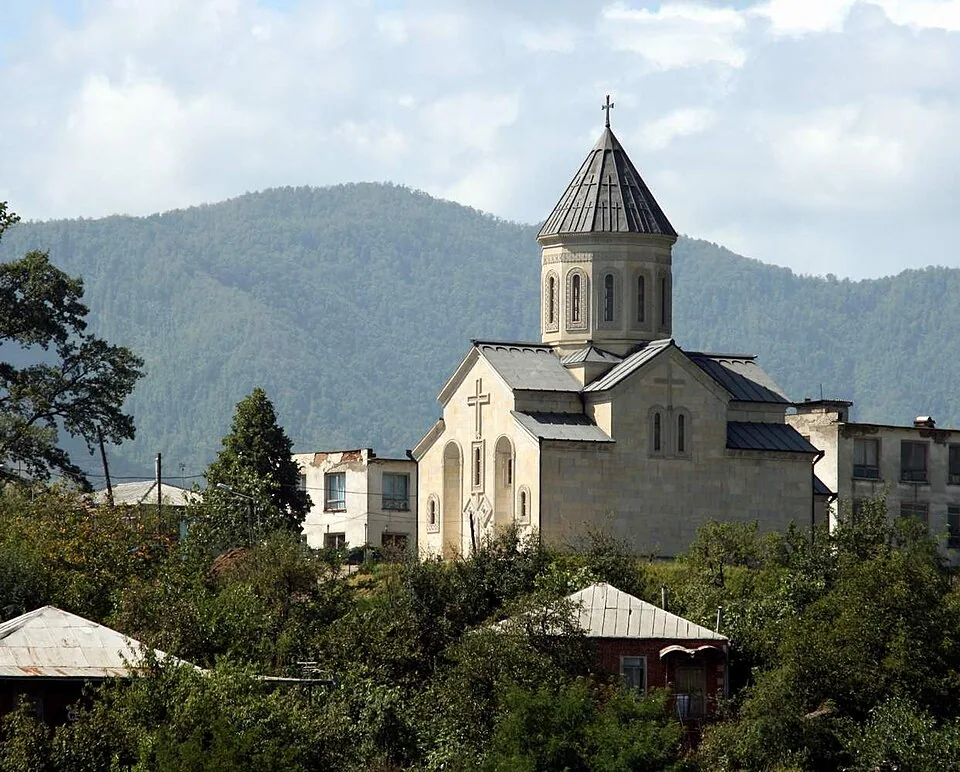
A Kvirila river town of manganese furnaces and Tsolikouri vines — the natural pause on the E60, with a loud market and Shorapani fortress next door.
- Time needed
- 1.5 h
- From Tbilisi
- 190 km · 2:30
- Road
- Paved
- Car needed
- Economy class
- Season
- All year
- Entry
- free
Most drivers know Zestafoni only as a blur of factory chimneys and vineyards between the Rikoti tunnel and Kutaisi — and they are the poorer for it.
The town straddles the Kvirila, and its name explains why it is here at all: zeda poni, the upper ford — the crossing the town grew up around. Written records mention it from the 1560s. In the 1820s it went by the name of the river itself, Kvirila; in 1920 it was renamed Jugeli, and a year later it took back its old name. Some 20,000 people live here today.
Zestafoni lives by two trades, and you sense both from the road. Since 1933 the ferroalloy works has smelted manganese ore brought down from Chiatura, and its stacks still draw the town's skyline, even after production was halted for about six months from October 2024. The second trade is older and gentler. This is the home ground of Tsolikouri and Tsitska, the white grapes of Imereti, and the nearby village of Sviri gives its name to one of Georgia's protected wine appellations.
Three reasons to leave the motorway:
- The market, where wheels of Imeretian cheese sit beside heaps of herbs and village wine in second-hand bottles
- A family cellar out towards Sviri — call ahead, and expect a kitchen table rather than a tasting room
- Shorapani fortress, four kilometres away where the Dzirula meets the Kvirila — the Sarapana of Strabo
The novelist Boris Akunin was born here in 1956 as Grigori Chkhartishvili. Give Zestafoni an hour — a wedge of cheese, a glass of cold Tsolikouri, the Kvirila hurrying under the bridge — and the chimneys start to look like part of the landscape rather than a reason to drive on.
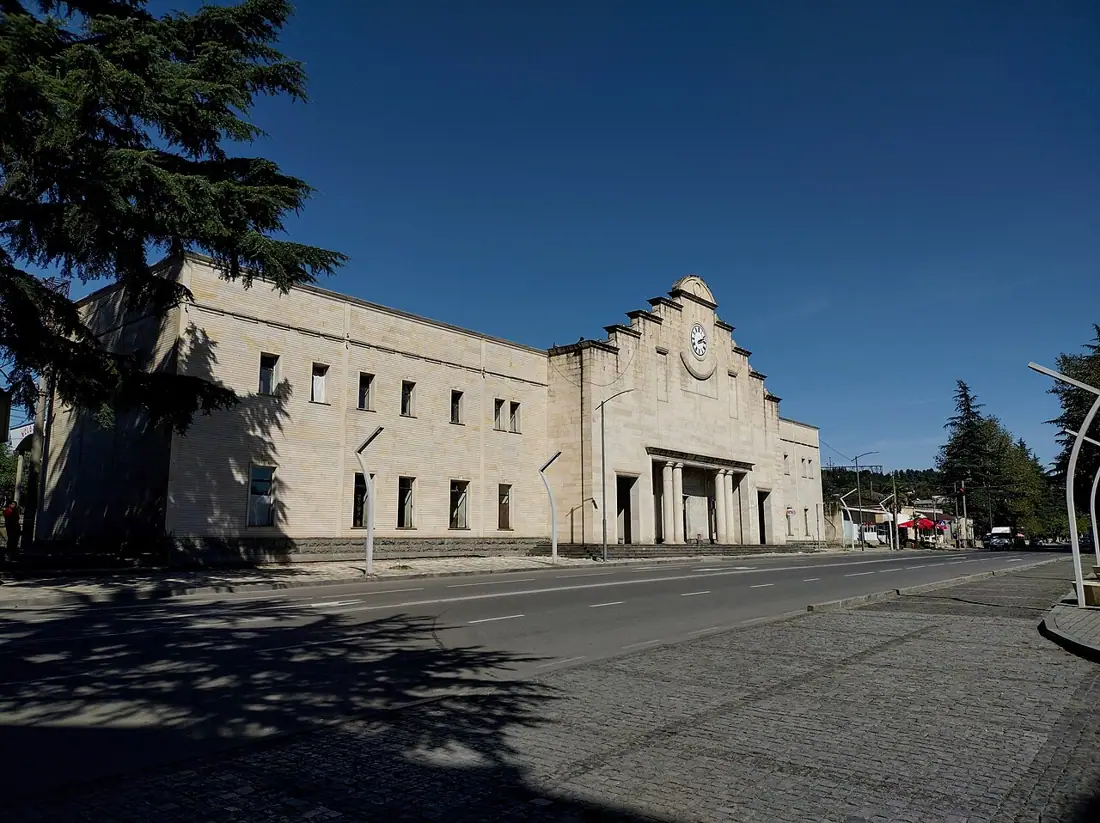
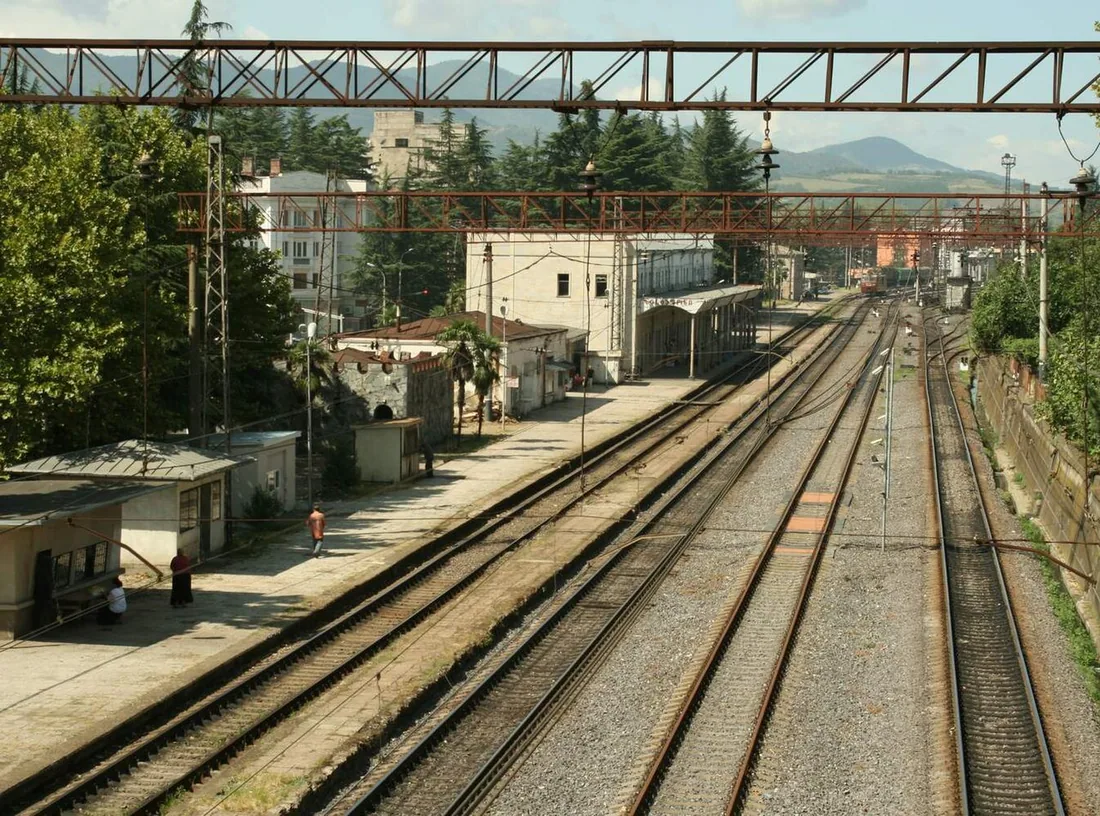
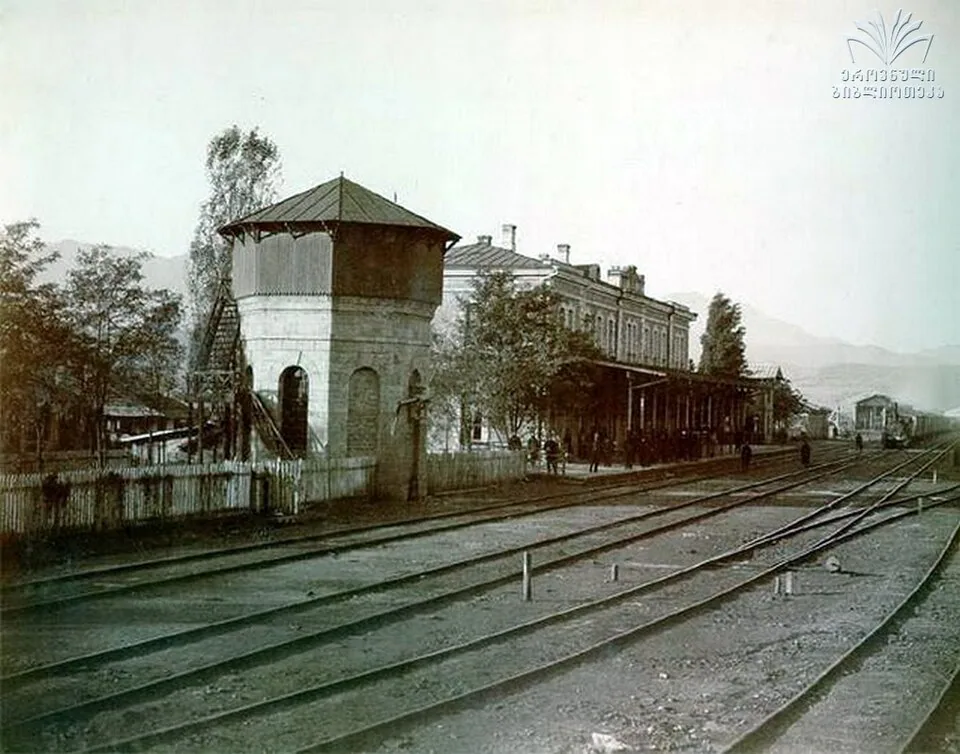
Gallery
Practical advice
The market opens early and is at its busiest before noon; by late afternoon the stalls thin out. Family wineries keep no opening hours, so ask your guesthouse or a local contact to arrange a visit a day ahead — and if you taste, let someone else drive, because Georgia's drink-driving limit is very low. The centre is congested and parking is a scramble: leave the car in the first free space near the market and walk. The town has ATMs, pharmacies and simple canteens; for a comfortable night, Kutaisi is about forty minutes further west.
How to get there from Tbilisi
From Tbilisi follow the S1 (E60) west past Gori and Khashuri, through the Rikoti tunnel and down the Dzirula gorge, then leave the motorway for Zestafoni — about 190 km, roughly two and a half hours. It is asphalt all the way, and much of it is now modern motorway, though works around the Rikoti section can still slow things down. Fuel is plentiful in Khashuri and in Zestafoni itself. An economy car is all you need in any season; in winter, check the Rikoti forecast before you set off.
Click a marker for details. Coloured lines are ready-made road trips.
Nearby places
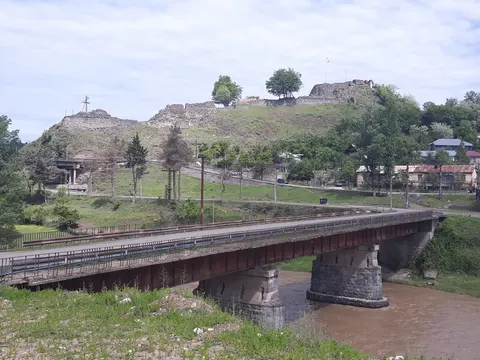
Shorapani Fortress
Strabo’s Sarapana: a hilltop fort over the Dzirula–Kvirila confluence, where the river road ended and the land road began.
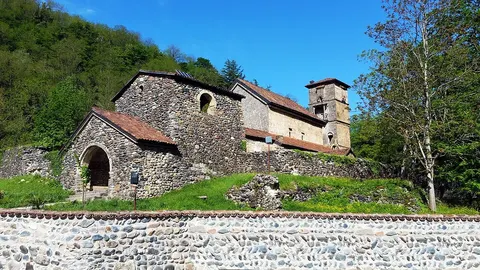
Ubisa Monastery
A 9th-century monastery in the Dzirula valley, with 14th-century frescoes and a tower-house of 1141 built by the kingdom's grand chancellor.
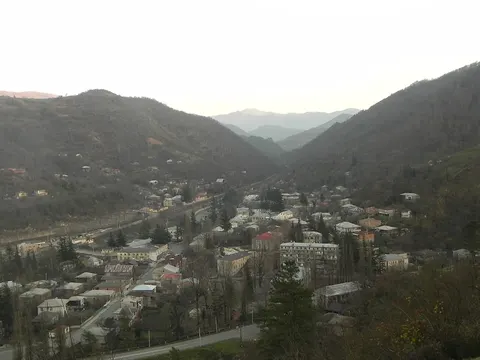
Kharagauli
A railway town in the deep Chkherimela gorge and the western doorstep of Borjomi-Kharagauli National Park — the beech forest begins where the platform ends.
Best car for this trip
Guides
- Driving in Georgia: What the Distances Actually Cost You Georgia is a small country with slow roads. Here is what 267 measured drives from Tbilisi say about how long y
Pickup locations
Car Rental in Kutaisi — 33 km (straight line)