
Ubisa Monastery
A 9th-century monastery in the Dzirula valley, with 14th-century frescoes and a tower-house of 1141 built by the kingdom's grand chancellor.
- Time needed
- 1 h
- From Tbilisi
- 170 km · 2:30
- Road
- Paved
- Car needed
- Economy class
- Season
- All year
- Entry
- free
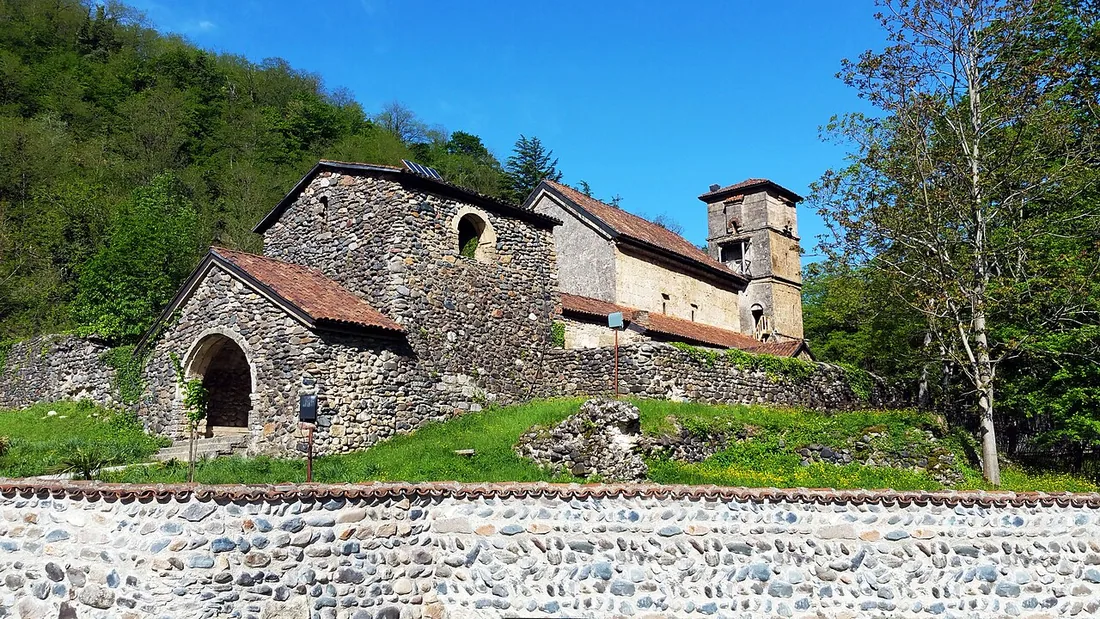
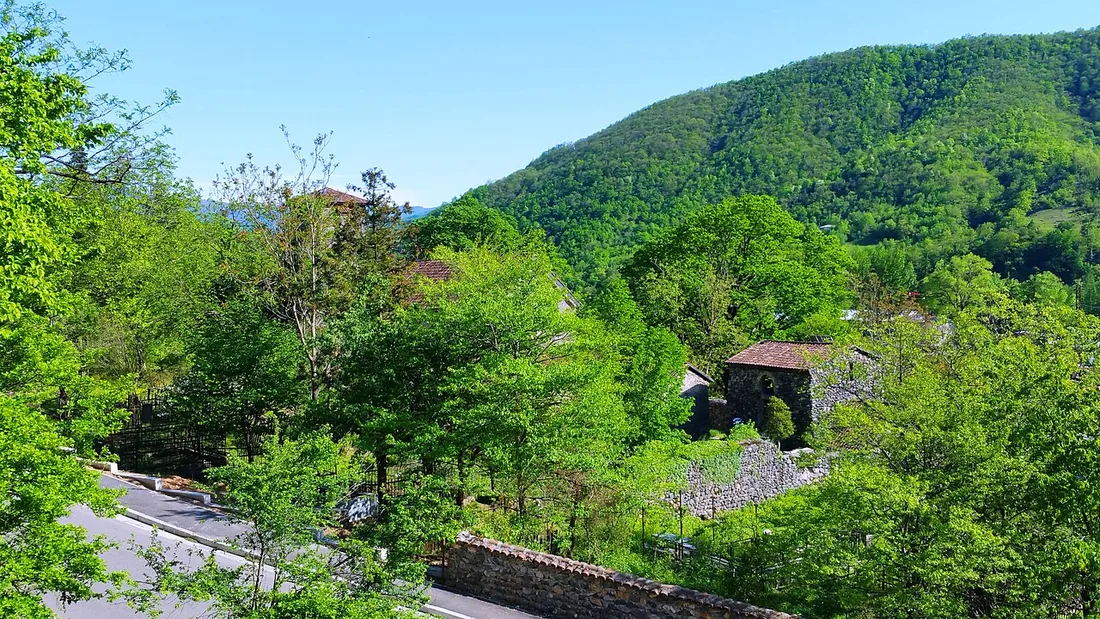
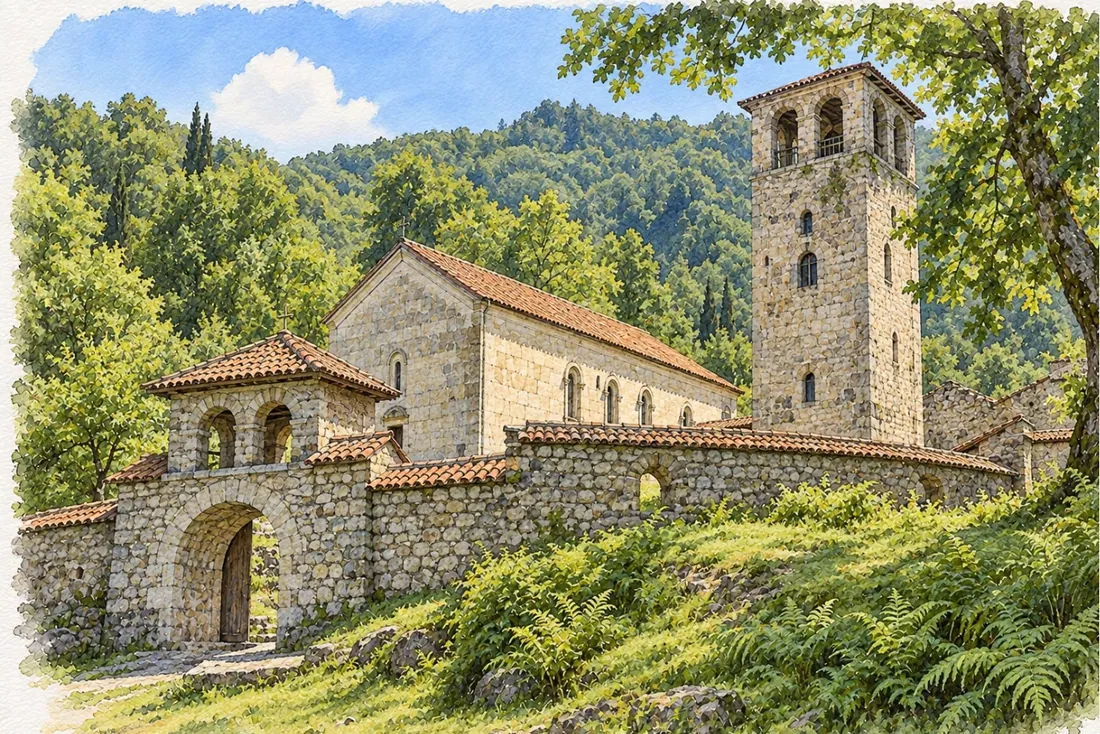
In 1141 one of the most powerful men in Georgia built himself a four-storey stone tower here, with a fireplace, a latrine and deep niches for his books.
He was Simon Chkondideli. From the time of David the Builder, the bishop of Chkondidi usually also served as grand chancellor, second only to the king, and Simon's inscription on the tower dates it to the reign of David's son, Demetre I. The tower survives almost unaltered: a storeroom at the bottom, a living room with its hearth above, a room for prayer and work higher still, and a defensive storey on top. Scholars believe Simon spent his last years in it.
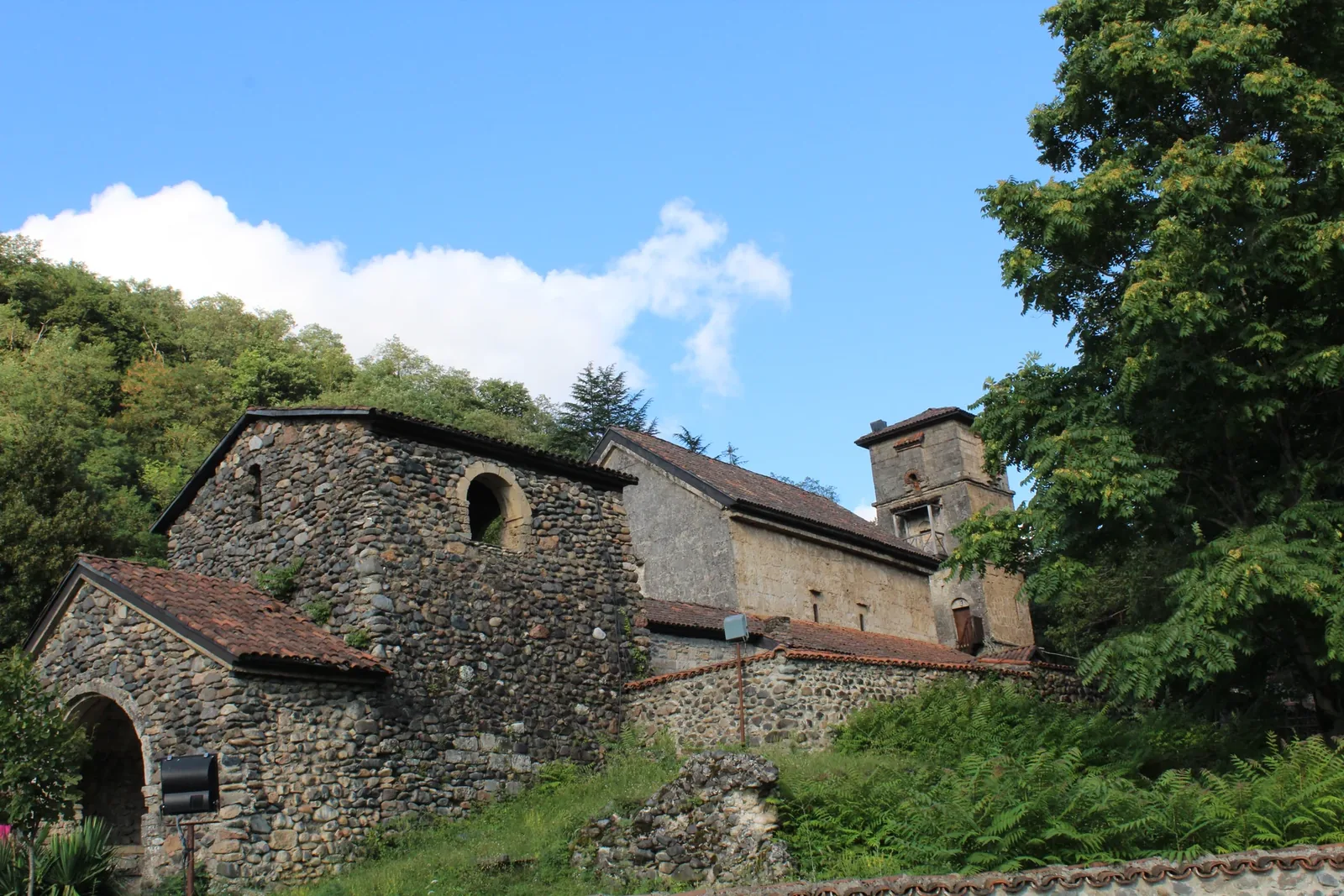
The monastery is three centuries older. Grigol Khandzteli and his disciples founded it in the 9th century, and his biographer Giorgi Merchule records that Grigol named it Ube and set an old man from Jerusalem, Ilarion, over it as abbot. Folk verse later credited Queen Tamar with finishing the church; that is tradition, not chronicle.
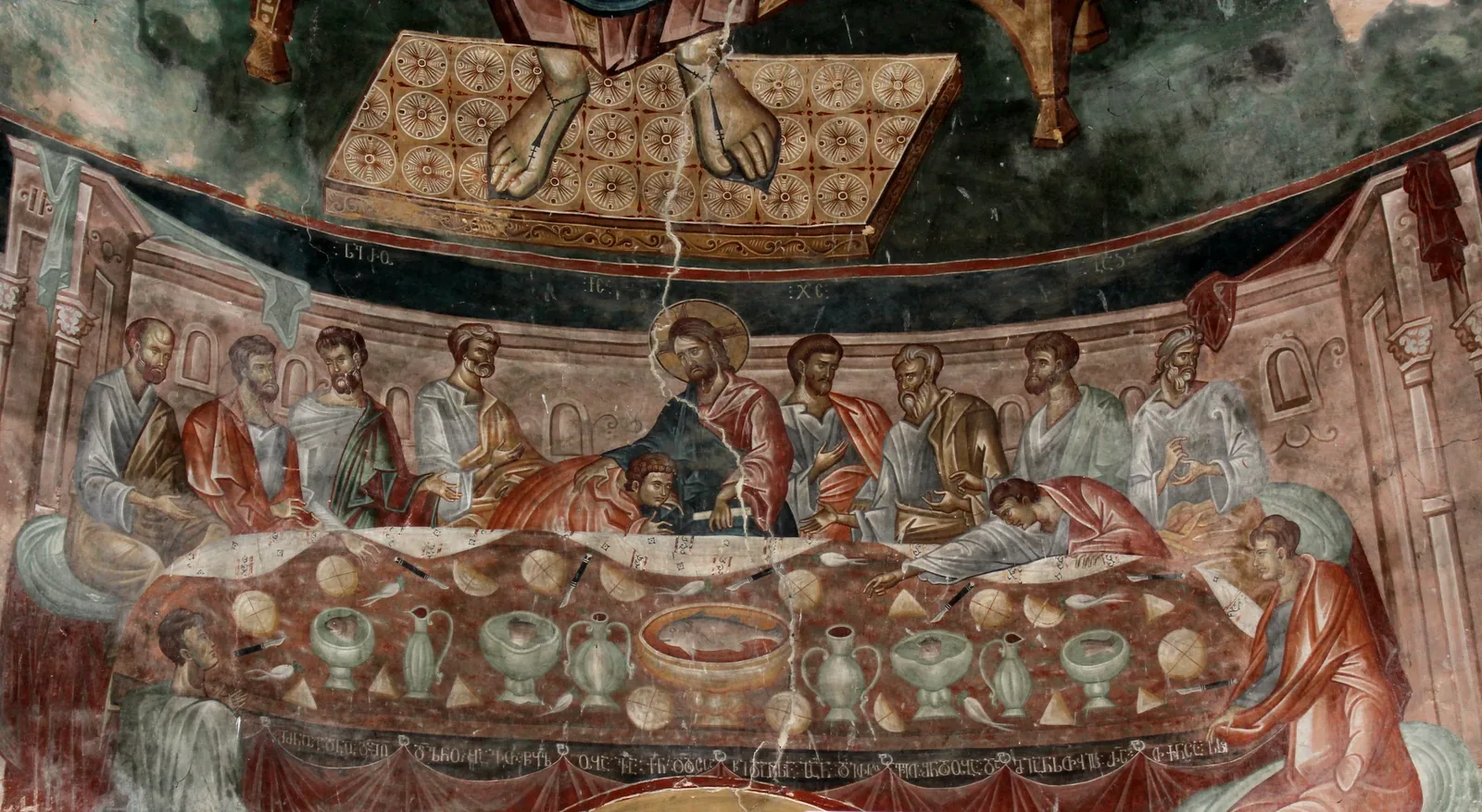
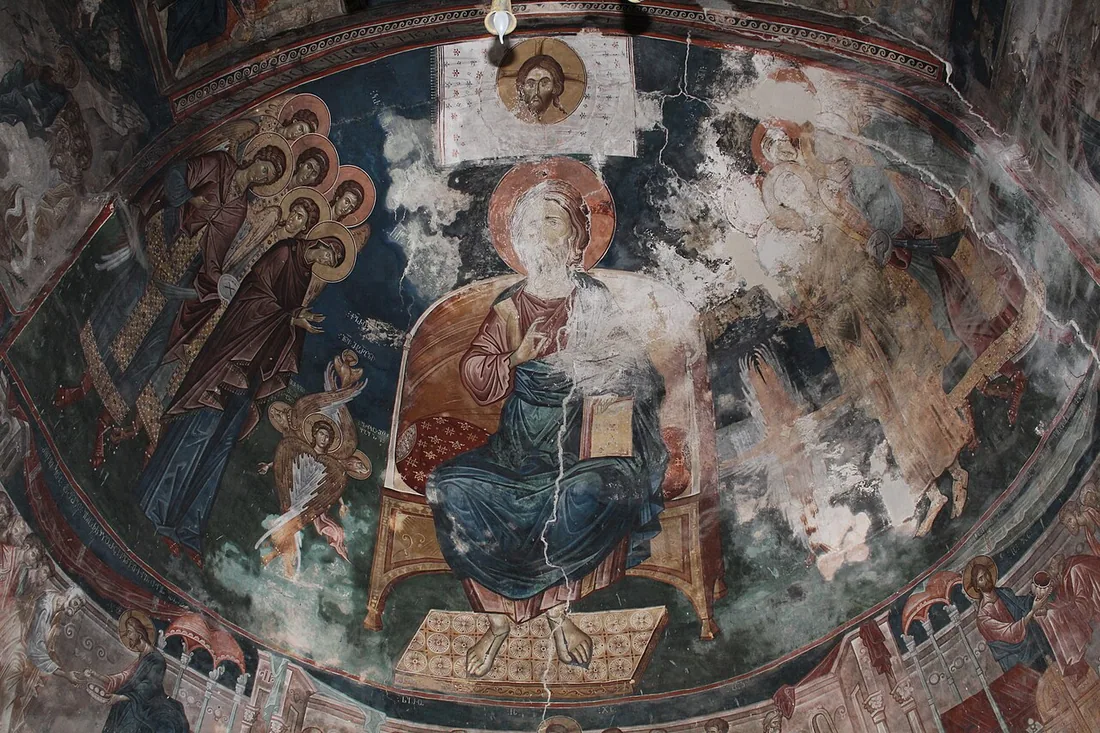
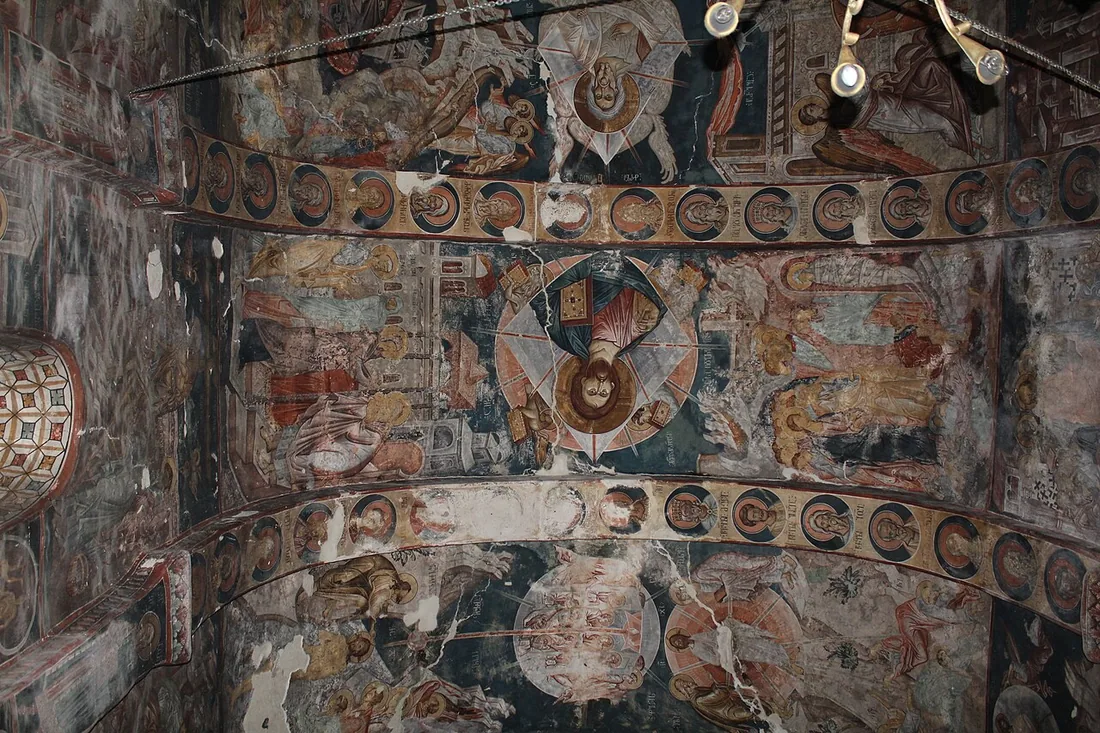
The real treasure is inside. In the 14th century, under King Giorgi V the Brilliant, the whole interior was painted. Shalva Amiranashvili attributed the murals to the painter Damiane; Vakhtang Beridze argued they were the work of Damiane's pupil, Gerasime. Whoever held the brush, look for:
- the Last Supper, crowded and yet intimate
- St George, the church's patron, in a fresco famous in its own right
- the Ancient of Days, an unusual subject in Georgian painting
Six centuries have darkened the colours and made the faces quieter still. The monks keep bees, and a jar of Ubisa honey is the one souvenir worth carrying home.
Gallery
Practical advice
An hour is enough, though the frescoes reward more. The church is dim inside, so give your eyes a minute before judging the paintings, and ask a monk before taking photographs. Modest dress is expected: women cover their heads and wear a skirt, and wraps are usually left by the door. Entry is free. There is no café; food and shops are in Kharagauli or Zestaponi. In winter the church is unheated and genuinely cold. Step back across the yard to see the tower's upper windows and the openings of its defensive top storey.
How to get there from Tbilisi
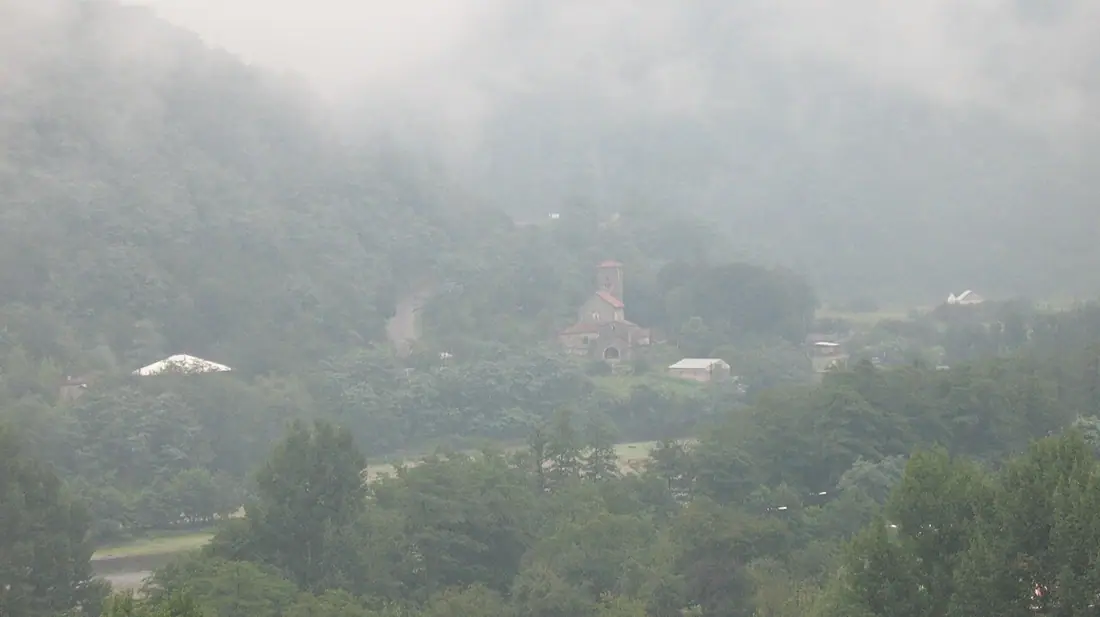
From Tbilisi take the S1 (E60) west past Gori and Khashuri and over the Rikoti Pass. Beyond the pass, as the highway runs down the Dzirula valley, turn off onto the old road (Sh213) where it is signed for Ubisa; the monastery stands just north-east of the village. It is about 170 km and two and a half hours, paved all the way, and the last couple of kilometres are a narrow village lane. Refuel in Khashuri or Zestaponi. Parking by the gate is free. An economy car is fine all year, and Kharagauli, gateway to the Borjomi-Kharagauli National Park, is close by.
Click a marker for details. Coloured lines are ready-made road trips.
Nearby places
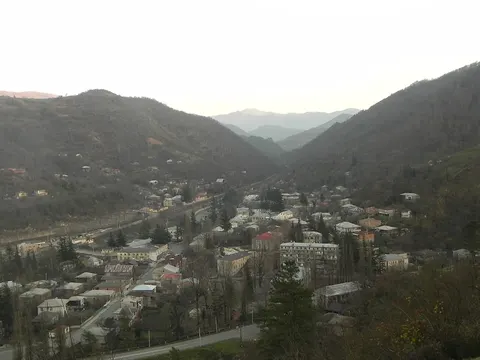
Kharagauli
A railway town in the deep Chkherimela gorge and the western doorstep of Borjomi-Kharagauli National Park — the beech forest begins where the platform ends.
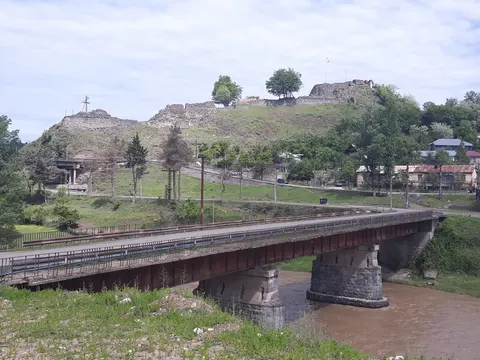
Shorapani Fortress
Strabo’s Sarapana: a hilltop fort over the Dzirula–Kvirila confluence, where the river road ended and the land road began.
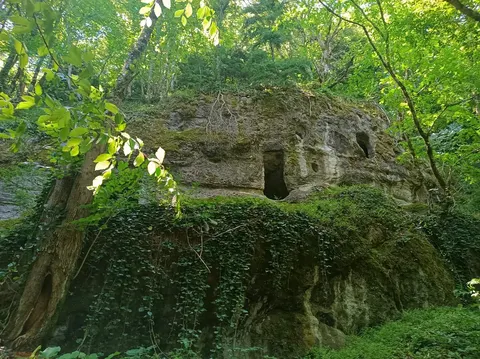
Nunisi
A tiny warm-sulphur resort deep in the forests of Borjomi-Kharagauli, where the water has been treating skin complaints since 1856.
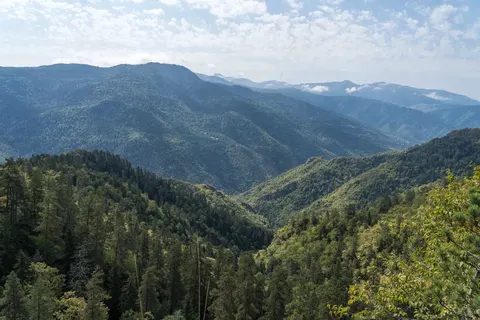
Borjomi-Kharagauli National Park
More than one per cent of Georgia under forest and meadow, crossed by marked trails with mountain shelters, beginning at the edge of Borjomi.
Best car for this trip
Guides
- Driving in Georgia: What the Distances Actually Cost You Georgia is a small country with slow roads. Here is what 267 measured drives from Tbilisi say about how long y
Pickup locations
Car Rental in Kutaisi — 47 km (straight line)