
Stalin's Underground Printing House
A secret press of 1903–1906 beneath an Avlabari house, reached down a water well and along a tunnel: Tbilisi's strangest museum.
- Time needed
- 1 h
- From Tbilisi
- 3 km · 0:15
- Road
- Paved
- Car needed
- Economy class
- Season
- All year
- Entry
- 10 ₾
To reach the most dangerous room in early-1900s Tiflis, you had to climb down a well. In 1903 the Caucasian Union Committee of the Russian Social Democratic Labour Party decided it needed a press of its own. The organiser, Mikheil Bochoridze, persuaded a former railway-workshop hand, D. Rostomashvili, to give up a plot in Avlabari; a fictitious building plan was filed with the city, and an ordinary-looking house went up. Beneath it, over six months, a deep cellar was dug. The only way in was down a well with water in it, along a horizontal tunnel, and up a ladder in a second shaft.
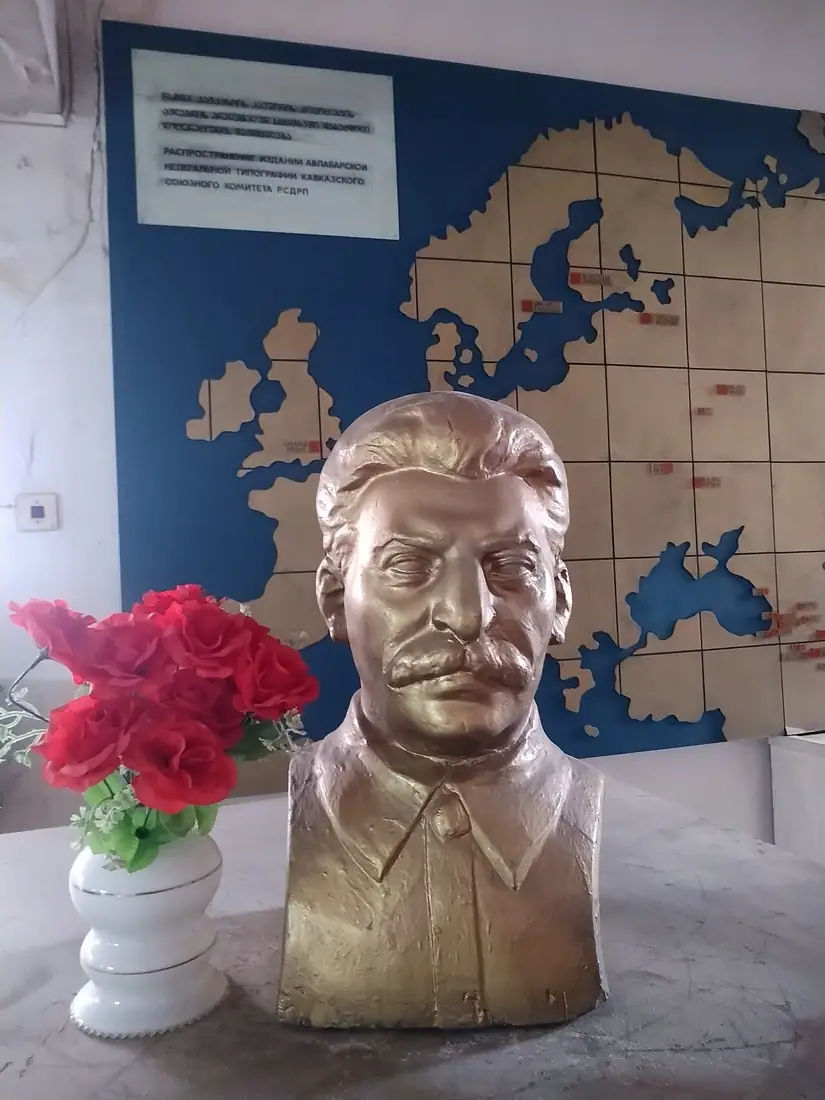
Upstairs lived Bochoridze's aunt, Babe Lashadze-Bochoridze, who cooked for the printers and never stopped watching the street. Lookouts on the porch rang a bell whenever police came near, so the men below could silence the machine. And the machine worked hard: a Maschinenfabrik Augsburg press, smuggled in and assembled underground, turned out up to 45,000 impressions a day in Georgian, Russian and Armenian, among them leaflets, Lenin's writings and the newspaper Proletariatis Brdzola. On 15 April 1906 the police found it and blew up the underground rooms. Soviet tradition later put the young Iosif Jughashvili, the future Stalin, at the heart of the story, and it is by his name that the museum is known today.
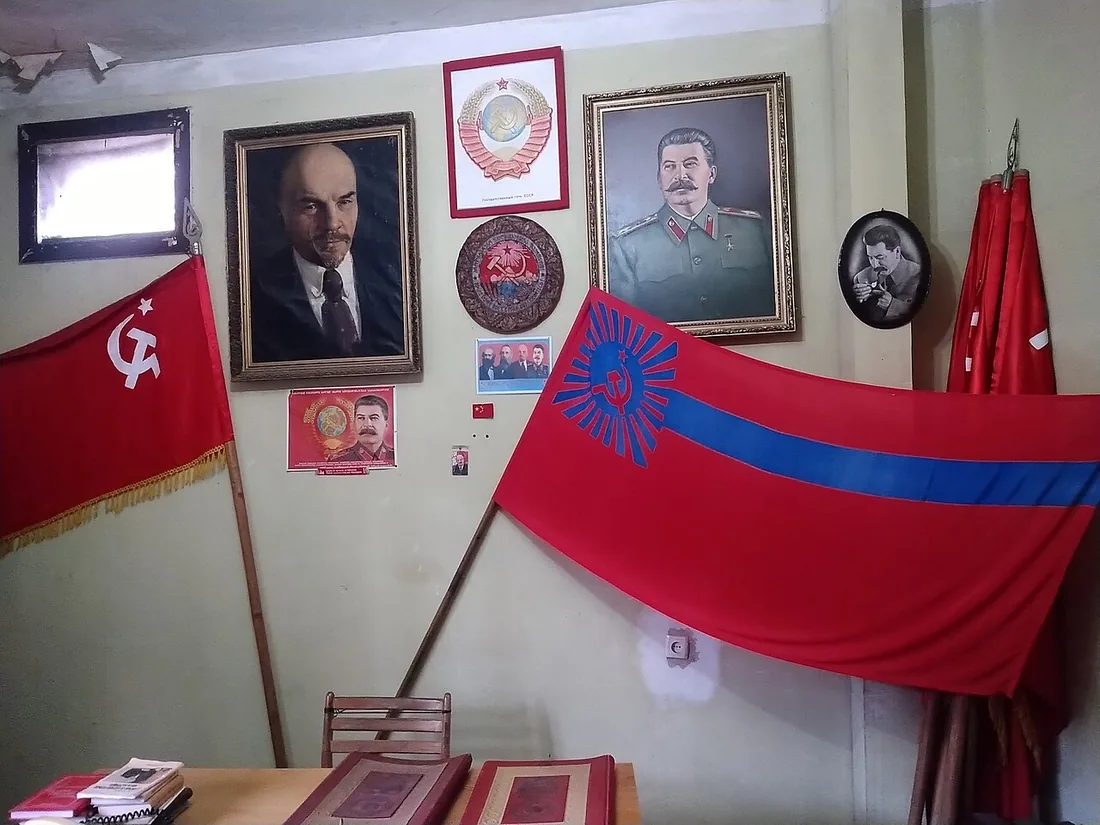
The Soviets restored the site as a shrine. Now it feels like a place time forgot: portraits of Lenin and Stalin, tired display cases, and, under a bare bulb in the cellar, the heavy German press the museum presents as the original. You peer down the brick-lined well, then go down to meet it. No curator has ever smoothed this place over, and it is all the more honest for it.
Gallery
Practical advice
Entry is 10 GEL, cash only. Official hours are 10:00–18:00, Monday to Friday, closed at weekends, but in practice they depend on the caretaker, who lives on site. Late morning, after 11:00, is the safest bet, and if the gate is shut, knock and wait a minute. Explanations are mostly in Georgian and Russian, so read up beforehand or bring a translation app. Allow 20 to 40 minutes. The steps down to the press are steep: wear flat shoes and hold the rail.
How to get there from Tbilisi
The museum is at 7 Kaspi Street, on the edge of Avlabari, about 3 km by road from Freedom Square and a 10–15-minute drive. Cross the Mtkvari by the Metekhi or Baratashvili bridge, follow Ketevan Tsamebuli Avenue towards Isani and turn off into Kaspi Street. The neighbourhood is quiet and residential, and you can usually park at the kerb near the gate. An economy car is all you need. Without a car, the 300 Aragveli metro station is about 600 metres away. The visit fits easily into one outing with Sameba Cathedral or the sulphur baths across the river.
Click a marker for details. Coloured lines are ready-made road trips.
Nearby places
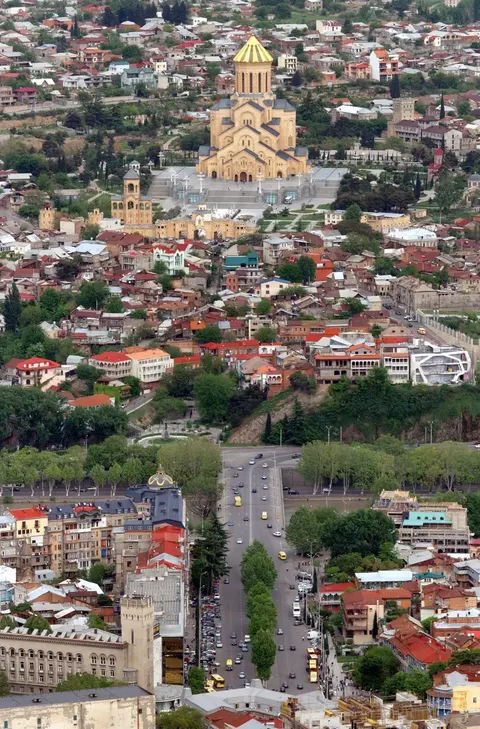
Holy Trinity Cathedral (Sameba)
Georgia's main cathedral, consecrated on Elia Hill in 2004: a golden cross 86 metres above the ground, nine chapels, and a city that still argues about it.
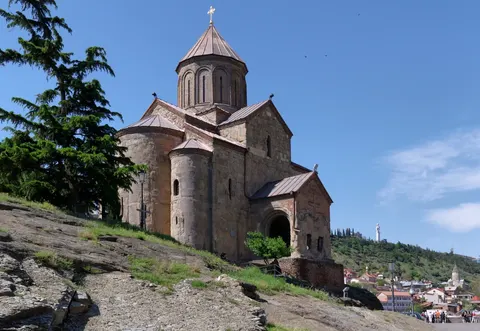
Metekhi Church
A thirteenth-century church on a cliff over the Mtkvari that survived a citadel, a prison, Beria and a theatre — with old Tbilisi spread out below.
Abanotubani and the Sulphur Baths
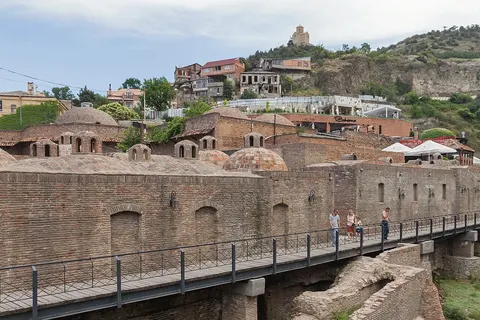
Brick domes breathing sulphur at the foot of Narikala: the warm springs that gave Tbilisi its name, still filling private stone pools by the hour.
Best car for this trip
Guides
- Driving in Georgia: What the Distances Actually Cost You Georgia is a small country with slow roads. Here is what 267 measured drives from Tbilisi say about how long y
Pickup locations
Car Rental in Tbilisi — 2 km (straight line)