
Tbilisi Zoo
Georgia's oldest zoo, opened in 1927 in the green fold of the Vere valley: an easy family morning with a hard and honest history.
- Time needed
- 2 h
- From Tbilisi
- 4 km · 0:15
- Road
- Paved
- Car needed
- Economy class
- Season
- All year
- Entry
- 4 ₾
For almost a century, Tbilisi children have met their first lion in the same narrow green valley. The zoo was founded by decision of the city council on 10 February 1927, on the banks of the Vere, a small river that slips through the city towards the Mtkvari. It grew through the 1930s, and in its 1970s heyday kept more than a thousand animals and welcomed over half a million visitors a year.
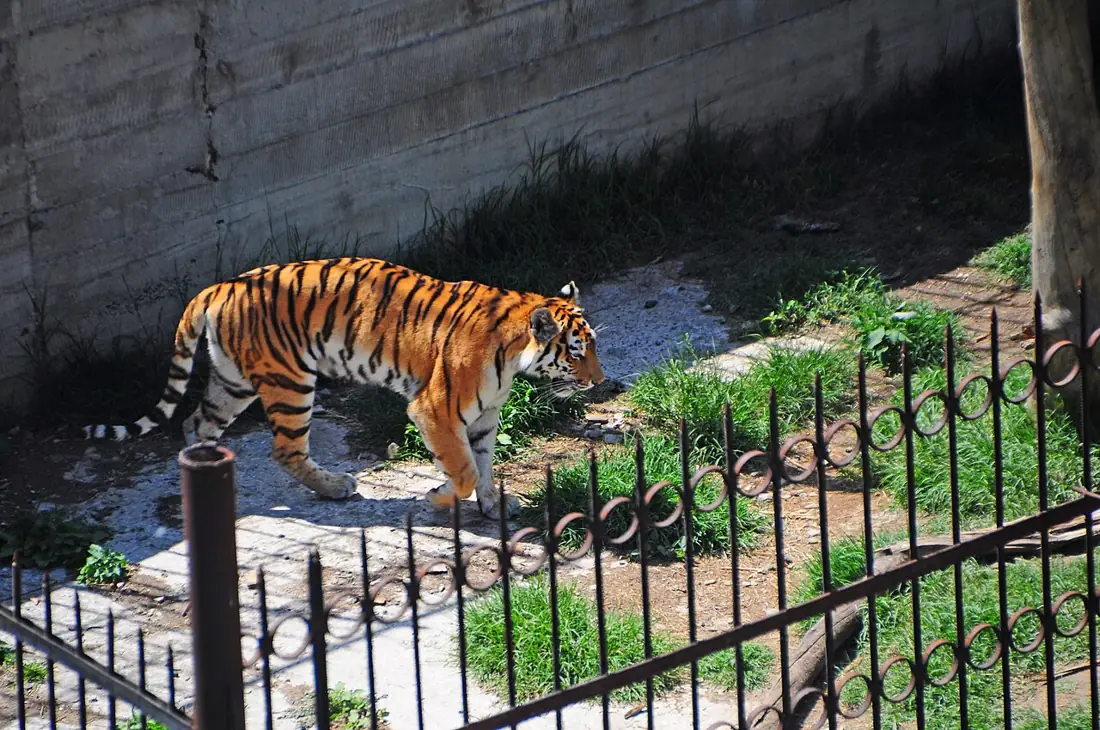
Then came the lean decades. After 1991, as the economy collapsed, more than half of the animals died of hunger and cold, according to an animal-welfare inspector who came in 1993. Recovery was slow; in 2007 the zoo opened a marine aquarium, the first in the Caucasus. In 2012 the city decided to move everything to a spacious new park beside the Tbilisi Sea, but the money never came, and the animals were still here on 14 June 2015, when the swollen Vere tore through the grounds. Nearly half the collection died, along with three keepers who lived on site; a hippopotamus, lions, tigers, bears and wolves escaped into the streets, and the pictures went round the world.
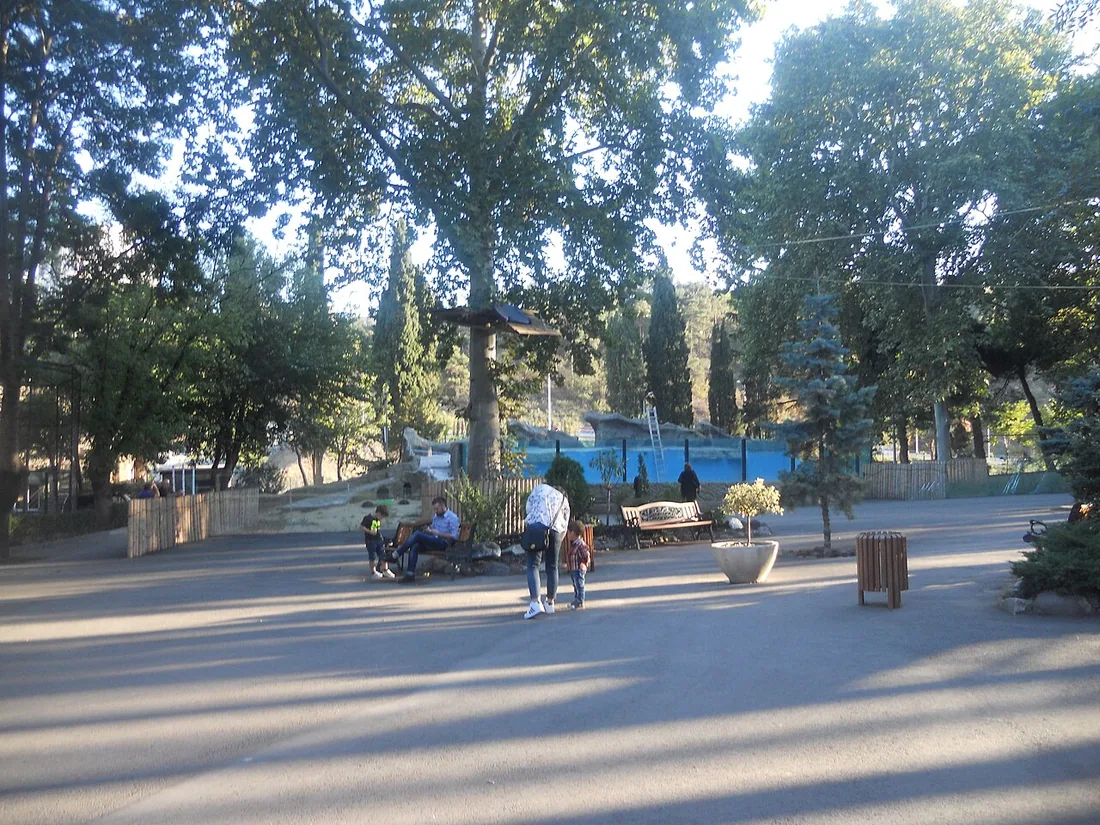
What you walk through today is the rebuilt zoo: new enclosures, paths climbing the valley side under old trees, the warm, damp air of the exotarium. It is modest, and it knows it. For nearly fifty years, until 2013, the photographer Victor Sukiasov sat children on papier-mâché horses here to take their portraits, a small ritual that outlived the Soviet Union by two decades.
Come for an unhurried morning with small children, and let the place's story make you a little gentler with it.
Gallery
Practical advice
Tickets are 4 GEL from age 12 and 2 GEL for children aged 3–12; under-threes go free. The exotarium has its own ticket (2 GEL, 1 GEL for children), and tickets can also be bought online. The zoo is open all year, but in winter many animals stay in their indoor quarters, so April to October shows you more. Paths climb the valley side and some are steep for a pushchair. Food inside is limited: bring water and snacks. Feeding the animals is forbidden. Weekend afternoons fill with local families; weekday mornings are calm.
How to get there from Tbilisi
The entrance is at Heroes' Square, where Kostava Street ends: about 4 km by road from Freedom Square, 10–15 minutes in light traffic and noticeably more at rush hour. Follow the right-bank embankment of the Mtkvari north and climb to Heroes' Square, the city's most tangled interchange, where several fast streams of traffic merge. Pick your lane early or you will be sent round the loop again. There is paid parking along Kostava Street near the gate, but by weekend afternoons it is full, so come in the morning. Any economy car will do; nothing here asks for more.
Click a marker for details. Coloured lines are ready-made road trips.
Nearby places
State Silk Museum
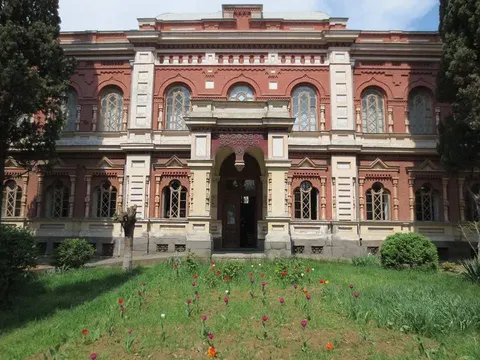
Founded in 1887: thousands of cocoon varieties in their original 1890s cases, inside a red-brick hall carved with silkworms and moths.
Turtle Lake and Vake Park
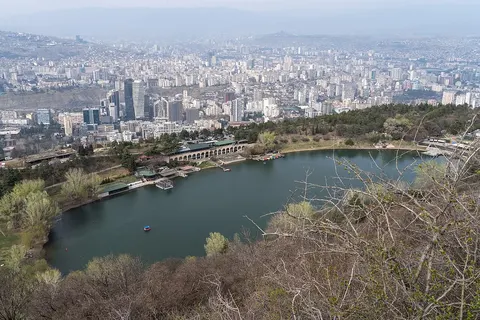
A landslide pond on a pine ridge above Vake, six minutes up by gondola: the place Tbilisi goes when the streets below start to bake.
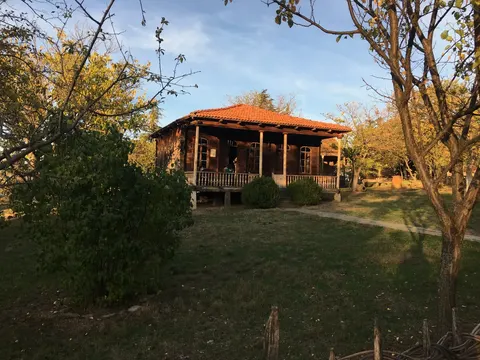
Open Air Museum of Ethnography
A village assembled on a wooded hill above Vake, where a Khevsur tower, an early basilica from Tianeti and a Megrelian maize granary stand as neighbours.
Best car for this trip
Guides
- Driving in Georgia: What the Distances Actually Cost You Georgia is a small country with slow roads. Here is what 267 measured drives from Tbilisi say about how long y
Pickup locations
Car Rental in Tbilisi — 3 km (straight line)